
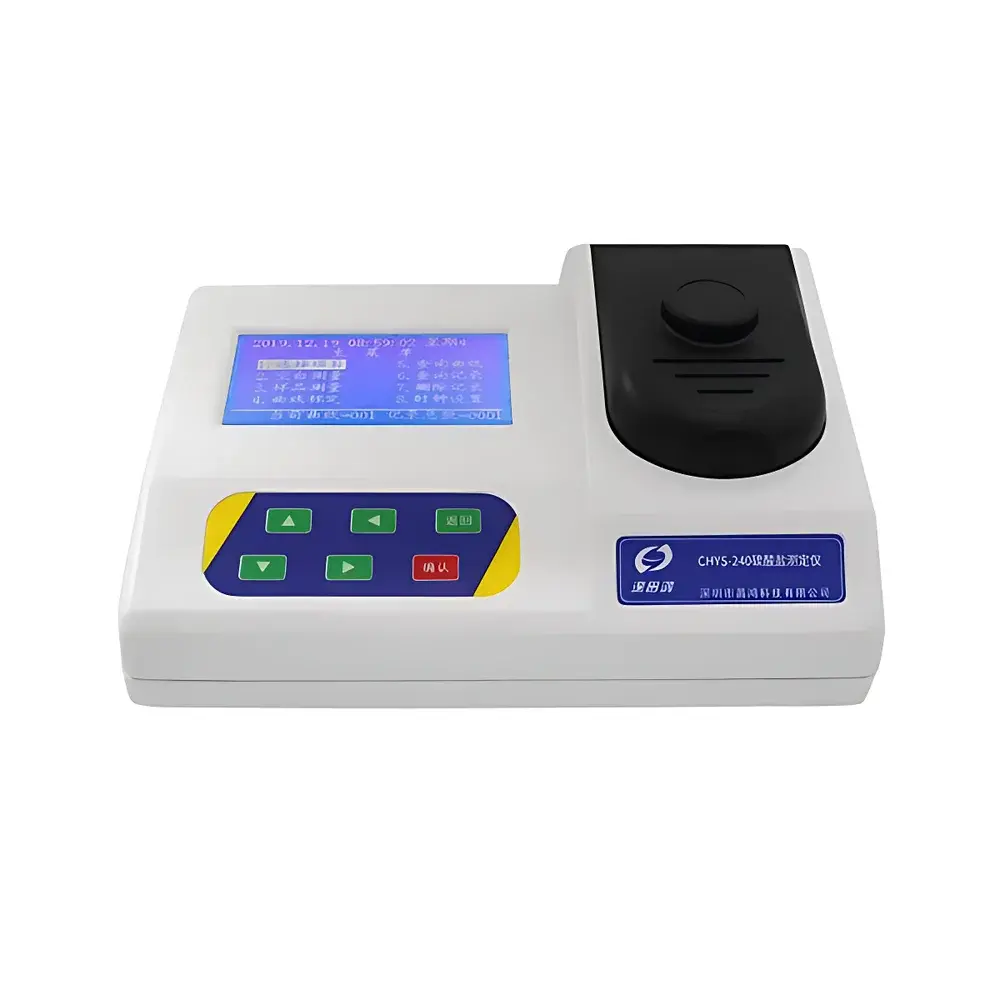
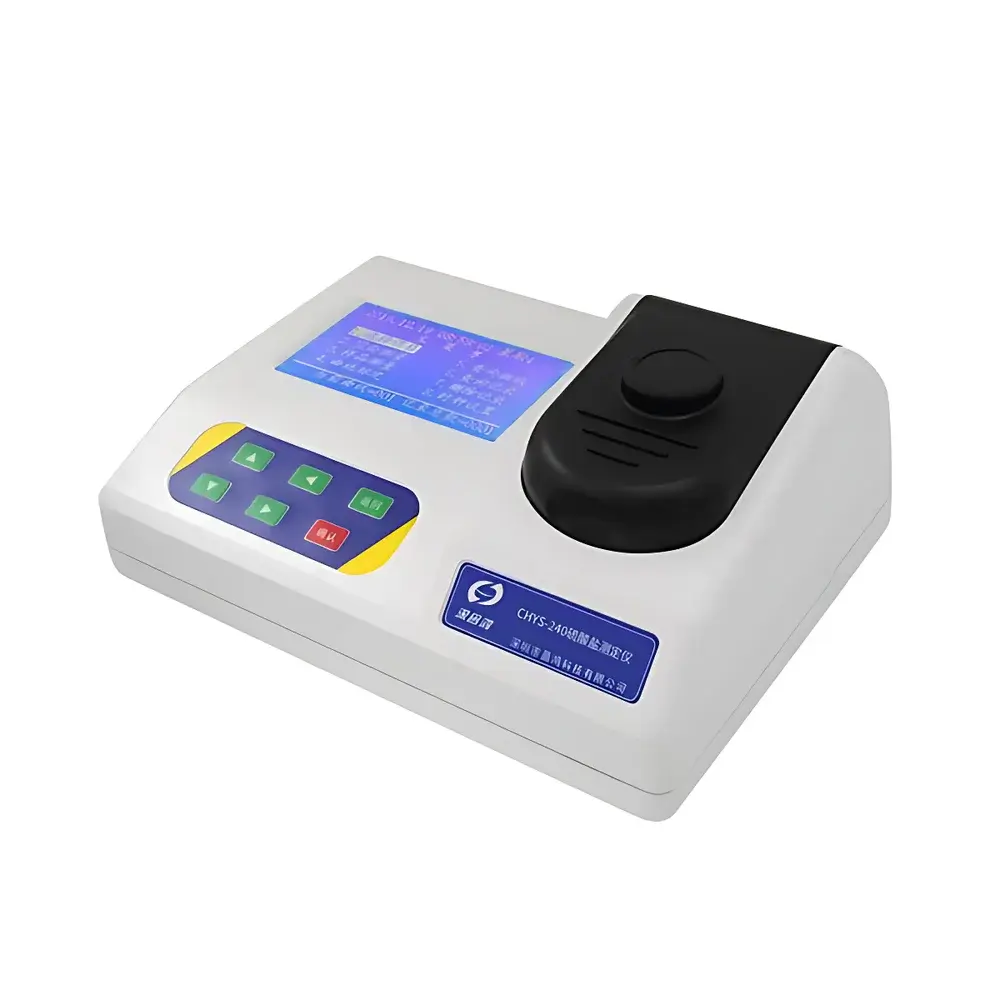
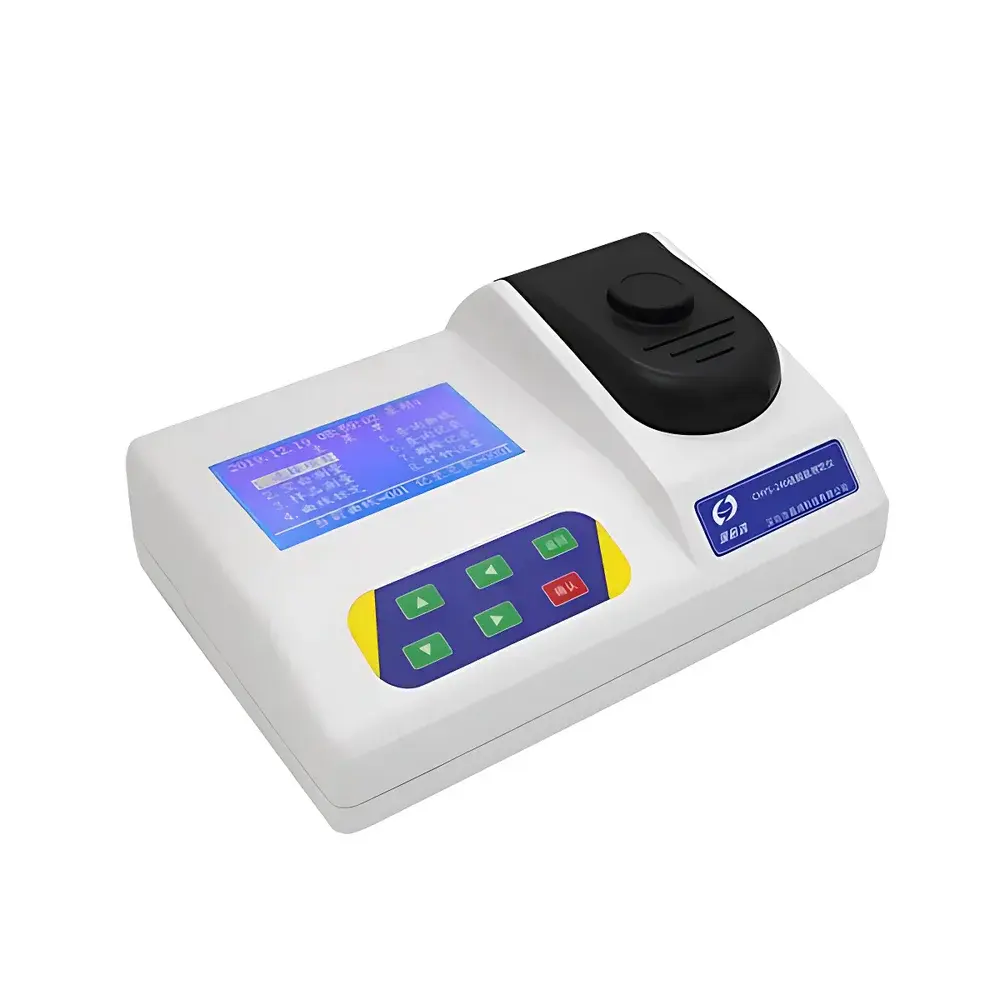
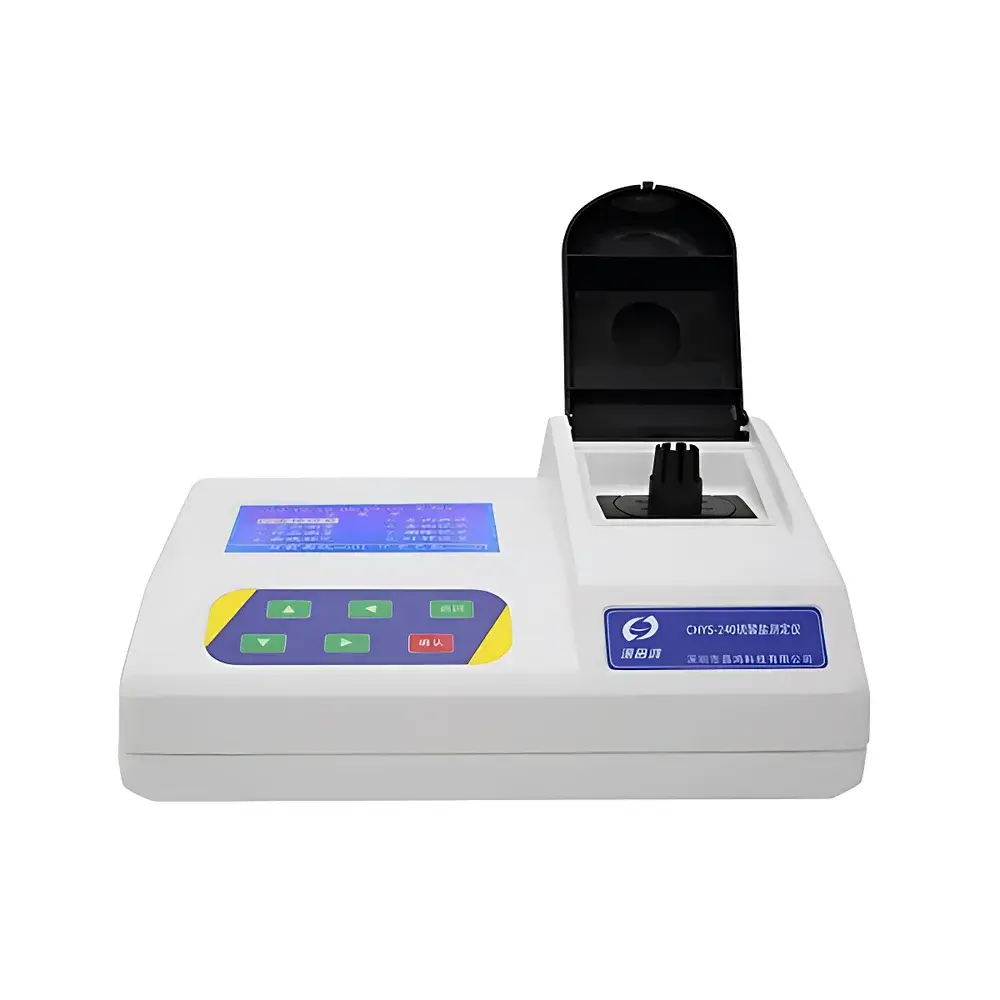
Shenchanghong CHYS-240 Sulfate Analyzer
| Brand | Shenchanghong |
|---|---|
| Origin | Guangdong, China |
| Manufacturer Type | Direct Manufacturer |
| Country of Origin | China |
| Model | CHYS-240 |
| Pricing | Upon Request |
| Measurement Range | 5–200.00 mg/L SO₄²⁻ |
| Accuracy (Abs. Error) | ≤ ±5% |
| Repeatability | ≤ 3% |
| Optical Drift | < 0.002 A in 20 min |
| Dimensions (W×D×H) | 266 × 200 × 130 mm |
| Weight | < 1 kg |
| Operating Temperature | 5–40 °C |
| Relative Humidity | ≤ 85% RH |
| Power Supply | AC 220 V ± 10%, 50 Hz ± 0.5 Hz |
Overview
The Shenchanghong CHYS-240 Sulfate Analyzer is a benchtop photometric instrument engineered for precise, routine quantification of sulfate (SO₄²⁻) concentration in aqueous samples using the barium chloride–turbidimetric method. It operates on the principle of light scattering: sulfate ions react with barium chloride under controlled acidic conditions to form insoluble barium sulfate precipitates; the resulting turbidity is proportional to sulfate concentration and measured at a fixed wavelength using a stable monochromatic cold light source. Designed for compliance with standard methods including ISO 9297 (Water quality — Determination of sulfate — Turbidimetric method) and consistent with EPA Method 375.4 principles, the CHYS-240 delivers traceable, reproducible results without requiring complex calibration or operator-intensive wet chemistry workflows.
Key Features
- Monochromatic cold light source with >100,000-hour service life and narrow-band optical filtering ensures high photometric stability and minimal spectral interference—critical for low-turbidity measurements in clean water matrices.
- Integrated 16-bit microcontroller architecture enables real-time signal processing, automatic zero-point correction, and linearized absorbance-to-concentration conversion per user-defined or factory-preloaded calibration curves.
- Backlit LCD display with native Chinese menu interface supports intuitive navigation, parameter configuration, and direct readout of sulfate concentration in mg/L SO₄²⁻—no external software or PC required for basic operation.
- Durable ABS polymer housing provides chemical resistance against common reagents (e.g., HCl, BaCl₂ solutions) and mechanical robustness suitable for field-deployed lab environments or municipal water quality control stations.
- Optical system drift < 0.002 A over 20 minutes meets ISO 7027-1:2016 requirements for turbidimeter stability, ensuring measurement consistency across sequential sample batches.
- Onboard data storage retains up to 500 measurement records with timestamp and calibration ID—enabling GLP-compliant audit trails when paired with manual logbook documentation.
Sample Compatibility & Compliance
The CHYS-240 is validated for use with drinking water, surface water, groundwater, municipal wastewater, and industrial effluents within pH 4–9 after appropriate pretreatment (e.g., filtration to remove suspended solids >5 µm, acidification to prevent carbonate interference). Samples containing high concentrations of phosphate, silicate, or heavy metals (e.g., Fe³⁺, Al³⁺) may require masking agents or dilution per ISO 9297 Annex B guidance. While not certified to IEC 61326-1 for EMC or EN 61010-1 for safety out-of-the-box, the analyzer conforms to general laboratory electrical safety practices and is routinely deployed in ISO/IEC 17025-accredited environmental testing laboratories where method validation is performed per client-specific SOPs.
Software & Data Management
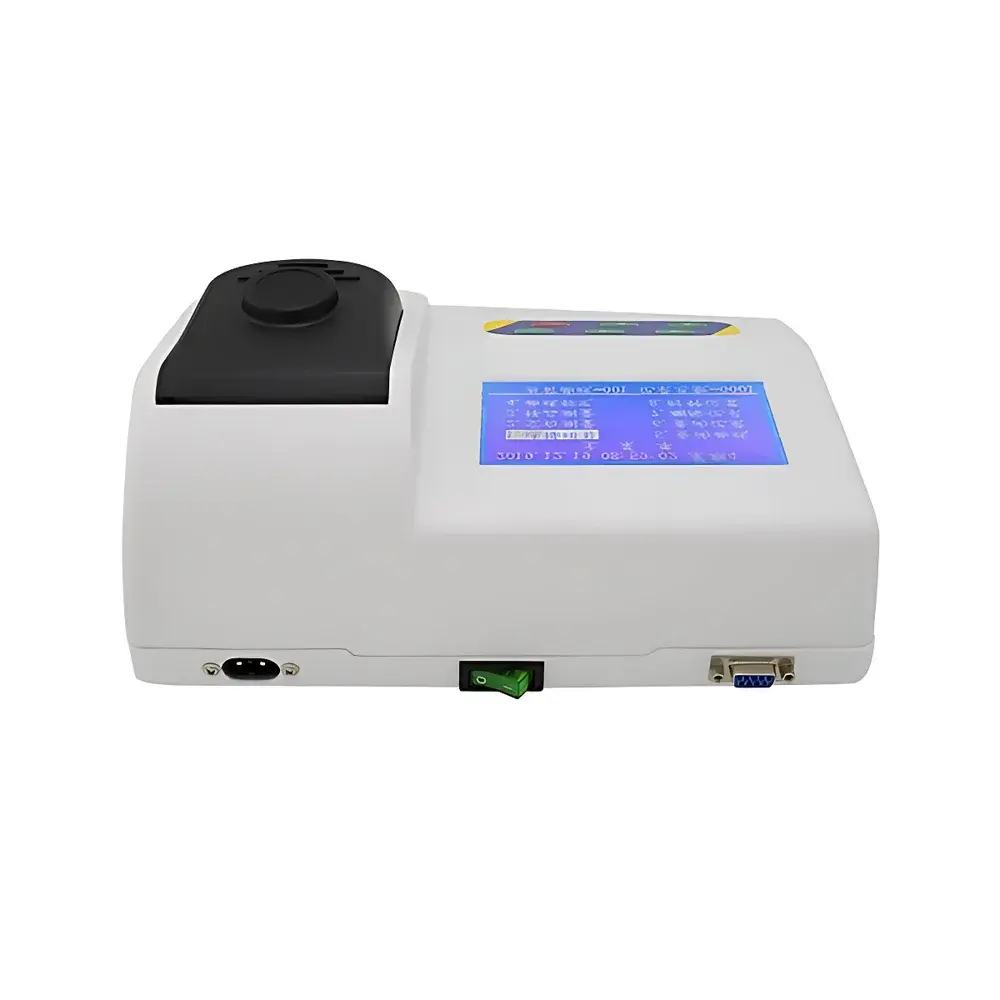
The CHYS-240 operates as a standalone instrument with no embedded operating system or network connectivity. Calibration curves—including up to three user-defined multi-point curves alongside the factory default curve—are stored in non-volatile memory and recalled via menu selection. Measurement data are retained in volatile RAM until power-off unless manually exported via optional RS-232 serial interface (cable and terminal software sold separately). For regulated environments, users may implement manual transcription into LIMS or electronic lab notebooks (ELN) with full metadata capture (operator ID, date/time, lot numbers of reagents, calibration verification records) to satisfy FDA 21 CFR Part 11 documentation expectations at the procedural—not device—level.
Applications
- Regulatory monitoring of sulfate in potable water supplies per WHO Guideline Values (250 mg/L) and national standards (e.g., GB 5749–2022 in China).
- Process control in desalination plants, where sulfate scaling potential must be tracked upstream of RO membranes.
- Effluent compliance testing for mining, textile dyeing, and metal finishing industries subject to local discharge limits (e.g., EU Industrial Emissions Directive Annex I).
- Educational laboratories conducting quantitative analytical chemistry experiments on precipitation reactions and turbidimetric analysis fundamentals.
- Field-deployable QA/QC checks during groundwater contamination surveys involving sulfate-rich leachates from coal ash or gypsum stockpiles.
FAQ
What sulfate detection method does the CHYS-240 employ?
It uses the standardized turbidimetric method based on barium sulfate precipitation, aligned with ISO 9297 and referenced in APHA Standard Methods 4500-SO₄²⁻ E.
Can the instrument measure sulfate below 5 mg/L?
No—the lower limit of quantitation is 5 mg/L SO₄²⁻. For sub-ppm detection, ion chromatography (IC) or inductively coupled plasma–mass spectrometry (ICP-MS) is recommended.
Is the CHYS-240 compliant with US EPA or ASTM methods?
It implements the core chemistry of EPA Method 375.4 but is not EPA-listed or ASTM-certified; method validation per laboratory’s own protocol is required for regulatory submission.
How often must the optical path be cleaned or recalibrated?
The cuvette chamber and light path should be wiped with lint-free tissue after each batch; full calibration verification is advised before each analytical session or every 8 hours of continuous use.
Does the analyzer support GLP or GMP documentation requirements?
It provides timestamped data storage and user-accessible calibration history—however, full GLP/GMP compliance depends on associated procedural controls (e.g., change control logs, audit trail review), not built-in electronic signatures.







