
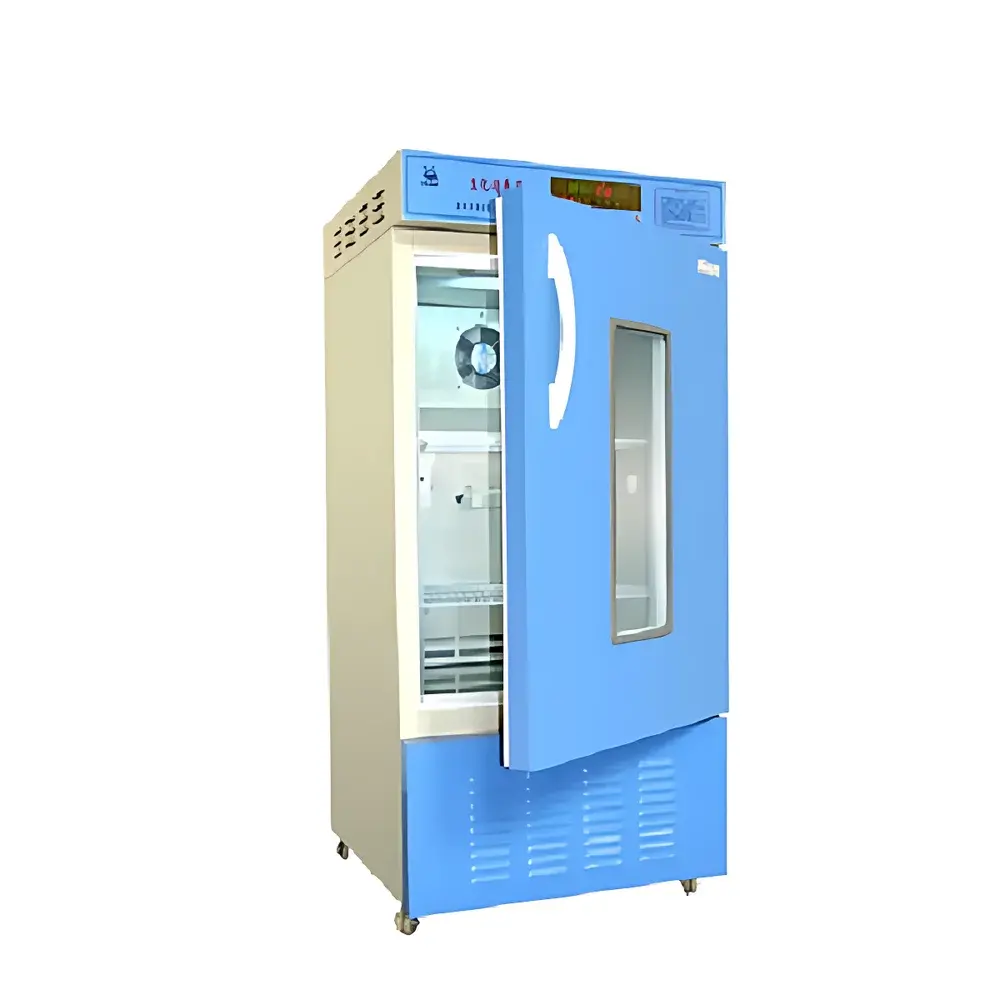
Shenchanghong BC-150 Biological Incubator
| Brand | Shenchanghong |
|---|---|
| Model | BC-150 |
| Capacity | 150 L |
| Temperature Range | 0–65 °C |
| Temperature Resolution | 0.1 °C |
| Temperature Fluctuation | ±0.3 °C |
| Temperature Uniformity | ±0.8 °C |
| Refrigerant | R134a |
| Power Consumption | 200 W |
| Supply Voltage | 220 VAC, 50 Hz |
| Inner Dimensions (W×D×H) | 50 × 40 × 65 cm |
| Outer Dimensions (W×D×H) | 60 × 66 × 116 cm |
| Safety Protection | Dual Independent Over-Temperature Cutoff (±4 °C deviation alarm + 70 °C hard limit) |
| Insulation | Structural Polyurethane Foam Injection |
| Interface | RS485 port for external data logging or PC connectivity |
| Timing Function | Programmable timer up to 9999 minutes |
| Display | Full-color LCD with real-time clock, temperature, and operational status icons |
| Compliance | Designed to support GLP-compliant environmental simulation workflows in water quality laboratories |
Overview
The Shenchanghong BC-150 Biological Incubator is a precision-controlled, dual-mode (heating/cooling) environmental chamber engineered for reproducible, long-term cultivation and stabilization of biological samples under tightly regulated thermal conditions. Operating on a thermoelectric and compressor-based hybrid system with R134a refrigerant, the BC-150 maintains stable setpoints across its full 0–65 °C range—enabling critical applications such as biochemical oxygen demand (BOD5) testing per ASTM D5210 and ISO 5815-1, microbial enumeration (e.g., heterotrophic plate count, coliform assays), algal growth studies, and seed germination trials. Its microprocessor-driven PID temperature control architecture ensures high repeatability and low thermal drift, making it suitable for routine QC/QA procedures in municipal water labs, environmental monitoring agencies, and academic research facilities conducting water quality analysis per US EPA Method 1681 and APHA Standard Methods 21st Edition.
Key Features
- Full-color graphical LCD display with real-time clock, dynamic operational icons, and simultaneous temperature readout—enhancing operator situational awareness during extended incubation cycles.
- Dual-stage over-temperature protection: primary deviation alarm triggered at ±4 °C from setpoint, backed by an independent hardware cutoff at 70 °C—meeting IEC 61010-1 requirements for laboratory equipment safety.
- Structural polyurethane insulation injected as a single monolithic layer into the chamber walls and door frame—reducing thermal bridging and achieving >35% lower standby energy consumption versus conventional fiberglass-insulated units.
- Self-diagnostic firmware that detects and displays standardized fault codes (e.g., E01 = sensor open circuit, E03 = compressor lockout) — accelerating troubleshooting without service technician intervention.
- RS485 serial interface compliant with Modbus RTU protocol—enabling integration with SCADA systems, centralized lab data management platforms, or third-party chart recorders for audit-ready temperature traceability.
- Precision timing module supporting programmable incubation durations from 1 minute to 9999 minutes (166.6 hours), with automatic cycle termination and audible alert—essential for standardized BOD5 and MPN protocols.
Sample Compatibility & Compliance
The BC-150 accommodates standard microbiological sample formats including Petri dishes (up to 150 mm diameter), test tubes (16 × 150 mm), multi-well plates (96- and 24-well), and BOD bottles (300 mL glass stoppered). Internal dimensions (50 × 40 × 65 cm) allow vertical stacking of up to four standard stainless-steel wire shelves (included), each rated for 15 kg load capacity. The unit is designed to operate within ambient conditions of 10–30 °C and ≤80% RH non-condensing. While not certified to UL/CSA or CE for standalone medical device use, its construction and control logic align with key elements of ISO/IEC 17025:2017 clause 6.4.2 (environmental condition monitoring) and supports compliance with FDA 21 CFR Part 11 when paired with validated electronic data capture software.
Software & Data Management
The BC-150 does not include embedded data storage but provides native RS485 communication for seamless integration with external data acquisition systems. When connected to a compliant PC-based logger (e.g., LabVIEW-compatible DAQ or dedicated incubator monitoring software), users can archive timestamped temperature logs at user-defined intervals (1 s to 60 min), generate calibration reports, and export CSV-formatted datasets for statistical process control (SPC) analysis. Audit trails—including parameter changes, alarm events, and power interruptions—are recorded in device memory and retrievable via serial query. Optional firmware upgrades may extend functionality to support Modbus TCP gateway bridging for Ethernet-based lab network deployment.
Applications
- BOD5 determination in wastewater influent/effluent per ISO 5815-1 and Standard Methods 5210B.
- Cultivation of indicator organisms (e.g., Escherichia coli, Enterococcus) for drinking water safety verification.
- Algal bioassays (e.g., Chlorella vulgaris) in ecotoxicology studies evaluating nutrient loading or contaminant thresholds.
- Seed viability testing and controlled germination trials under standardized temperature regimes (ISTA guidelines).
- Long-term stability studies of reagents, culture media, and preserved reference standards.
- Pre-incubation conditioning of membrane filters prior to colony isolation on selective agar media.
FAQ
What is the minimum ambient temperature required for reliable operation of the BC-150?
The unit is rated for continuous operation in ambient environments between 10 °C and 30 °C. Operation below 10 °C may impair compressor efficiency and extend cooldown times; operation above 30 °C may reduce maximum achievable temperature stability.
Does the BC-150 support validation documentation (IQ/OQ/PQ)?
Yes—Shenchanghong provides factory calibration certificates (traceable to NIM China) and a validation support package including temperature mapping templates, alarm log examples, and sensor tolerance specifications for user-executed qualification protocols.
Can the RS485 interface be used for remote control (not just monitoring)?
Yes—the Modbus RTU register map supports write commands for setpoint adjustment, start/stop control, and timer reset, enabling full automation within integrated lab management systems.
Is the interior chamber stainless steel?
The inner chamber is constructed from 304 stainless steel with electropolished finish for corrosion resistance and ease of decontamination using alcohol or diluted bleach solutions.
How often should the unit undergo preventive maintenance?
We recommend biannual inspection of condenser coil cleanliness, door gasket integrity, and sensor calibration verification—especially after high-humidity or high-bioaerosol usage scenarios.
Related Products







