
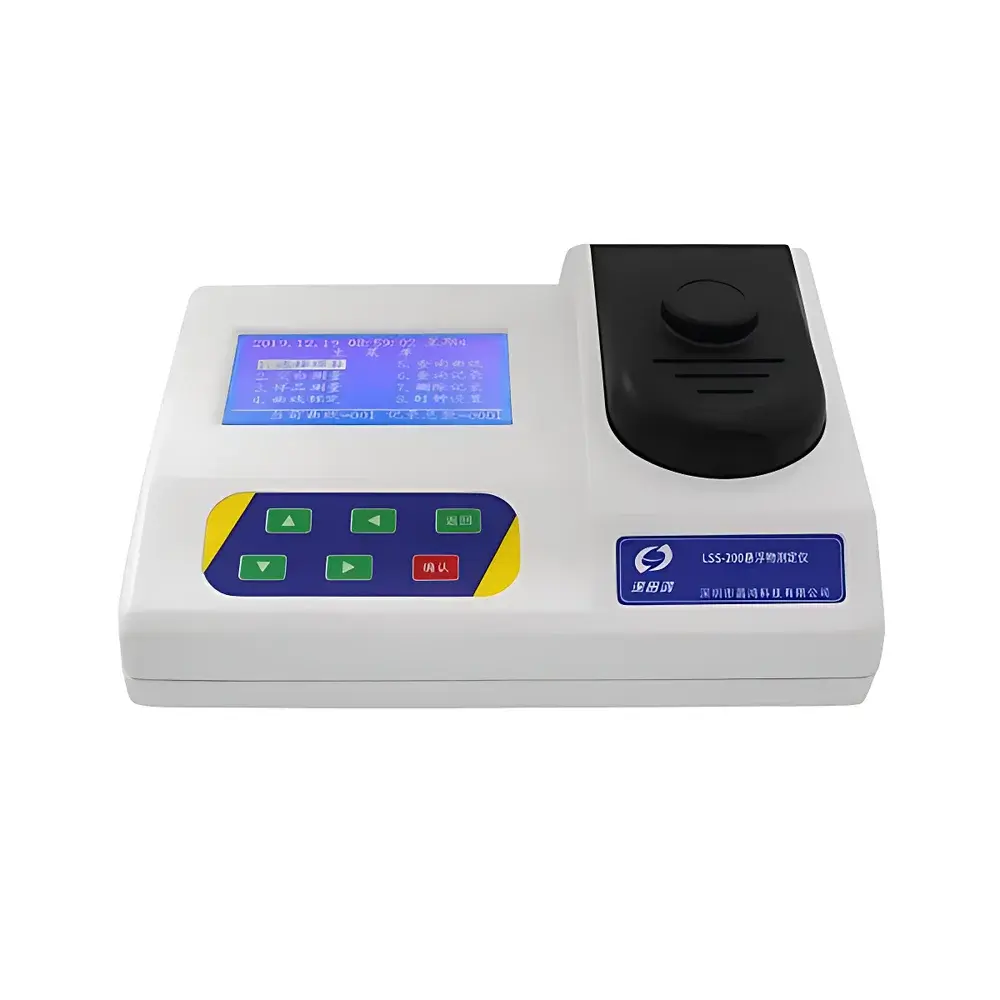
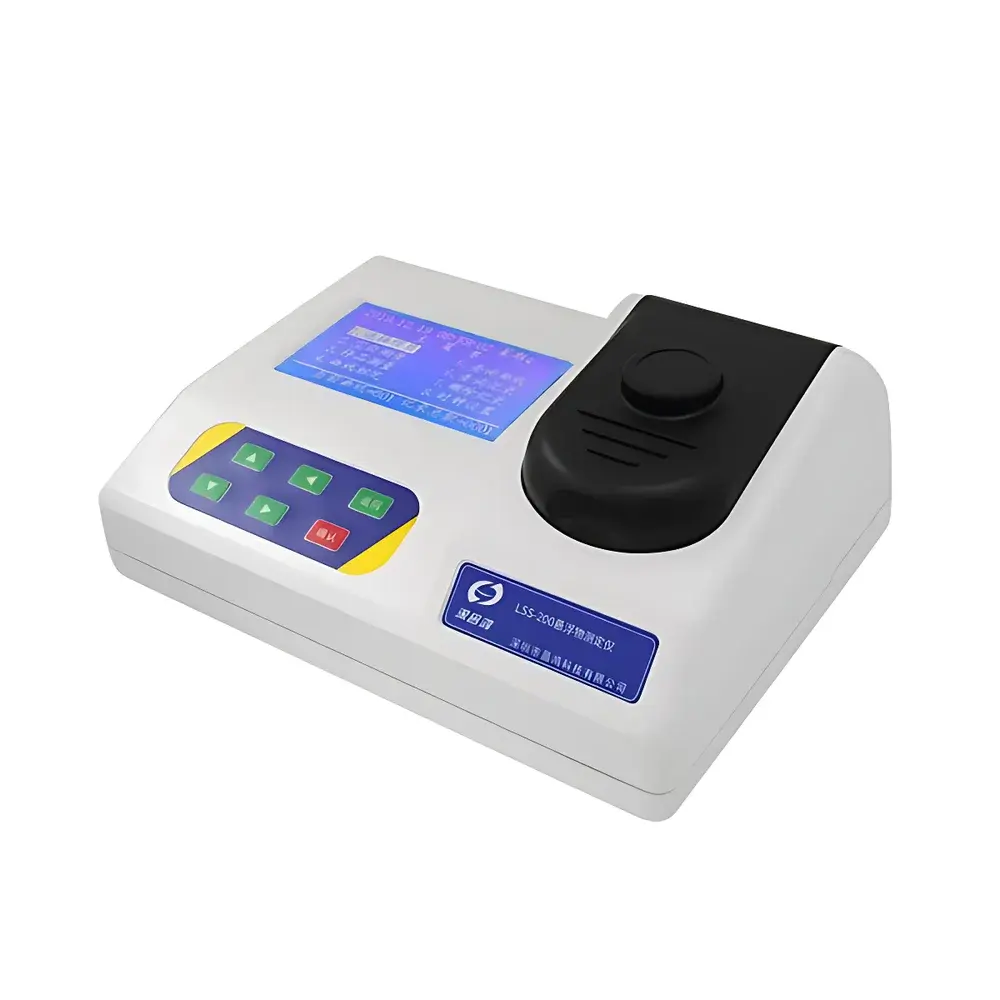
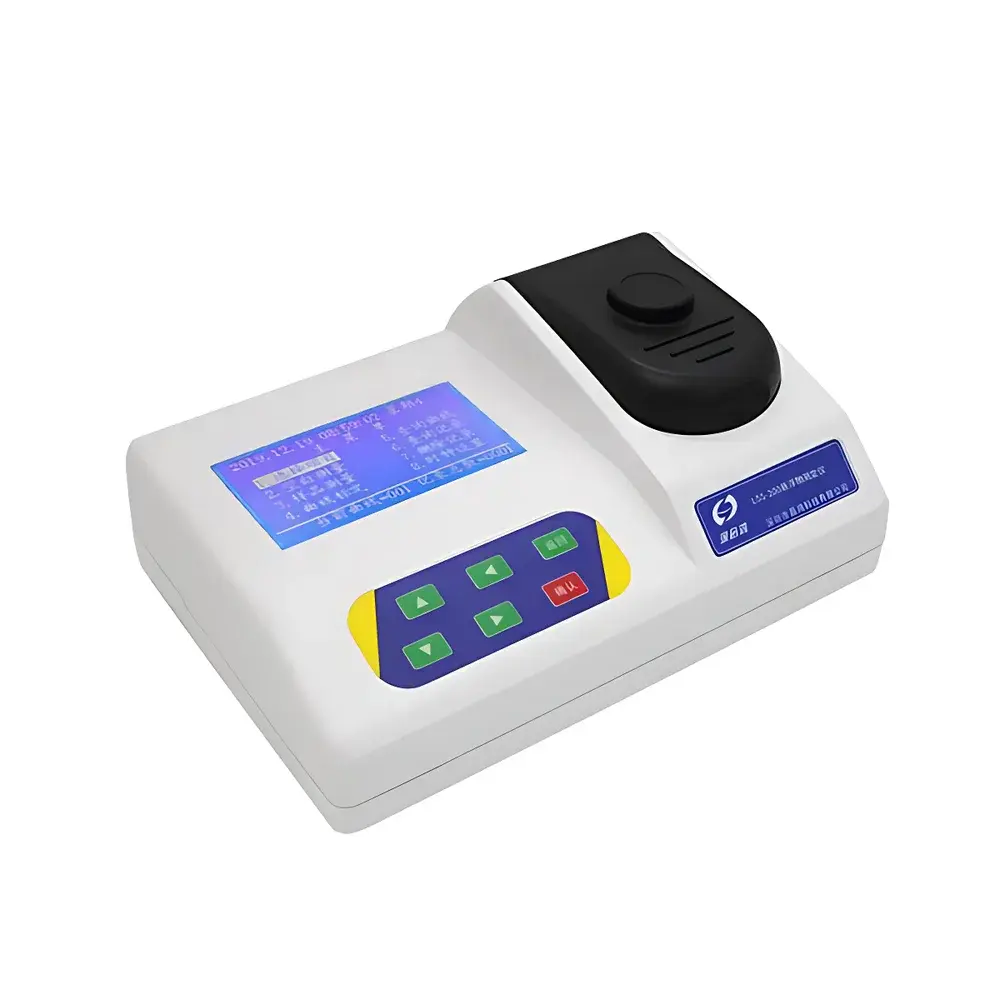
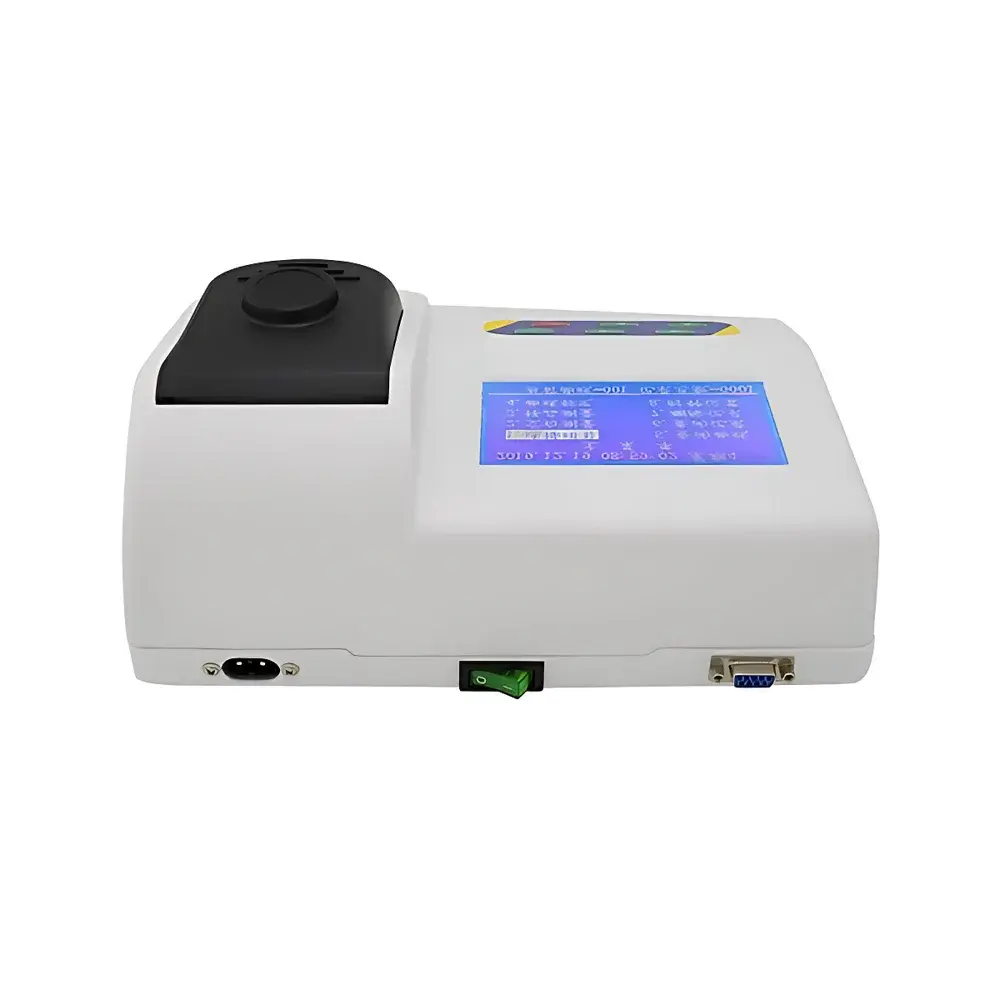
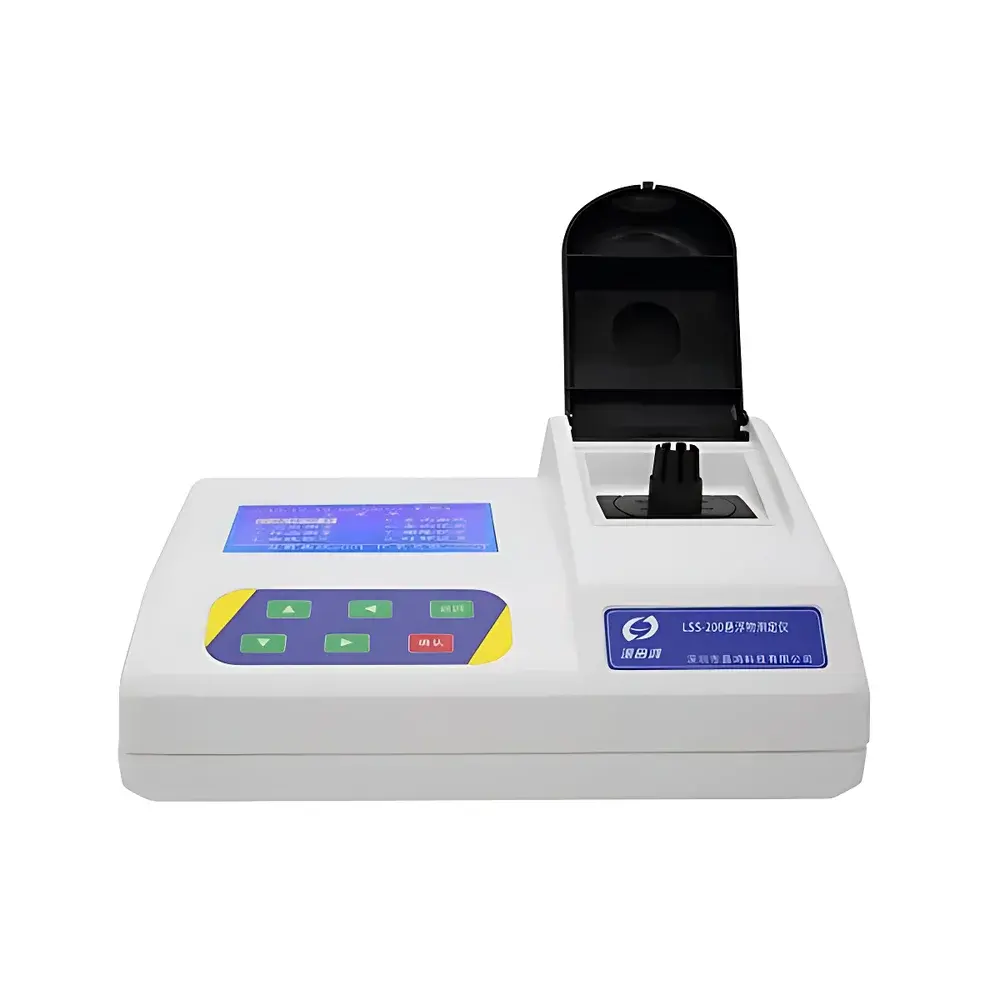
Shenchanghong LSS-200 Suspended Solids Analyzer
| Brand | Shenchanghong |
|---|---|
| Origin | Guangdong, China |
| Manufacturer Type | Direct Manufacturer |
| Country of Origin | China |
| Model | LSS-200 |
| Instrument Type | Laboratory Benchtop Analyzer |
| Measurement Range | 0–1000 mg/L |
| Accuracy | ≤ ±2% FS |
| Repeatability | ≤ ±2% FS |
| Resolution | 0.01 mg/L |
| Drift | < 0.1 mg/L/h |
| Dimensions | 266 × 200 × 130 mm |
| Weight | 1 kg |
| Operating Temperature | 5–40 °C |
| Relative Humidity | ≤70% RH |
| Power Supply | AC (220 ±10%) V, 50 Hz |
| Optical Source | Imported high-intensity LED (100,000 h lifetime) |
| Display | Backlit LCD with Chinese menu interface |
| Data Storage | 10 calibration curves + 199 measurement records (non-volatile memory) |
Overview
The Shenchanghong LSS-200 Suspended Solids Analyzer is a laboratory-grade photometric instrument engineered for rapid, reliable quantification of total suspended solids (TSS) in aqueous samples according to standardized gravimetric correlation principles. Unlike direct gravimetric TSS analysis—which requires filtration, drying, and weighing—the LSS-200 employs calibrated optical density measurement at a fixed wavelength (typically 650–850 nm), leveraging the linear relationship between turbidity-induced light attenuation and suspended particle concentration in low-to-moderate turbidity matrices. This method is validated for routine screening and process monitoring where turnaround time, operator consistency, and sample throughput are critical—particularly in wastewater treatment plants, industrial effluent labs, and environmental compliance facilities. The instrument operates on Beer–Lambert law fundamentals, using a narrow-band optical filter system paired with a long-life imported LED source (rated >100,000 hours) to ensure optical stability and minimize drift under ambient lab conditions.
Key Features
- High-stability optical architecture: Integrated high-brightness LED light source with precision narrow-band interference filter, delivering consistent spectral output and minimizing stray-light interference.
- Robust mechanical design: Housing fabricated from molded ABS polymer with enhanced chemical resistance—suitable for exposure to common reagents including dilute acids, bases, and organic solvents encountered during sample preparation.
- Intuitive human-machine interface: Large backlit LCD display with full Chinese-language menu navigation; no external PC or software required for basic operation.
- Embedded microcontroller system: 16-bit low-power MCU ensures deterministic response timing, stable analog-to-digital conversion, and reliable real-time signal processing.
- Persistent data retention: Non-volatile memory stores up to 10 user-defined calibration curves and 199 individual measurement results—even after power loss or shutdown.
- Thermal and electrical resilience: Designed to maintain specification compliance after 30 minutes of warm-up under ambient conditions (5–40 °C, ≤70% RH, AC 220 V ±10%, 50 Hz), with optical drift <0.1 mg/L per hour.
Sample Compatibility & Compliance
The LSS-200 is optimized for clear-to-moderately turbid liquid samples with particulate loadings between 0 and 1000 mg/L—covering typical influent/effluent ranges in municipal and industrial water treatment applications. It accommodates standard 10-mm pathlength rectangular cuvettes (supplied: 2 × glass cuvettes). While not a replacement for EPA Method 160.2 or ISO 11923 gravimetric TSS determination in regulatory reporting, the LSS-200 serves as a validated screening tool aligned with internal QA/QC protocols and preliminary assessment workflows. Its performance characteristics meet general requirements for laboratory instrumentation referenced in ISO/IEC 17025:2017 (clause 5.5.2 on equipment verification) and support GLP-compliant recordkeeping when paired with manual log documentation. No built-in audit trail or electronic signature functionality; therefore, it is not compliant with FDA 21 CFR Part 11 for fully electronic records without supplementary procedural controls.
Software & Data Management
The LSS-200 operates as a standalone instrument with no proprietary PC software or USB/Bluetooth connectivity. All calibration, measurement, and data recall functions are executed locally via front-panel controls. Calibration is performed manually using up to 10 user-entered standard points (e.g., prepared suspensions of known TSS concentration traceable to NIST SRM equivalents). Measured values are displayed in mg/L with 0.01 mg/L resolution and stored with timestamp-independent indexing. Export of data requires manual transcription or optional third-party integration via RS-232 (not included; hardware interface available upon request). For laboratories requiring automated data capture, integration with LIMS systems is feasible using external serial-to-USB adapters and ASCII-based polling scripts.
Applications
- Routine TSS monitoring in wastewater treatment plant influent, activated sludge basins, and final effluent streams.
- Industrial process control for textile dyeing baths, metallurgical leachates, pharmaceutical rinse waters, and food processing effluents.
- Environmental field lab support—portable enough for mobile testing units (1 kg mass, compact footprint) though intended for benchtop use.
- Educational laboratories teaching water quality fundamentals, including turbidity–TSS correlation, calibration curve development, and method validation principles.
- Pre-screening prior to formal gravimetric analysis—reducing unnecessary filtration workload and accelerating decision cycles.
FAQ
Does the LSS-200 comply with EPA or ISO TSS measurement standards?
No—it does not replace gravimetric methods (e.g., EPA 160.2, ISO 11923) for regulatory submission but supports rapid correlative estimation within validated concentration ranges.
Can calibration curves be transferred between instruments?
No—calibration is device-specific and must be performed individually on each unit using traceable reference suspensions.
Is the instrument suitable for seawater or high-salinity samples?
Caution is advised: high ionic strength may affect particle settling behavior and optical scattering profiles; validation against gravimetric results is recommended for such matrices.
What maintenance is required for the optical system?
Routine cleaning of cuvette surfaces and instrument optical windows with lint-free wipes and isopropyl alcohol; no alignment or lamp replacement needed within 100,000-hour rated lifetime.
Does the LSS-200 support multi-point linear or polynomial curve fitting?
Yes—users may define up to 10 calibration points and select linear regression; higher-order fits are not supported in firmware.
Related Products







