
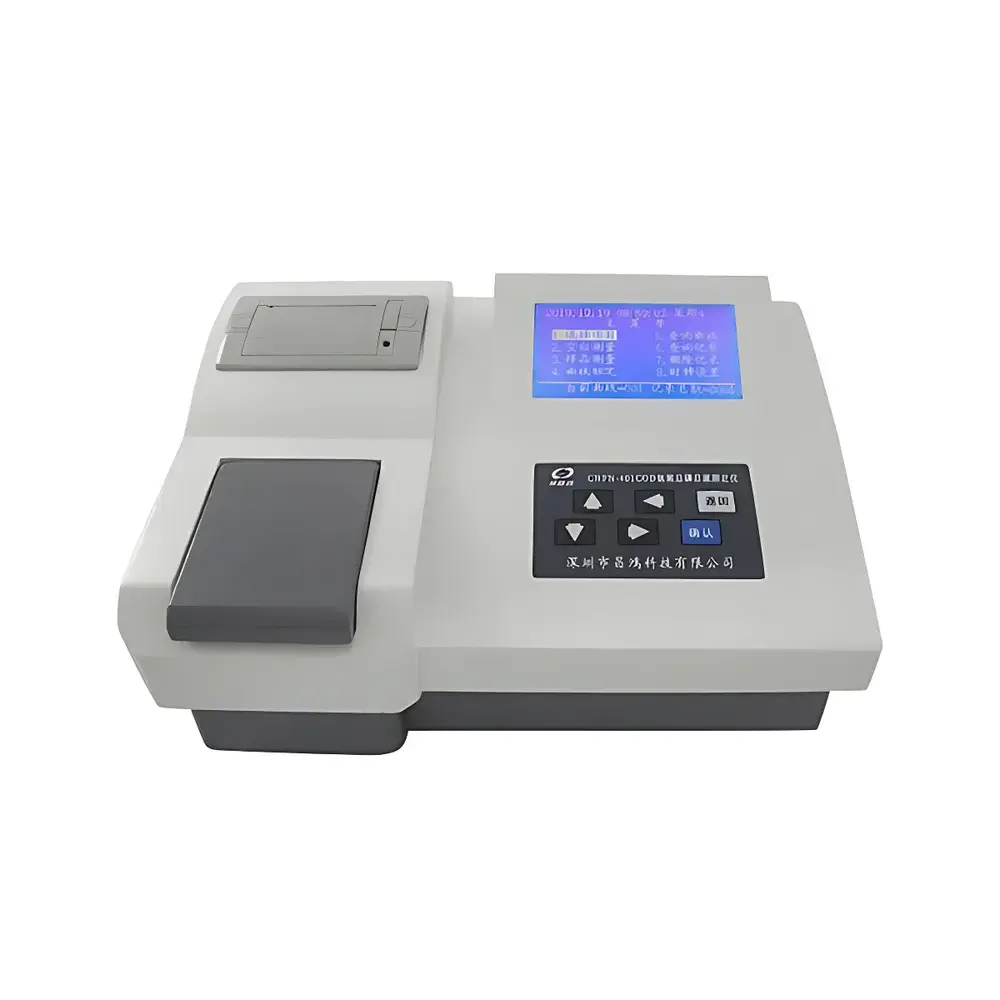
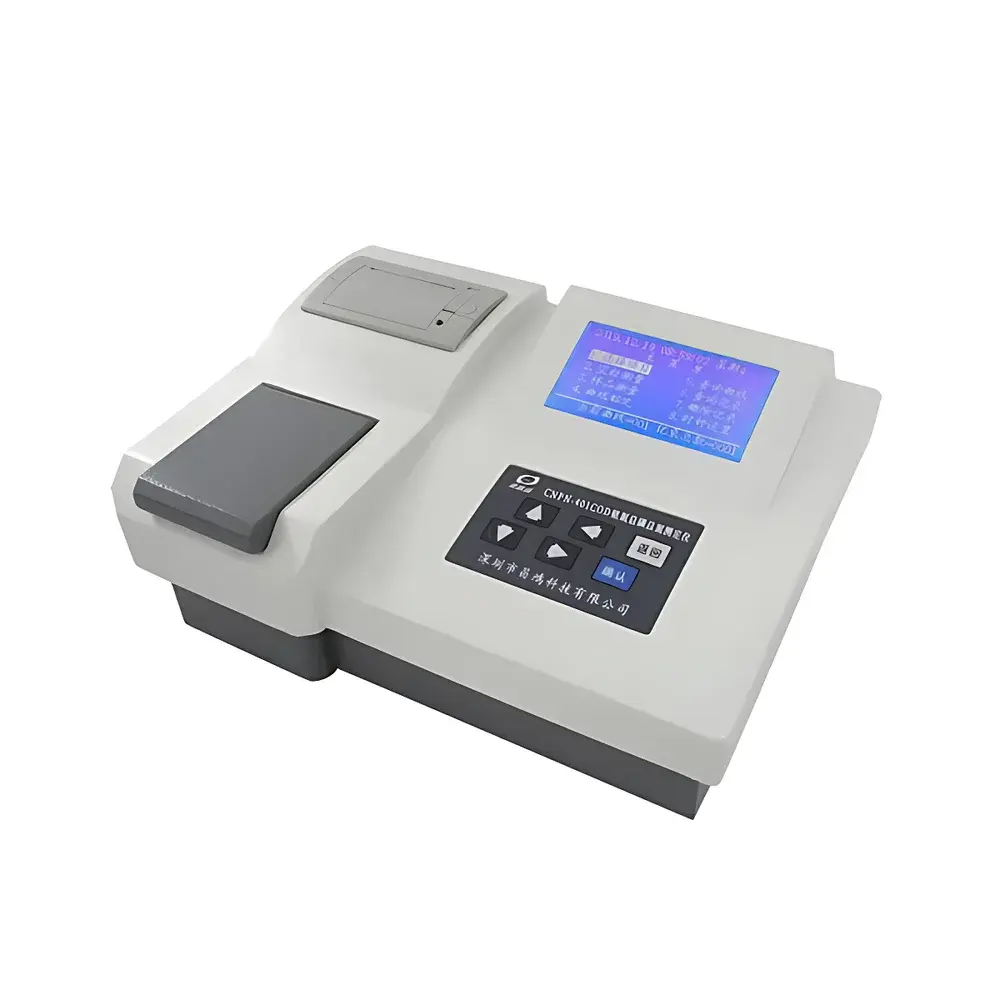
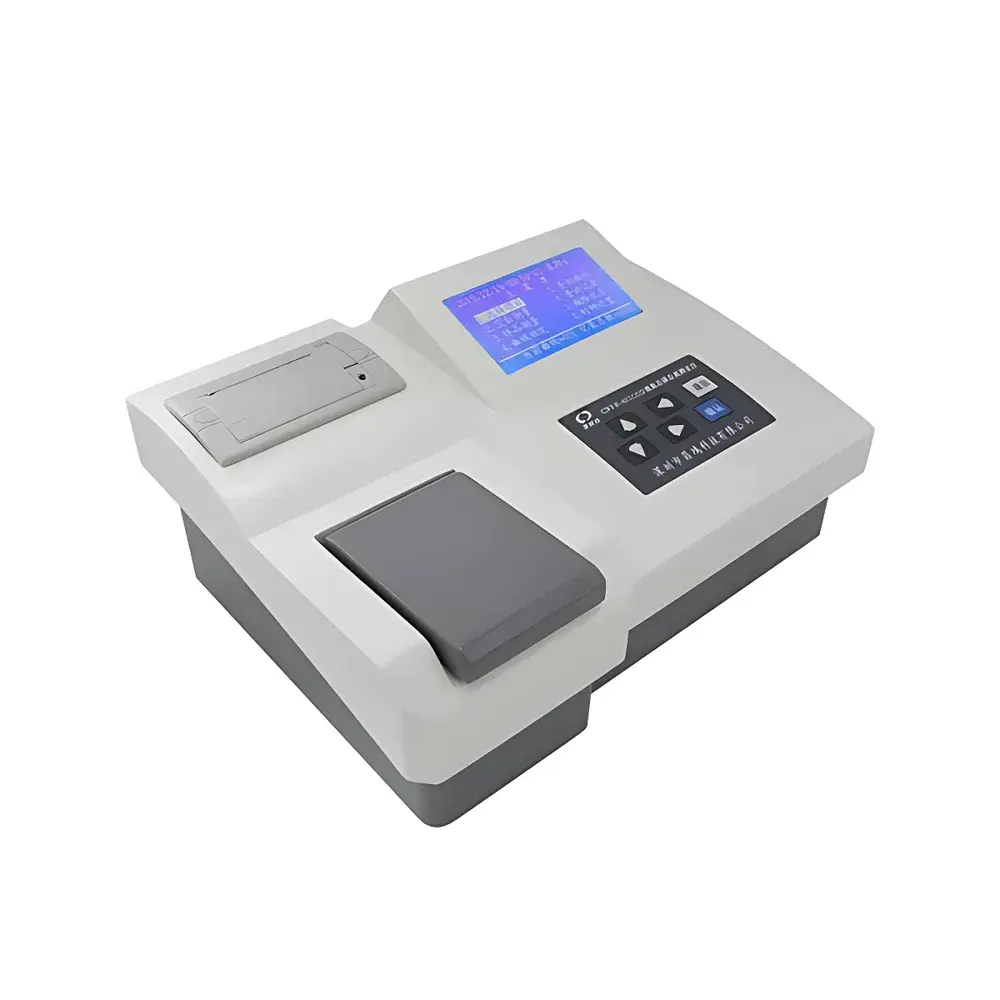
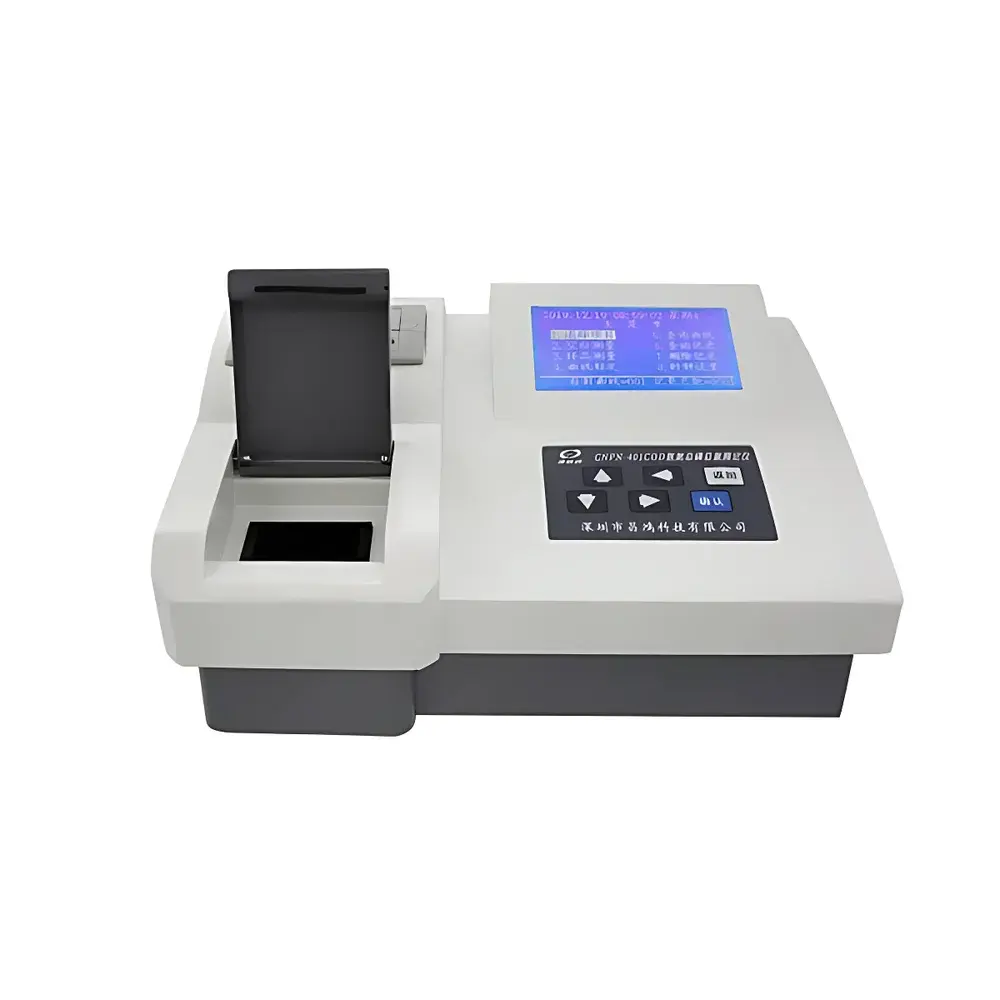
Shenchanghong CNPN-401 Multi-Parameter Water Quality Analyzer for COD, Ammonia Nitrogen, Total Phosphorus and Total Nitrogen
| Brand | Shenchanghong |
|---|---|
| Origin | Guangdong, China |
| Manufacturer Type | OEM/ODM Producer |
| Product Category | Domestic Lab-Based Water Quality Analyzer |
| Model | CNPN-401 |
| Detection Parameters | COD, Ammonia Nitrogen (NH₃-N), Total Phosphorus (TP), Total Nitrogen (TN) |
| Measurement Range (COD) | 5–2000 mg/L |
| (NH₃-N) | 0.02–25 mg/L |
| (TP) | 0.00–10 mg/L |
| (TN) | 0.05–100 mg/L |
| Accuracy | COD ≤ ±5% |
| Repeatability | ≤3% RSD |
| Optical Drift | <0.002 A in 20 min |
| Chloride Interference Tolerance (COD) | ≤2000 mg/L Cl⁻ |
| Dimensions (Analyzer) | 340 × 250 × 130 mm |
| Weight (Analyzer) | 4 kg |
| Power Consumption (Analyzer) | <10 W |
| Digestion Unit Options | DIS-16B / DIS-20B / DIS-25B / DIS-36B |
| Digestion Temp Range | Ambient to 200 °C |
| PID Temperature Control Accuracy | ±0.5 °C |
| Digestion Time Range | 1–999 min |
| Standard Digestion Protocols | COD @ 165 °C / 15 min |
| Batch Capacity | 16–36 samples |
| Display | 3.5″ color TFT touchscreen (320 × 240 px), bilingual (English & Chinese) UI |
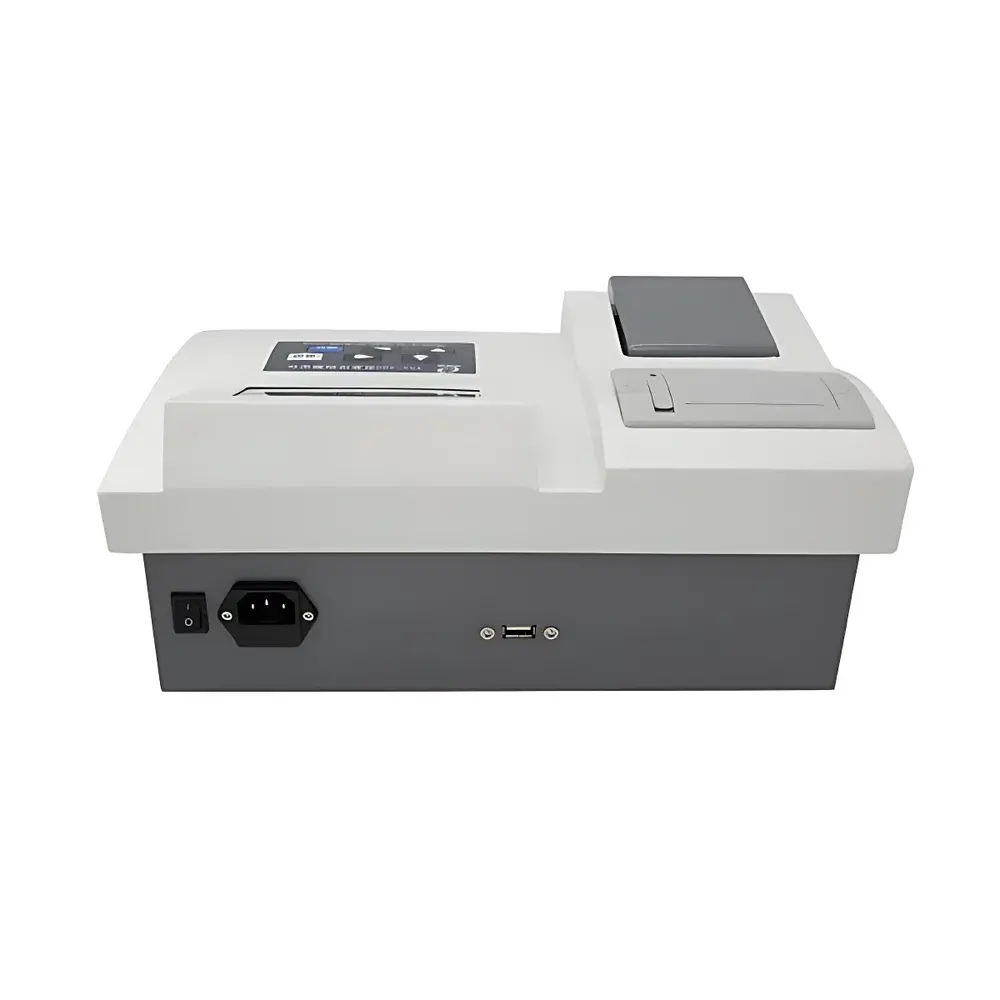
| Data Output | Built-in thermal printer + USB 2.0 interface |
| Memory | 20 calibration curves per parameter + 400 measurement records (non-volatile storage) |
| Digestion/Colorimetric Tube | Reusable quartz-glass composite tube (high thermal & mechanical stability) |
Overview
The Shenchanghong CNPN-401 is a benchtop multi-parameter water quality analyzer engineered for precise, standardized quantification of four critical parameters in wastewater, surface water, and effluent samples: Chemical Oxygen Demand (COD), Ammonia Nitrogen (NH₃-N), Total Phosphorus (TP), and Total Nitrogen (TN). It operates on the principle of spectrophotometric colorimetry—utilizing narrow-band interference optical filtering and high-stability cold-light sources—to convert analyte-specific chromogenic reactions into absorbance values, which are then converted to concentration via pre-programmed calibration algorithms. The system separates sample digestion and optical measurement into two physically independent modules: a thermally regulated digestion unit (DIS-series) and a dedicated photometric analyzer. This architecture eliminates thermal cross-talk and ensures long-term optical stability—critical for compliance with ISO 8467 (COD), ISO 7150-1 (NH₃-N), ISO 6878 (TP), and ISO 11905-1 (TN) methodologies. Designed for routine laboratory use in municipal wastewater treatment plants, environmental monitoring stations, and industrial QA/QC labs, the CNPN-401 supports method flexibility, audit-ready data integrity, and reproducible results across diverse matrix types.
Key Features
- Modular design: Independent digestion and photometric units prevent thermal drift from affecting optical path stability.
- High-fidelity optical system: Imported long-life cold-light source combined with precision narrow-band interference filters ensures ≤0.002 A absorbance drift over 20 minutes.
- Programmable digestion protocols: PID-controlled temperature accuracy of ±0.5 °C and adjustable time (1–999 min) enable method adaptation beyond standard EPA 410.4, ISO 6060 (COD), and HACH-approved TN/TP digestion conditions.
- Dual-mode data handling: Integrated thermal printer supports immediate hardcopy reporting; USB 2.0 interface enables secure export of raw absorbance values, calibration metadata, and timestamped results to external PCs.
- Robust consumables: Reusable digestion/colorimetric tubes—engineered from high-purity quartz-glass composites—resist thermal shock up to 200 °C and repeated acid digestion cycles without spectral degradation.
- Non-volatile memory architecture: Stores up to 20 user-defined calibration curves per parameter and 400 measurement records with full traceability—including date/time stamp, operator ID (via optional login), and method version identifier.
Sample Compatibility & Compliance
The CNPN-401 is validated for use with domestic and industrial wastewater, treated effluent, river/lake water, and groundwater samples containing chloride concentrations up to 2000 mg/L (for COD determination using dichromate oxidation). Its optical and thermal specifications align with internationally recognized performance benchmarks: repeatability ≤3% RSD meets ISO/IEC 17025 intra-laboratory precision requirements; accuracy tolerances satisfy ASTM D1252 (COD), APHA 4500-NH₃ B (ammonia), and ISO 15681-1 (phosphorus). While not certified under FDA 21 CFR Part 11, the instrument’s audit trail capabilities—including immutable record timestamps, firmware-locked calibration history, and USB-exportable .csv logs—support GLP-compliant documentation workflows. All digestion protocols comply with standard regulatory heating profiles for oxidizable nitrogen and phosphorus species, minimizing interference from nitrite, organic nitrogen, and condensed phosphates.
Software & Data Management
The embedded firmware features a bilingual (English/Chinese) menu-driven interface rendered on a 3.5″ resistive touchscreen (320 × 240 px resolution). No external PC is required for operation: calibration curve generation, sample measurement, and report generation occur entirely onboard. Each parameter maintains its own independent calibration library—up to 20 curves per analyte—with automatic selection based on range and matrix type. All stored measurements include metadata: sample ID, digestion protocol used, operator tag (if enabled), ambient temperature, and instrument serial number. Data export via USB produces tab-delimited text files compatible with LIMS integration, Excel-based QA review, or statistical process control (SPC) software. Firmware updates are performed via USB stick, preserving all user calibrations and historical records during revision cycles.
Applications
- Wastewater treatment plant (WWTP) process control: Real-time monitoring of influent/effluent COD, NH₃-N, TP, and TN to optimize biological nutrient removal (BNR) and chemical dosing.
- Environmental regulatory compliance: Routine analysis for discharge permits under national standards (e.g., China’s GB 8978-1996, EU Urban Wastewater Treatment Directive).
- Industrial pretreatment verification: Quantifying pollutant loadings from electroplating, food processing, pharmaceutical, and textile facilities prior to sewer discharge.
- Research and education: Teaching laboratories use the CNPN-401 to demonstrate redox titration principles (COD), indophenol blue formation (NH₃-N), ascorbic acid reduction (TP), and alkaline persulfate digestion (TN).
- Field-deployable lab support: Compact footprint (340 × 250 × 130 mm) and low power draw (<10 W) allow integration into mobile environmental testing units.
FAQ
Does the CNPN-401 require annual recalibration by the manufacturer?
No. Users can perform full optical and electronic calibration using supplied NIST-traceable standard solutions. Factory calibration certificates are provided with each unit; recalibration intervals depend on usage frequency and QC protocol—typically every 3–6 months for high-throughput labs.
Can the instrument measure nitrate or nitrite separately?
No. The CNPN-401 quantifies total nitrogen (TN) only, via alkaline persulfate digestion followed by UV spectrophotometry at 220 nm. Separate nitrate/nitrite analysis requires dedicated ion chromatography or selective electrode systems.
Is the digestion tube compatible with Hach DR3900 or similar spectrophotometers?
Yes—tubes meet standard 16 mm outer diameter and 100 mm height specifications, enabling cross-platform use with most benchtop spectrophotometers supporting 10 mm or 20 mm pathlength cuvettes.
What happens to stored data during a power outage?
All calibration curves and measurement records reside in non-volatile flash memory; no battery backup is required. Data integrity is preserved indefinitely without external power.
Are reagents supplied with the instrument compliant with ISO-certified methods?
Yes. Included COD (dichromate-based), ammonia (salicylate), total phosphorus (ascorbic acid/molybdate), and total nitrogen (alkaline persulfate) reagent kits are formulated to match ISO 6060, ISO 7150-1, ISO 6878, and ISO 11905-1 reaction stoichiometries and sensitivity ranges.







