
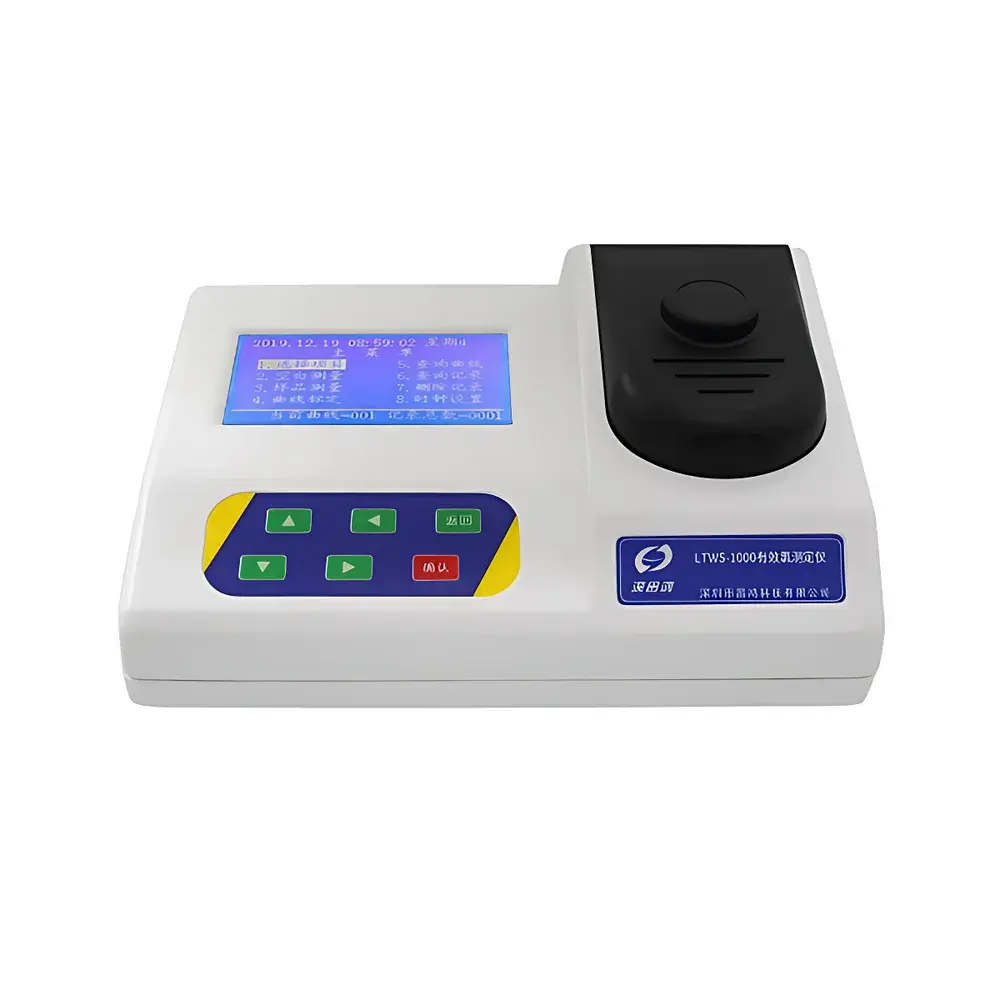
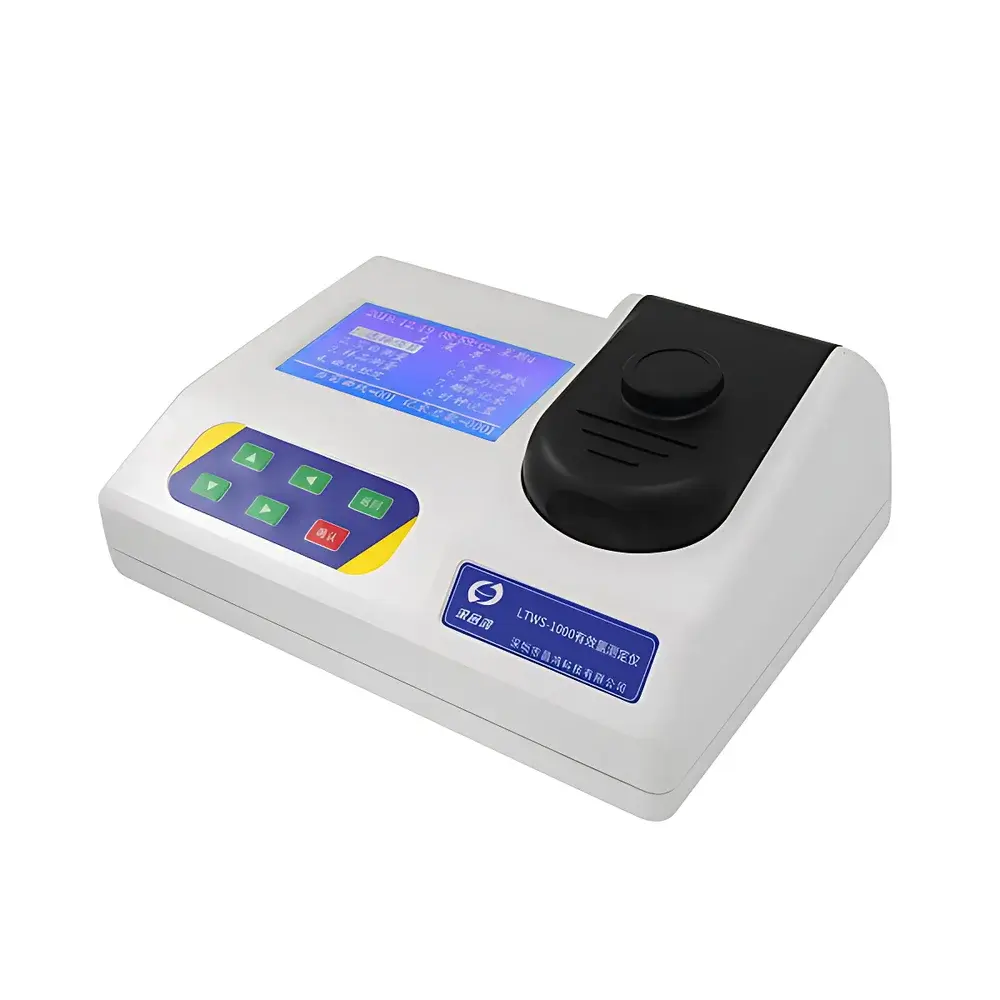
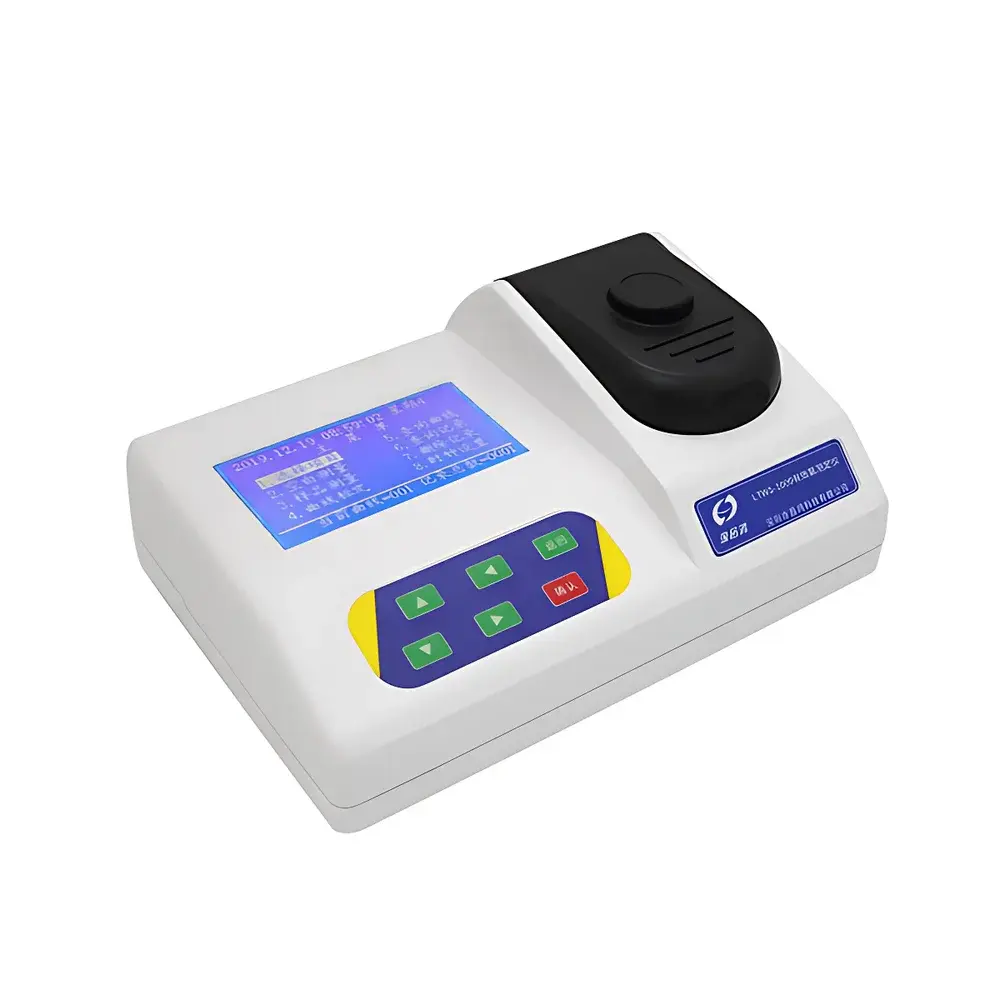
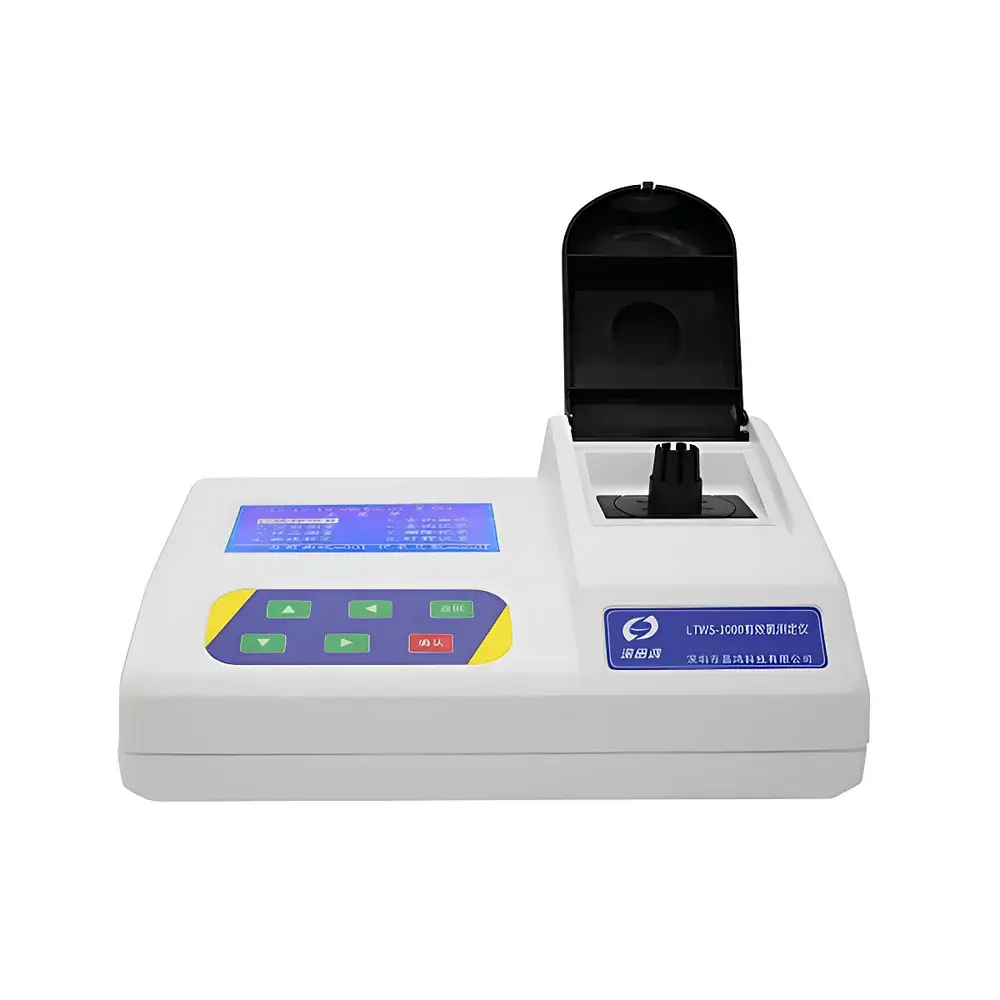
Shenchanghong LTWS-1000 Residual Chlorine Analyzer
| Brand | Shenchanghong |
|---|---|
| Model | LTWS-1000 |
| Measurement Range | 0.00–100.00 mg/L |
| Accuracy | ≤±5% F.S. |
| Repeatability | ≤3% |
| Optical Drift | <0.002 A in 20 min |
| Dimensions (H×W×D) | 266 mm × 200 mm × 130 mm |
| Weight | 1000 g |
| Operating Temperature | 5–40 °C |
| Relative Humidity | ≤85% RH |
| Power Supply | 4 × AA batteries |
| Data Storage | 20 calibration curves + 199 timestamped measurement records (residual chlorine, absorbance, transmittance) |
| IP Rating | IP65 |
| Optical System | Cold light source with narrow-band interference filter |
Overview
The Shenchanghong LTWS-1000 Residual Chlorine Analyzer is a portable, field-deployable photometric instrument engineered for rapid, on-site quantification of free and total residual chlorine in aqueous samples. It operates on the principle of DPD (N,N-diethyl-p-phenylenediamine) colorimetric reaction—where residual chlorine oxidizes DPD to form a stable magenta-colored compound—and measures absorbance at 515 nm using a narrow-band interference optical system. This method complies with standard protocols referenced in ISO 7393-2:2018 (Water quality — Determination of free chlorine and total chlorine — Part 2: Colorimetric method using N,N-diethyl-p-phenylenediamine), APHA Standard Methods 4500-Cl G, and US EPA Method 334.0. The analyzer integrates a low-power 16-bit microcontroller architecture and cold LED illumination to ensure long-term stability, minimal thermal drift, and consistent photometric performance under variable ambient conditions.
Key Features
- High-stability optical platform featuring a cold LED light source and precision narrow-band interference filter centered at 515 nm—eliminating spectral interference and enhancing selectivity for DPD-derived chromophores.
- Large backlit LCD display with intuitive menu navigation, enabling real-time visualization of concentration values (mg/L), absorbance (A), transmittance (%T), and full timestamp metadata (year/month/day/hour/minute/second).
- Ruggedized housing constructed from injection-molded ABS polymer with IP65-rated ingress protection—providing reliable operation in humid, dusty, or splash-prone environments typical of wastewater plants, distribution networks, and industrial process lines.
- Embedded non-volatile memory retains up to 20 user-defined calibration curves and 199 fully timestamped measurement records—including residual chlorine concentration, raw absorbance, and transmittance—without reliance on external storage or cloud connectivity.
- Low-power design powered by four standard AA alkaline batteries, supporting continuous operation for >10,000 measurements per set under typical usage (based on 10-second measurement cycles and 30-second standby intervals).
- Integrated data integrity safeguards including automatic power-loss recovery and EEPROM-based parameter retention—ensuring no loss of calibration settings or historical records during unexpected shutdowns.
Sample Compatibility & Compliance
The LTWS-1000 is validated for use with clarified, low-turbidity water matrices including potable water, treated effluent, swimming pool water, cooling tower makeup, and disinfection contact tank samples. It accommodates standard 10 mm pathlength cuvettes (glass or disposable plastic) and supports both manual reagent addition and pre-packaged DPD tablet formats. While not intended for highly turbid, colored, or high-oxidant matrixes without pretreatment, it meets functional equivalency requirements for routine compliance monitoring under national drinking water regulations (e.g., China’s GB 5749-2022, U.S. EPA Safe Drinking Water Act Tier 1 reporting thresholds). Its optical stability (<0.002 A drift over 20 minutes) satisfies GLP-aligned instrument qualification criteria for field-use photometers in environmental laboratories.
Software & Data Management
No proprietary PC software or driver installation is required. All calibration, measurement, and data review functions are executed locally via the onboard interface. Calibration curves may be generated using up to six standard points across the 0.00–100.00 mg/L range; linear, quadratic, or user-defined polynomial fitting is supported. Timestamped records include ISO 8601-compliant date/time stamps and are exportable only via manual transcription—consistent with audit-trail minimalism appropriate for non-21 CFR Part 11 environments. For laboratories operating under regulated frameworks (e.g., ISO/IEC 17025), the device supports documented instrument verification through daily zero-check and span-check procedures using certified reference standards traceable to NIST SRM 2825.
Applications
- Real-time verification of chlorine residual at water treatment plant final effluent points and distribution system entry nodes.
- Disinfection efficacy monitoring in food processing rinse water, beverage line sanitization loops, and pharmaceutical clean-in-place (CIP) validation.
- Field assessment of chlorination performance in municipal wastewater disinfection channels and hospital effluent dechlorination units.
- Quality control of chlorine-based biocides in cooling water systems, pulp & paper bleach plant sidestreams, and aquaculture recirculation tanks.
- Educational use in environmental science laboratories for method validation, inter-laboratory comparison exercises, and student-led water safety projects.
FAQ
What chlorine species does the LTWS-1000 measure?
It quantifies total residual chlorine (free chlorine + combined chlorine) when used with standard DPD Method 1. Free chlorine alone can be measured using DPD Method 2 with iodide suppression—though method selection requires appropriate reagent kits not included with the base instrument.
Is the instrument suitable for regulatory reporting?
Yes, when operated according to ISO 7393-2 or APHA 4500-Cl G protocols and verified with traceable standards, its performance meets data quality objectives for Tier 1 compliance monitoring in most national frameworks.
How often must the optical system be recalibrated?
Factory calibration remains stable for ≥12 months under normal field use; however, users should perform a zero and span check before each sampling session using deionized water and a mid-range certified standard (e.g., 2.00 ± 0.05 mg/L Cl₂).
Can the LTWS-1000 connect to LIMS or export data digitally?
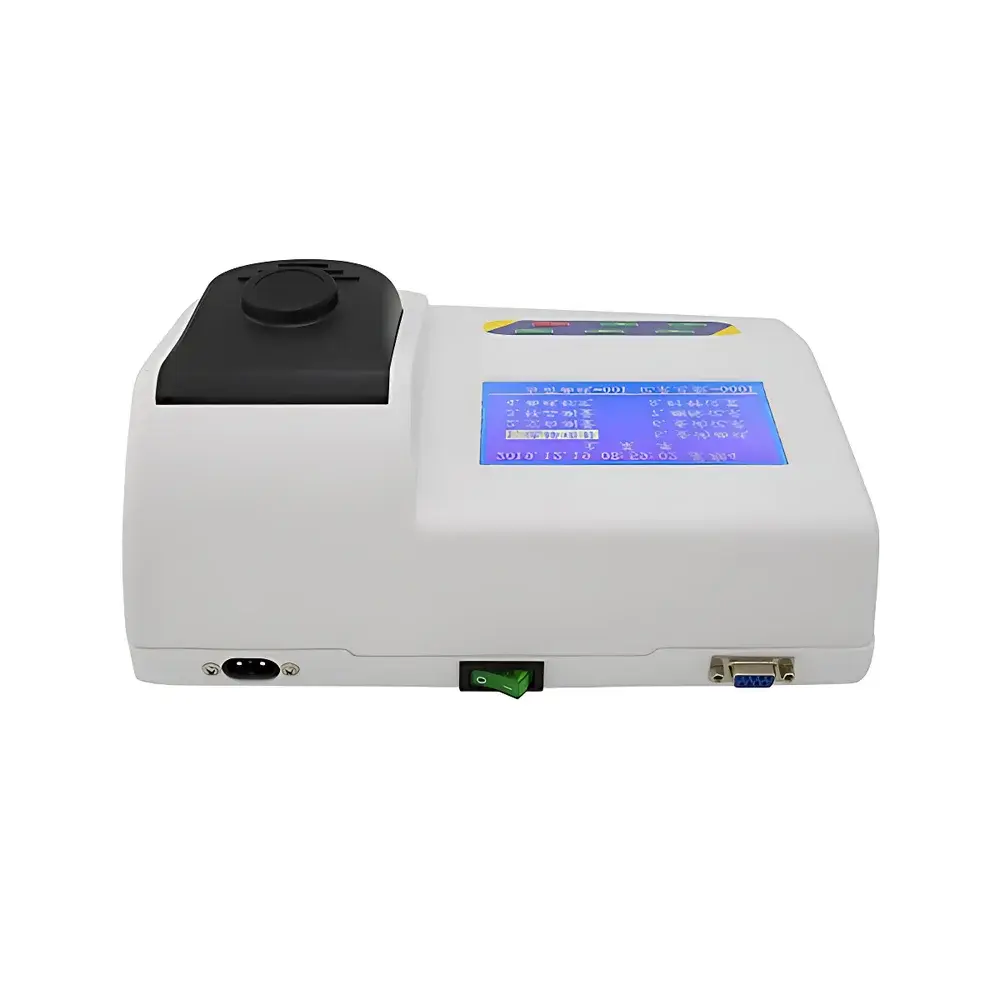
No—it lacks USB, Bluetooth, or RS-232 interfaces. Data transfer relies on manual recording or optional third-party barcode-assisted logging solutions compatible with its display output.
What maintenance is required?
Routine cleaning of the cuvette chamber and optical window with lint-free tissue and isopropyl alcohol; annual inspection of battery contacts and seal integrity for IP65 compliance. No alignment or lamp replacement is needed—the LED light source has a rated lifetime exceeding 50,000 hours.
Related Products







