
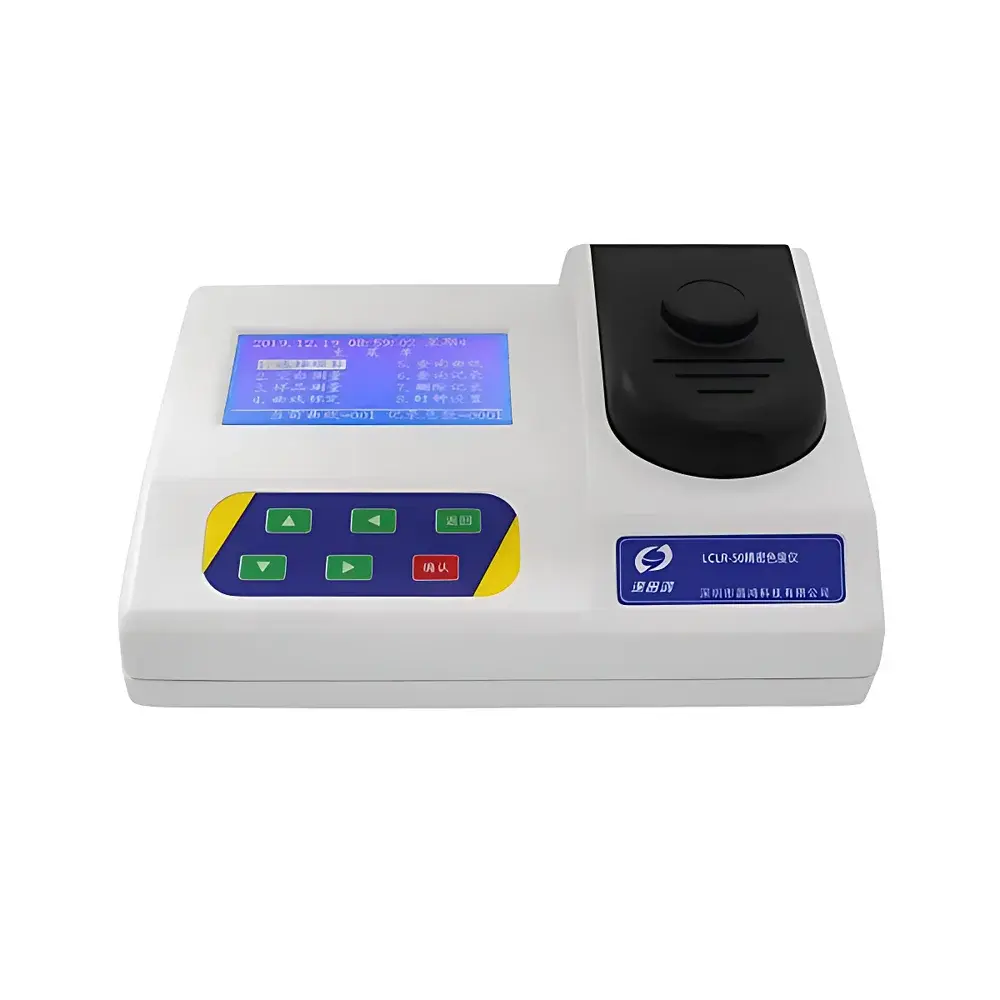
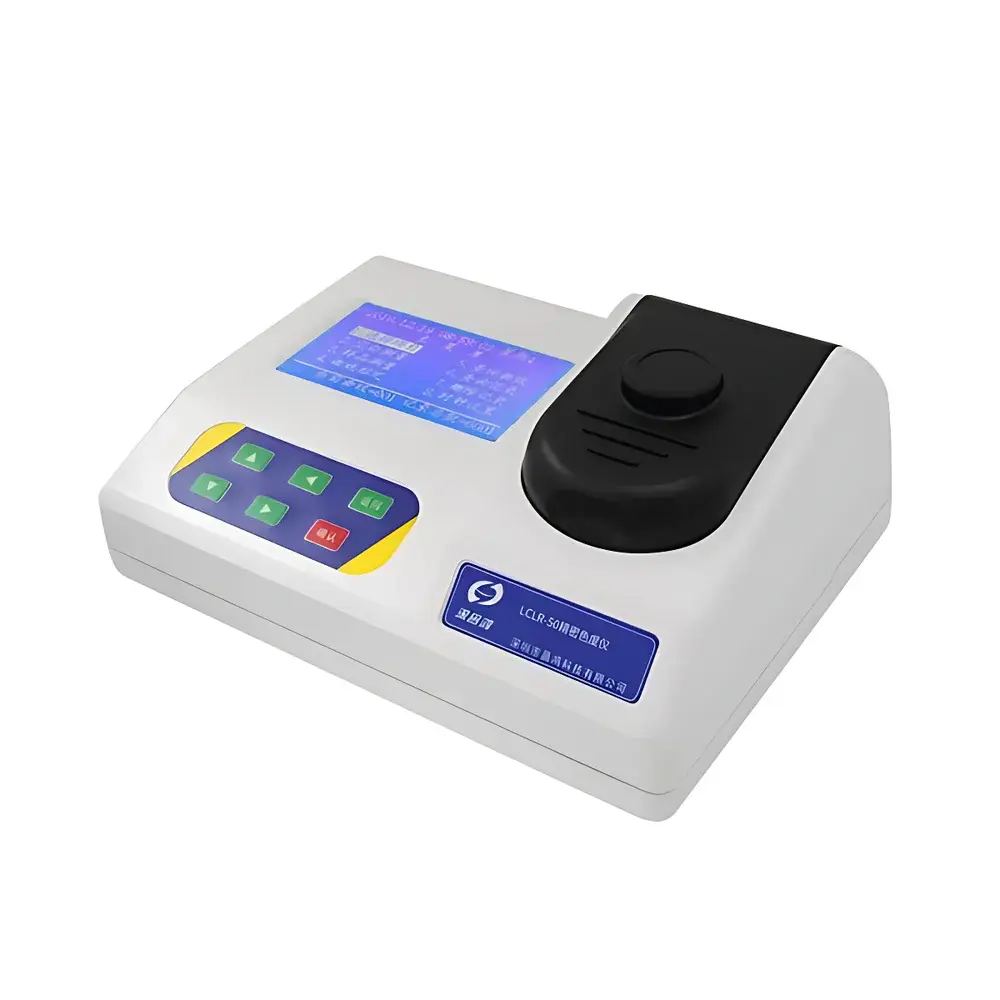
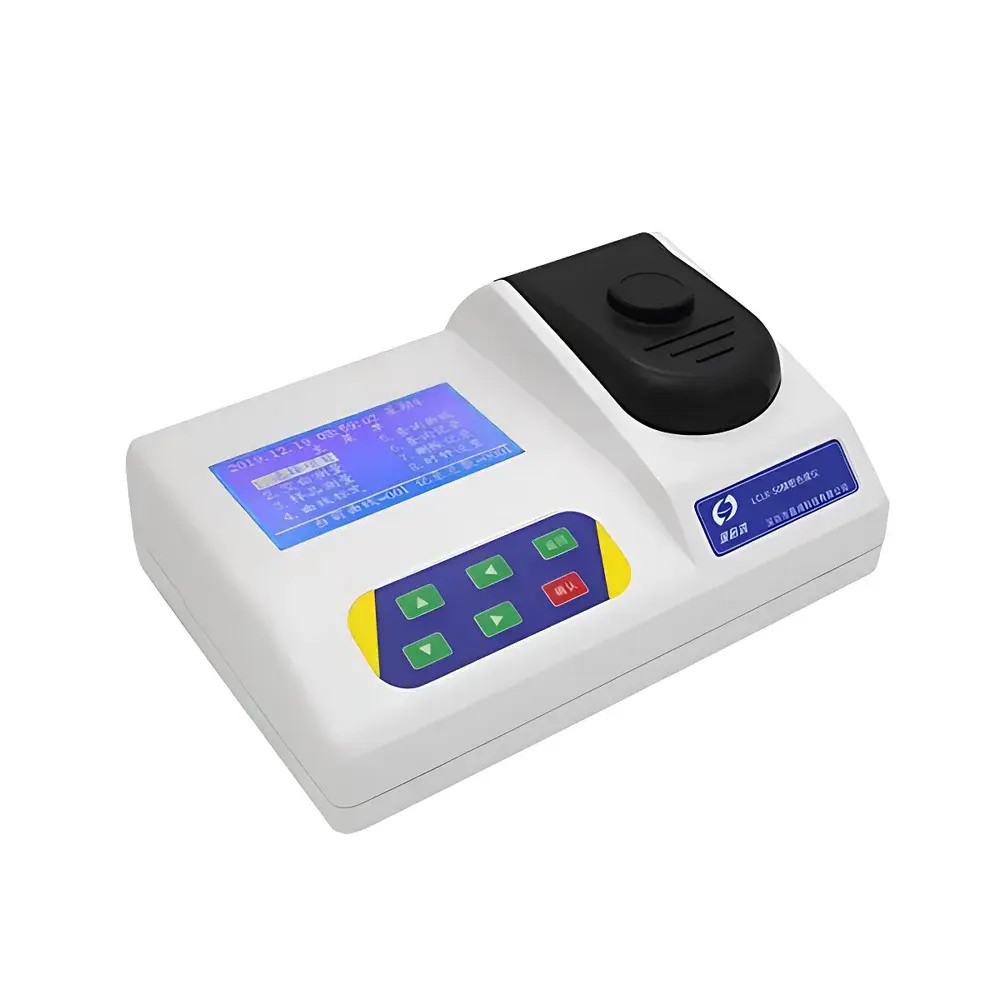
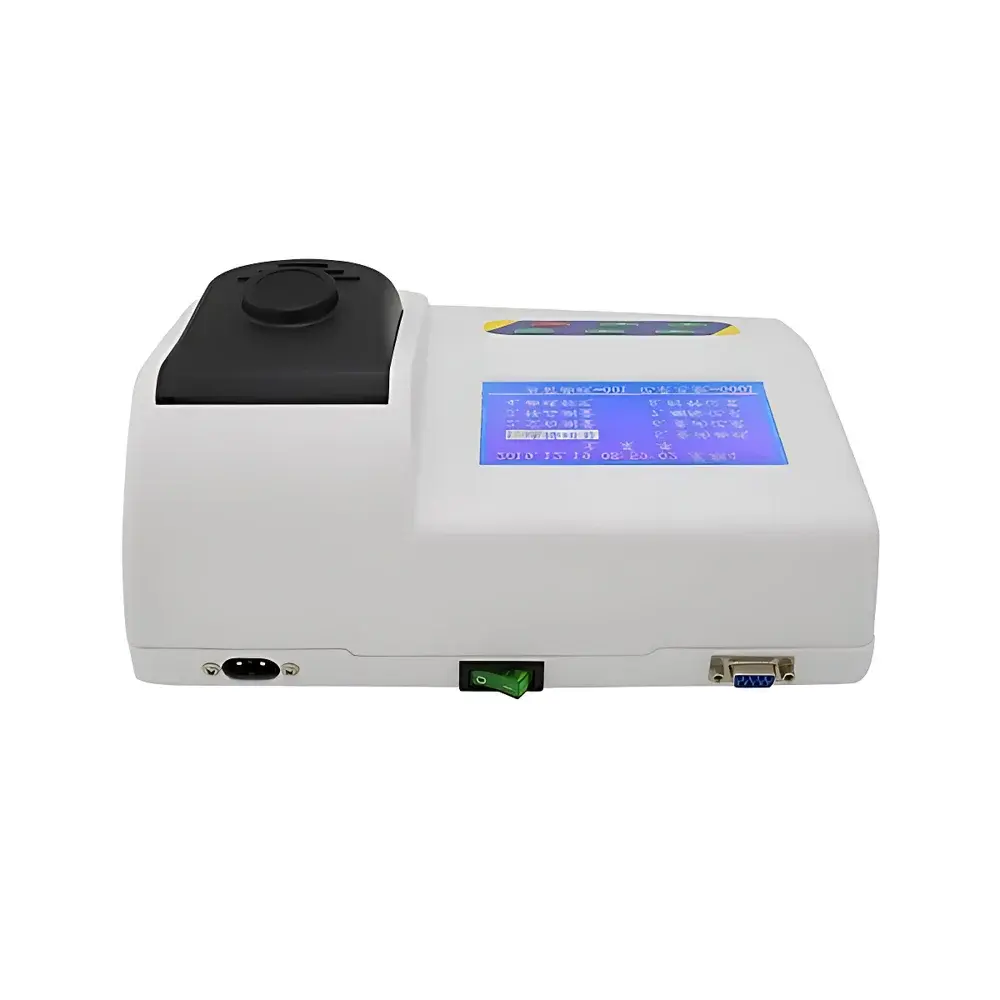
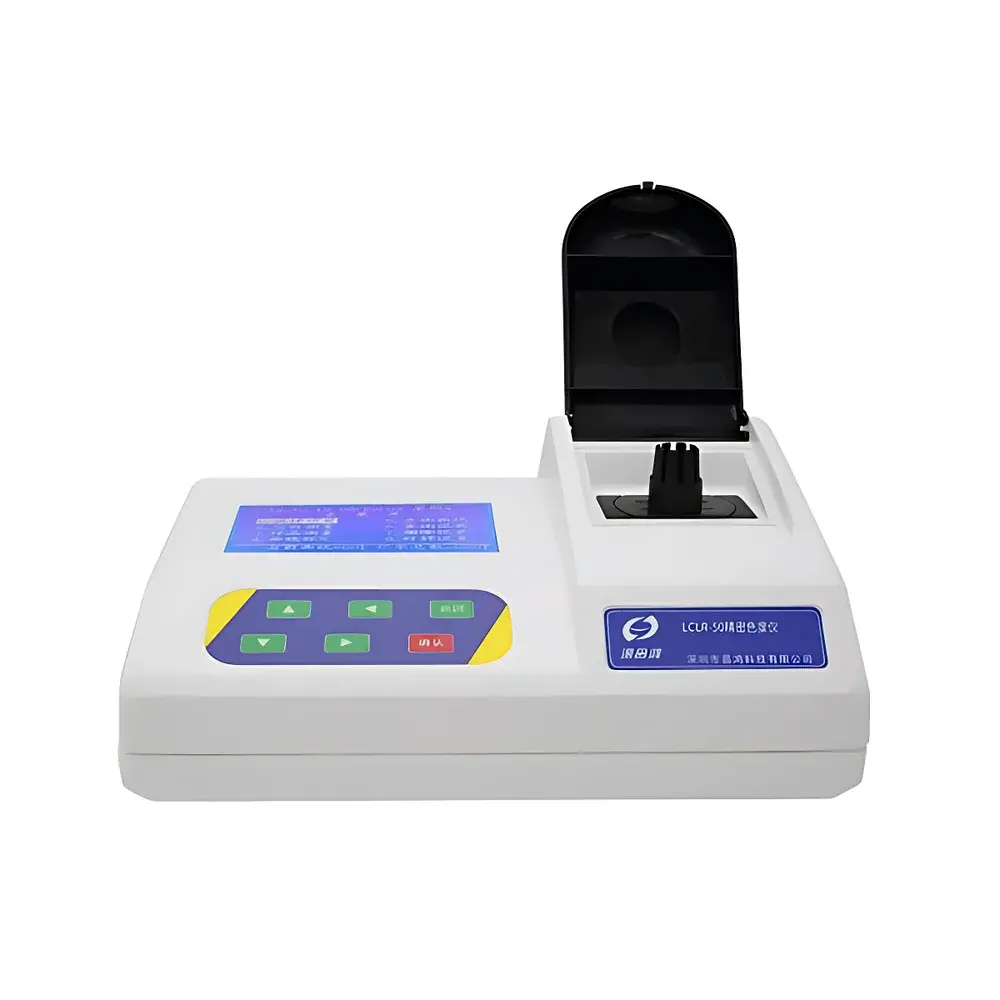
Shenchanghong LCLR-50 Precision Colorimeter
| Brand | Shenchanghong |
|---|---|
| Origin | Guangdong, China |
| Manufacturer Type | Manufacturer |
| Origin Category | Domestic (China) |
| Model | LCLR-50 |
| Price | USD 420 (est.) |
| Measurement Range | 0.00–100 PCU |
| Resolution | 0.01 PCU |
| Basic Error | ±3% F.S. |
| Repeatability | ≤3% |
| Optical Stability | Absorbance drift <0.002 A within 20 min |
| Dimensions (H×W×D) | 266 mm × 200 mm × 130 mm |
| Weight | 1.0 kg |
| Operating Temperature | 5–40 °C |
| Relative Humidity | ≤85% RH |
| Power Supply | AC (220 ± 22) V, (50 ± 0.5) Hz |
| Light Source Lifetime | 100,000 hours |
| Filter System | Narrow-band optical interference filters |
| Compliance | GB/T 5750.4–2006 (Platinum-Cobalt Colorimetric Method) |
Overview
The Shenchanghong LCLR-50 Precision Colorimeter is a benchtop optical measurement instrument engineered for accurate, repeatable determination of color in aqueous samples using the standardized Platinum-Cobalt (Pt-Co) colorimetric method. It operates on the principle of absorbance photometry at a fixed wavelength—typically centered near 455 nm—where the intensity of transmitted light through a sample is quantified relative to a reference standard solution. The instrument implements GB/T 5750.4–2006, China’s national standard for drinking water quality testing, which aligns closely with ISO 7887 and ASTM D1209 for platinum-cobalt hue measurement. Its optical architecture integrates a high-stability, long-life (100,000-hour) imported LED light source and precision narrow-band interference filters to minimize spectral crosstalk and ambient light interference. This design ensures robust performance under routine laboratory or field-deployed environmental monitoring conditions—particularly where low-level color detection (0.00–100 PCU) and trace-level repeatability (<3% RSD) are required.
Key Features
- High-stability optical path with drift <0.002 A over 20 minutes—enabling reliable batch analysis without frequent recalibration.
- Narrow-band optical filtering system optimized for Pt-Co spectral response, reducing interferences from turbidity or chromophore overlap.
- Large-backlit LCD display with intuitive Chinese-language menu navigation—designed for ease of use by QC technicians and field operators without advanced spectroscopy training.
- Dual calibration capability: factory-preloaded Pt-Co reference curve plus user-definable calibration points for custom standards or matrix-matched validation.
- Compact, corrosion-resistant ABS housing rated for humid or chemically exposed environments typical of water treatment labs and municipal testing facilities.
- Low-power 16-bit microcontroller architecture ensuring stable firmware execution, minimal thermal drift, and extended operational uptime.
Sample Compatibility & Compliance
The LCLR-50 is validated for transparent, low-turbidity aqueous matrices including potable water, surface water, groundwater, and treated effluent. Samples must be free of suspended solids (recommended filtration via 0.45 µm membrane prior to measurement) and free of strong oxidants or reducing agents that may alter Co²⁺/PtCl₆²⁻ stability. The instrument conforms to GB/T 5750.4–2006, which defines color units (PCU) based on serial dilutions of potassium chloroplatinate and cobaltous chloride solutions. While not certified to ISO/IEC 17025 or accredited per GLP, its performance specifications—including ±3% full-scale accuracy and ≤3% repeatability—are consistent with routine compliance screening requirements under national drinking water regulations. It supports documentation workflows compatible with basic audit trails and manual record-keeping; however, it does not implement electronic signature or 21 CFR Part 11-compliant data integrity features.
Software & Data Management
The LCLR-50 operates as a standalone embedded system with no external PC dependency. All measurement data—including date/time stamp, PCU value, and calibration ID—are stored internally in non-volatile memory for up to 500 test records. Data export is manual: users may transcribe values into LIMS or Excel via visual readout. No proprietary software, USB interface, or Bluetooth connectivity is provided. Calibration curves are retained across power cycles, and the unit supports two independent curve sets—one pre-programmed and one user-defined—to accommodate regional standard variations or internal QA/QC protocols. Firmware updates are not field-upgradable; revisions require return-to-factory service.
Applications
- Routine color assessment in municipal drinking water quality control laboratories per national regulatory mandates.
- Monitoring color removal efficiency in coagulation/flocculation and activated carbon treatment stages.
- Field-based verification of raw water intake quality before disinfection or distribution.
- Educational use in environmental science and analytical chemistry curricula for teaching standardized colorimetric methodology.
- Supporting ISO 22192 (water quality — determination of color) alignment in multi-lab collaborative studies where Pt-Co equivalence is required.
FAQ
What color standard does the LCLR-50 implement?
It follows GB/T 5750.4–2006, the Chinese national standard for platinum-cobalt colorimetry, equivalent to ISO 7887 and ASTM D1209.
Can the instrument measure beyond 100 PCU?
No—the linear dynamic range is strictly 0.00–100 PCU. Samples exceeding this range must be diluted with deionized water and results multiplied accordingly.
Is the device suitable for wastewater or industrial effluent?
Only if turbidity is <1 NTU and interfering ions (e.g., Fe³⁺, Mn²⁺, ClO⁻) are absent or masked; otherwise, spectrophotometric methods with multi-wavelength correction are recommended.
Does it support automatic wavelength selection or spectral scanning?
No—it is a fixed-wavelength colorimeter, not a spectrophotometer. It uses a single narrow-band optical channel centered at ~455 nm.
What maintenance is required for long-term accuracy?
Annual verification against NIST-traceable Pt-Co standards is recommended; cleaning of cuvette holders and optical windows with lint-free wipes and isopropanol every 3 months maintains baseline stability.



