
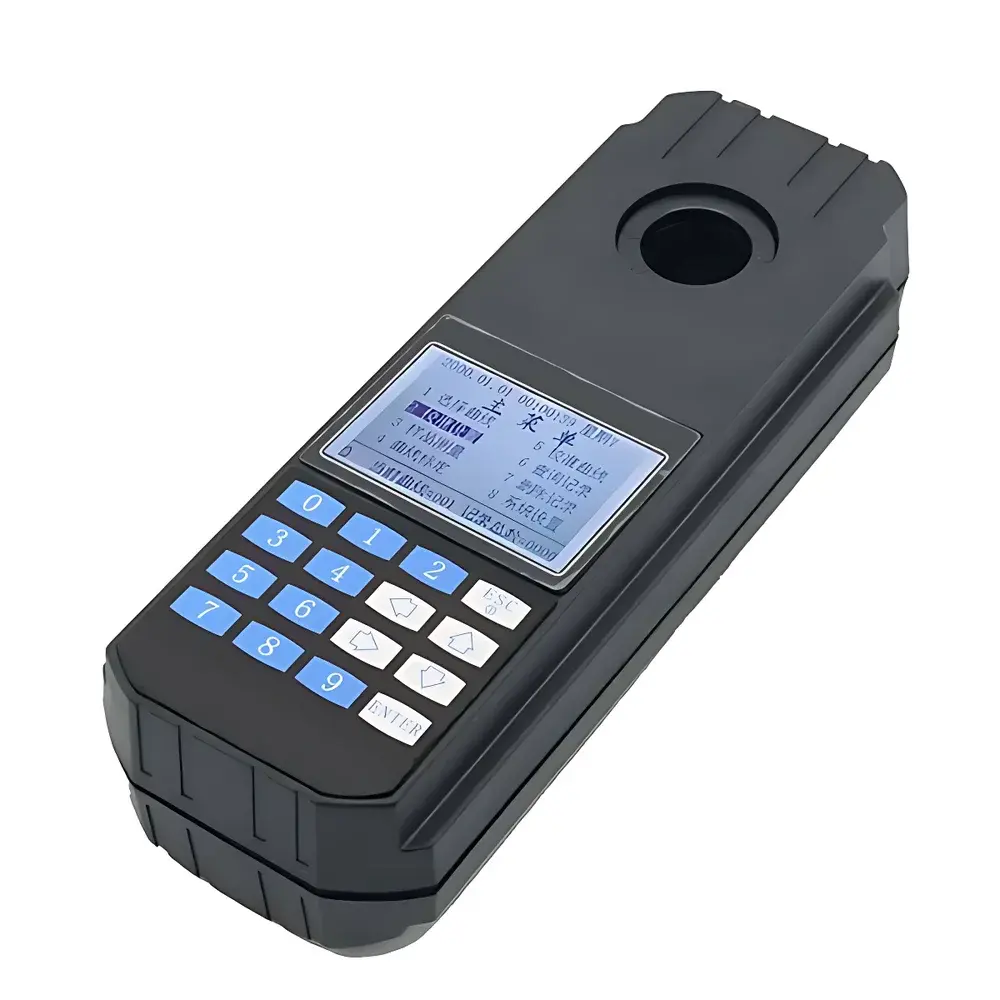
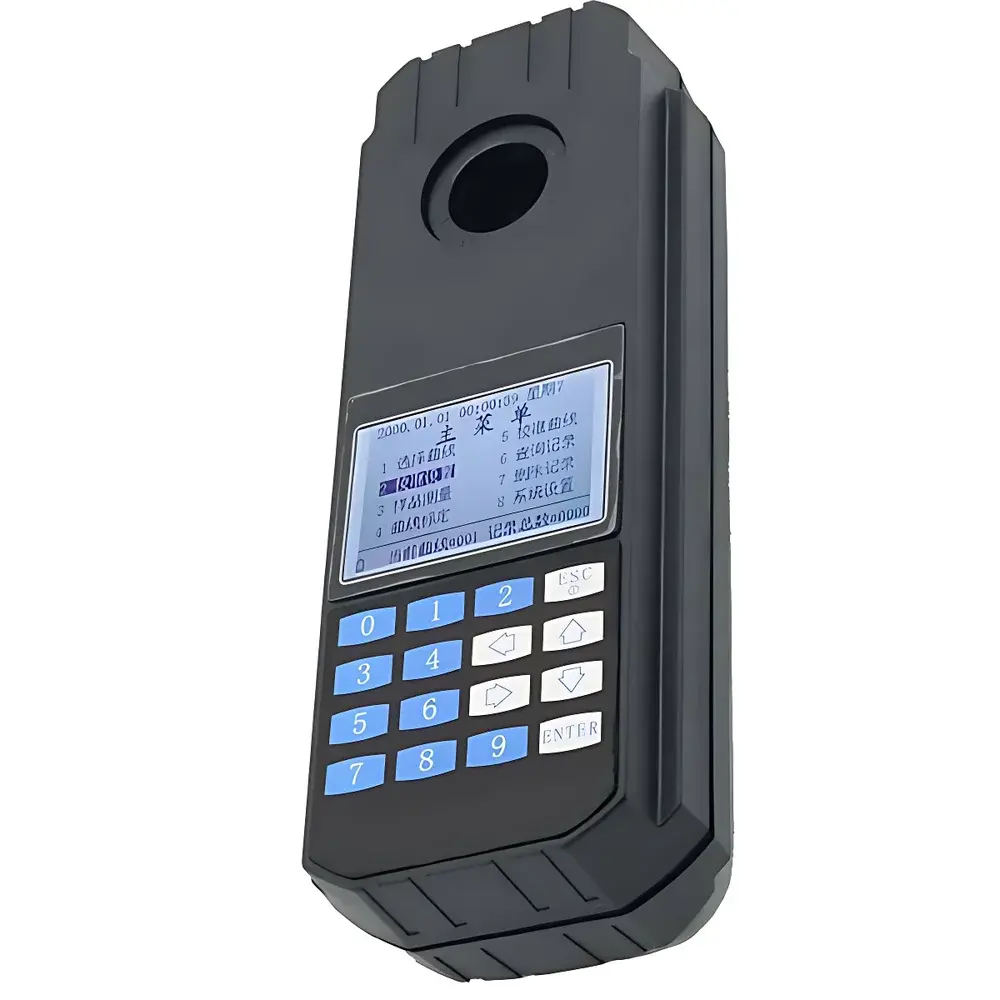
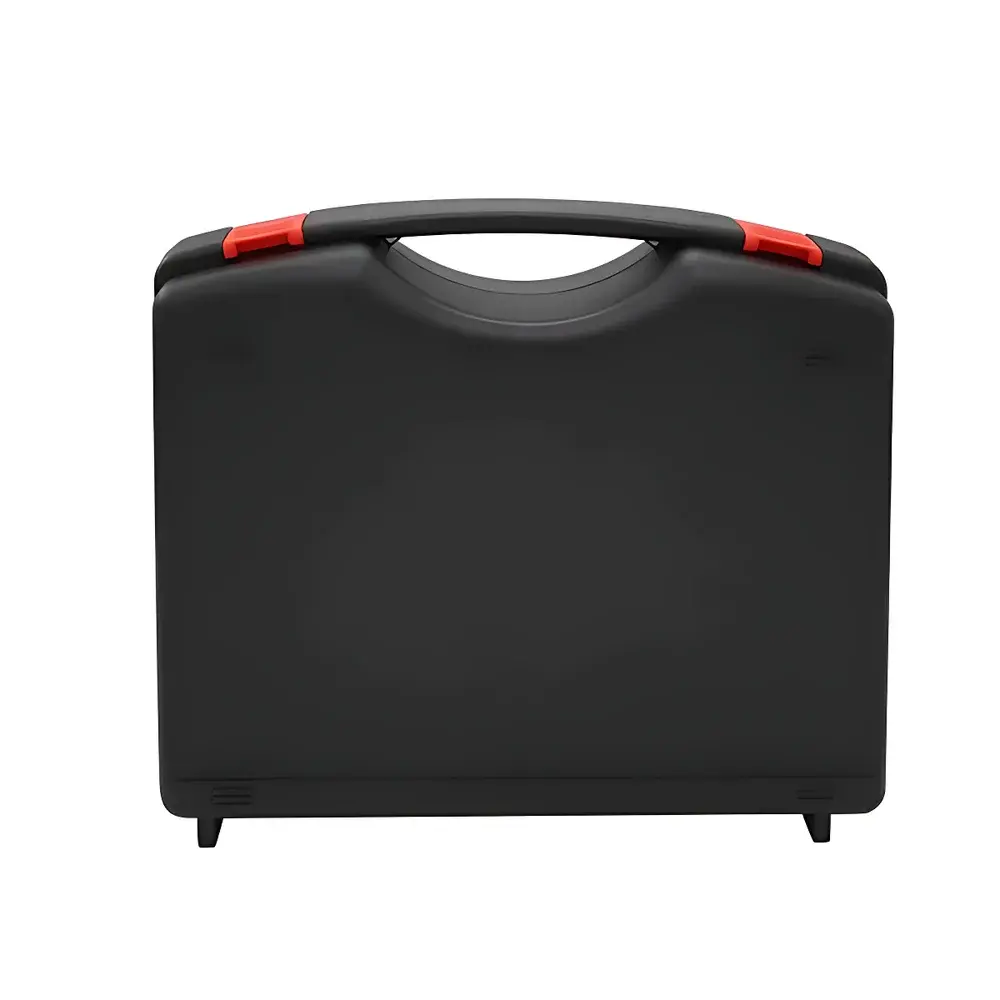
Shenchanghong PCHCM-210 Portable Water Hardness Analyzer
| Brand | Shenchanghong |
|---|---|
| Origin | Guangdong, China |
| Manufacturer Type | Direct Manufacturer |
| Country of Origin | China |
| Model | PCHCM-210 |
| Price | Upon Request |
| Measurement Range | 0.1–200 mg/L as CaCO₃ |
| Accuracy | ±5% FS |
| Repeatability | ≤3% RSD |
| Optical Drift | <0.002 A in 20 min |
| Dimensions (W×D×H) | 80 × 230 × 55 mm |
| Weight | 500 g |
| Operating Temperature | 5–40 °C |
| Relative Humidity | ≤85% RH |
| Power Supply | AA batteries (4×1.5 V) |
| IP Rating | IP65 |
| Data Storage | 199 measurement records with timestamp (YYYY-MM-DD hh:mm:ss), plus 10 preloaded calibration curves |
| Protection | Auto power-off & data retention after power loss |
Overview
The Shenchanghong PCHCM-210 Portable Water Hardness Analyzer is a compact, field-deployable photometric instrument engineered for rapid, reliable quantification of total water hardness—expressed as calcium carbonate (CaCO₃) equivalence—in the range of 0.1 to 200 mg/L. It operates on the principle of colorimetric analysis using a stable monochromatic cold light source and a precision narrow-band optical filter system. The method conforms to standard spectrophotometric protocols for EDTA-based complexometric titration equivalents, adapted for direct absorbance measurement at a fixed wavelength optimized for the colored metal–dye complex (typically 525 nm or 610 nm, depending on indicator chemistry). Designed for routine compliance monitoring and process control, the PCHCM-210 delivers laboratory-grade repeatability (≤3% RSD) and accuracy (±5% FS) under variable ambient conditions—making it suitable for both fixed-site laboratories and unpowered field environments where portability and battery operation are essential.
Key Features
- High-stability cold LED light source (rated lifetime >100,000 hours) with integrated narrow-band interference filter ensures minimal spectral drift and immunity to ambient light interference
- Large backlit LCD display with intuitive menu navigation; supports real-time readout of hardness concentration (mg/L as CaCO₃), absorbance (A), and transmittance (%T)
- Robust IP65-rated ABS polymer housing—resistant to dust, water splashes, and chemical corrosion—validated for use in industrial effluent sampling points and outdoor surface water stations
- Battery-powered operation (4×AA alkaline cells) enables uninterrupted field measurements for up to 12 hours per charge cycle; auto-power-off and non-volatile memory preserve calibration and sample data during battery replacement
- Onboard data management: stores up to 199 timestamped results (including full ISO 8601-compliant date/time stamps) and 10 user-configurable or factory-default calibration curves
- Optical stability verified per ASTM D511-22 Annex A1: absorbance drift <0.002 A over 20 minutes—meeting requirements for GLP-aligned environmental testing workflows
Sample Compatibility & Compliance
The PCHCM-210 is validated for use with clarified aqueous samples across multiple water matrices, including potable water, groundwater, surface water (rivers, lakes), municipal wastewater, and industrial process streams—with turbidity <5 NTU recommended for optimal accuracy. Sample pretreatment (e.g., filtration through 0.45 µm membrane) is advised for suspended solids-rich samples. The analyzer complies with core regulatory frameworks governing hardness reporting in environmental monitoring: US EPA Method 130.1 (colorimetric), ISO 6059:2022 (water quality — determination of hardness — titrimetric method), and Chinese national standard HJ 535-2009 (determination of ammonia nitrogen and hardness in water by spectrophotometry). Its design supports audit-ready documentation practices required under ISO/IEC 17025:2017 accredited laboratories.
Software & Data Management
No external PC software is required for basic operation; all calibration, measurement, and data review occur via the onboard interface. However, stored datasets—including timestamps, absorbance values, and calculated concentrations—can be exported manually via optional USB-to-serial adapter (not included) for integration into LIMS or Excel-based QA/QC tracking. Calibration curves may be edited or reloaded using standardized CSV templates compliant with ISO/IEC 17025 Clause 7.7 (traceability of calibrations). Full audit trail functionality—including operator ID tagging and change logs—is available when paired with Shenchanghong’s optional QC Manager Suite (v3.2+), which supports 21 CFR Part 11 electronic signature and data integrity controls for regulated pharmaceutical or municipal utility applications.
Applications
- Drinking water safety verification at treatment plant outlets and distribution network nodes
- Monitoring scaling potential in boiler feedwater and cooling tower circuits
- Regulatory reporting for NPDES permits and local discharge compliance (e.g., hardness limits in industrial effluents)
- Field screening of agricultural runoff and irrigation source water quality
- Educational use in university environmental science labs for method validation exercises
- Preventive maintenance support for water softening systems and ion exchange resin performance assessment
FAQ
What hardness units does the PCHCM-210 report?
It reports total hardness exclusively as mg/L CaCO₃, consistent with international reporting conventions and regulatory submission requirements.
Can the instrument measure individual Ca²⁺ or Mg²⁺ concentrations?
No—it measures total divalent cation concentration (primarily Ca²⁺ and Mg²⁺) as an aggregate value. Separate ion quantification requires ICP-OES or atomic absorption spectroscopy.
Is the device compatible with third-party hardness reagents?
Yes, provided the reagent kit follows the same colorimetric chemistry (e.g., Eriochrome Black T or Calmagite-based formulations) and delivers absorbance within the instrument’s optical detection window.
How often must the calibration curve be renewed?
Factory calibration remains stable for ≥6 months under normal storage; however, daily verification with a mid-range standard (e.g., 100 mg/L CaCO₃) is recommended before critical measurements per ISO 8466-1:2021.
Does the PCHCM-210 meet GLP or GMP requirements?
When used with documented SOPs, traceable standards, and the optional QC Manager Suite, it satisfies functional requirements for GLP-compliant environmental testing and supports GMP water system monitoring per USP and EU Annex 1.
Related Products







