
Leica STELLARIS 8 FALCON Fast Lifetime Contrast Confocal Microscope
| Brand | Leica |
|---|---|
| Origin | Germany |
| Model | STELLARIS 8 FALCON |
| Imaging Modality | Time-Correlated Single-Photon Counting (TCSPC)-based Fluorescence Lifetime Imaging (FLIM) |
| Frame Rate | Up to 4 fps at 256 × 256 pixels |
| Spectral Channels | Simultaneous acquisition across up to 4 spectral detection channels or sequential acquisition across up to 10 channels |
| FLIM Analysis Modes | Biexponential decay fitting, phasor plot analysis, spectral-FLIM unmixing |
| Software Integration | Fully embedded in Leica LAS X NAVIGATOR and LAS X LITE platforms |
| Compliance | Designed for GLP/GMP-aligned workflows |
Overview
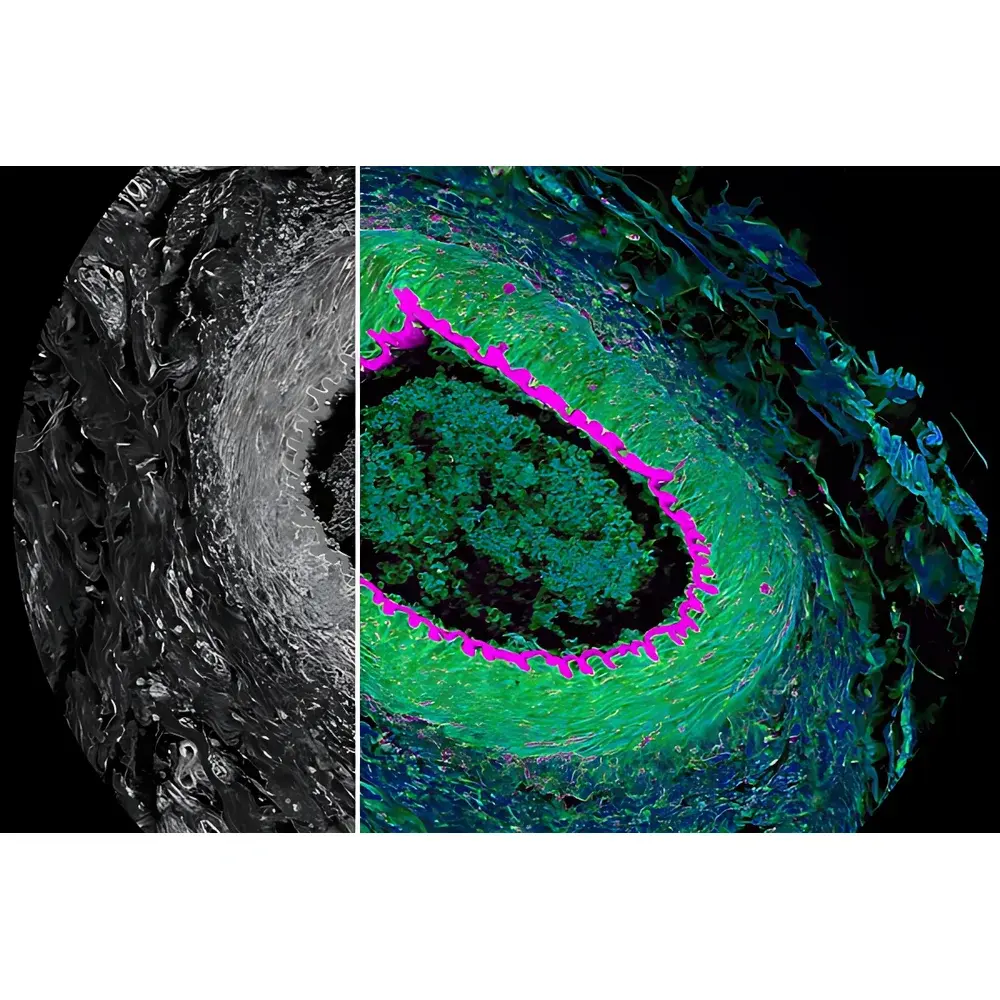
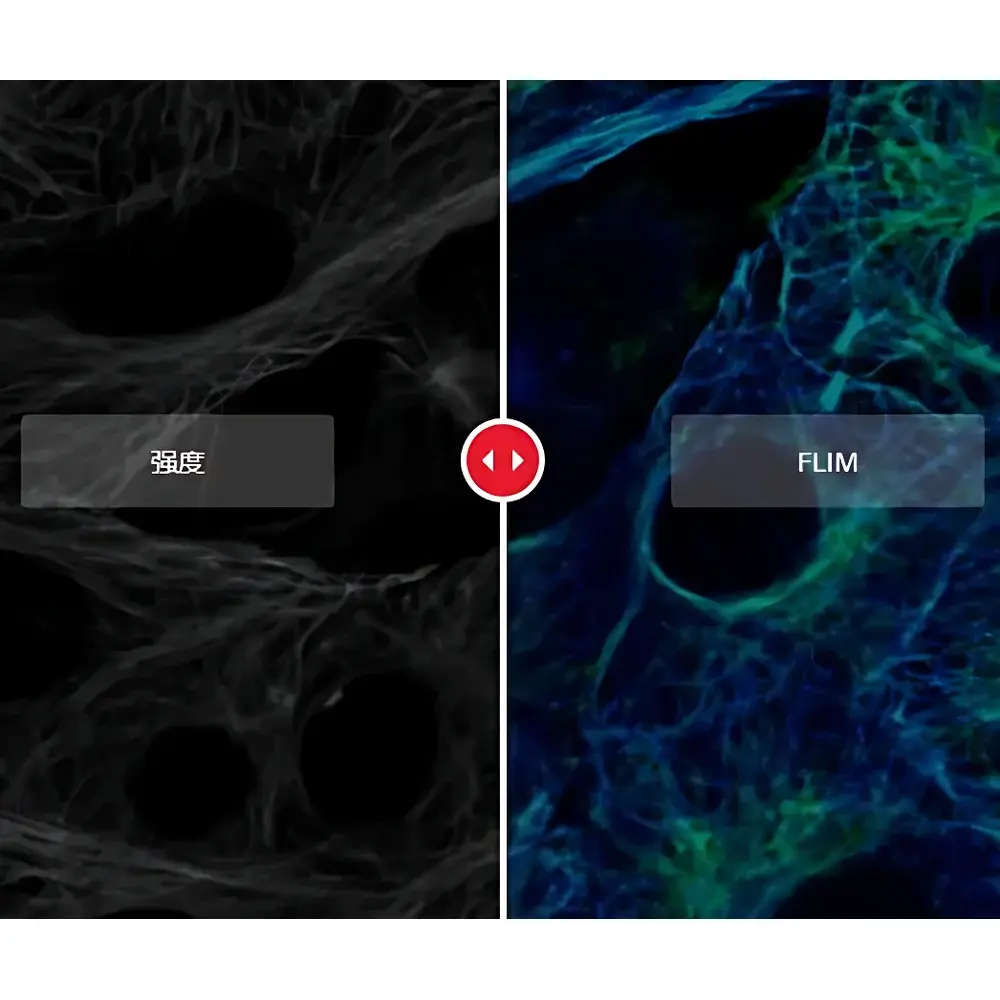
The Leica STELLARIS 8 FALCON is a fully integrated, TCSPC-based confocal fluorescence lifetime imaging (FLIM) microscope engineered for high-speed, quantitative functional imaging in live biological systems. Unlike intensity-based or spectral separation methods, FALCON leverages intrinsic fluorescence lifetime—nanosecond-scale decay kinetics independent of fluorophore concentration, excitation intensity, or photobleaching—to extract physicochemical information from the cellular microenvironment. Its core innovation lies in FAst Lifetime CONtrast (FALCON), a hardware-software co-optimized architecture that overcomes traditional FLIM speed limitations. By combining ultrafast time-gating electronics, parallelized photon arrival time processing, and real-time phasor domain computation, the system delivers video-rate lifetime maps (up to 4 frames per second at 256 × 256 resolution) without compromising temporal resolution (<25 ps instrument response function) or photon efficiency. This enables direct observation of rapid subcellular dynamics—including ion fluxes, metabolic transitions, and protein conformational changes—within native physiological contexts.
Key Features
- TCSPC engine with <25 ps timing resolution and adaptive dead-time correction for accurate multi-exponential decay modeling
- FALCON acquisition mode enabling simultaneous spectral and lifetime imaging across up to 4 detection channels, or sequential FLIM across up to 10 channels
- Integrated phasor analysis pipeline supporting real-time 2D lifetime distribution mapping, FRET efficiency quantification, and microenvironment classification
- Seamless compatibility with Leica’s full suite of resonant and galvo scanning modules, HyD detectors, and white-light lasers (470–670 nm)
- Automated lifetime-guided region-of-interest (ROI) selection via LAS X NAVIGATOR, enabling 10,000× field-of-view expansion with coordinate-preserving navigation
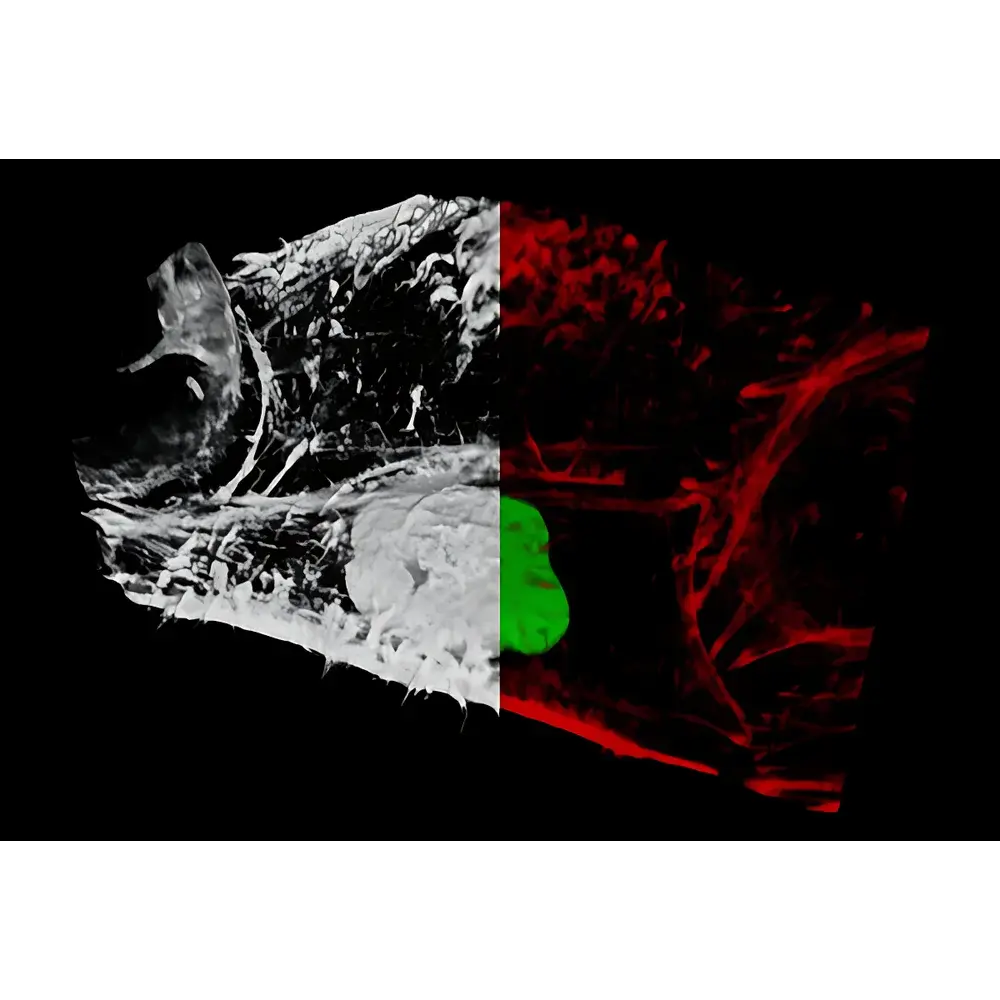
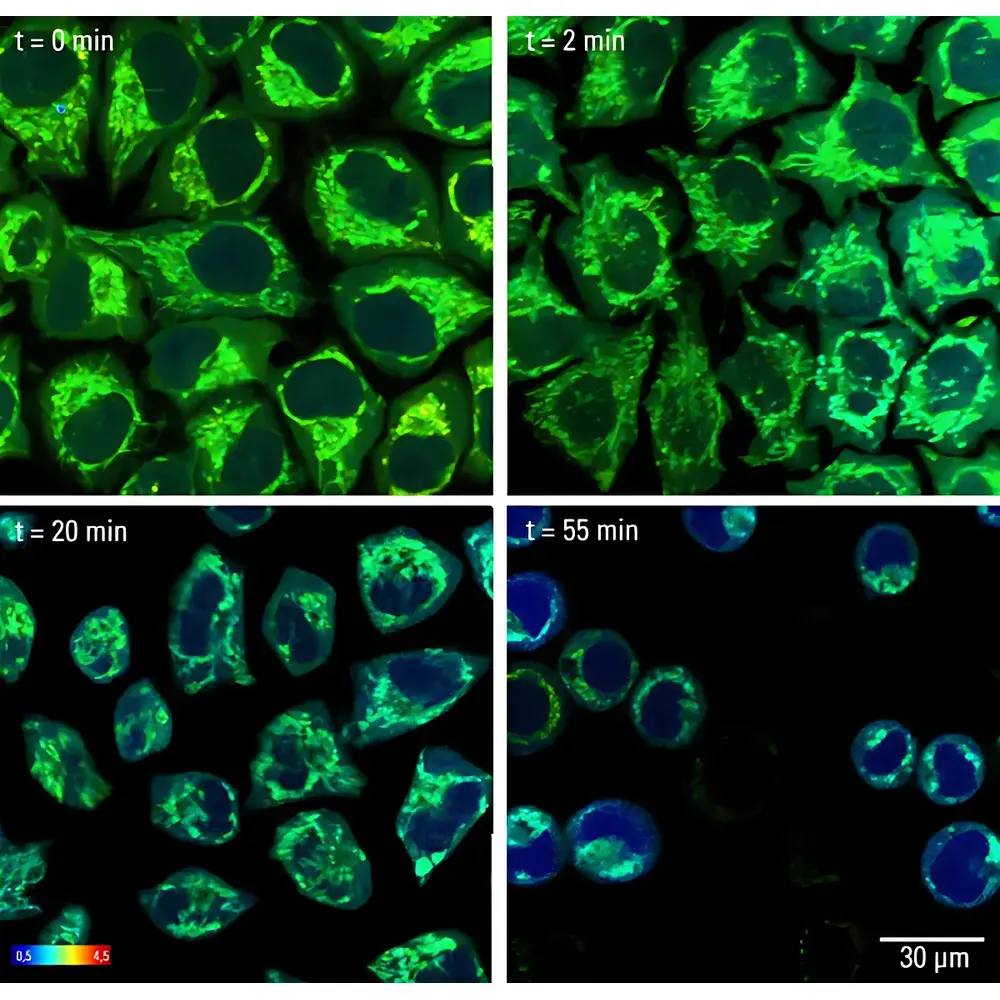
- Hardware-synchronized 3D stack acquisition, time-lapse FLIM, and tiled mosaic imaging with automatic drift correction and lifetime-aware stitching
Sample Compatibility & Compliance
The STELLARIS 8 FALCON supports live-cell, tissue slice, organoid, and cleared-tissue imaging under physiological conditions (37°C, 5% CO₂, humidity control). Its non-invasive FLIM contrast eliminates reliance on ratiometric dyes or overexpression artifacts, making it ideal for endogenous autofluorescence studies (e.g., NAD(P)H, FAD, collagen) and genetically encoded biosensors (e.g., EPAC, GCaMP variants). The platform complies with international regulatory frameworks for data integrity: raw photon timestamp data is stored in vendor-neutral OME-TIFF format with embedded metadata (acquisition parameters, calibration files, detector gain settings); LAS X software supports 21 CFR Part 11–compliant electronic signatures, role-based user permissions, and immutable audit trails for GLP/GMP validation. All FLIM analysis workflows—including phasor gating, biexponential fitting, and spectral unmixing—are fully traceable and reproducible.
Software & Data Management
LAS X serves as the unified acquisition, visualization, and analysis environment for STELLARIS 8 FALCON. It provides one-click FLIM acquisition identical in workflow to standard confocal imaging—no additional scripting or external processing required. Advanced modules include: (1) Lifetime Explorer for interactive phasor plot navigation and component segregation; (2) TauFit for constrained/unconstrained multi-exponential decay modeling with χ² minimization; (3) FLIM-FRET Wizard for automated donor-acceptor pair identification, background subtraction, and sensitized emission correction; and (4) Batch Processor for high-throughput analysis of time-series or multi-position datasets. Export options include calibrated lifetime heatmaps (ns), amplitude-weighted τₘ values, fractional contributions (α₁, α₂), and OME-ZARR containers for cloud-based collaboration. Data provenance is preserved via embedded EXIF-like metadata compliant with FAIR principles.
Applications
- Molecular Interaction Dynamics: Quantitative FLIM-FRET monitoring of protein-protein interactions in real time—e.g., cAMP-induced EPAC activation in HeLa cells with subsecond temporal resolution
- Metabolic Phenotyping: Discrimination of oxidative phosphorylation vs. glycolytic states via NADH τ₁/τ₂ ratio mapping in tumor spheroids or primary neurons
- Microenvironment Sensing: pH- and ion-sensitive lifetime shifts in Ca²⁺ oscillations (thrombin-stimulated cells) or redox potential changes during oxidative stress
- Multiplexed Probe Unmixing: Resolution of spectrally overlapping fluorophores (e.g., Alexa Fluor 546/555) using lifetime heterogeneity rather than emission bandwidth
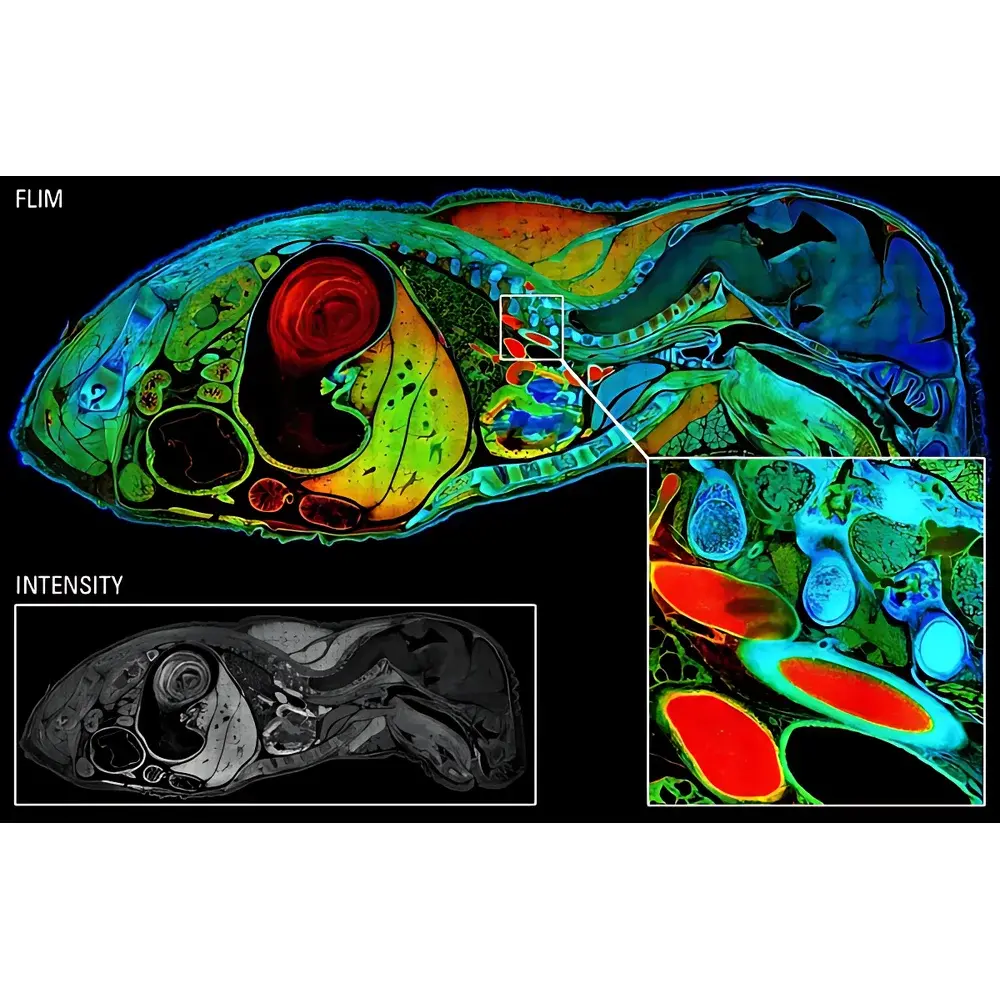
- Developmental Biology: Large-area FLIM mosaics of mouse embryos (190 Mpixel composites) with four-component lifetime decomposition for spatially resolved metabolic zonation
FAQ
What distinguishes FALCON from conventional TCSPC-FLIM systems?
FALCON integrates real-time phasor computation and parallelized photon processing to achieve video-rate FLIM without binning or frame averaging—enabling dynamic process capture previously inaccessible to lifetime imaging.
Can FALCON be used with standard confocal sample preparations?
Yes. No specialized labeling or mounting media are required; standard aqueous buffers, glass-bottom dishes, and common fluorophores (including GFP, mCherry, and synthetic dyes) are fully supported.
Is FLIM data compatible with third-party analysis tools?
Raw photon timestamps and processed lifetime maps are exported in open OME-TIFF and HDF5 formats, enabling import into Python (scikit-image, phasorpy), MATLAB, or ImageJ/Fiji with appropriate plugins.
How does FALCON handle phototoxicity in live-cell experiments?
By extracting contrast from lifetime rather than intensity, FALCON permits lower excitation power (typically 1–5% of standard confocal settings) while maintaining quantitative fidelity—reducing photodamage and extending observation windows.
Does the system support correlative multimodal imaging?
Yes. LAS X enables synchronized acquisition of FLIM, spectral lambda stacks, transmitted light (DIC/phase), and second-harmonic generation (SHG) within a single scan sequence, preserving spatial registration across modalities.





