
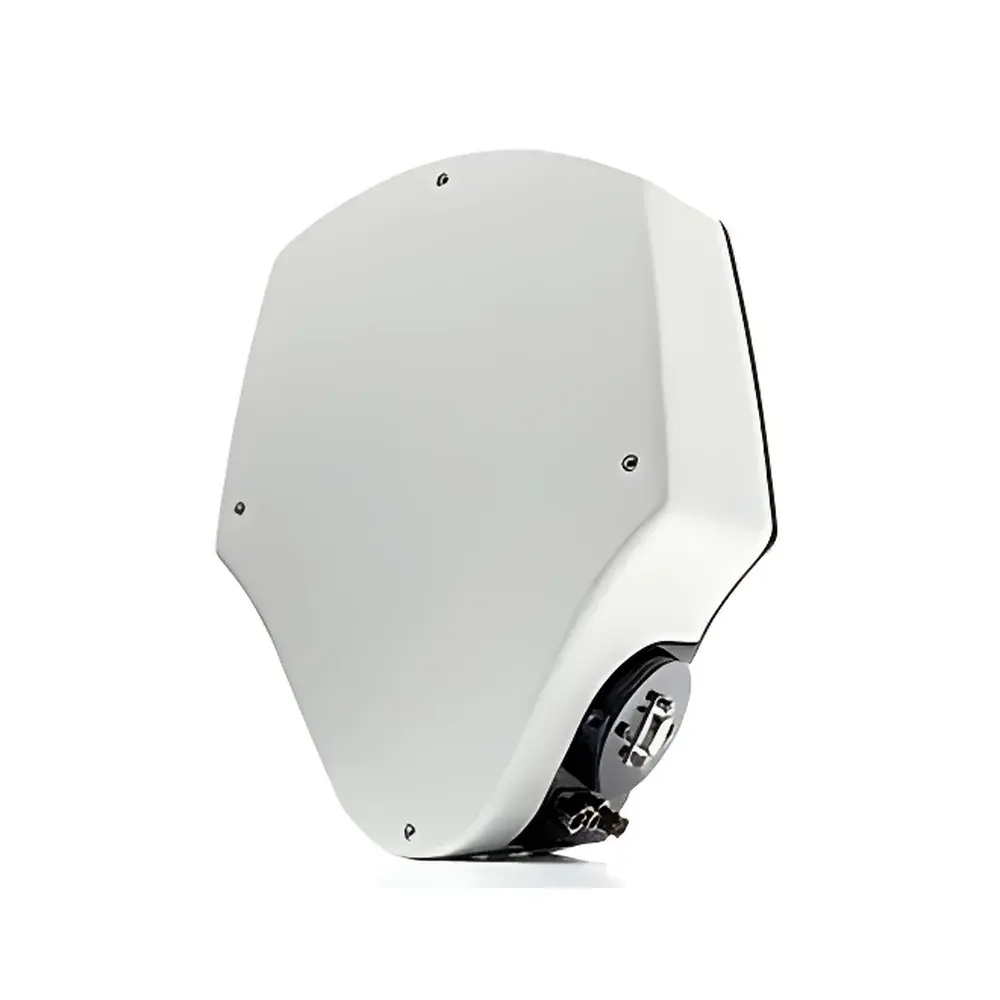
Leica SFL4000 LED Fluorescence Excitation Light Source
| Brand | Leica |
|---|---|
| Origin | Germany |
| Model | Leica SFL4000 |
| LED Channels | 5 independent high-power LEDs |
| LED Lifetime | ≥10,000 hours |
| Control Interface | Integrated capacitive touchscreen |
| Output Stability | <1% intensity drift over 8 h |
| Spectral Range | 365–770 nm (configurable via modular LED selection) |
| Compatibility | Designed for Leica DMi8, DM6 B, and DM6000 B inverted & upright microscopes |
| Regulatory Compliance | CE, IEC 61000-6-3, IEC 62471 (Photobiological Safety Class 1) |
Overview
The Leica SFL4000 is a modular, high-stability LED fluorescence excitation light source engineered for demanding live-cell imaging, quantitative confocal applications, and multi-channel time-lapse microscopy. Unlike traditional mercury or metal-halide arc lamps, the SFL4000 employs five independently addressable, high-brightness solid-state LEDs—each spectrally optimized for common fluorophores including DAPI, FITC, TRITC, Cy5, and far-red dyes. Its core architecture leverages constant-current LED drivers and active thermal regulation to ensure intensity stability (<1% RMS drift over 8 hours) and spectral fidelity across extended acquisition periods. The system operates on a cold-light principle: minimal infrared emission and negligible UV-induced phototoxicity enable prolonged observation of sensitive biological specimens without compromising viability or introducing artifacts from thermal stress or photobleaching.
Key Features
- Five Independent LED Channels: Each LED module is individually addressable via hardware or software, supporting sequential or simultaneous illumination with precise temporal control (ms-scale switching).
- Touchscreen Control Interface: A 5.7-inch capacitive touchscreen provides intuitive, glove-compatible operation—no alignment, no warm-up, no lamp replacement required.
- Photostability & Phototoxicity Reduction: Engineered for low photobleaching rates and minimal reactive oxygen species (ROS) generation; validated for >12-hour continuous GFP-tagged cell tracking under physiological conditions.
- Intensity Modulation: Analog dimming (0–100%) per channel with 0.1% resolution enables precise photon flux calibration for quantitative intensity-based assays (e.g., FRET, ratiometric Ca²⁺ imaging).
- Thermal Management System: Passive heatsinking combined with intelligent fan control maintains junction temperature within ±0.5°C across ambient conditions (15–30°C), ensuring wavelength consistency and long-term output repeatability.
Sample Compatibility & Compliance
The SFL4000 is fully compatible with Leica’s DMi8, DM6 B, and DM6000 B microscope platforms—including motorized filter turrets and automated stage control—enabling seamless integration into GLP-compliant imaging workflows. All LED modules conform to IEC 62471:2006 (Photobiological Safety), classified as Risk Group 1 (exempt), eliminating requirements for interlocks or user training under laser safety regulations. The device meets electromagnetic compatibility standards IEC 61000-6-3 (emissions) and IEC 61000-6-2 (immunity), ensuring reliable operation in shared lab environments with electrophysiology rigs or mass spectrometry instrumentation. No optical realignment is needed after transport or reinstallation—mechanical coupling is maintained via precision-machined dovetail mounts compliant with DIN 3140.
Software & Data Management
Native integration with Leica LAS X software (v3.7+) supports full remote control, protocol scripting, and audit-trail logging per FDA 21 CFR Part 11 requirements—including electronic signatures, user access levels, and immutable session records. Intensity settings, exposure timing, and LED activation sequences are stored as metadata within .lif files and exportable in TIFF/OME-TIFF formats for downstream analysis in ImageJ/Fiji, Imaris, or MATLAB. Optional API access (HTTP RESTful interface) permits synchronization with external hardware triggers (e.g., piezo stages, patch-clamp amplifiers) for closed-loop experimental paradigms.
Applications
- Long-term live-cell imaging of mitotic dynamics, organelle trafficking, and membrane fusion events
- Multi-parameter fluorescence resonance energy transfer (FRET) with donor–acceptor pair optimization
- High-content screening using multiplexed nuclear/cytoskeletal/membrane labeling
- Quantitative calcium imaging in primary neuronal cultures with minimal photodamage
- Correlative light-electron microscopy (CLEM) sample preparation requiring low-heat illumination pre-fixation
FAQ
Is the SFL4000 compatible with non-Leica microscope systems?
Yes—via TTL trigger input and analog intensity control (0–5 V), it can be integrated with third-party platforms provided mechanical mounting and filter cube alignment are adapted.
Can individual LED modules be replaced in the field?
Yes—modules are user-swappable without tools; each includes factory-calibrated spectral profile data written to onboard EEPROM.
Does the system support pulsed illumination modes?
Yes—external TTL triggering supports pulse widths from 100 µs to continuous, with jitter <50 ns.
What maintenance is required over its 10,000-hour lifetime?
None beyond periodic dust removal from heatsink fins; no recalibration or optical realignment is necessary.
How is intensity uniformity verified across the field of view?
Each unit undergoes factory flat-field calibration using NIST-traceable photodiode array mapping; uniformity data is supplied with certificate of conformance.




