
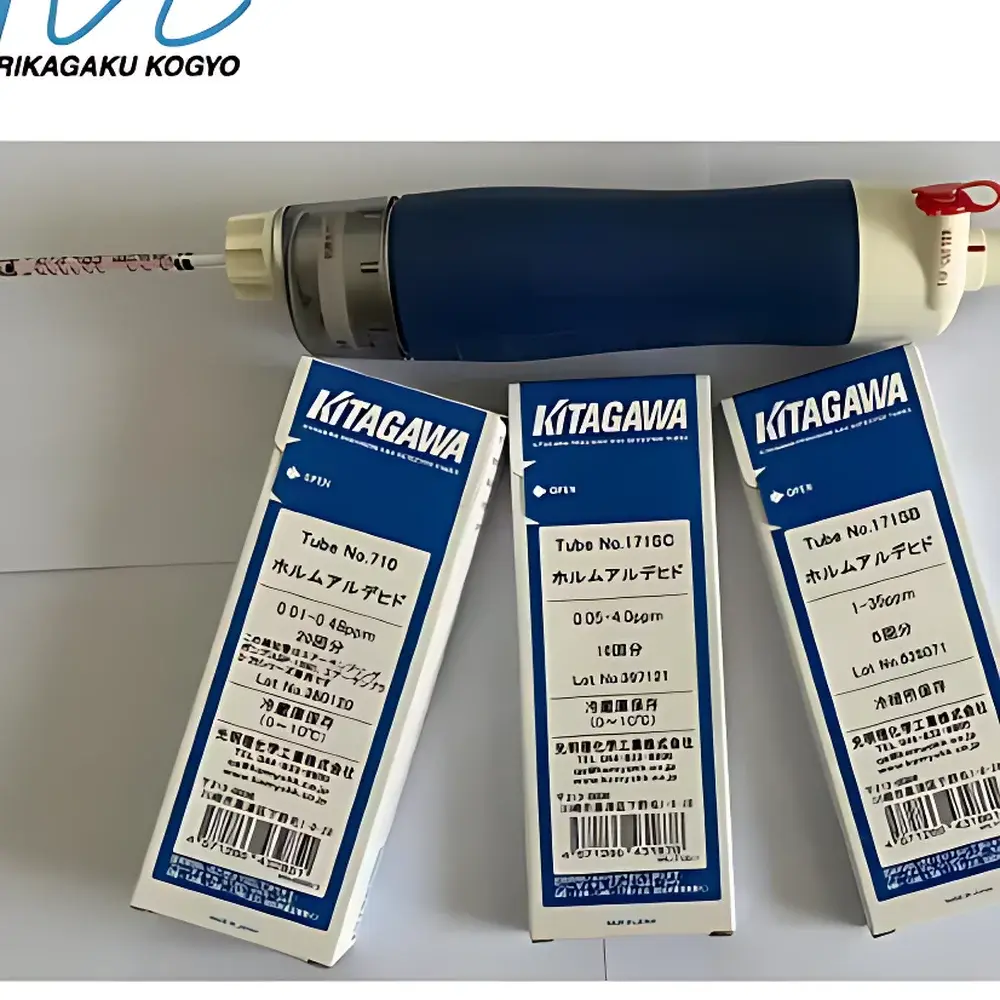
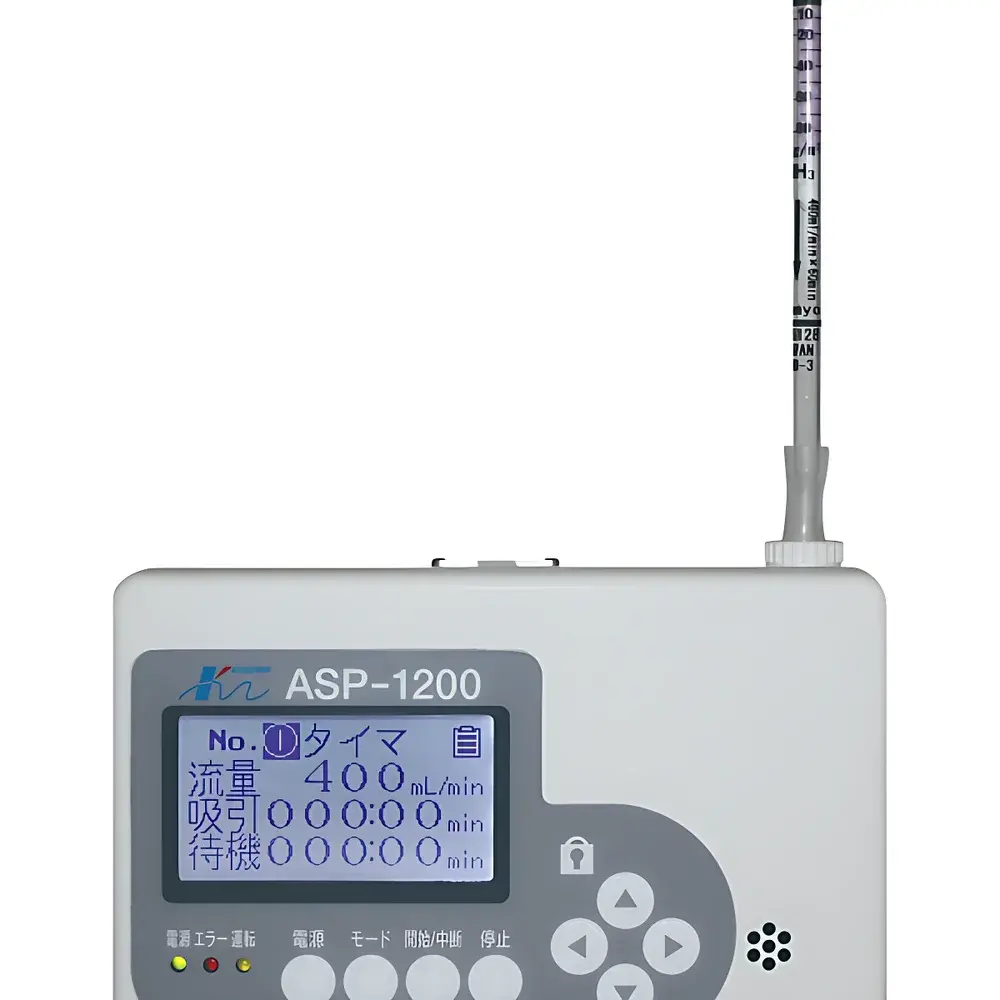
Kikuchi Formaldehyde Gas Detection Tubes Model 171SA / 171SB / 171SC
| Brand | Kikuchi |
|---|---|
| Origin | Japan |
| Model | 171SA, 171SB, 171SC |
| Detection Principle | Colorimetric Reaction with Pre-calibrated Glass Tube |
| Measurement Unit | ppm (parts per million) |
| Sampling Device | Manual Bellows Pump AP-20 |
| Compliance | JIS K 0321 (Japanese Industrial Standard for Air Quality Testing), ISO 16000-23 (Indoor Air – Determination of Formaldehyde – Active Sampling Using Chromatographic Methods – Reference for Validation of Screening Methods) |
| Packaging | Individually sealed in aluminum pouches with desiccant |
| Shelf Life | 24 months from manufacture date when stored at ≤25°C and <60% RH |
| Operating Temperature Range | 10–35°C |
| Relative Humidity Limit | ≤80% RH (non-condensing) |
| Calibration Traceability | NIST-traceable reference standards used during production batch validation |
Overview
The Kikuchi Formaldehyde Gas Detection Tubes (Models 171SA, 171SB, and 171SC) are precision-engineered, single-use colorimetric dosimeters designed for rapid, on-site quantification of gaseous formaldehyde in ambient air, indoor environments, and industrial workspaces. Based on the well-established length-of-stain (LOS) principle, each tube contains a chemically impregnated silica gel reagent bed that undergoes a stoichiometric, irreversible color reaction upon exposure to formaldehyde vapor. The resulting color front advances linearly along the calibrated glass tube bore in proportion to the integrated concentration × time (C×t) exposure. When used with the manually operated AP-20 bellows pump — which delivers a fixed, pre-validated sampling volume of 100 mL per stroke — the final stain length directly corresponds to the formaldehyde concentration in parts per million (ppm). This method eliminates dependence on external power sources, analytical instrumentation, or laboratory infrastructure, making it ideal for field technicians, occupational hygienists, EHS officers, and first responders requiring immediate, legally defensible screening data.
Key Features
- Three optimized sensitivity ranges: 171SA (0.05–0.5 ppm), 171SB (0.2–2.0 ppm), and 171SC (1.0–10 ppm), enabling selective deployment across diverse exposure scenarios — from low-level indoor air quality assessments to high-concentration industrial leak detection.
- Pre-calibrated, factory-sealed glass tubes with NIST-traceable batch certification; each lot undergoes rigorous inter-laboratory validation against dynamic gas-phase permeation standards.
- No electrical components or consumables beyond the tube and pump; fully intrinsically safe for use in potentially explosive atmospheres (ATEX Zone 2 / Class I, Division 2 compatible when used per instructions).
- Stable reagent formulation resistant to interference from common co-pollutants including acetaldehyde, methanol, and CO₂ at typical environmental concentrations (per JIS K 0321 Annex B verification reports).
- Integrated humidity compensation algorithm embedded in scale calibration — validated performance maintained within ±15% accuracy across 30–70% RH at 25°C.
- AP-20 pump features dual-stroke mechanism with tactile feedback and built-in volume limiter ensuring consistent 100 mL draw per actuation; compliant with ISO 16000-23 Annex D sampling protocol requirements.
Sample Compatibility & Compliance
These detection tubes are validated for use with undiluted ambient air, ventilated workplace air, and static headspace samples from building materials (e.g., pressed wood products, adhesives, insulation). They are not intended for direct measurement in flue gases, solvent vapors, or high-particulate environments without upstream filtration (e.g., PTFE membrane filter, 0.3 µm pore size). All models conform to Japanese Industrial Standard JIS K 0321:2019 (“Determination of Formaldehyde in Ambient Air Using Colorimetric Detection Tubes”) and support compliance with ISO 16000-23:2019 as a Tier-1 screening tool. While not a replacement for laboratory-grade GC-FID or DNPH-HPLC methods in regulatory reporting, data generated meets GLP documentation requirements when recorded with traceable pump usage logs, environmental condition annotations, and analyst signatures per ISO/IEC 17025 clause 7.8.2.
Software & Data Management
The Kikuchi 171-series operates independently of software — no drivers, firmware, or cloud connectivity required. However, standardized digital recordkeeping is supported via Kikuchi’s free “TubeLog Pro” companion application (iOS/Android), which enables photo-based stain length capture, automatic unit conversion (ppm ↔ mg/m³ at user-defined T/P), geotagged field entry, and PDF report generation compliant with ISO 14001 internal audit templates. All raw data exports as CSV with metadata fields including tube lot number, pump stroke count, ambient temperature/humidity, and analyst ID — satisfying FDA 21 CFR Part 11 audit trail prerequisites when deployed in pharmaceutical facility environmental monitoring programs.
Applications
- Ongoing compliance monitoring of formaldehyde emissions from composite wood manufacturing lines (CARB ATCM Phase 2, EPA TSCA Title VI).
- Rapid response to suspected off-gassing incidents in newly renovated offices, schools, and healthcare facilities.
- Pre-occupancy verification testing following installation of urea-formaldehyde foam insulation (UFFI) or laminated flooring.
- Verification of HVAC system effectiveness in reducing formaldehyde load during IAQ investigations.
- Training and competency assessment for occupational safety personnel under OSHA 29 CFR 1910.1048 formaldehyde standard.
FAQ
Can these tubes be reused after initial sampling?
No. Each tube is a single-use, chemically consumed device. Reuse invalidates calibration and introduces cross-contamination risk.
What is the minimum detectable concentration for Model 171SC?
The lower limit of quantitation (LLOQ) is 1.0 ppm with ±10% repeatability (n=6) under controlled lab conditions per JIS K 0321 Annex C.
Do I need special training to operate the AP-20 pump correctly?
Yes. Proper technique — including full compression stroke, pause duration (>2 s), and vertical orientation during sampling — is critical to volumetric accuracy. Kikuchi provides certified online operator training modules aligned with ISO/IEC 17025 competency criteria.
Are there documented interferences from ozone or nitrogen dioxide?
Ozone >0.1 ppm causes slight overestimation (<5%) in 171SA; NO₂ shows negligible interference up to 5 ppm per third-party validation studies (NIES Report No. 2022-IAQ-07).
How should expired tubes be disposed?
Tubes contain trace quantities of chromotropic acid and sulfuric acid. Dispose as hazardous chemical waste per local regulations (EPA Waste Code D002); do not incinerate or landfill untreated.
Related Products







