
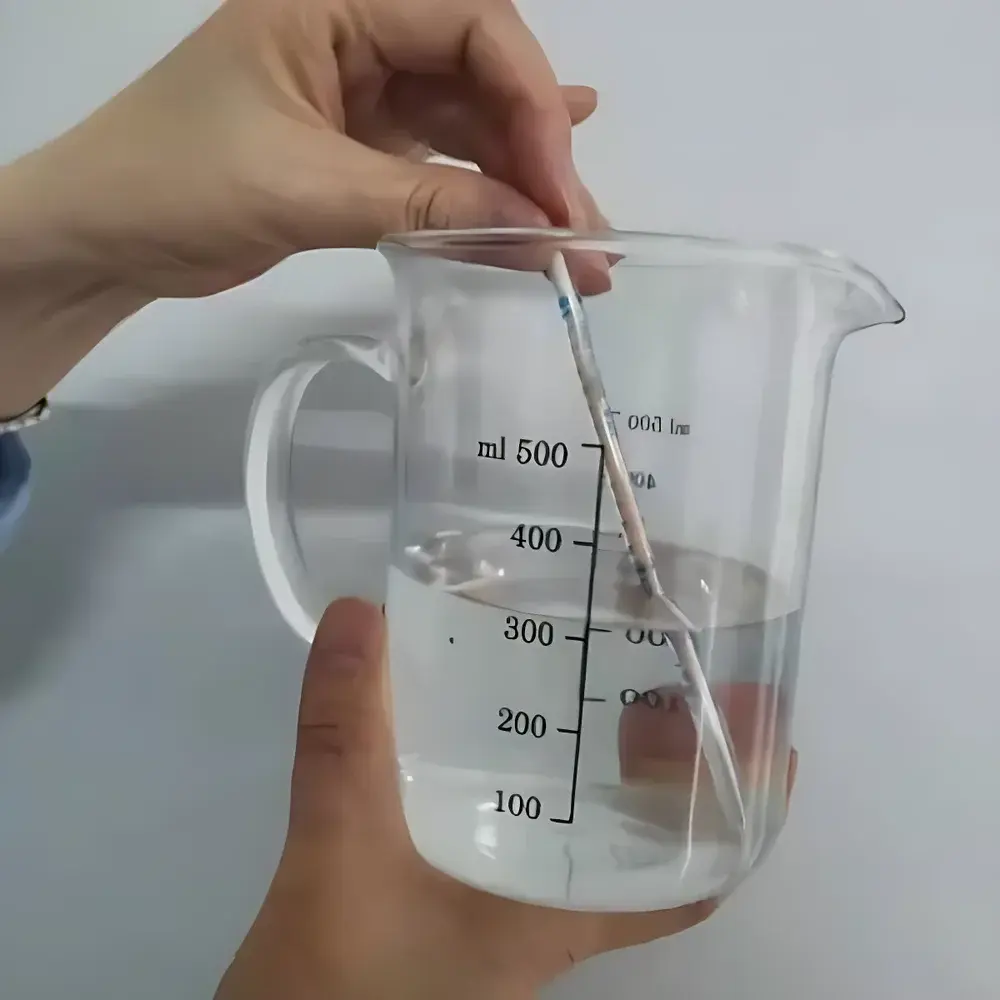
Kohmei Rikagaku Sulfide Ion Quick Test Tube (200SA / 200SB)
| Brand | Kohmei Rikagaku |
|---|---|
| Origin | Japan |
| Model | 200SA / 200SB |
| Detection Range | 200SA: 2–2000 ppm S²⁻ |
| 200SB | 0.5–10 ppm S²⁻ |
| Reaction Time | 2–3 min |
| Principle | Colorimetric Chemical Reaction |
| Format | Single-use Glass Ampoule |
| Compliance | Designed per JIS K 0102 and ISO 10304-1 guidelines for sulfide screening |
Overview
The Kohmei Rikagaku Sulfide Ion Quick Test Tube (Model 200SA / 200SB) is a field-deployable, single-use colorimetric detection system engineered for rapid, on-site quantification of aqueous sulfide ions (S²⁻) in environmental water samples. Based on standardized chemical chromogenic reaction principles—specifically the formation of iron(II) sulfide precipitate under controlled acidic conditions—the test tube delivers visual concentration readouts without requiring power, calibration, or auxiliary instrumentation. The system operates via stoichiometric oxidation-reduction coupling between dissolved sulfide and pre-encapsulated reagents (including acidified ferrous ammonium sulfate and stabilizing buffers), generating a reproducible brown-to-black color gradient proportional to sulfide concentration. This method aligns with foundational analytical approaches referenced in ISO 10304-1 (determination of anions by ion chromatography) and JIS K 0102 (testing methods for industrial wastewater), serving as a validated prescreening tool prior to laboratory confirmation via ICP-MS or methylene blue spectrophotometry.
Key Features
- Two calibrated sensitivity ranges: Model 200SA for higher-concentration applications (2–2000 ppm S²⁻); Model 200SB optimized for trace-level detection (0.5–10 ppm S²⁻), enabling method selection based on expected contamination levels.
- Pre-filled, hermetically sealed borosilicate glass ampoules—each containing precisely dosed, moisture-stable reagents with shelf life exceeding 24 months when stored at 2–8 °C in original packaging.
- No external power, software, or consumables beyond the tube itself; operation requires only clean sample immersion and ambient light for visual interpretation.
- Engineered for operator safety: integrated fritted tip design minimizes splashing and limits direct exposure to acidic reagents during insertion.
- Robust mechanical construction resists thermal shock and minor impact—validated for use in mobile laboratories, emergency response vehicles, and remote sampling sites.
Sample Compatibility & Compliance
The test tubes are validated for use with freshwater, wastewater effluent, groundwater, and surface runoff samples exhibiting pH 5.5–9.0. Samples containing high turbidity (>100 NTU), strong oxidants (e.g., free chlorine >0.5 mg/L), or suspended solids >50 mg/L require pre-filtration (0.45 µm membrane) or centrifugation to prevent interference. Interference from thiosulfate, thiocyanate, and mercaptans is minimized through proprietary pH buffering and reaction-time optimization. The assay conforms to the qualitative and semi-quantitative requirements of ISO/IEC 17025:2017 Annex A (field screening methods) and supports GLP-aligned documentation workflows when paired with standardized field log templates.
Software & Data Management
As a non-instrumental, analog colorimetric system, the 200SA/200SB series does not incorporate embedded electronics or digital interfaces. However, it integrates seamlessly into digital environmental monitoring ecosystems: users may record results manually into LIMS platforms (e.g., LabWare, STARLIMS) or capture high-resolution images of developed tubes using calibrated smartphone-based colorimeters (e.g., Munsell CAPSURE™) for cloud-based archiving and trend analysis. Each batch includes a Certificate of Analysis referencing NIST-traceable sulfide reference standards (SRM 2703a), and full lot-specific uncertainty budgets (k=2) are available upon request to support audit readiness under EPA Region 10 or EU WFD reporting frameworks.
Applications
- Rapid assessment of sulfide breakthrough in municipal wastewater treatment plant influent and digester supernatant.
- Emergency response triage following industrial spills involving sulfur-containing compounds (e.g., H₂S release from pulp/paper or tannery operations).
- Field validation of passive sampler deployments in sediment porewater studies.
- Verification of sulfide removal efficiency in bioremediation pilot systems and zero-liquid-discharge (ZLD) pretreatment units.
- Educational use in university environmental chemistry labs for teaching stoichiometric reaction kinetics and redox titration fundamentals.
FAQ
What is the shelf life of unopened tubes, and how should they be stored?
Unopened tubes retain accuracy for 24 months when stored at 2–8 °C in original desiccated packaging. Avoid freezing or exposure to direct sunlight.
Can this test distinguish between S²⁻, HS⁻, and H₂S species?
No—the assay measures total reactive sulfide (ΣS²⁻ + HS⁻ + H₂S) under the specified pH-dependent reaction conditions. Speciation requires complementary techniques such as ion-selective electrode measurement or GC-SCD.
Is the color scale traceable to international standards?
Yes—calibration is performed against NIST SRM 2703a (sulfide in aqueous matrix) and verified annually per ISO/IEC 17025 internal audit protocols.
Are there documented interferences from common co-occurring ions?
Ferric iron (>5 mg/L), nitrite (>2 mg/L), and residual chlorine (>0.5 mg/L) may suppress color development; recommended sample pretreatment includes ascorbic acid addition or cadmium column filtration.
Does this method meet regulatory acceptance for compliance reporting?
It serves as a validated screening method under EPA Method 376.1 (colorimetric sulfide) and supports Tier 1 data qualification per ASTM D8082; confirm jurisdictional acceptance with local regulatory authority prior to submission.







