
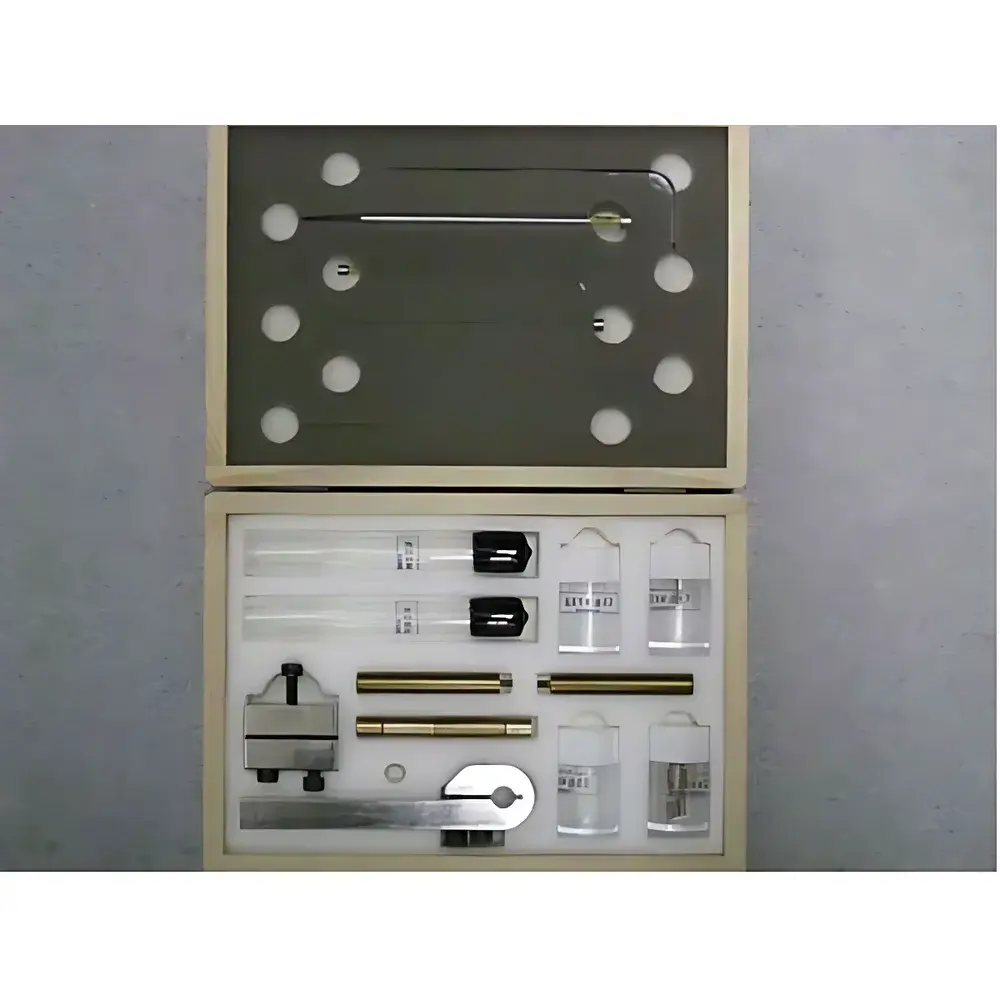
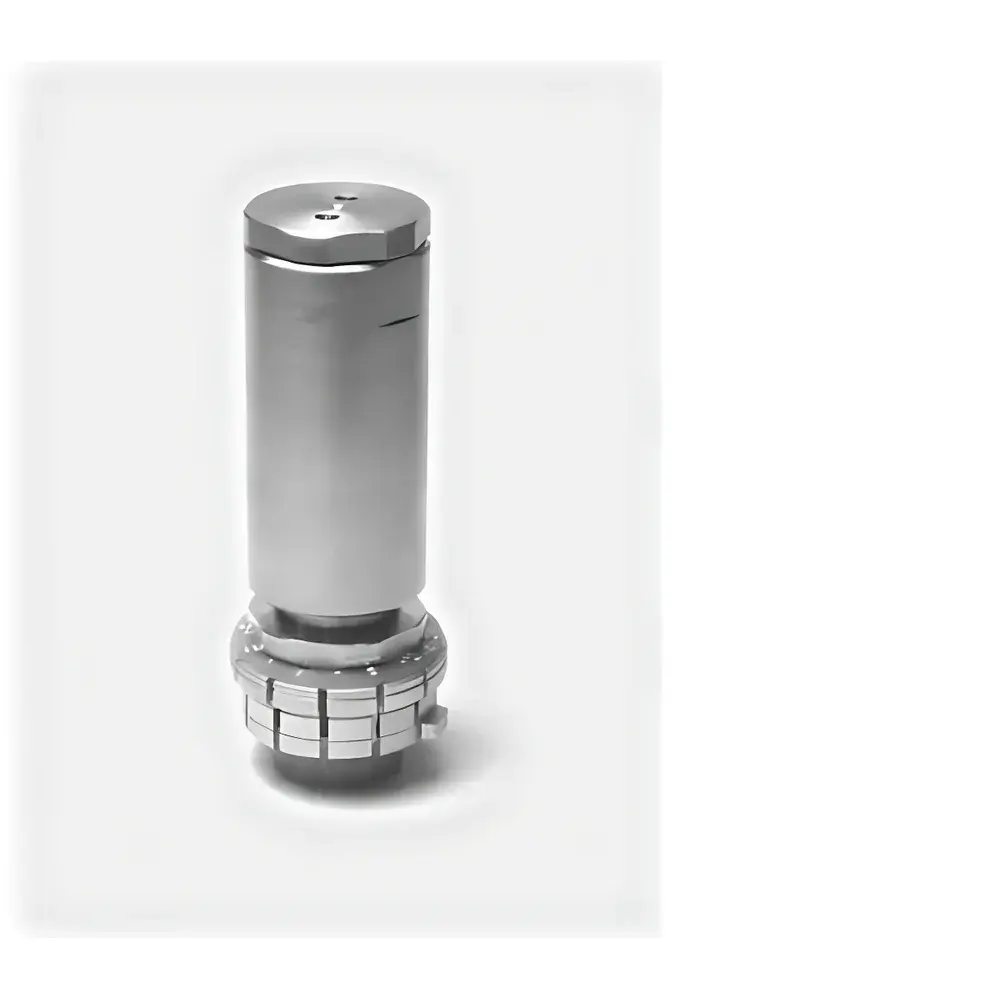
Quantum Design Pcell and Mcell High-Pressure Cells for MPMS and PPMS Systems
| Brand | Quantum Design |
|---|---|
| Origin | Japan |
| Manufacturer Type | Original Equipment Manufacturer (OEM) |
| Import Status | Imported |
| Model | Pcell or Mcell |
| Pricing | Available upon Request |
Overview
The Quantum Design Pcell and Mcell high-pressure cells are purpose-built cryogenic and magnetically compatible pressure modules engineered for seamless integration with Quantum Design’s Magnetic Property Measurement System (MPMS) and Physical Property Measurement System (PPMS). These cells enable true three-parameter experimental control—simultaneous application of high hydrostatic pressure (up to 1.5 GPa for magnetic measurements, up to 3 GPa for electrical transport), ultra-low temperatures (down to 2 K), and high magnetic fields (up to 9 T or 16 T, depending on the host system configuration). Based on the piston-cylinder and diamond-anvil cell principles, the Pcell and Mcell utilize non-magnetic, low-thermal-conductivity materials—including NiCrAl alloys, sapphire insulators, and BeCu gaskets—to preserve field homogeneity, thermal stability, and signal fidelity during SQUID-based magnetometry or resistivity/heat capacity measurements. Their design adheres to the mechanical and electromagnetic constraints of MPMS/PPMS sample chambers, ensuring minimal perturbation to background field profiles and sensor noise floors.
Key Features
- Fully plug-and-play compatibility with MPMS-XL, MPMS3, and PPMS DynaCool platforms—no system modification or firmware update required
- Modular construction enables rapid installation and removal (<15 minutes per setup) without disassembling the cryostat or magnet bore
- Non-magnetic stainless-steel and titanium alloy housings eliminate field distortion and eddy-current heating under field sweep conditions
- Integrated high-vacuum feedthroughs support simultaneous electrical leads (4-wire or 6-wire), thermocouple wiring, and pressure-transducer connections
- Calibrated manganin or NaCl pressure media with in situ ruby fluorescence or Sm:YAG luminescence monitoring for traceable pressure determination
- Optimized thermal anchoring pathways ensure sample-stage temperature uniformity < ±5 mK across the full pressure range at base temperature
Sample Compatibility & Compliance
The Pcell and Mcell accommodate solid-state samples in pellet, single-crystal, or thin-film form (diameter ≤ 4 mm, thickness ≤ 1.2 mm). Sample capsules are sealed using indium or gold gaskets, compatible with standard MPMS/PPMS sample rods and holders. All components comply with ISO 14001 environmental management standards and meet mechanical safety requirements per ASME B31.3 Process Piping Code for high-pressure instrumentation. The cells are routinely validated under GLP-compliant test protocols for reproducibility (pressure hysteresis < 0.5% full scale; thermal drift < 10 µK/min at 2 K). They support ASTM D7263-22 (standard test method for high-pressure resistivity of solids) and ISO/IEC 17025-accredited calibration workflows when paired with certified transducers and optical pressure gauges.
Software & Data Management
Operation is fully integrated into Quantum Design’s MultiVu software suite. Pressure ramping, temperature stabilization, and field sweeps can be synchronized via user-defined measurement sequences. Real-time pressure feedback from calibrated piezoresistive sensors or optical readouts is logged alongside magnetic moment, resistivity, and heat capacity data in native .dat format. Audit trails—including timestamped parameter sets, operator ID, and hardware status flags—are retained in accordance with FDA 21 CFR Part 11 requirements for regulated research environments. Export options include HDF5, CSV, and MATLAB-compatible structures for third-party analysis (e.g., Python-based phase-diagram mapping or critical-field modeling).
Applications
- Pressure-tuned quantum phase transitions in correlated electron systems (e.g., Fe-based superconductors, heavy fermions, Mott insulators)
- In situ high-field magnetization studies under hydrostatic stress to probe spin-lattice coupling mechanisms
- High-pressure Hall effect and Shubnikov–de Haas oscillation measurements in topological semimetals
- Thermodynamic characterization (specific heat, magnetostriction) across pressure-induced structural phase boundaries
- Validation of first-principles predictions of pressure-dependent exchange interactions and magnetic anisotropy
FAQ
Are Pcell and Mcell compatible with both MPMS3 and PPMS DynaCool systems?
Yes—both models are mechanically and electronically certified for use with MPMS3 (SQUID-based) and PPMS DynaCool (VSM + ACMS + resistivity + heat capacity) platforms.
What pressure media are recommended for magnetic versus transport measurements?
For magnetization, Daphne 7373 or NaCl is preferred due to low magnetic susceptibility; for resistivity, steatite or borosilicate glass offers superior electrical insulation and pressure-transmitting uniformity.
Can the cells be used with the PPMS ACMS option for torque magnetometry?
Yes—the Mcell variant includes a low-inertia cantilever mount compatible with PPMS ACMS torque detection, maintaining angular resolution better than 10−7 rad under 3 GPa load.
Is in situ pressure calibration supported during cooldown?
Yes—ruby fluorescence or Sm:YAG luminescence signals are acquired continuously via fiber-optic access ports, enabling real-time pressure correction relative to temperature-dependent R1-line shifts.
Do these cells require special training or service contracts?
Installation and basic operation are covered in Quantum Design’s official MPMS/PPMS Advanced User Workshop; extended warranty and preventive maintenance plans are available through authorized OEM service centers in North America, Europe, and APAC regions.
Related Products



