
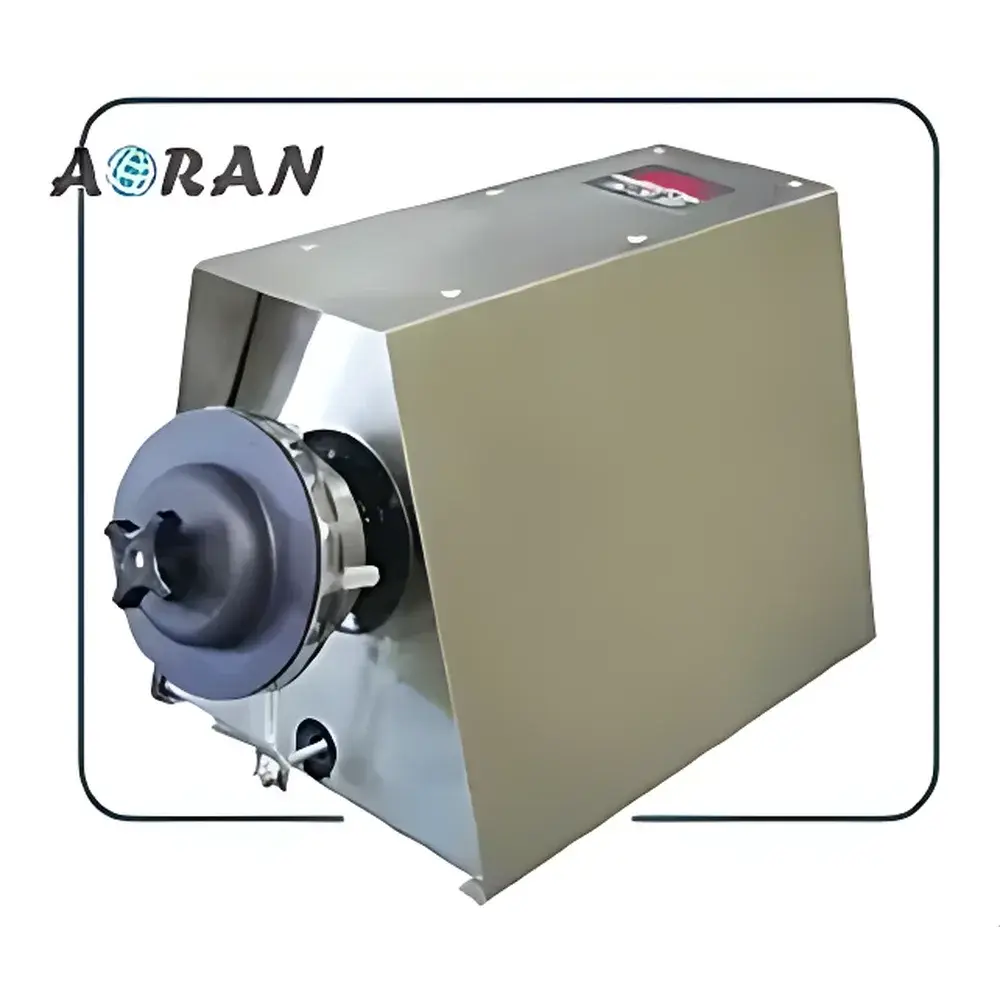
Biospec MiniBeadbeater-16 Bead Mill Homogenizer
| Brand | Biospec |
|---|---|
| Origin | USA |
| Model | MiniBeadbeater-16 |
| Instrument Type | Bead Mill Homogenizer |
| Dimensions (W×D×H) | 280 × 440 × 260 mm |
| Sample Capacity | 0.5–7 mL per tube |
| Operating Speed | 3450 rpm |
| Time Range | 0–300 s (digitally adjustable) |
| Simultaneous Processing | 16 × 1–1.5 mL tubes or 8 × 7 mL tubes (with optional adapter) |
Overview
The Biospec MiniBeadbeater-16 is a high-performance, benchtop bead mill homogenizer engineered for rapid, reproducible mechanical lysis of biological samples through high-frequency horizontal oscillation. Unlike rotor-stator or ultrasonic systems, this instrument relies on kinetic energy transfer from dense grinding beads—typically glass, stainless steel, or ceramic—to disrupt cell walls and membranes via repeated impact and shear forces within sealed microcentrifuge tubes. Its design adheres to the principles of controlled mechanical disruption, minimizing thermal denaturation and foaming while preserving labile biomolecules including native enzymes, intact proteins, high-molecular-weight DNA/RNA, and functional subcellular organelles. The device operates at a fixed frequency of 3450 rpm, delivering consistent energy input across all 16 positions, making it especially suitable for parallel processing in genomics, proteomics, and microbiology workflows where inter-sample variability must be minimized.
Key Features
- Simultaneous homogenization of up to 16 samples in 1–1.5 mL microtubes—or 8 samples in 7 mL tubes using an optional adapter—enabling high-throughput sample preparation without cross-contamination.
- Digital timer with precise 1-second resolution (0–300 s), allowing fine-tuned control over lysis intensity to match sample type and downstream application requirements.
- Robust cast-aluminum housing and balanced drive mechanism reduce operational noise and vibration relative to earlier-generation models such as the MiniBeadbeater-8, enhancing laboratory ergonomics and long-term reliability.
- No requirement for cryogenic cooling or organic solvents (e.g., ethanol or phenol); compatible with aqueous buffers, chaotropic agents, and enzymatic inhibitors—ideal for sensitive molecular assays.
- Interchangeable bead sets available in three diameters (0.1 mm, 0.5 mm, 1.0 mm) and three material types (glass, stainless steel, zirconia ceramic), enabling optimization for diverse sample matrices—from soft mammalian tissues to rigid bacterial spores or fungal hyphae.
Sample Compatibility & Compliance
The MiniBeadbeater-16 demonstrates broad compatibility across life science sample types: cultured mammalian and insect cells, plant leaf tissue, yeast and filamentous fungi, Gram-positive and Gram-negative bacteria, archaea, and environmental biofilms. Its closed-tube operation prevents aerosol generation and maintains biosafety containment (BSL-1/BSL-2 compliant when used with appropriate tube caps). While not certified to specific ISO or ASTM standards as a standalone unit, its performance aligns with common method validation frameworks referenced in ISO 17025-accredited laboratories—for example, when integrated into nucleic acid extraction protocols compliant with ISO/IEC 17025:2017 clause 7.2.2 (method validation) or USP (ancillary materials for biologics). Routine use supports GLP/GMP-aligned workflows when paired with audit-trail-capable LIMS integration and documented SOPs.
Software & Data Management
The MiniBeadbeater-16 operates via embedded digital electronics with no external software dependency. All parameters—including run time and start/stop activation—are set directly on the front-panel interface. Though lacking network connectivity or data logging capabilities, its deterministic operation (fixed speed, repeatable acceleration profile) ensures full traceability when recorded manually in electronic lab notebooks (ELNs) or paper-based batch records. For laboratories subject to FDA 21 CFR Part 11 compliance, validated operation requires procedural controls (e.g., operator ID logging, parameter verification checks prior to initiation) rather than built-in electronic signatures. Optional accessories include barcoded tube racks and calibrated timing verification tools to support IQ/OQ documentation.
Applications
- Routine genomic DNA and total RNA isolation from difficult-to-lyse microbes (e.g., Mycobacterium tuberculosis, Bacillus anthracis spores) and fibrous plant tissues.
- Preparation of native protein extracts for activity assays, co-immunoprecipitation, or structural studies—where preservation of quaternary structure is critical.
- Cell organelle enrichment protocols requiring gentle yet complete membrane rupture without sonication-induced damage.
- Environmental microbiome studies involving soil, sediment, or biofilm samples, where mechanical lysis outperforms enzymatic digestion alone.
- High-throughput screening of microbial strain libraries in synthetic biology and metabolic engineering pipelines.
FAQ
What types of grinding beads are compatible with the MiniBeadbeater-16?
Glass, stainless steel, and zirconia ceramic beads are supported in diameters of 0.1 mm, 0.5 mm, and 1.0 mm—each selected based on sample hardness and desired lysis efficiency.
Can the instrument process samples in 7 mL tubes?
Yes—using the optional 8-position 7 mL tube adapter, which maintains uniform energy distribution across all positions.
Is the MiniBeadbeater-16 suitable for RNA work?
Yes, provided RNase-free consumables and cold operation (e.g., pre-chilled tubes and beads) are employed to minimize degradation.
Does the device require routine calibration?
No formal calibration is specified by the manufacturer; however, periodic verification of oscillation timing accuracy using a handheld tachometer or stopwatch is recommended for quality assurance.
How does it compare to ultrasonic homogenizers in terms of biomolecule integrity?
Bead beating generates less localized heating and avoids cavitation-induced shearing, resulting in higher recovery of intact RNA and native protein complexes compared to probe-based sonication.



