
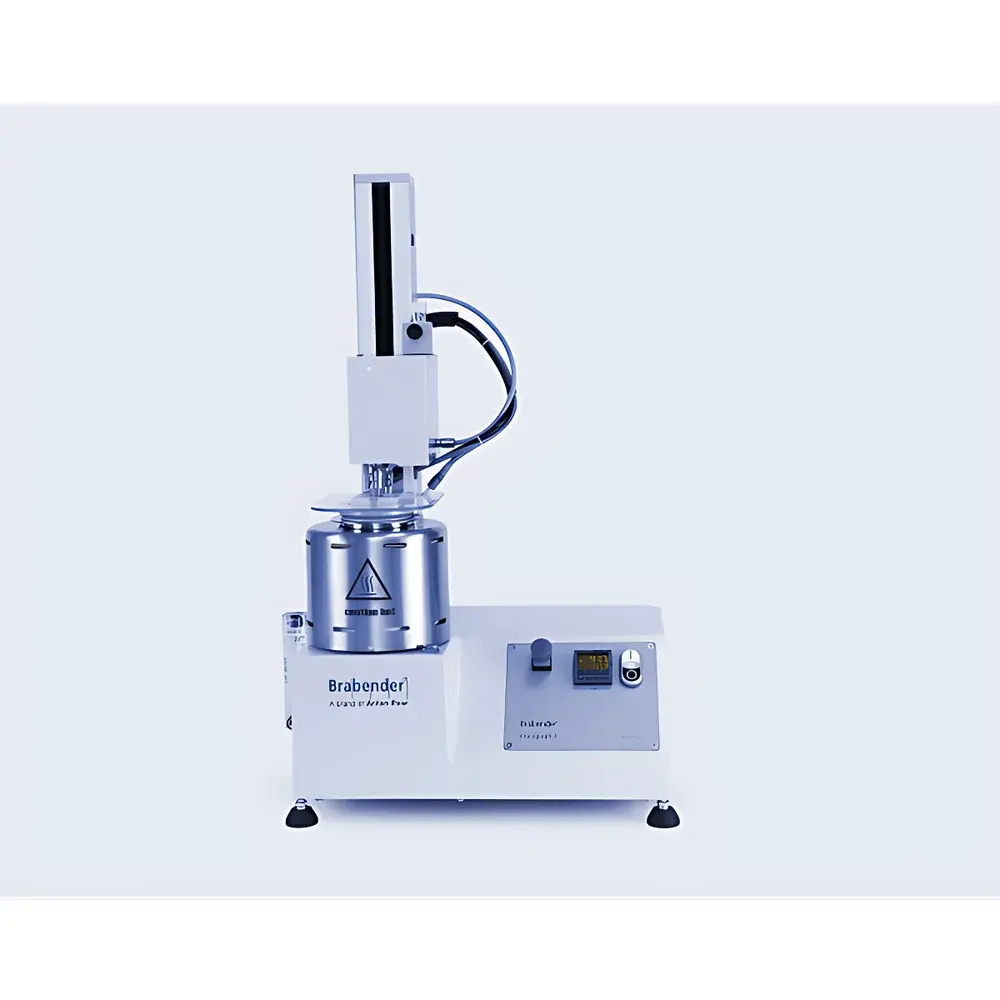
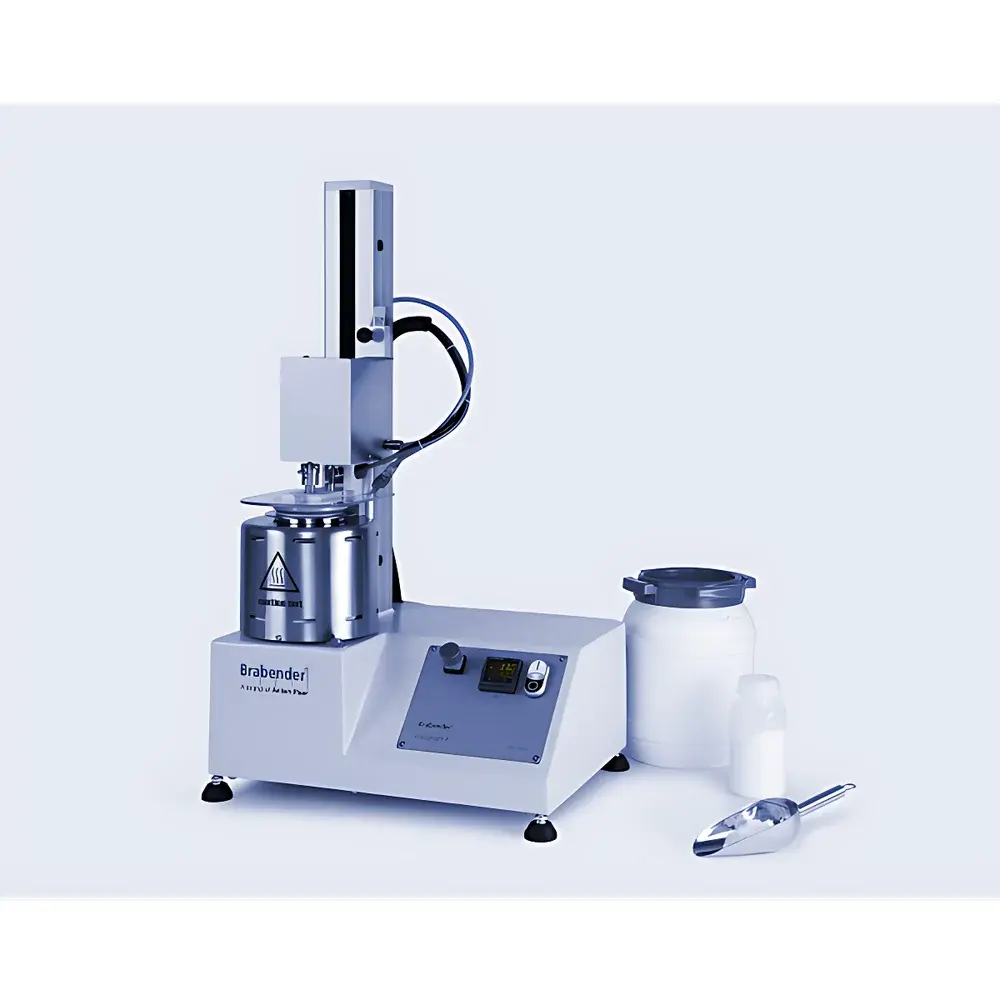

Anton Paar Brabender Viscograph-E Standard Starch Viscometer
| Brand | Anton Paar Brabender |
|---|---|
| Origin | Germany |
| Model | Viscograph-E |
| Sample Mass | 40 g |
| Compliance | ICC Standard No. 162, AACCI Method 76-15A |
| Temperature Control Accuracy | ±0.1 °C |
| Probe Type | Direct-contact immersion Pt100 sensor |
| Construction | Stainless steel bowl and stirrer |
| Software Platform | MetaBridge v3.x (supports FDA 21 CFR Part 11 audit trail, LIMS integration, multi-instrument synchronization) |
Overview
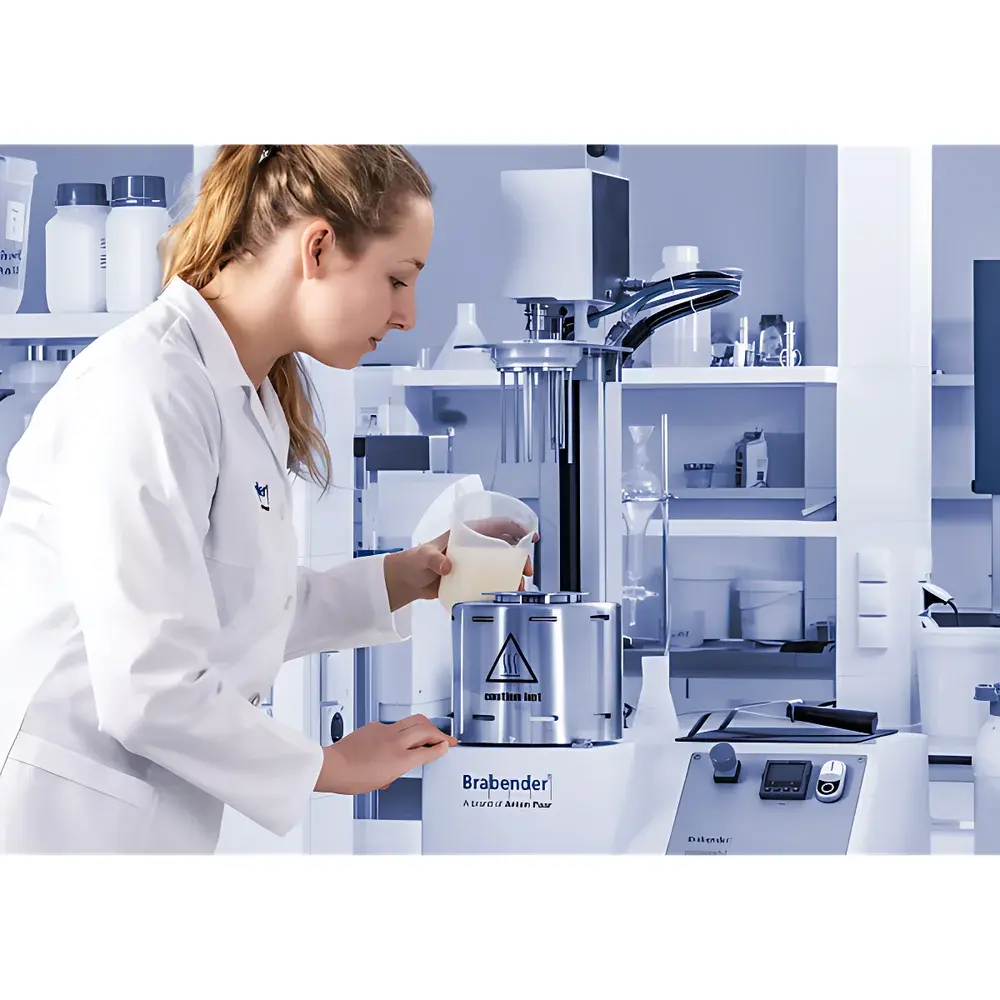
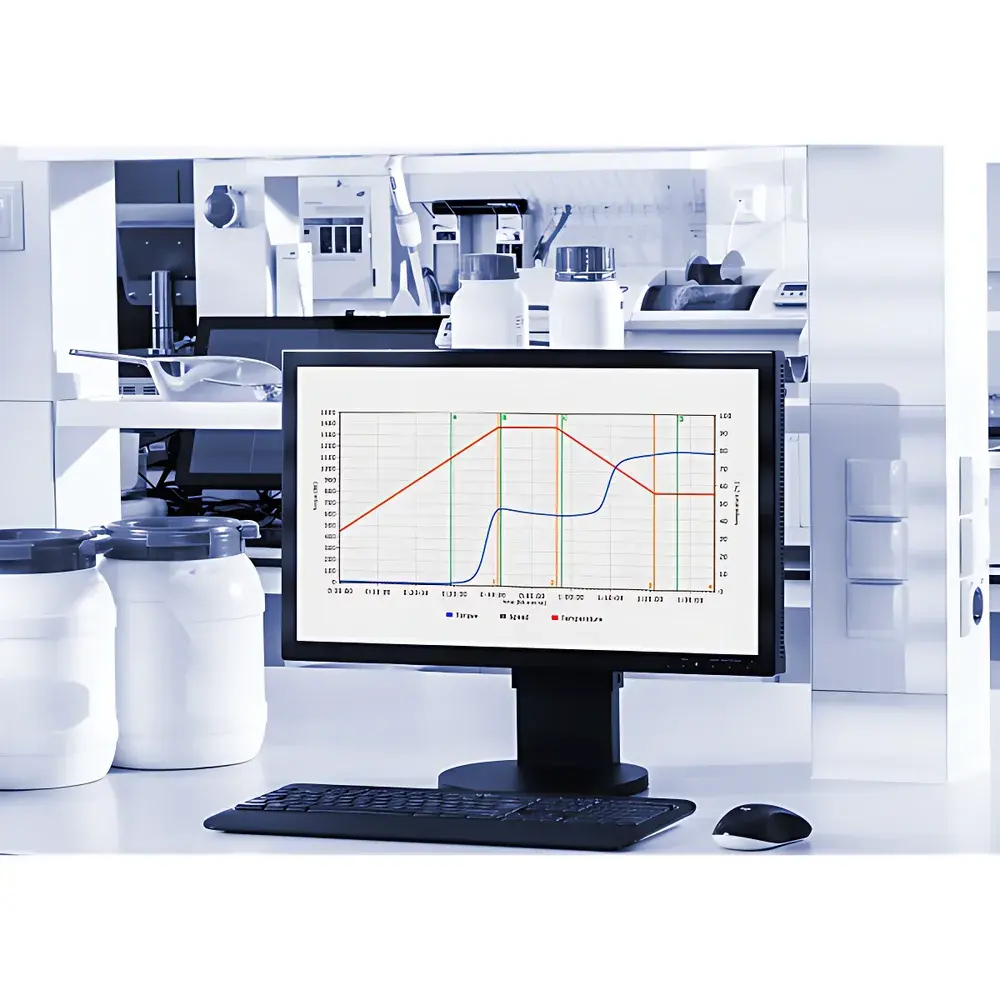
The Anton Paar Brabender Viscograph-E is a precision-engineered rotational viscometer specifically designed for standardized gelatinization and pasting behavior analysis of native and modified starches, wheat flour, and cereal-based materials. Operating on the principle of torque-based viscosity measurement under controlled heating/cooling ramps, the instrument records real-time resistance to shear as starch granules swell, gelatinize, and subsequently retrograde—generating the characteristic Brabender viscosity curve (BU vs. time/temperature). Its architecture conforms strictly to internationally recognized methodologies, including ICC Standard No. 162 (Determination of Pasting Properties of Starch and Flour) and AACCI Approved Method 76-15A (Viscoamylograph—Pasting Properties of Starch and Flour). The system employs a dual-jacketed stainless steel bowl with integrated temperature-controlled water circulation and a precisely calibrated paddle stirrer rotating at fixed speed (75 rpm), ensuring hydrodynamic consistency across measurements. All thermal events—including onset, peak, and setback temperatures—are derived from direct-contact Pt100 temperature sensing immersed in the slurry, eliminating thermal lag and enabling traceable correlation between thermal history and rheological response.
Key Features
- Direct-contact Pt100 temperature probe immersed in sample matrix ensures ±0.1 °C thermal accuracy, critical for reproducible detection of gelatinization onset and peak viscosity timing.
- Stainless steel bowl and stirrer assembly engineered for long-term dimensional stability and abrasion resistance—eliminates consumable dependency and maintains calibration integrity over >10,000 test cycles.
- Standardized 40 g sample mass minimizes relative weighing error (<0.25% at ±0.1 g balance resolution) and enhances slurry homogeneity, directly improving inter-laboratory reproducibility.
- Integrated water-jacketed thermal control system delivers linear heating/cooling ramps (e.g., 3–95–50 °C profile) with ≤0.3 °C deviation across full range, meeting ICC and AACCI protocol tolerances.
- Brabender Unit (BU) output scale—calibrated against NIST-traceable reference oils—is maintained via factory-certified torque transducer linearity (±0.5% FS), enabling cross-platform data comparability across global R&D and QC labs.
Sample Compatibility & Compliance
The Viscograph-E supports routine analysis of wheat, rye, barley, maize, rice, potato, and tapioca flours; native and chemically modified starches; and gluten-free formulations. It is validated for compliance with ISO 7973:1991 (Cereal flours—Determination of pasting properties), ICC Standard No. 162 (Starch and flour pasting behavior), and AACCI Method 76-15A. Instrument qualification includes IQ/OQ documentation aligned with GLP and GMP environments. Data acquisition meets FDA 21 CFR Part 11 requirements when used with MetaBridge software configured for electronic signatures, audit trails, and role-based access control—facilitating regulatory submissions in food ingredient manufacturing and pharmaceutical excipient development.
Software & Data Management
MetaBridge v3.x serves as the unified control, analysis, and reporting platform for the Viscograph-E. It provides real-time visualization of viscosity curves overlaid with reference standards (e.g., “Normal Wheat Flour” or “High-Amylose Maize Starch”), automated parameter extraction (peak viscosity, breakdown, setback, gelatinization temperature), and statistical trend analysis across batches. The software supports secure remote operation via encrypted HTTPS, synchronized multi-instrument testing (e.g., parallel Viscograph-E + Amylograph-E runs), and bidirectional data exchange with LIMS, SAP QM, and ERP systems through configurable RESTful APIs. All raw torque/time/temperature datasets are stored in vendor-neutral HDF5 format, preserving metadata for retrospective reprocessing and method validation per ICH Q5E guidelines.
Applications
- Raw material qualification of incoming starches and flours against supplier specifications and internal quality gates.
- Formulation development for bakery products, instant noodles, sauces, and plant-based meat analogs where pasting behavior dictates texture, freeze-thaw stability, and shelf-life performance.
- Enzyme activity profiling (e.g., α-amylase dosage optimization) by monitoring viscosity decay kinetics during controlled incubation phases.
- Regulatory dossier preparation for novel starch ingredients submitted to EFSA, FDA, or Health Canada, where ICC/AACCI-compliant pasting data is mandatory.
- Root-cause analysis of production deviations—e.g., correlating unexpected gelatinization temperature shifts with grain harvest moisture or milling parameters.
FAQ
Does the Viscograph-E require annual recalibration by an accredited service provider?
Yes. While the stainless steel mechanical components maintain dimensional stability, torque transducer linearity and Pt100 probe accuracy must be verified annually per ISO/IEC 17025 requirements. Anton Paar TorqueTec GmbH offers certified recalibration kits and on-site verification services.
Can MetaBridge export data in ASTM E1382-compliant format for analytical method transfer?
Yes. MetaBridge supports CSV and XML exports containing full metadata (instrument ID, operator, environmental conditions, calibration certificates), satisfying ASTM E1382-22 Annex A2 requirements for chromatographic and rheological data portability.
Is the 40 g sample size adjustable for low-volume R&D screening?
No. The 40 g mass is fixed per ICC and AACCI protocols to ensure hydrodynamic equivalence and thermal mass consistency. For exploratory work with limited samples, Anton Paar recommends the Micro ViscoAmyloGraph-E (5 g variant), which maintains BU traceability via scaled torque normalization.
How does the Viscograph-E handle high-viscosity, non-Newtonian starch pastes without slippage or wall effects?
The paddle geometry (dual-blade, 35 mm diameter, 12° pitch) and bowl aspect ratio (H/D = 1.8) are optimized per Couette flow theory to minimize secondary flows and boundary layer distortion. Combined with continuous torque feedback and adaptive motor current regulation, the system maintains constant 75 rpm even at peak viscosities exceeding 1,200 BU.
What documentation is provided for 21 CFR Part 11 compliance validation?
Anton Paar supplies a complete Validation Support Package including URS, FRS, DQ/IQ/OQ protocols, electronic signature configuration guide, and audit trail generation test scripts—all pre-reviewed by third-party GxP consultants.






