
AIRSENSE DRY-FOG Portable Dry-Fog Disinfection System
| Brand | AIRSENSE |
|---|---|
| Origin | Japan |
| Manufacturer Type | Authorized Distributor |
| Origin Category | Imported |
| Model | DRY-FOG |
| Quotation | Upon Request |
| Dimensions | Not Applicable (Wearable, Ergonomic Design) |
| Reservoir Capacity | Integrated Dual-Compartment Cartridge System (Compatible with Standard 1–2 L Disinfectant Cartridges) |
| 雾 Output Rate | ≤2 L/h (Adjustable via Microprocessor-Controlled Pneumatic Atomization) |
| Detection Range | 0–30 cm (Infrared Proximity Sensor, Auto-Triggered Dispensing) |
Overview
The AIRSENSE DRY-FOG Portable Dry-Fog Disinfection System is an engineered solution for rapid, residue-free surface and ambient space decontamination in sensitive operational environments. Unlike conventional wet-spray or UV-based methods, the DRY-FOG utilizes compressed-air-driven pneumatic atomization to generate a stable aerosol cloud composed of sub-10 µm droplets—classified as “dry fog” per ISO 14644-1 Class 5 cleanroom-compatible particle size distribution criteria. This physical principle enables deep penetration into crevices, vertical surfaces, and non-line-of-sight areas while minimizing liquid runoff, corrosion risk, and electrical short-circuit potential. Designed explicitly for mobility and operator autonomy, the system integrates a rechargeable lithium-ion battery pack, miniature oil-free diaphragm compressor, dual-chamber disinfectant reservoir, and embedded microcontroller—all housed in a balanced, ergonomically contoured背负 frame. Its operational profile aligns with WHO-recommended contact-time efficacy models for sporicidal and virucidal agents (e.g., hydrogen peroxide, peracetic acid, chlorine dioxide formulations), supporting validated disinfection cycles under controlled environmental conditions.
Key Features
- Sub-10 µm dry-fog generation via precision-engineered nozzle array and pressure-regulated air-assisted atomization
- Autonomous wearable platform: full-system integration including power supply, air compression, fluid delivery, and real-time sensor feedback
- Corrosion-resistant construction using electropolished 316L stainless steel, PTFE-lined fluid pathways, and IP65-rated electronics enclosure
- Infrared proximity sensing (0–30 cm range) with adaptive trigger logic to minimize unintended dispersion and optimize reagent use
- Battery endurance: ≥40 minutes continuous operation at nominal output (tested per IEC 62133:2017)
- Modular cartridge interface supporting industry-standard 1 L and 2 L disinfectant containers with leak-proof bayonet locking
- On-device status display: real-time battery level, remaining runtime estimate, fog density feedback, and fault diagnostics
Sample Compatibility & Compliance
The DRY-FOG is chemically agnostic across broad-spectrum liquid disinfectants—including oxidizing agents (e.g., stabilized hydrogen peroxide, peracetic acid), quaternary ammonium compounds, and chlorine-based solutions—provided they meet viscosity ≤15 cP and pH 2–12 compatibility limits. All wetted materials comply with USP and cytotoxicity and systemic injection testing requirements. The device conforms to IEC 61000-6-2 (immunity) and IEC 61000-6-4 (emissions) electromagnetic compatibility standards. While not a medical device per FDA 21 CFR Part 820, it supports GLP/GMP-aligned disinfection protocols when deployed within validated environmental control programs (e.g., ISO 13485-certified facilities, EU GMP Annex 1 cleanroom operations).
Software & Data Management
The DRY-FOG operates via embedded firmware (v2.1+) with configurable operational presets stored in non-volatile memory. Optional Bluetooth 5.0 module enables secure pairing with the AIRSENSE Disinfection Log Manager desktop application (Windows/macOS), facilitating timestamped cycle logging, operator ID tagging, location metadata (via connected GPS dongle), and exportable CSV reports compliant with internal audit and regulatory traceability requirements (e.g., ISO 9001 clause 8.5.2, FDA 21 CFR Part 11 electronic record provisions). Audit trails include start/stop timestamps, total dispensed volume estimation, battery discharge curve, and sensor anomaly flags.
Applications
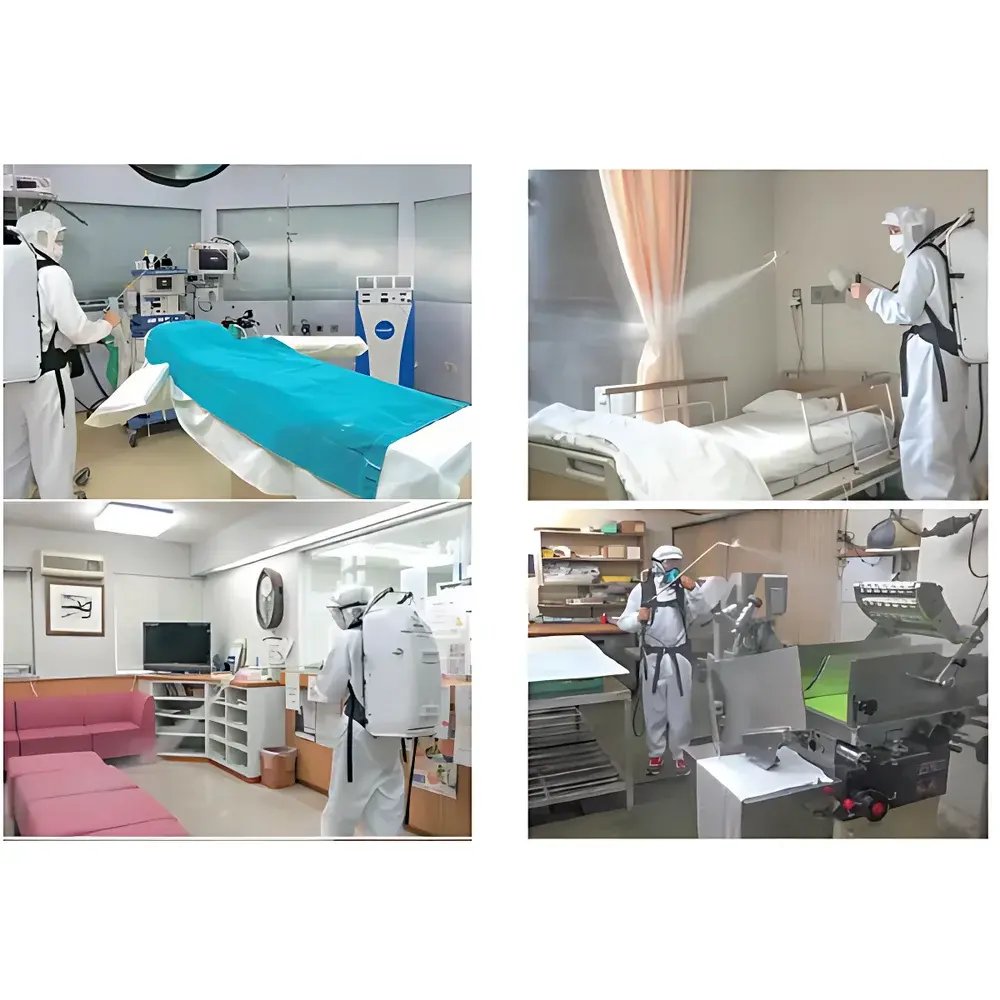
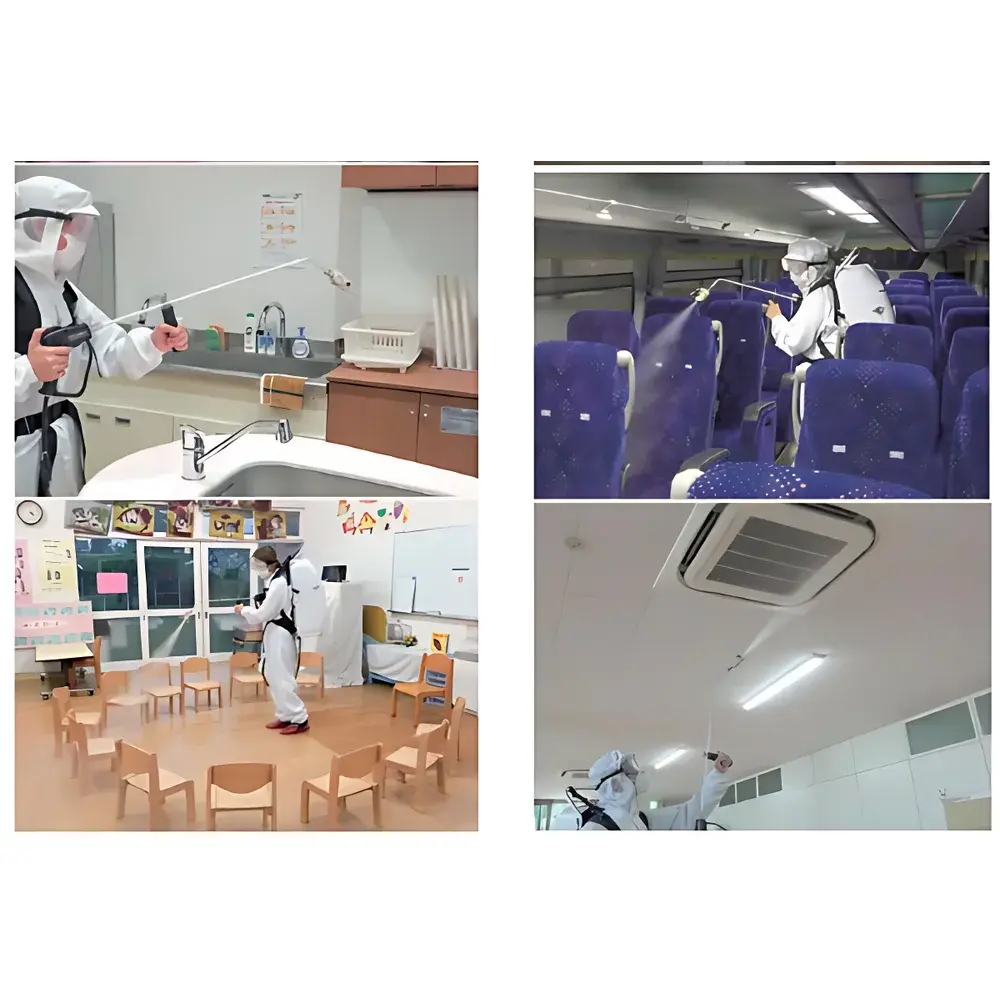
- Hospital infrastructure: terminal disinfection of operating theaters, isolation rooms, and mobile medical equipment without equipment shutdown
- Food production: post-CIP sanitization of conveyor belts, packaging stations, and high-ceiling processing zones where moisture accumulation is prohibited
- Public transport: rapid turnaround decontamination of train carriages, bus interiors, and aircraft galleys between service cycles
- Educational and childcare facilities: non-toxic, low-residue disinfection of play structures, classroom furniture, and shared digital interfaces
- Electronics-intensive environments: server rooms, control centers, and laboratory instrument suites requiring electrostatic-safe, non-conductive decontamination
FAQ
What disinfectants are compatible with the DRY-FOG system?
The system accepts aqueous disinfectant solutions with viscosity ≤15 cP and pH 2–12. Common validated formulations include 5–7% hydrogen peroxide, 0.2–0.5% peracetic acid blends, and EPA-registered quaternary ammonium mixtures.
Does the DRY-FOG require external power or compressed air sources?
No—it is fully self-contained with an integrated rechargeable battery and oil-free diaphragm compressor, enabling unrestricted deployment in off-grid or mobile settings.
How is disinfection efficacy verified when using dry-fog methodology?
Users must perform biological indicator challenge tests (e.g., Geobacillus stearothermophilus spores) in accordance with ISO 14644-3 Annex B and ISO 15714:2019 fogging validation protocols; AIRSENSE provides technical guidance documentation for protocol development.
Is routine calibration required?
The system does not require user-performed calibration; however, annual functional verification—per manufacturer’s Technical Service Bulletin TS-DRYF-003—is recommended to ensure sensor accuracy, flow consistency, and battery health.
Related Products



