
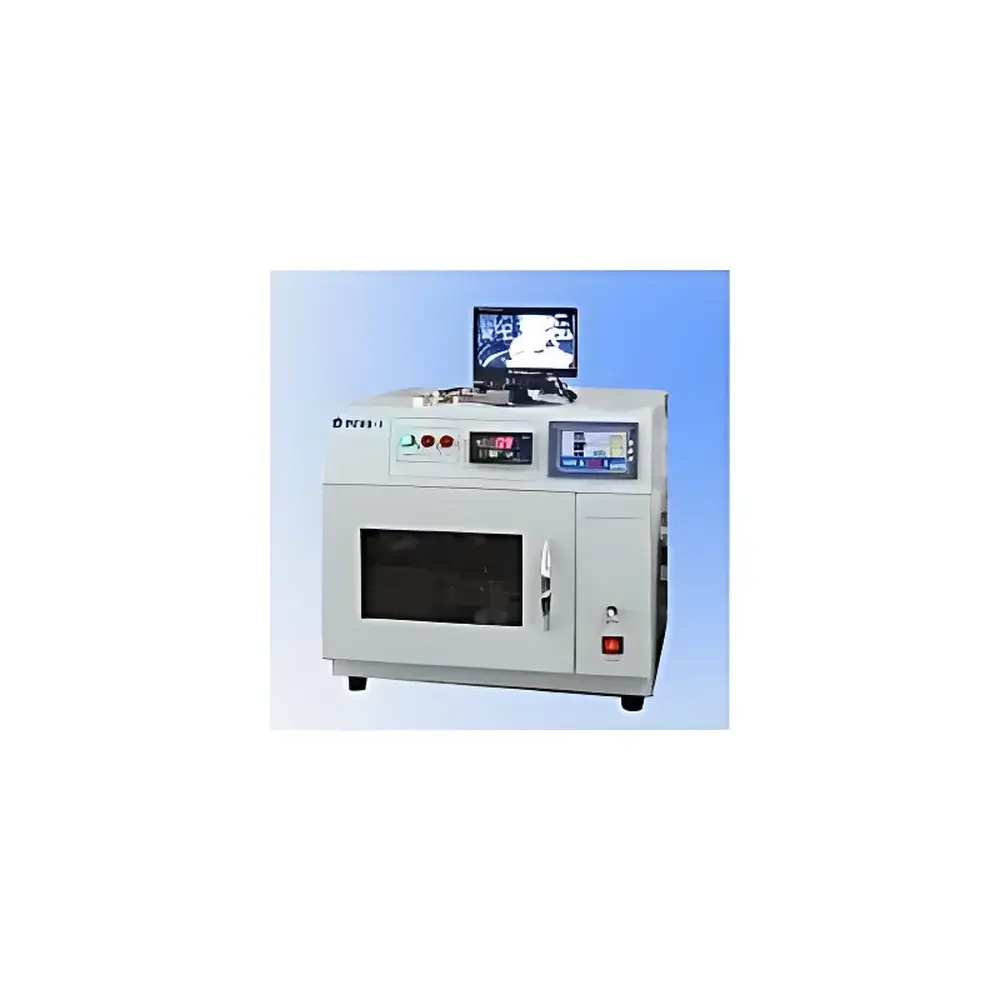
English Product Name
| Origin | Jiangsu, China |
|---|---|
| Manufacturer Type | Authorized Distributor |
| Origin Category | Domestic (China) |
| Model | MC8S-1 |
| Price | Upon Request |
| Microwave Power | 0–1000 W (continuous, linearly adjustable) |
| Microwave Frequency | 2450 MHz ±50 MHz |
| Ultrasonic Power | 50 W |
| Ultrasonic Frequency | 40 kHz |
| Temperature Range | 0–300 °C (contact sensor, ±1 °C accuracy) |
| Reaction Volume | 10–500 mL |
| Cavity Material | Stainless Steel |
| Safety Compliance | Meets GB 10436-2008 (Chinese national standard for microwave leakage) |
Overview
The MC8S-1 Microwave-Ultrasound Hybrid Synthesis Reactor is an engineered platform for controlled, multi-energy-driven chemical processing in research and development laboratories. It integrates two complementary non-thermal activation modalities—microwave irradiation (2450 MHz) and low-frequency ultrasonication (40 kHz)—within a single, safety-certified cavity architecture. Unlike conventional single-mode reactors, the MC8S-1 enables independent or synergistic operation of both energy sources, facilitating mechanistic studies on reaction acceleration, selectivity modulation, and mass/heat transfer enhancement in heterogeneous catalysis, solvent-free synthesis, extraction, and oxidative degradation. The system operates on the principle of dielectric heating (microwave) coupled with acoustic cavitation (ultrasound), where localized hotspots and transient micro-reactive environments are generated without bulk temperature overshoot. Designed for reproducible method development under GLP-aligned conditions, it supports traceable parameter logging, real-time thermal feedback control, and open-access integration with auxiliary lab equipment.
Key Features
- Independent or concurrent operation of microwave and ultrasound subsystems via intuitive touchscreen interface
- Continuous, linear microwave power regulation (0–1000 W) using adaptive fuzzy logic control to maintain stable power density inside the cavity
- Bottom-mounted 40 kHz ultrasonic transducer (50 W nominal output) optimized for mechanical coupling, minimal acoustic noise, and high sonomechanical efficiency
- Industrial-grade embedded microcomputer controller with full-color TFT LCD display (7-inch, 800×480 resolution) for live visual monitoring of reaction progress
- Top-access port with waveguide-based microwave cutoff structure—enables safe installation of reflux condensers, gas/vacuum lines, thermocouple probes, or mechanical stirrers without compromising RF shielding integrity
- Integrated Pt100 contact temperature sensor with ±1 °C accuracy across 0–300 °C range; closed-loop PID control adjusts microwave output in real time based on measured sample temperature
- Dual safety architecture: hardware interlocks (door switch, magnetron overtemperature protection) plus software-enforced operational limits and dynamic alarm states
- Stainless steel resonant cavity (≥12 L internal volume) rated for sustained high-temperature operation and resistant to chemical corrosion from common solvents and reagents
Sample Compatibility & Compliance
The MC8S-1 accommodates standard borosilicate glassware (e.g., round-bottom flasks, reflux setups) and compatible PTFE/Teflon-lined vessels within its 10–500 mL working volume range. Its open-top design supports ASTM E2912-compliant reflux configurations and USP –aligned aseptic manipulation when used with appropriate containment accessories. While not certified to IEC 61000-4 or EN 61326-1 out-of-the-box, the reactor meets China’s GB 10436-2008 standard for microwave radiation leakage (<5 mW/cm² at 5 cm distance), verified by third-party testing. Optional RS-485 Modbus RTU interface enables integration into ISO/IEC 17025-accredited QA/QC workflows requiring remote data acquisition and audit-trail generation per FDA 21 CFR Part 11 guidelines.
Software & Data Management
All operational parameters—including microwave setpoint, ultrasonic duty cycle, target temperature, ramp rate, hold time, and real-time sensor readings—are programmable, stored, and recalled via the onboard touch interface. Up to 100 user-defined protocols can be saved with descriptive naming and version timestamps. The system logs timestamped temperature/power profiles at 1-second intervals and exports CSV-formatted datasets via USB flash drive. Optional PC-based control software (sold separately) provides extended functionality: synchronized video capture (via composite video output + optional frame grabber), automated report generation, and secure database archiving with electronic signature support compliant with ALCOA+ principles.
Applications
The MC8S-1 serves as a versatile tool across academic and industrial R&D domains: catalytic C–C bond formation under solvent-minimized conditions; accelerated enzymatic hydrolysis of lignocellulosic biomass; microwave-assisted synthesis of metal–organic frameworks (MOFs); ultrasound-enhanced leaching of rare-earth elements from spent magnets; oxidative degradation of persistent organic pollutants (e.g., PFAS precursors); and rapid digestion of biological tissues prior to elemental analysis. Its modular design permits straightforward adaptation to emerging methodologies requiring sequential or simultaneous energy inputs—particularly valuable in green chemistry process intensification and DOE-based optimization studies.
FAQ
Can the MC8S-1 operate in microwave-only or ultrasound-only mode?
Yes. The instrument supports three distinct operational modes: microwave-only, ultrasound-only, and synchronized hybrid mode—all selectable via the main menu.
Is external cooling required for prolonged ultrasonic operation?
No. The bottom-mounted transducer is thermally isolated and rated for continuous duty at ambient laboratory temperatures (15–30 °C).
What safety certifications does the system carry?
The MC8S-1 complies with GB 10436-2008 for microwave leakage. CE marking is not applicable as it is manufactured for domestic Chinese market use; international variants require regional conformity assessment.
Can custom reaction vessels be integrated?
Yes. The top access port accepts standard ground-glass joints (e.g., 24/40, 29/32) and allows direct mounting of jacketed reactors or fiber-optic temperature probes.
Is firmware upgrade capability available?
Firmware updates are distributed via USB stick and installed through the maintenance menu. Version history and release notes are provided upon request to authorized users.
Related Products



