
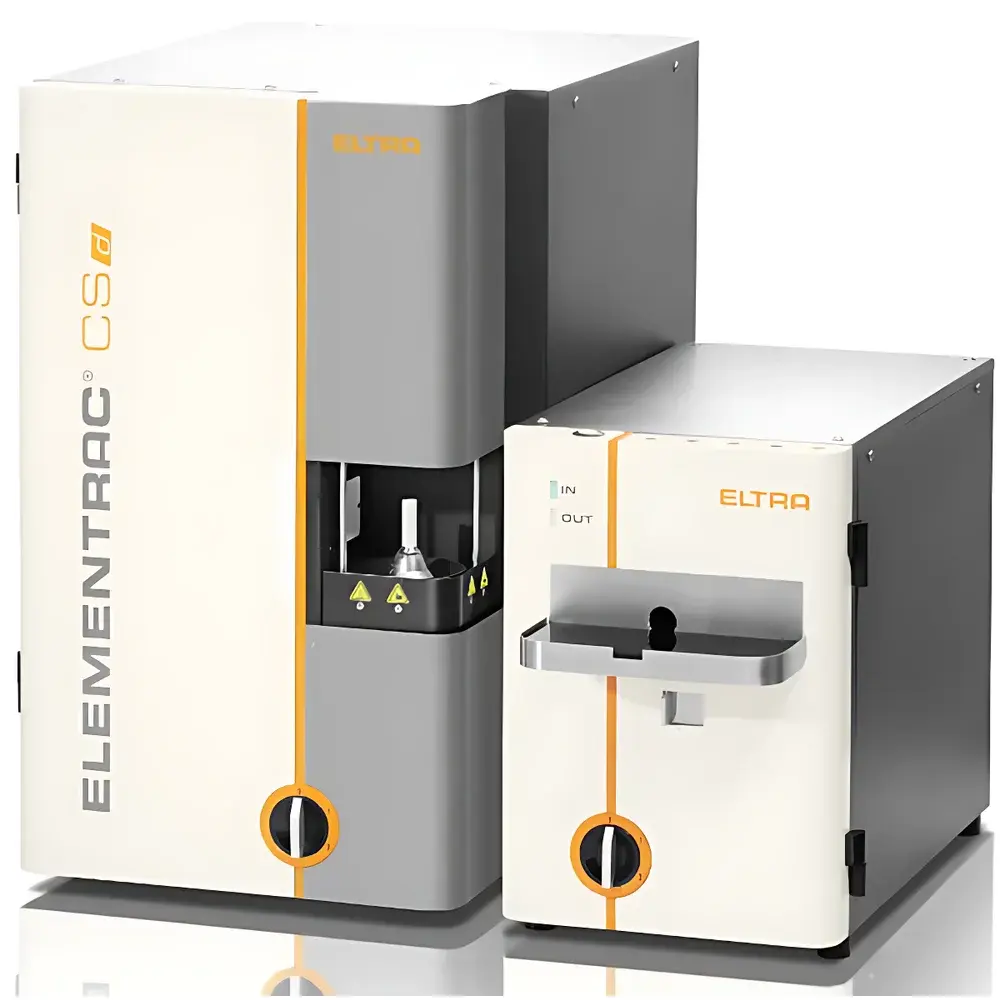
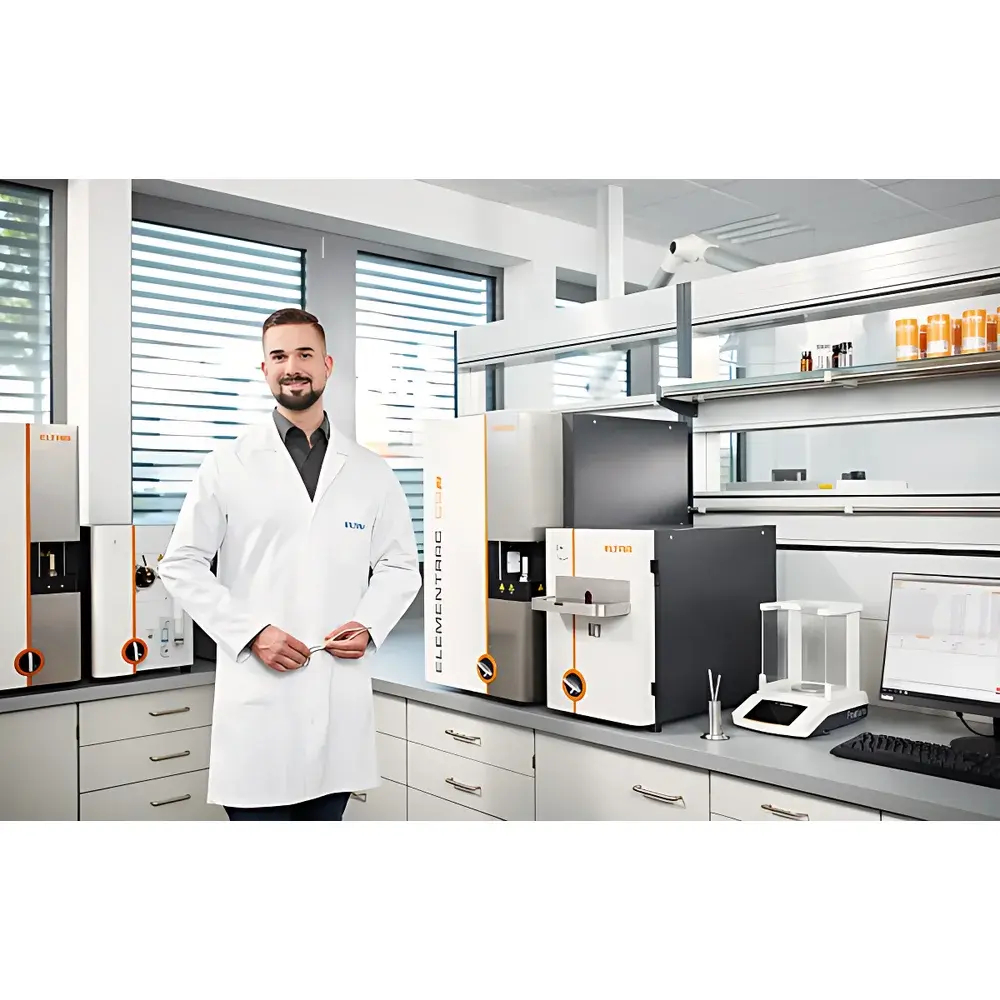
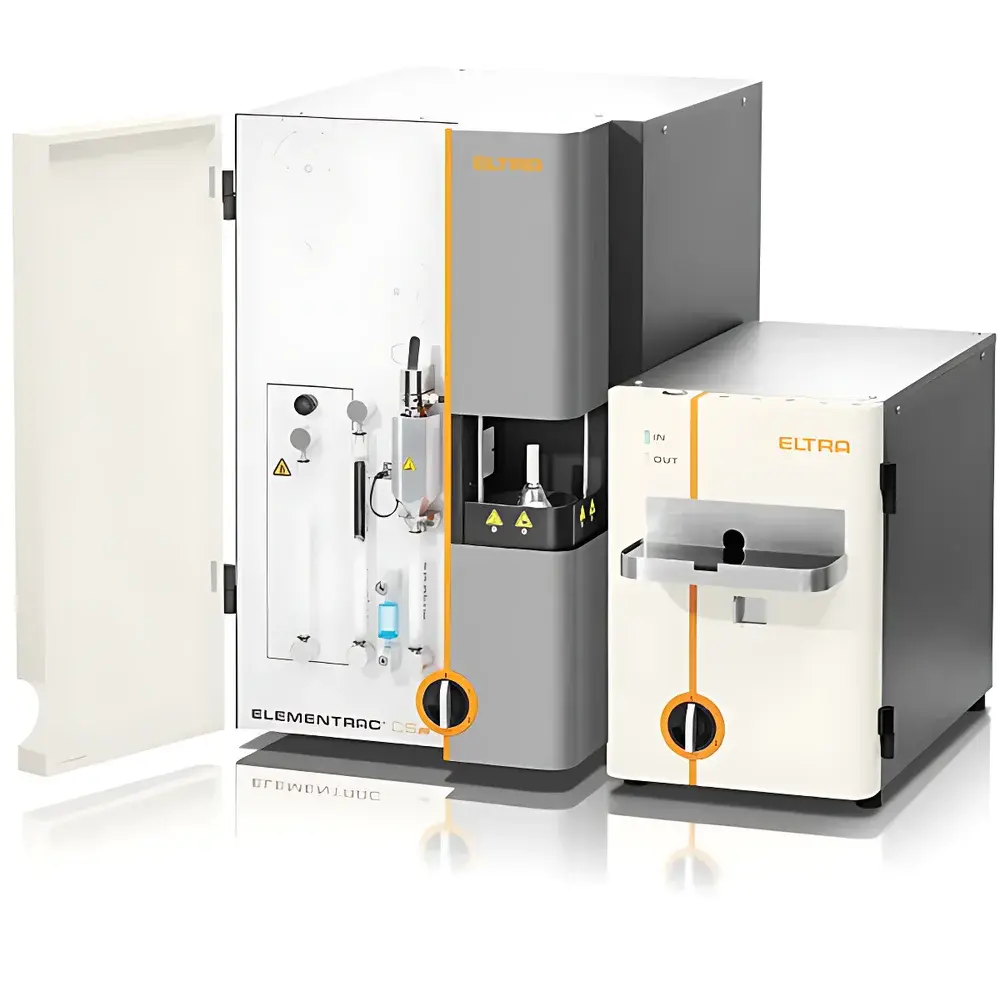
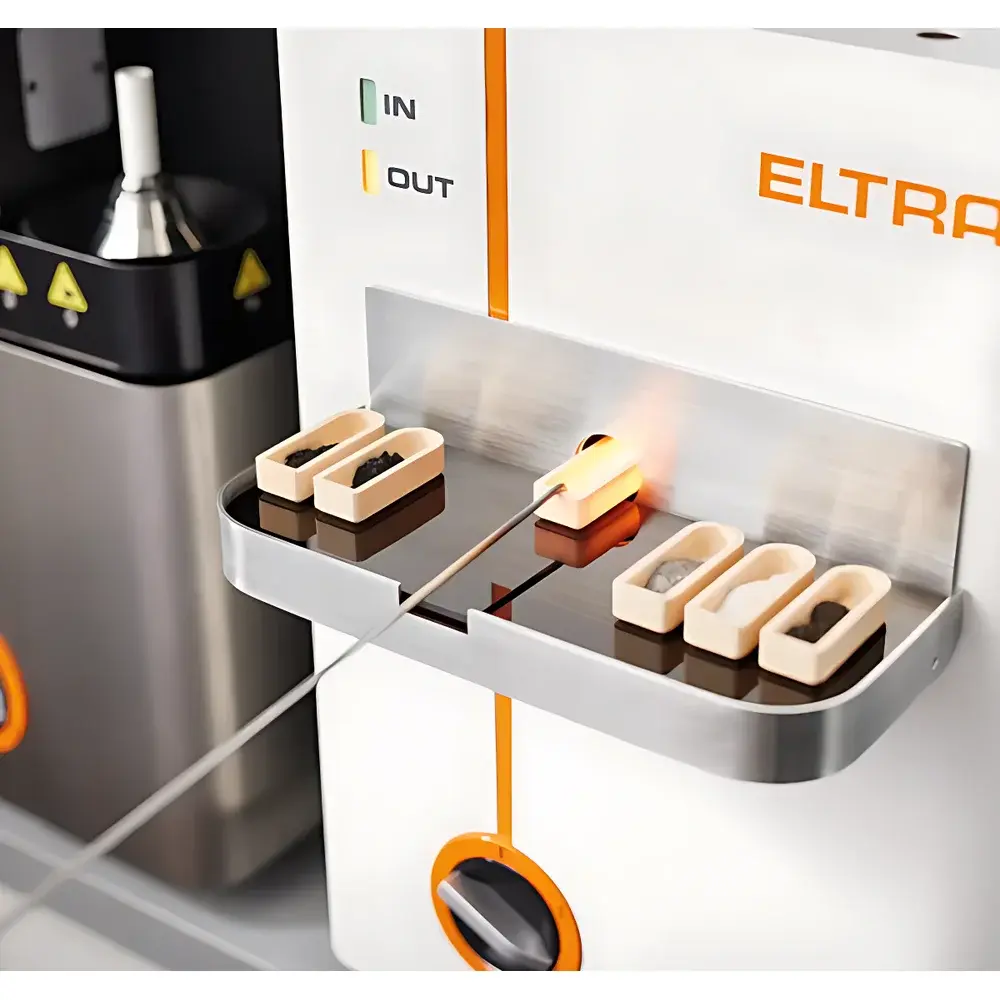
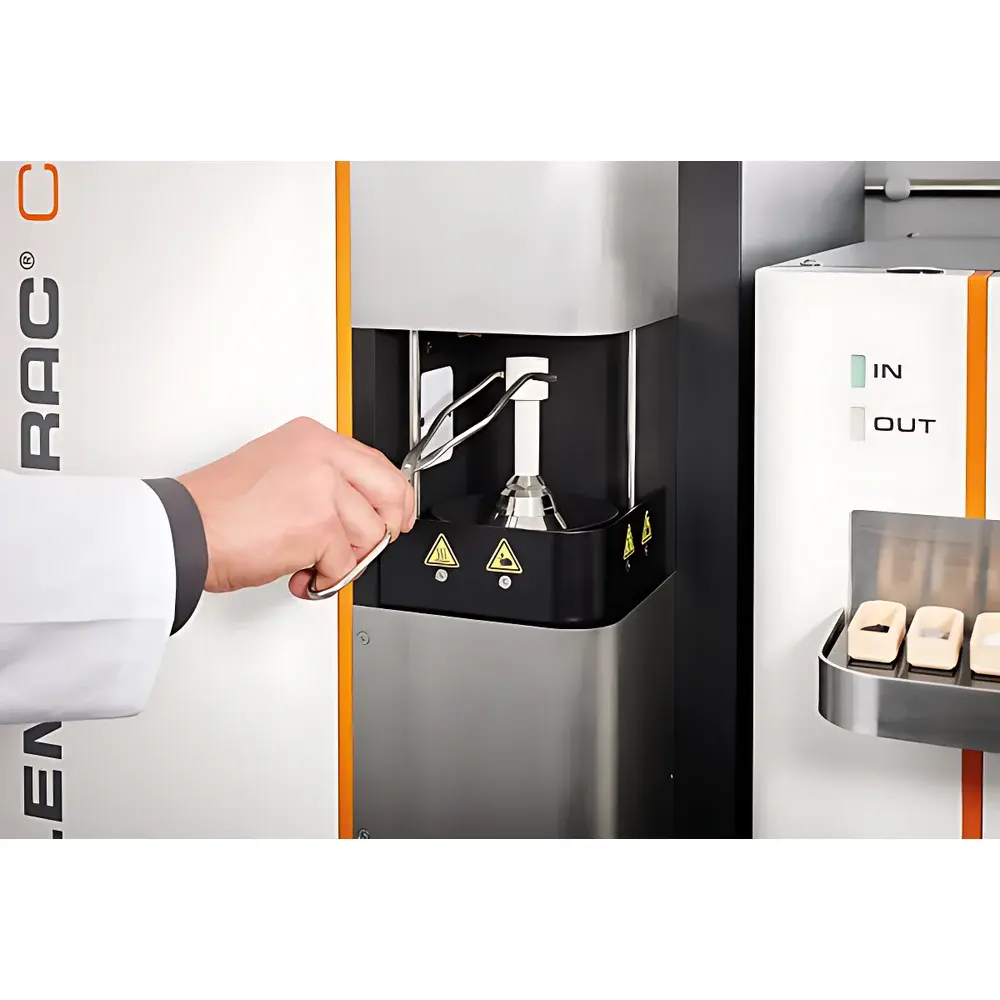
ELTRA ELEMENTRAC CS-d Carbon Sulfur Analyzer
| Brand | ELTRA |
|---|---|
| Origin | Germany |
| Model | CS-d |
| Measurement Principle | Infrared Absorption |
| Heating System | High-Frequency Induction Furnace & Resistance Furnace |
| Carbon Range | 0.0012–70 mg |
| Sulfur Range | 0.0006–30 mg |
| Sensitivity | 0.01 ppm |
| Accuracy | ±0.2 ppm or ±0.5% RSD |
| Analysis Time | 45 s |
Overview
The ELTRA ELEMENTRAC CS-d is a dual-furnace combustion-based carbon and sulfur analyzer engineered for high-precision elemental quantification in both organic and inorganic solid materials. It operates on the principle of high-temperature combustion followed by non-dispersive infrared (NDIR) spectroscopic detection—where evolved CO₂ and SO₂ gases are measured in dedicated gold-coated infrared cells. This methodology complies with internationally recognized standards including ASTM E1019, ISO 15350, and DIN 51018 for total carbon and sulfur determination in metals, ores, ceramics, fuels, and geological matrices. The CS-d’s architecture integrates two thermally independent furnaces—high-frequency induction (HF) and programmable resistance heating—enabling method-specific optimization without hardware reconfiguration. Its robust thermal management, heated dust filter, and temperature-controlled catalytic converter ensure complete oxidation of CO to CO₂ and suppression of sulfate condensation, directly contributing to measurement integrity across trace (ppm) to major-element (wt%) concentration ranges.
Key Features
- Dual-furnace system: HF induction furnace (for metals, alloys, refractories) and resistance furnace (for organics, polymers, coal, soils), each independently controllable via ELEMENTS software.
- Four independent, gold-plated NDIR detectors—two for carbon (broad and narrow range), two for sulfur—ensuring linear response from 0.01 ppm to 100% w/w with minimal cross-talk.
- Heated quartz dust filter (maintained at >120 °C) prevents condensation of H₂SO₄ and water vapor, eliminating baseline drift and memory effects.
- Programmable catalytic converter (operable up to 850 °C) ensures quantitative oxidation of CO to CO₂ during low-temperature resistance furnace analysis.
- Smart oxygen delivery: Centralized O₂ jet for bulk metallic samples; diffuse cavity injection for powders and low-density materials (e.g., SiC) to prevent splatter and mass loss.
- Adjustable RF power (2–5 kW) and ramped heating profiles allow optimized combustion of low-melting-point alloys (Sn, Mg) and high-carbon cast irons without crucible failure.
Sample Compatibility & Compliance
The CS-d accommodates diverse physical forms—chips, turnings, pellets, powders, and pressed briquettes—with no mandatory acid digestion or solvent extraction. Typical certified reference materials (CRMs) validated include NIST SRM 1261a (low-alloy steel), BCS CRM 309/1 (cast iron), and SARM 20 (coal). All furnace modules meet CE directives for electromagnetic compatibility (2014/30/EU) and low voltage safety (2014/35/EU). Data acquisition and audit trails comply with FDA 21 CFR Part 11 requirements when operated under validated ELEMENTS software configurations. Routine calibration verification follows GLP-aligned procedures, including daily blank checks, multi-point calibration curves (≥5 points), and intermediate control sample monitoring per ISO/IEC 17025:2017 clause 7.7.
Software & Data Management
ELEMENTS v5.x provides a modular, role-based interface with intuitive workflow navigation, real-time gas signal visualization, and automated peak integration. Critical analytical parameters—including furnace temperature ramp rates, O₂ flow profiles, catalyst zone setpoints, and detector gain settings—are stored per method and protected by password-secured user levels (Operator, Supervisor, Administrator). Raw spectral data, calibration logs, and instrument diagnostics are timestamped and archived in encrypted SQLite databases. Export options include CSV, PDF reports (with embedded chromatograms), and direct LIMS integration via ASTM E1382-compliant ASCII output. Audit trail functionality records all parameter modifications, result overrides, and user logins with immutable timestamps—fully traceable for regulatory inspections.
Applications
The CS-d delivers reproducible results across metallurgical QA/QC (steel, stainless, superalloys), raw material certification (ferroalloys, graphite electrodes), energy sector testing (coal, coke, biomass), environmental analysis (soil, fly ash, slags), and advanced ceramics (SiC, Al₂O₃, ZrO₂). Its resistance furnace enables accurate TC (total carbon) determination in acid-washed geological samples per USP , while HF mode supports rapid sulfur screening in copper anodes per ASTM B115. Laboratories performing ISO 9001-certified production testing routinely deploy the CS-d for SPC charting of C/S variability in continuous casting billets.
FAQ
What sample types require the resistance furnace versus the high-frequency furnace?
Resistance furnace is recommended for organic-rich, low-conductivity, or thermally sensitive matrices (e.g., coal, polymers, soils, biological ash); HF furnace is optimal for conductive metals, alloys, and refractory oxides.
Can the CS-d measure carbon and sulfur simultaneously in a single run?
Yes—both elements are quantified in parallel using dedicated NDIR channels during one combustion cycle, with independent calibration and correction algorithms.
Is the 36-position autosampler compatible with both furnaces?
The autosampler is designed exclusively for the HF furnace; resistance furnace analysis requires manual loading due to extended thermal equilibration requirements.
How does the heated dust filter improve long-term stability?
By maintaining the filter above the dew point of combustion gases, it prevents sulfuric acid deposition and subsequent detector contamination—extending cell lifetime beyond 50,000 analyses.
Does the CS-d support method transfer from legacy ELTRA instruments?
Yes—ELEMENTS software includes backward-compatible import tools for CS-2000, CS-500, and CS-800 methods, with automatic parameter mapping and validation prompts.





