
Hydro-Watch Online Automatic Water Quality and Hydrological Telemetry System
| Origin | Shanghai, China |
|---|---|
| Manufacturer Type | Authorized Distributor |
| Origin Category | Domestic (China) |
| Model | Hydro-Watch |
| Pricing | Available Upon Request |
Overview
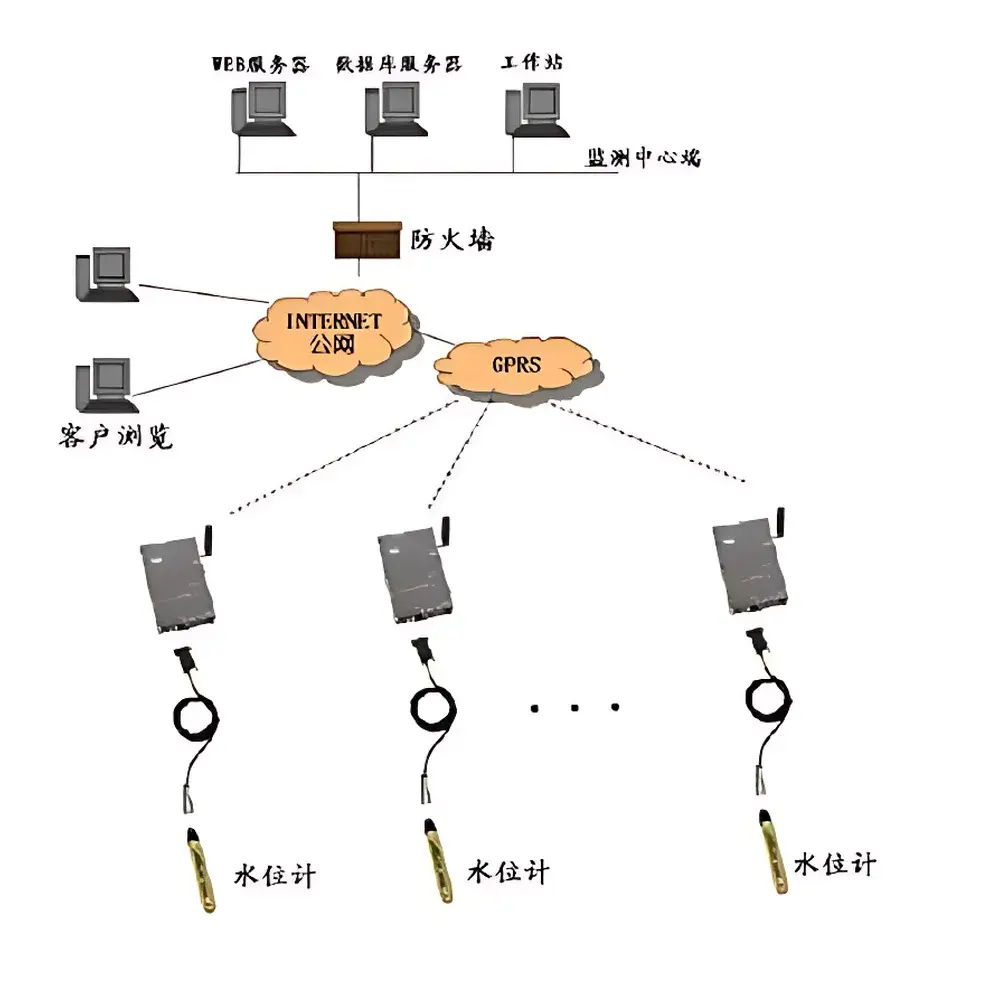
The Hydro-Watch Online Automatic Water Quality and Hydrological Telemetry System is an integrated, field-deployable environmental monitoring platform engineered for long-term, unattended measurement and remote transmission of critical hydrological parameters. Built upon a robust telemetry architecture, the system employs standardized sensor interfaces and low-power embedded controllers to acquire real-time data—including water level, temperature, electrical conductivity, rainfall, barometric pressure—and transmit it via GPRS/CDMA cellular networks to a centralized web-based management server. Unlike manual sampling or intermittent logging systems, Hydro-Watch implements continuous, bidirectional communication—enabling not only automated data retrieval but also remote configuration, firmware updates, and diagnostic interrogation of field units. Its design adheres to fundamental principles of hydrological monitoring: minimal site disturbance, high temporal resolution, energy autonomy, and operational resilience across geographically dispersed and logistically challenging locations (e.g., mountainous watersheds, arid aquifer zones, flood-prone river basins). The system operates under ISO 14001-aligned deployment protocols and supports traceability requirements consistent with national water resource management frameworks.
Key Features
- True bidirectional telemetry: Enables remote command issuance (e.g., sensor recalibration triggers, sampling interval adjustment, alarm threshold reconfiguration) alongside upstream data transmission
- Multi-parameter sensor integration: Native support for submersible pressure transducers (water level), platinum RTD probes (temperature), four-electrode conductivity cells (EC), tipping-bucket rain gauges, and MEMS barometers
- Low-power embedded architecture: Field nodes operate on 5 V DC supply; average current draw < 15 mA in standby, < 80 mA during active measurement and transmission
- Flexible power options: Compatible with rechargeable LiFePO₄ batteries (10-year nominal service life), solar charging kits (with MPPT regulator), and 220 V AC mains adapters
- Self-diagnostic firmware: Monitors battery voltage, sensor health status, memory integrity, and modem signal strength; reports anomalies via structured telemetry packets
- Modular hardware design: Enclosed IP68-rated instrument housing includes terminal blocks for sensor wiring, SIM card slot, and RS-485/RS-232 interface for legacy device integration
Sample Compatibility & Compliance
The Hydro-Watch system accommodates standard industrial-grade hydrological sensors compliant with IEC 61000-6-2 (EMC immunity) and IEC 60529 (IP68 ingress protection). Sensor calibration certificates conform to ISO/IEC 17025-accredited practices where applicable. Data acquisition intervals are configurable from 1 minute to 24 hours per parameter, supporting both event-triggered (e.g., rapid water-level rise > 5 cm/hr) and scheduled reporting modes. All transmitted data packets include UTC timestamps, sensor serial identifiers, and CRC-16 checksums to ensure integrity. The system meets China’s HJ/T 92–2019 technical specifications for online water quality monitoring systems and aligns with international best practices referenced in UNESCO-IHP guidelines for sustainable groundwater monitoring networks.
Software & Data Management
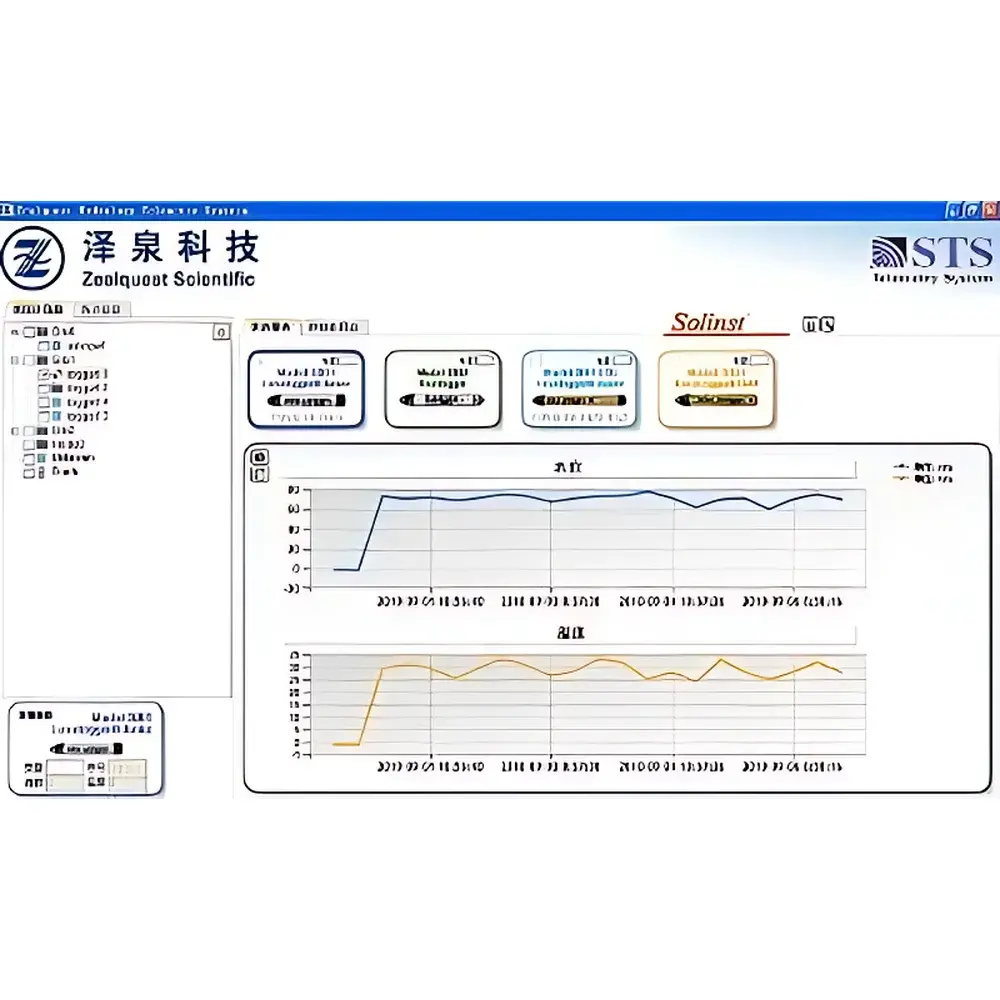
The Hydro-Watch Remote Monitoring Software is a browser-based ASP.NET application hosted on Microsoft SQL Server, designed for multi-user access with role-based permissions (administrator, operator, viewer). It provides real-time dashboard visualization with customizable time-series plots, geospatial mapping of monitoring sites (via integrated GIS layer support), and automated alerting via email/SMS when user-defined thresholds (e.g., water level > 3.2 m, conductivity > 1,800 µS/cm) are exceeded. All raw sensor data—including metadata such as battery voltage, modem RSSI, and internal temperature—are stored in normalized relational tables with full audit trail capabilities. Export functionality supports CSV, Excel (.xlsx), and standardized WaterML 2.0 formats. The software architecture complies with data retention policies required under China’s Cybersecurity Law and supports optional encryption-at-rest (AES-256) and TLS 1.2+ encrypted data transmission.
Applications
- Regional groundwater level trend analysis for aquifer sustainability assessment
- Real-time flood forecasting and early warning in riverine and coastal catchments
- Long-term monitoring of artesian well dynamics during drought or recharge events
- Supporting managed aquifer recharge (MAR) projects through precise infiltration rate quantification
- Automated reservoir and detention pond level control in urban stormwater infrastructure
- Post-mining or landfill leachate plume tracking via conductivity anomaly detection
- Calibration validation for satellite-based altimetry (e.g., SWOT mission ground truthing)
FAQ
What communication protocols does the Hydro-Watch system support?
GPRS and CDMA cellular networks using TCP/IP over PPP; optional LoRaWAN gateway integration available upon request.
Can the system operate without cellular coverage?
Yes—field units store up to 30 days of high-frequency data locally and transmit synchronously once network connectivity is restored.
Is the remote monitoring software compatible with third-party SCADA platforms?
Yes—data export APIs (RESTful JSON endpoints) and ODBC drivers enable integration with Ignition, Siemens Desigo, or Schneider EcoStruxure systems.
How is sensor calibration maintained over extended deployments?
Each sensor module includes non-volatile calibration coefficients; field units support zero-point verification routines triggered remotely or via scheduled maintenance cycles.
Does the system meet regulatory requirements for environmental reporting?
Data structure and metadata fields comply with China’s Ministry of Ecology and Environment (MEE) reporting templates and are adaptable to EPA STORET or EU WISE data submission standards.







