
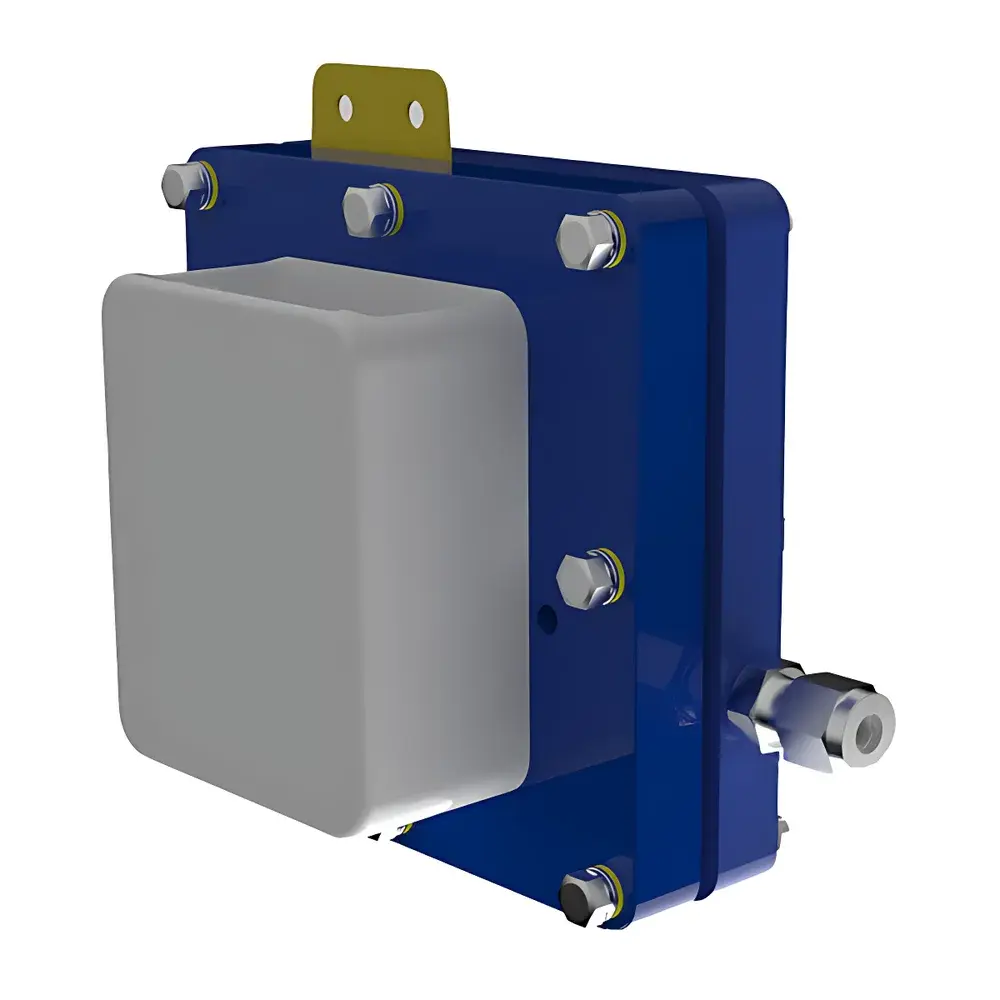
EWIN-TECH HC-100H Auto-Humidifying Redox Catalyst Testing Fixture
| Brand | EWIN-TECH |
|---|---|
| Origin | Shanghai, China |
| Manufacturer Type | OEM/ODM Producer |
| Country of Origin | China |
| Model | HC-100H |
| Pricing | Upon Request |
| Construction Materials | PEEK + ASTM F138 Grade 316L Stainless Steel |
| Operating Temperature Range | 25–95 °C |
| Relative Humidity Control | 0–100% RH (Auto-humidification via integrated water vapor diffusion manifold) |
| Compatible Electrode Formats | GDEs up to 5 cm² active area |
| Measurement Capabilities | Polarization curve acquisition, electrochemical impedance spectroscopy (EIS), cyclic voltammetry (CV), chronoamperometry (CA) |
| Fluidic Interface | Dual gas inlets (anode/cathode), liquid water injection ports, integrated pressure regulation (0–300 kPa gauge) |
| Compliance | Designed per ISO 8502-3 (surface cleanliness), ASTM D7234 (adhesion testing for coated substrates), and compatible with GLP-compliant test protocols |
Overview
The EWIN-TECH HC-100H Auto-Humidifying Redox Catalyst Testing Fixture is an engineered platform for controlled electrochemical evaluation of catalyst layers under realistic proton exchange membrane fuel cell (PEMFC) and electrolyzer operating conditions. It implements a closed-loop humidification architecture based on saturated vapor diffusion through precision-machined PTFE-coated stainless steel manifolds, enabling dynamic RH control from 0% to 100% without external bubbler systems or condensation-prone external humidifiers. Unlike conventional dry-gas test cells, the HC-100H replicates the coupled water transport, thermal gradients, and interfacial mass transfer phenomena inherent to membrane electrode assemblies (MEAs). Its core design principle follows the Couette–Poiseuille hybrid flow regime for uniform gas distribution across the catalyst layer, minimizing boundary-layer resistance and ensuring representative kinetic data for oxygen reduction reaction (ORR), hydrogen oxidation reaction (HOR), and oxygen evolution reaction (OER) studies.
Key Features
- Integrated auto-humidification system delivering stable, traceable RH control (0–100%) at temperatures from 25 °C to 95 °C — no external humidifiers or manual water refills required.
- Bimetallic fluidic architecture: 316L stainless steel structural frame (ASTM F138 compliant) with PEEK polymer sealing and flow-path components, resistant to acidic electrolyte exposure and long-term H₂/O₂ operation.
- Modular dual-chamber configuration supporting independent anode/cathode gas supply, backpressure control (0–300 kPa), and optional liquid water injection for flooding simulation.
- Precision-machined gas diffusion layer (GDL) contact surface with <1.2 µm Ra finish to ensure uniform interfacial contact pressure and minimize contact resistance variability.
- Thermally isolated heating/cooling plates with Pt100 RTD feedback loops and ±0.3 °C spatial uniformity across the active area.
- Standardized electrical interface (4-wire Kelvin connection) compatible with potentiostats from BioLogic, Gamry, Pine Research, and Metrohm Autolab platforms.
Sample Compatibility & Compliance
The HC-100H accommodates standard catalyst-coated membranes (CCMs) and gas diffusion electrodes (GDEs) with active areas up to 5 cm² (e.g., 25 mm diameter circular or 20 × 25 mm rectangular formats). Its gasket geometry supports both Nafion™-based and hydrocarbon membrane systems. All wetted materials comply with USP Class VI biocompatibility requirements and meet ISO 10993-5 cytotoxicity screening thresholds. The fixture’s mechanical loading protocol adheres to ASTM D7234 for adhesion integrity assessment under thermal cycling. Data acquisition workflows are structured to support 21 CFR Part 11 audit trails when paired with validated software environments, and its operational envelope aligns with DOE Hydrogen Program targets for catalyst durability benchmarking (e.g., DOE Target 2025: <5 mV/h voltage decay under accelerated stress tests).
Software & Data Management
The HC-100H operates as a hardware-integrated subsystem — it does not include proprietary firmware or embedded controllers. Instead, it interfaces directly with industry-standard electrochemical workstations via analog I/O and digital trigger lines. Temperature, humidity, and pressure transducers output calibrated 4–20 mA or 0–10 V signals compatible with LabVIEW, MATLAB Data Acquisition Toolbox, or Python-based PyVISA frameworks. Users may implement automated test sequences (e.g., stepped potential sweeps with concurrent RH ramping) using open-source libraries such as ECpy or commercial tools like EC-Lab® Scripting Module. All raw sensor data is timestamped and stored in HDF5 or CSV format, enabling traceable correlation between polarization behavior and transient hygrothermal states.
Applications
- Accelerated catalyst degradation testing (ADT) under realistic water activity gradients (e.g., cathode RH cycling from 30% to 100% while maintaining anode at 50% RH).
- Quantitative structure–activity relationship (QSAR) modeling for Pt-alloy, Fe–N–C, and non-PGM catalysts under variable hydration states.
- Validation of computational fluid dynamics (CFD) models for water management in MEA microstructures.
- Process qualification of catalyst ink formulations, spray-coating parameters, and hot-pressing protocols prior to full-cell integration.
- Teaching laboratories requiring reproducible, safety-compliant PEMFC fundamentals demonstrations with real-time impedance monitoring.
FAQ
Can the HC-100H be used for CO₂ electrolysis catalyst evaluation?
Yes — with appropriate anode gas selection (e.g., CO₂/N₂ mixtures) and compatible membrane alternatives (e.g., AEMs), the fixture supports alkaline and anion exchange membrane configurations when operated below 70 °C.
Is custom active area sizing available?
Yes — EWIN-TECH offers engineering services for bespoke GDL contact plates, gasket geometries, and flow-field modifications; lead time typically ranges from 6–10 weeks.
Does the fixture include pressure sensors and temperature controllers?
Standard configuration includes two calibrated PT100 RTDs (anode/cathode side), one absolute humidity sensor (Vaisala HUMICAP®), and two piezoresistive pressure transducers (0–300 kPa); all are pre-calibrated and supplied with NIST-traceable certificates.
How is leak integrity verified during setup?
The system incorporates a dual-stage helium leak check port and supports ASTM E499-19 compliance verification using handheld mass spectrometer detectors (e.g., INFICON UL2000) prior to electrochemical testing.
What maintenance intervals are recommended for long-term operation?
PEEK seals require replacement every 12 months under continuous use; 316L surfaces should undergo passivation per ASTM A967 every 6 months if exposed to chloride-containing condensates.



