
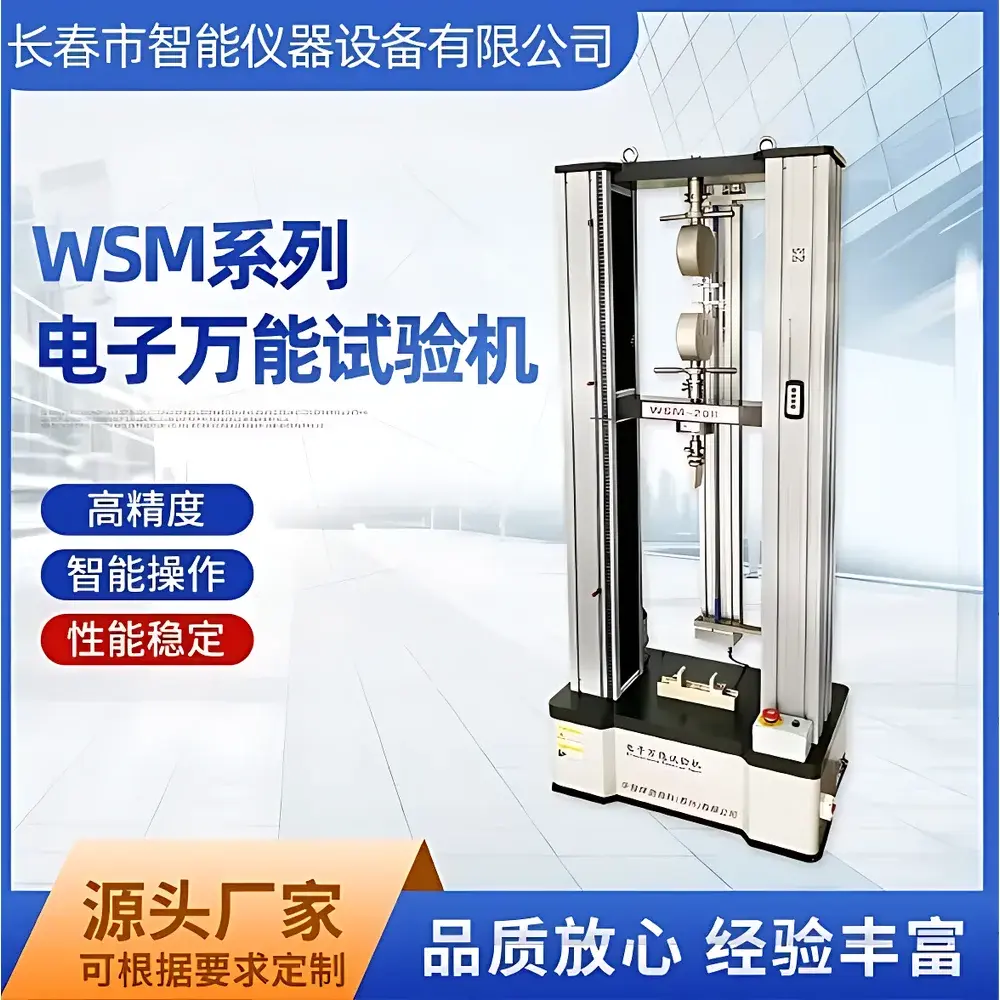
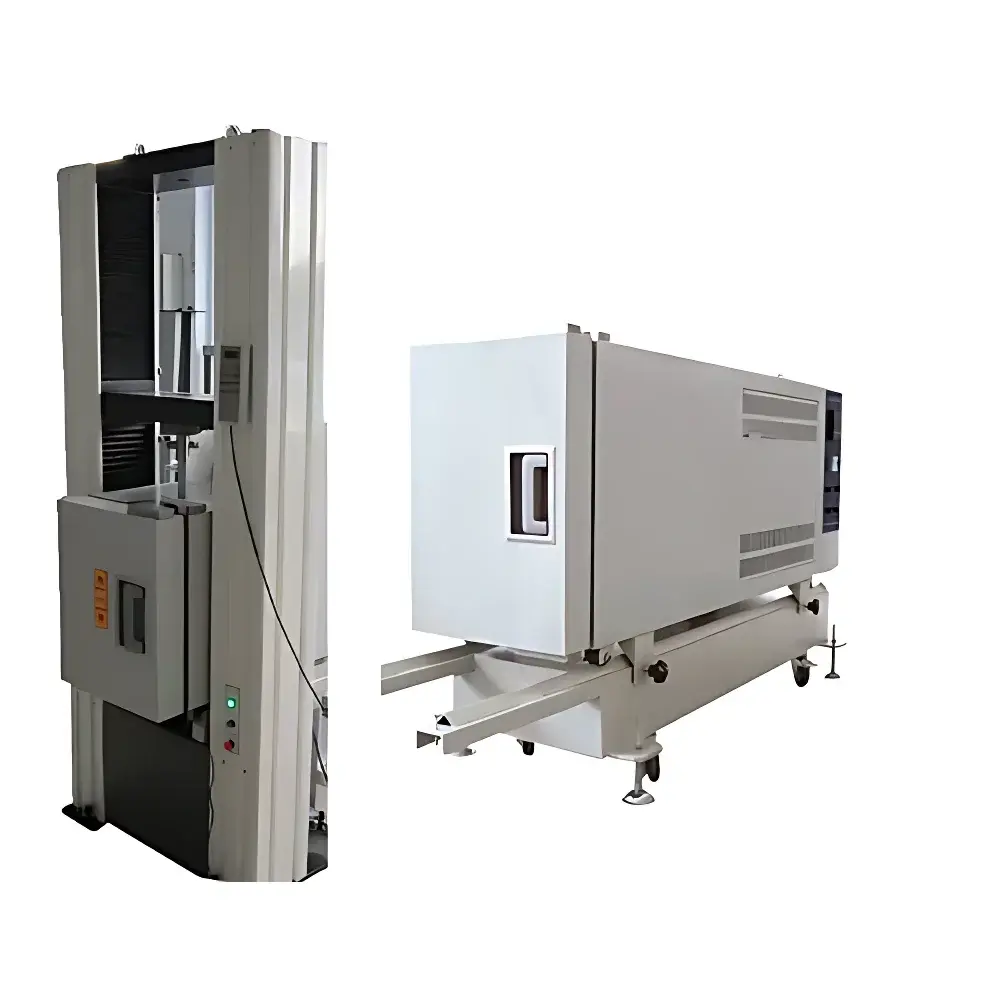
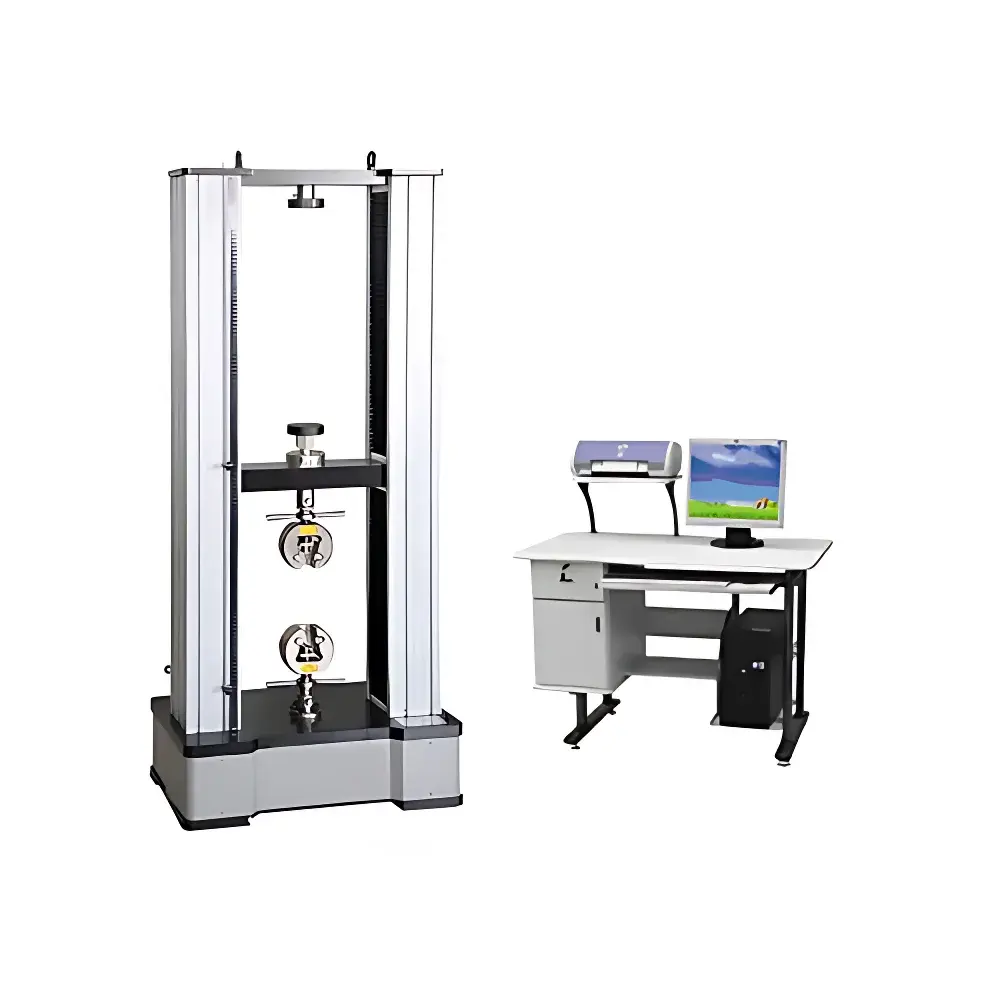
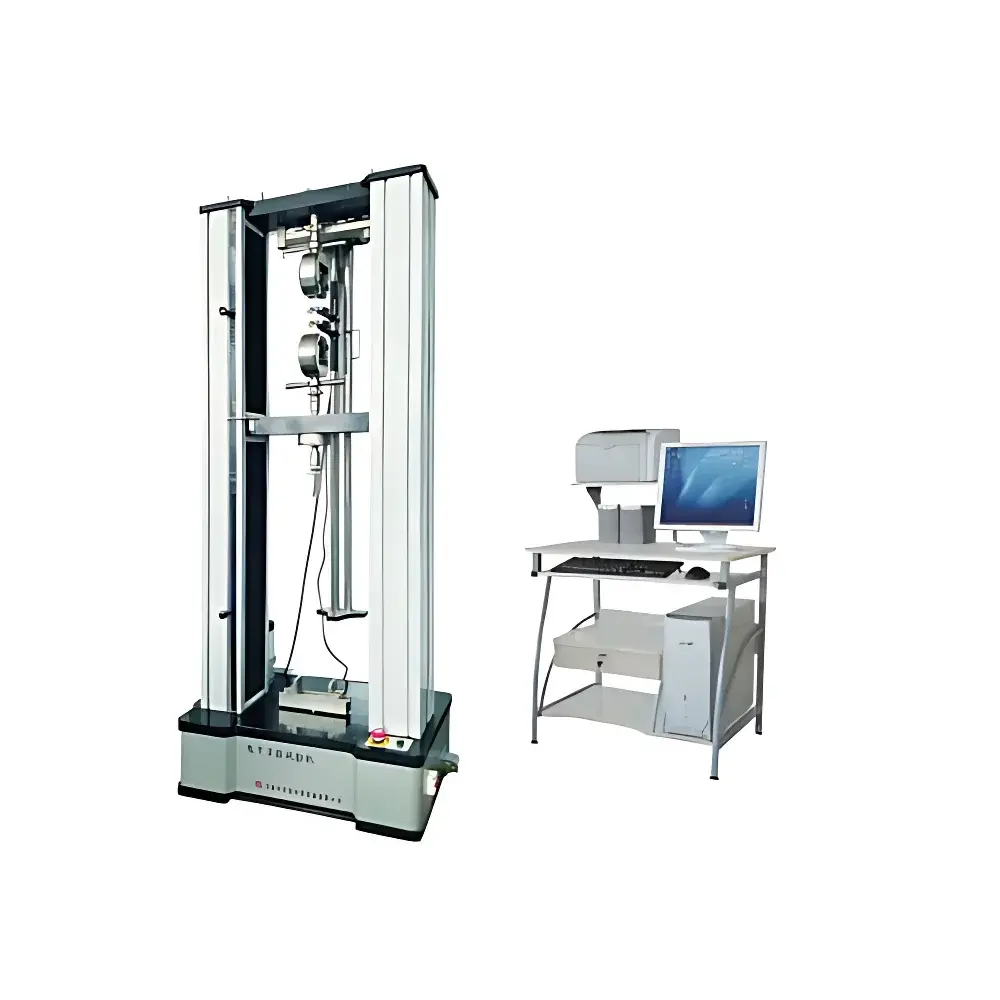
Changchun Intelligent WSM-20kN Advanced Electromechanical Universal Testing Machine
| Brand | Changchun Intelligent |
|---|---|
| Origin | Jilin, China |
| Model | WSM-20kN |
| Maximum Test Force | 20 kN |
| Force Accuracy | ±0.5% of reading |
| Force Resolution | 1/300,000 FS |
| Test Speed Range | 0.05–500 mm/min (±0.5% speed accuracy) |
| Displacement Measurement Range | 0–1000 mm (resolution: 0.001 mm |
| accuracy | ±0.5%) |
| Crosshead Travel | 1200 mm |
| Effective Test Width | 400 mm |
| Load Frame Type | Dual-ball-screw, four-column rigid structure |
| Compliance Standards | GB/T 16491–2008, GB/T 2611–2007, ISO 527-1, ISO 604, ISO 178, ASTM D638, ASTM D695, ASTM D790 |
| Software | Windows-based test control & analysis suite with real-time curve plotting, multi-curve overlay, region zoom, data export to Excel/PDF/Word, and GLP-compliant audit trail |
Overview
The Changchun Intelligent WSM-20kN Advanced Electromechanical Universal Testing Machine is a precision-engineered static mechanical testing system designed for high-reproducibility tensile, compression, and flexural characterization of polymeric, composite, metallic, and ceramic materials. Based on the fundamental principles of quasi-static load application under controlled displacement or force rate, the system employs a dual high-precision ground ball-screw drive mechanism coupled with a rigid four-column frame architecture to minimize parasitic deflection and ensure axial alignment integrity throughout the full 20 kN load range. Its closed-loop digital servo control architecture—featuring imported Fuji AC servo motors and drivers—enables stable, low-noise operation across an ultra-wide speed spectrum (0.05–500 mm/min), supporting both ASTM- and ISO-defined ramped and constant-rate test protocols. The machine conforms to Class 0.5 accuracy per GB/T 16491–2008 and ISO 7500-1, making it suitable for R&D laboratories, quality control environments, and third-party certification facilities requiring traceable mechanical property data.
Key Features
- Rigid four-column, dual-ball-screw frame with German-sourced raw-material ball screws and arc-tooth synchronous belt transmission—ensuring zero backlash, high torsional stiffness, and long-term dimensional stability.
- High-fidelity force measurement via dual-load-cell configuration: a 20 kN Transcells (USA) sensor for primary high-range testing and a 500 N domestic high-resolution sensor for low-force sensitivity, both delivering ±0.5% linearity and repeatability across 0.4–100% of full scale.
- Integrated high-accuracy displacement sensing using optical rotary encoders (0.001 mm resolution) and optional extensometer support—including a 25–1000 mm large-strain clip-on extensometer with ±0.5% strain accuracy—enabling precise modulus and elongation-at-break determination per ISO 527-2 and ASTM D638.
- Real-time multi-channel data acquisition with simultaneous display of up to six synchronized curves: force–displacement, stress–strain, strength–time, force–time, displacement–time, and strain–time—configurable per test mode (tension, compression, bending).
- Automated safety interlocks including overload, overcurrent, overvoltage, undervoltage, thermal, and mechanical limit protection—compliant with IEC 61000-6-2 EMC and GB/T 2611–2007 general safety requirements.
- Full-featured manual control panel with Chinese-language LCD interface, enabling intuitive jog-mode crosshead positioning and emergency stop functionality independent of PC software.
Sample Compatibility & Compliance
The WSM-20kN accommodates standardized specimen geometries including dumbbell-shaped (ISO 527 Type 1A/1B), rectangular, and cylindrical specimens per ASTM D638, ISO 527-1, ISO 604, and ISO 178. Its 400 mm effective test width and 600 mm jaw separation accommodate sheet, film, fiber, and molded component testing across aerospace composites, automotive thermoplastics, wire & cable insulation, textile reinforcements, and biomedical polymers. All mechanical and software functions comply with national and international standards: GB/T 16491–2008 (electromechanical UTM specification), GB/T 2611–2007 (general test machine requirements), ISO 527-1:2019, ISO 604:2002, ISO 178:2019, ASTM D638-20, ASTM D695-15, and ASTM D790-17. Data logging and report generation support GLP/GMP-aligned documentation practices, including user authentication, electronic signatures, and audit-trail-enabled parameter change history.
Software & Data Management
The bundled Windows-based testing software provides ISO/IEC 17025-ready data management capabilities. It supports automated test sequence definition, real-time curve annotation, region-specific zoom-and-pan analysis, and multi-curve overlay with customizable color mapping. All raw data—including time-stamped force, displacement, and strain values—are stored in binary format with metadata tagging (operator ID, sample ID, environmental conditions). Export options include native .xlsx, .pdf, and .docx formats; curve overlays can be exported as vector-based SVG or raster PNG. The software implements role-based access control, password-protected method editing, and configurable electronic signature workflows aligned with FDA 21 CFR Part 11 requirements for regulated environments. Automatic report templates are preconfigured for ASTM, ISO, and GB standard compliance, with editable fields for lab accreditation details and uncertainty statements.
Applications
This universal tester serves as a core instrumentation platform in materials science laboratories conducting mechanical property validation across diverse sectors. In polymer R&D, it quantifies tensile strength, yield point, Young’s modulus, elongation at break, compressive yield stress, and flexural modulus for thermoplastics, elastomers, and biodegradable films. Automotive suppliers use it for validating structural adhesives, under-hood composites, and battery enclosure materials per SAE J2231. Aerospace QA labs apply it to carbon-fiber prepreg laminates and honeycomb core shear testing per ASTM D5656. Wire & cable manufacturers rely on its precise elongation control for insulation tensile verification (UL 1581, ICEA T-29-520). Additional applications include ceramic green-body strength testing, geotextile tensile performance per ISO 10319, and pharmaceutical tablet hardness correlation studies.
FAQ
What standards does the WSM-20kN comply with for calibration and verification?
It meets GB/T 16491–2008 (Class 0.5), ISO 7500-1:2018, and ASTM E4-16 for force calibration, and GB/T 2611–2007 for general metrological requirements.
Can the system perform closed-loop strain-controlled testing?
Yes—using the optional high-accuracy extensometer, it supports true strain-rate control per ISO 6892-1 Annex A and ASTM E8/E21, with programmable ramp rates from 0.001 to 0.1 %/s.
Is the software compatible with modern Windows OS versions?
The current release supports Windows 10 and Windows 11 (64-bit); legacy XP-compatible firmware is available upon request for migration-critical installations.
What is the maximum specimen height accommodated in compression mode?
With standard platens, the maximum usable height is 600 mm between grips; with extended-height fixtures, it reaches 860 mm.
Does the system support automated batch testing with pass/fail criteria?
Yes—the software allows defining acceptance thresholds for parameters such as ultimate tensile strength, elongation, or modulus, triggering automatic pass/fail flags and generating summary statistics across n-sample batches.



