
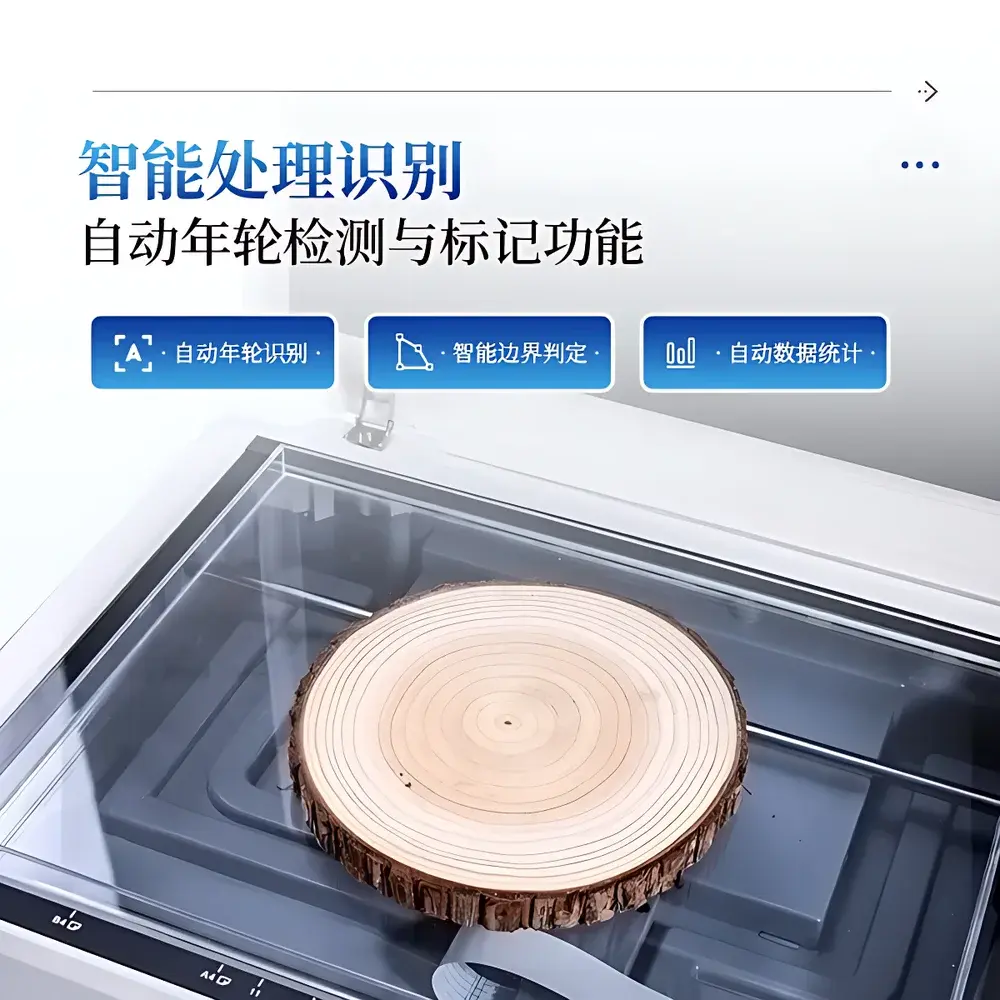
COMECAUSE IN~NL Dendrochronology Analysis System
| Brand | COMECAUSE |
|---|---|
| Origin | Shandong, China |
| Manufacturer Type | OEM Manufacturer |
| Product Origin | Domestic (China) |
| Model | IN~NL |
| Price | USD 5,300 (FOB) |
| Scan Area | 31 × 44 cm (A3) |
| Optical Resolution | 1600 × 1600 dpi (standard), up to 1800 × 3600 dpi (optional) |
| Minimum Detectable Ring Width | 0.011 mm (optional), 0.016 mm (standard) |
| Image Format Support | TIFF, BMP, PNG, JPEG |
| Software Platform | Windows 10 or later |
| Max Input Image Size | 1 GB per file |
| Measurement Accuracy | Sub-pixel interpolation with XY bidirectional calibration |
| Output Formats | Excel (.xlsx), CSV, JSON, PDF, high-res TIFF/PNG |
Overview
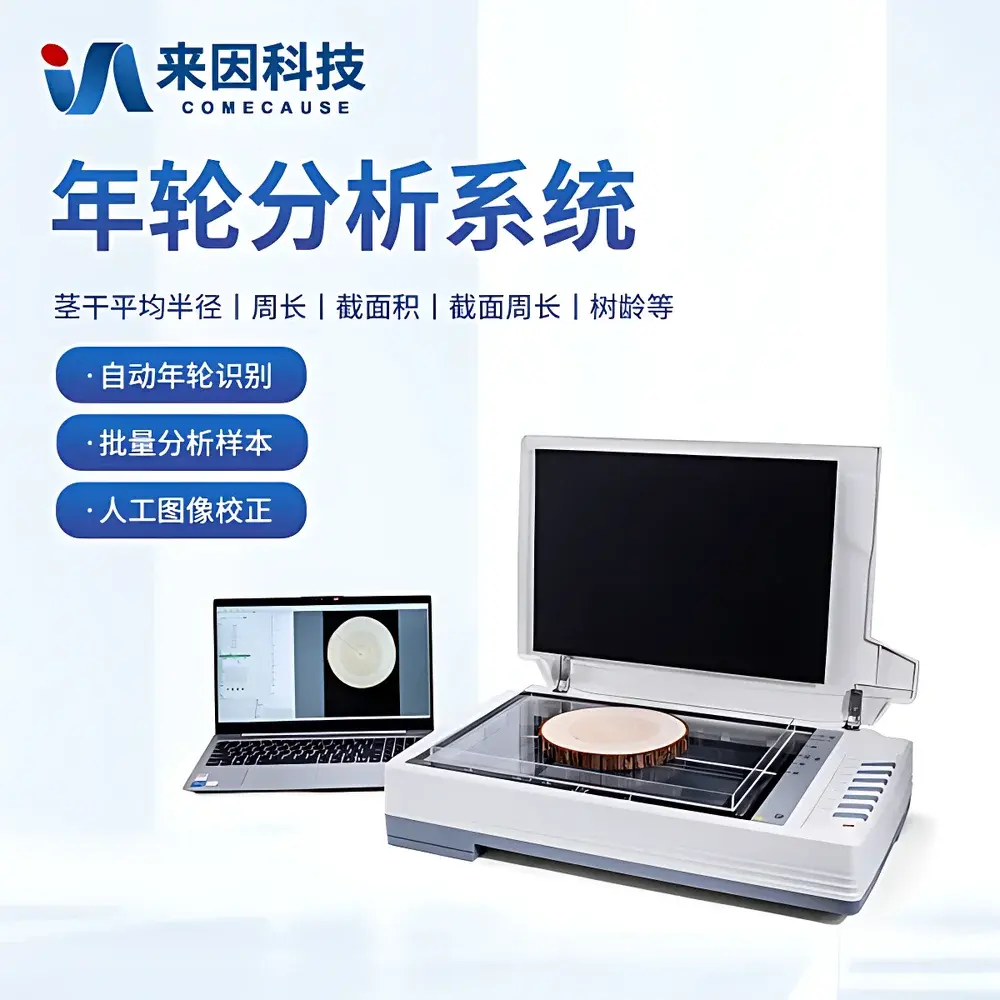
The COMECAUSE IN~NL Dendrochronology Analysis System is a precision-engineered platform for quantitative dendrochronological research. It operates on the principle of high-resolution optical imaging combined with algorithm-assisted ring detection and geometric measurement—transforming wood anatomical structures into temporally anchored, statistically robust chronologies. Unlike basic image viewers or manual caliper-based methods, this system implements calibrated digital microscopy at sub-10 µm resolution, enabling reproducible quantification of annual xylem growth increments in both disk cross-sections and increment core samples. Its core scientific function lies in converting biological growth patterns—modulated by climate, disturbance, and physiological constraints—into time-series data compliant with internationally accepted dendrochronological standards (e.g., ITRDB protocols, NOAA/NCEI metadata guidelines). The system serves as an analytical bridge between individual tree physiology and regional environmental history, supporting absolute dating, climate reconstruction, ecological disturbance analysis, and archaeological provenancing.
Key Features
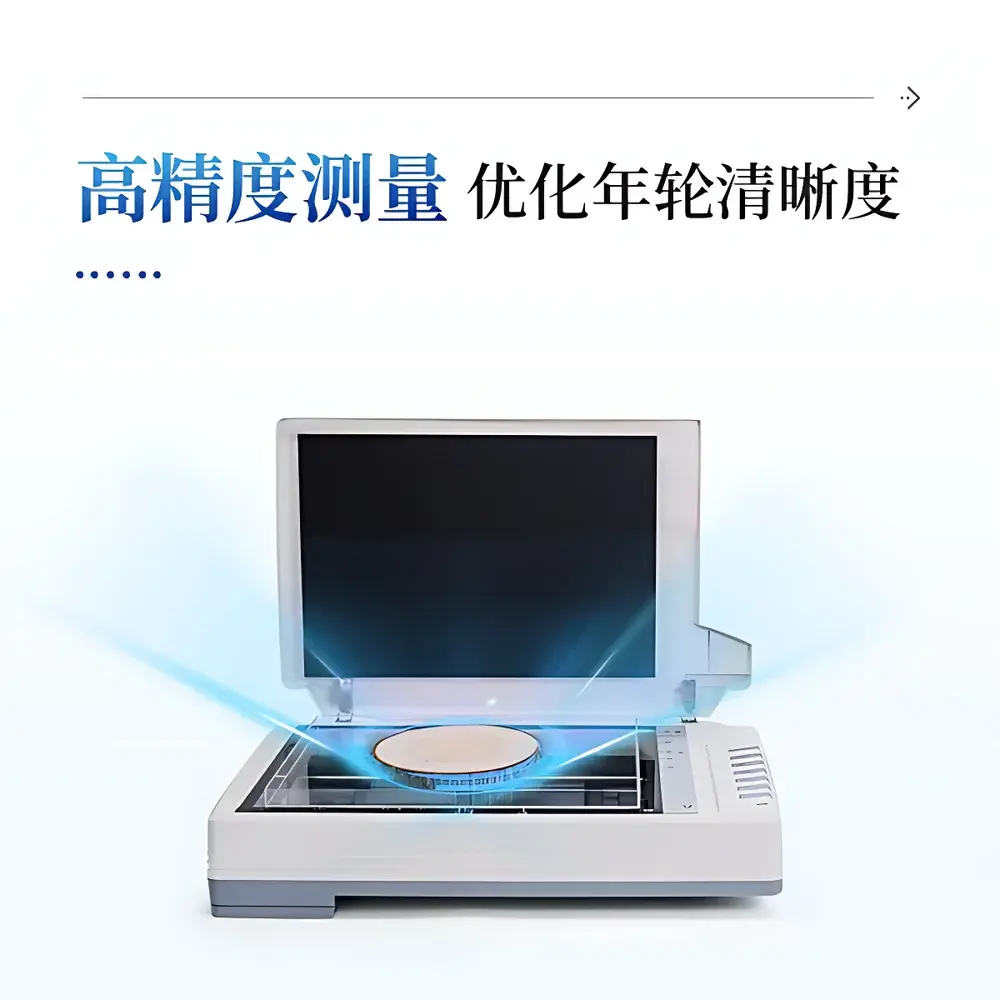
- High-fidelity A3-format scanning with optional ultra-high resolution (1800 × 3600 dpi), capable of resolving intra-annual features such as earlywood/latewood boundaries and micro-density variations.
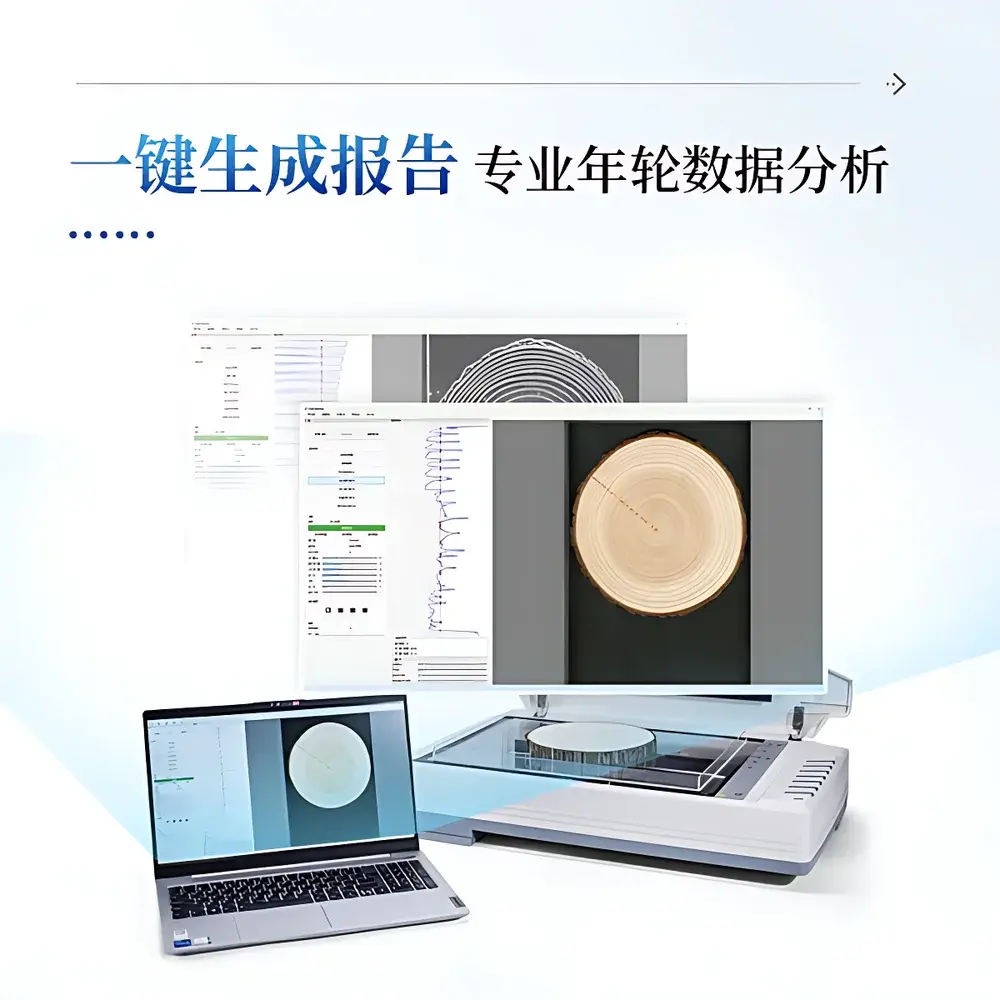
- Automated ring detection with adaptive thresholding, edge enhancement, and user-controllable sensitivity—optimized for species-specific growth patterns including diffuse-porous, ring-porous, and coniferous wood anatomy.
- Manual correction interface with pixel-level editing tools: insertion/deletion of missing rings, splitting fused bands, and repositioning of measurement paths along natural curvature.
- Multi-path measurement capability: users define linear, radial, or curved transects aligned to cambial geometry; software dynamically adjusts path orientation to follow ring contours.
- Bidirectional XY calibration using certified reference grids, correcting for mechanical drift, lens distortion, and stage misalignment across large-area scans.
- Integrated morphometric engine: computes stem radius, circumference, cross-sectional area, basal area increment (BAI), and mean ring width series—all traceable to SI units via embedded scale calibration.
Sample Compatibility & Compliance
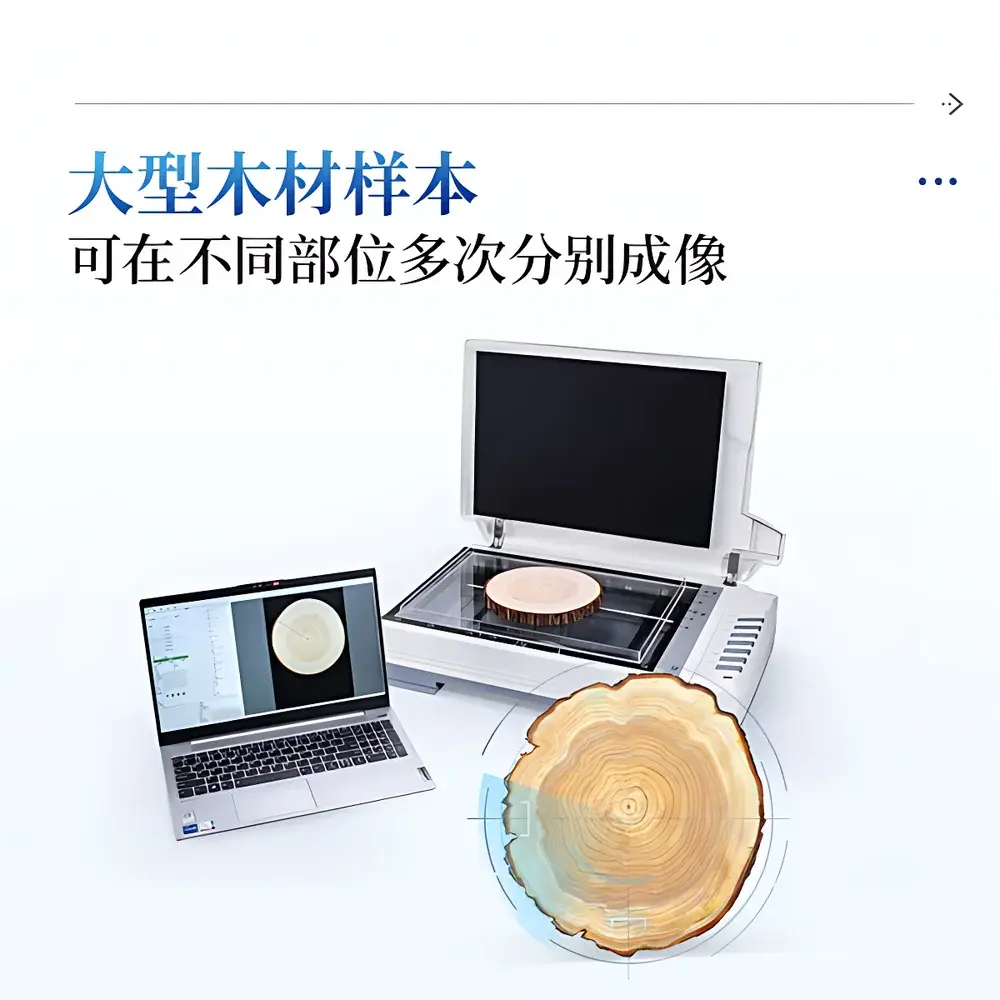
The IN~NL system accommodates standard dendroecological sample formats: 12–20 mm diameter increment cores (with dedicated core alignment fixture), 2–10 cm thick disk sections (including irregular or fire-scarred specimens), and mounted thin sections. It supports both softwood and hardwood taxa across boreal, temperate, and Mediterranean biomes. All measurement workflows comply with FAO Forestry Department guidelines for dendrochronological data reporting and align with ISO 13370:2019 (thermal performance of buildings — heat transfer via the ground) where applicable to root-zone moisture proxy studies. Data audit trails—including operator ID, timestamp, calibration logs, and versioned parameter sets—are retained for GLP-compliant research environments. Exported datasets conform to ITRDB v5.0 schema requirements, ensuring interoperability with global tree-ring databases.
Software & Data Management
The proprietary Windows-native application (v4.2+) provides full non-destructive workflow control—from raw image ingestion to publication-ready chronology generation. Batch processing enables concurrent analysis of >100 cores or disks with uniform parameter propagation and inter-sample synchronization checks. Advanced color-channel decomposition allows selective enhancement of lignin-rich latewood or cellulose-dense earlywood regions. Statistical modules include COFECHA pre-whitening, ARSTAN detrending (negative exponential, spline), and bootstrapped correlation confidence intervals. All outputs include embedded EXIF-like metadata: scanner model, resolution, calibration date, user-defined measurement protocol, and software build ID. Export options include ISO-standardized CSV (UTF-8, tab-delimited), Excel-compatible .xlsx with formula-locked worksheets, JSON-LD for semantic web integration, and vector-based PDF reports with embedded measurement uncertainty annotations.
Applications
- Climate Reconstruction: Generation of standardized ring-width indices (RWI) for paleotemperature and paleoprecipitation modeling, particularly in data-sparse high-latitude or high-elevation regions lacking instrumental records.
- Disturbance Ecology: Dating of fire scars, insect outbreaks, windthrow events, and landslide-triggered growth suppression through abrupt ring-width reductions or traumatic resin duct formation.
- Forest Dynamics Monitoring: Long-term assessment of basal area increment (BAI), competitive release signals, and climate-growth response shifts under warming scenarios.
- Archaeological Dating: Absolute dating of wooden artifacts, structural timbers, and burial contexts via cross-dating against master chronologies—achieving calendar-year precision without radiocarbon uncertainty.
- Hydrological Proxy Development: Calibration of ring-width patterns from riparian species against gauged streamflow, groundwater levels, or drought indices (e.g., PDSI, SPEI).
FAQ
Does the system support automated cross-dating?
Yes—the software includes a built-in COFECHA-compatible cross-dating module that computes interseries correlation coefficients, t-values, and Gleichläufigkeit statistics to objectively verify temporal alignment across multiple samples.
Can it process images from third-party scanners?
Absolutely—provided input files meet minimum resolution (≥1200 dpi) and bit-depth (≥16-bit grayscale) requirements, and include embedded or sidecar calibration metadata.
Is FDA 21 CFR Part 11 compliance available?
Electronic signature and audit trail functionality are implemented per ALCOA+ principles; full 21 CFR Part 11 validation packages (including IQ/OQ/PQ documentation) are available upon request for regulated environmental monitoring applications.
What training and technical support is provided?
COMECAUSE offers remote onboarding sessions, a comprehensive English-language user manual with SOP templates, and access to an international dendrochronologist support network for methodological consultation.
How is measurement traceability ensured?
Each analysis session records hardware calibration status, software version, operator credentials, and pixel-to-mm conversion factors derived from NIST-traceable reference targets scanned alongside biological samples.




