


COMECAUSE IN-D2 Automatic Potentiometric Titrator
| Brand | COMECAUSE |
|---|---|
| Origin | Shandong, China |
| Manufacturer Type | Direct Manufacturer |
| Instrument Type | General-Purpose Automatic Potentiometric Titrator |
| Application Scope | Universal |
| Potential Measurement Range | −2000 to +2000 mV |
| Potential Resolution | 0.1 mV |
| Titration Precision | ±5 µL (for 10 mL burette) |
| Potential Display Resolution | 0.1 mV |
| Compliance | JJG 814–2015 Class 0.05 (Max. Indication Error: ±1.5% |
| pH Range | 0–14 |
| pH Resolution | 0.01 |
| pH Accuracy | ±0.01 |
| Conductivity Range | 0.00 µS/cm–2000 mS/cm |
| Temperature Range | −5 to 105 °C |
| Resolution | 0.1 °C |
| Accuracy | ±0.2 °C |
| Operating System | Android 10 |
| Display | 7-inch capacitive touchscreen |
| Data Storage | ≥100,000 records |
| Connectivity | USB, Wi-Fi, Ethernet |
| Dimensions | 310 × 226 × 233 mm |
| Weight | 3.7 kg |
Overview
The COMECAUSE IN-D2 Automatic Potentiometric Titrator is a fully integrated electrochemical analysis platform engineered for precision, traceability, and regulatory compliance in modern analytical laboratories. It operates on the fundamental principle of potentiometric titration—monitoring the electromotive force (EMF) of an indicator electrode versus a reference electrode as titrant is incrementally added. At the equivalence point, a sharp inflection in the potential–volume curve occurs due to a rapid change in ion activity, which the instrument detects algorithmically without human intervention. This eliminates endpoint subjectivity inherent in visual or manual titrations—particularly critical for colored, turbid, or low-transmittance samples where colorimetric indicators fail. The IN-D2 implements a closed-loop control architecture: a high-accuracy peristaltic or piston-driven burette delivers titrant with ±5 µL volumetric precision (10 mL burette), while real-time potential feedback enables dynamic addition rate modulation—slowing to sub-microliter increments near the endpoint. Its dual-channel electrode interface supports simultaneous monitoring of potential, pH, conductivity, or current, enabling method flexibility across acid-base, redox, precipitation, and complexometric titrations.
Key Features
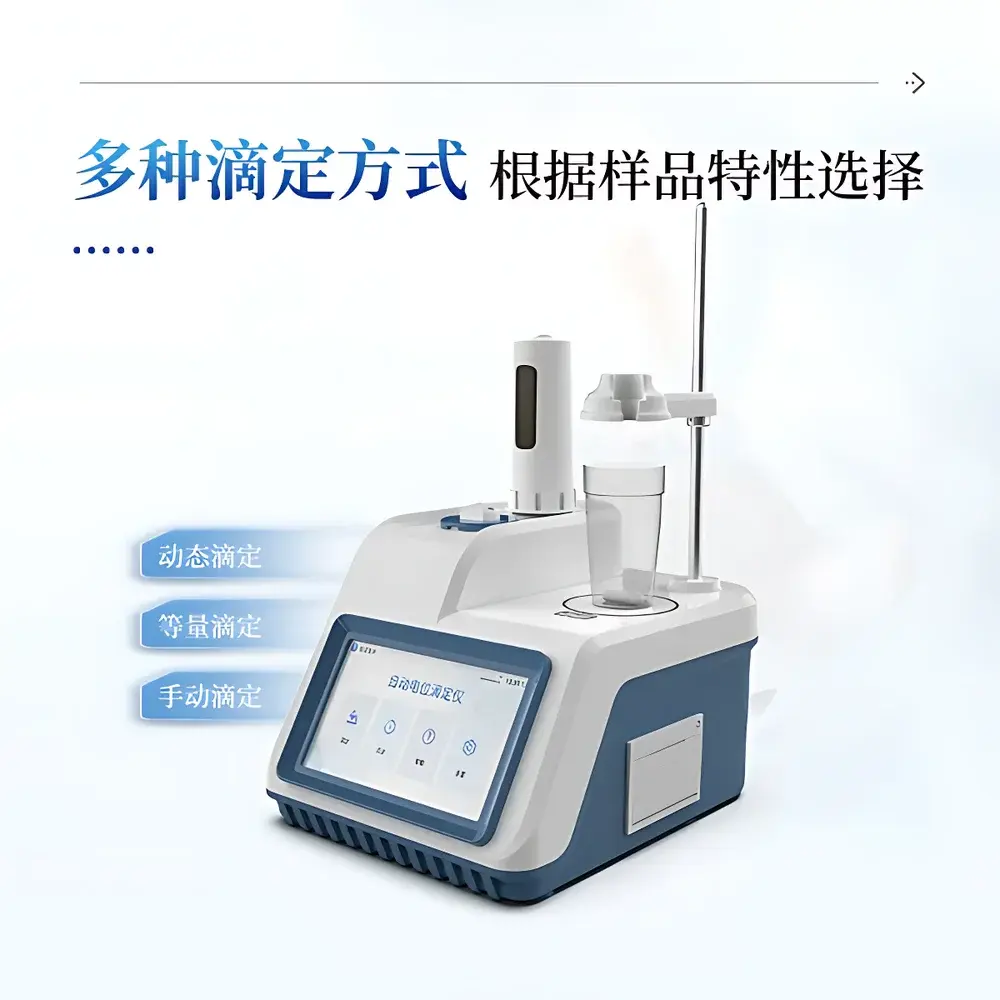
- Triple-mode titration control: dynamic (inflection-based), fixed-volume (equivalent to classical burette addition), and manual override—each configurable with user-defined pause points and safety limits.
- Automated fluidic maintenance suite: integrated “Purge” (air bubble removal from burette and tubing), “Rinse” (low-volume reagent priming to minimize cross-contamination), and “Drain-back” (post-analysis reagent recovery into burette to prevent drips and ensure safe disassembly).
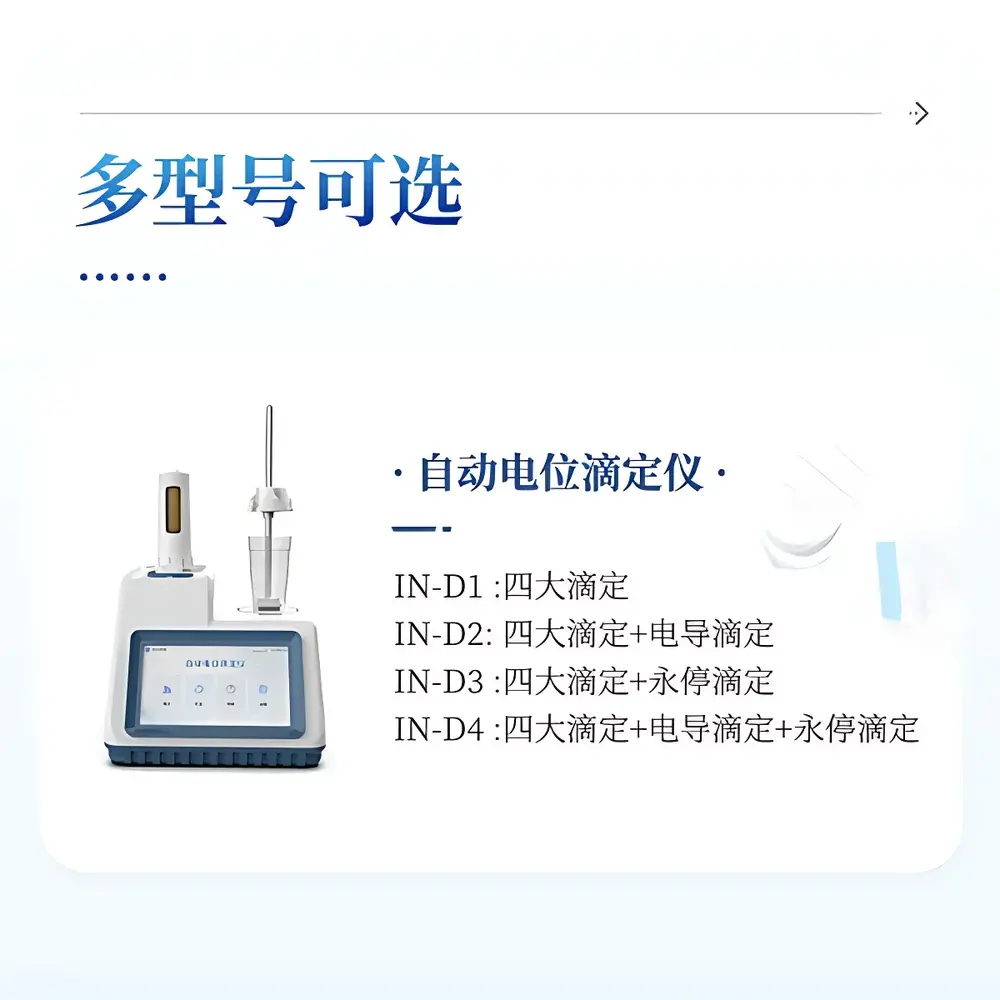
- Expandable electrochemical capability: optional modules for conductometric titration and dead-stop (biamperometric) titration support pharmacopeial methods requiring non-potentiometric endpoints.
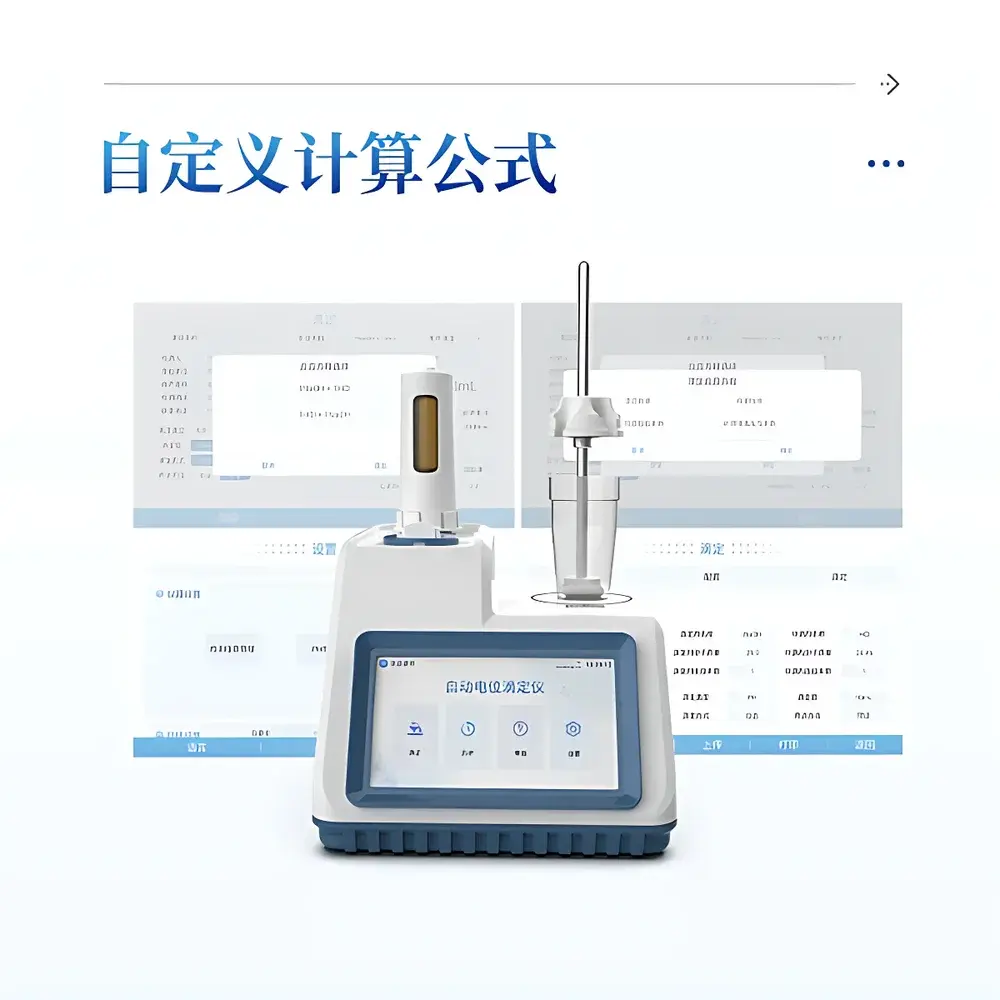
- Method-centric software architecture: stores ≥100 user-defined titration protocols—including electrode type, titrant concentration, reaction stoichiometry, calculation formulas, and pass/fail criteria—with full version history and timestamped metadata.
- Regulatory-ready data integrity: all measurements, parameter changes, and method executions are logged with immutable timestamps; audit trail complies with GLP and GMP documentation requirements per FDA 21 CFR Part 11 principles (when used with network-authenticated user accounts and encrypted storage).
- Android 10-based HMI: 7-inch responsive touchscreen with intuitive icon-driven workflow navigation, multi-language UI support (English, Chinese, Spanish), and real-time graphical display of E–V curves during titration.
Sample Compatibility & Compliance
The IN-D2 accommodates aqueous and non-aqueous matrices across diverse sample viscosities and ionic strengths, provided appropriate electrode selection (e.g., Ag/AgCl for redox, glass membrane for pH, platinum for amperometric detection). It meets the metrological specifications defined in JJG 814–2015 (Chinese National Verification Regulation for Automatic Potentiometric Titrators) at Class 0.05—certifying maximum indication error ≤±1.5% of full scale and repeatability ≤0.2% RSD under standardized conditions. While not pre-certified to ISO/IEC 17025 or ASTM E2081, its documented performance parameters align with validation benchmarks required for routine QC in food (AOAC 965.34, ISO 660), pharmaceutical (USP <541>, EP 2.2.20), and petrochemical (ASTM D974, D664) applications. All firmware updates and calibration logs are exportable in CSV or PDF for internal quality audits.
Software & Data Management
Data acquisition and processing occur natively within the embedded Android OS environment, eliminating dependency on external PCs. Raw potential, volume, pH, conductivity, and temperature values are sampled at ≥10 Hz and stored with millisecond timestamps. Post-run analysis includes automatic first-derivative (dE/dV) and second-derivative (d²E/dV²) endpoint detection, customizable smoothing filters, and overlay comparison of up to four titration curves. Export options include USB mass storage (CSV, PDF reports with embedded graphs), network transfer via SMB or HTTP POST, and direct printing via built-in thermal unit. Audit trails record operator ID, method name, start/end time, electrode serial number, and any manual intervention—enabling full traceability for GLP/GMP environments. Data encryption (AES-256) is enabled by default for stored records.
Applications
- Food & Beverage: Acid value and peroxide value determination in edible oils (ISO 660, AOAC 965.33); chloride quantification in dairy products; total acidity in fruit juices and wines.
- Pharmaceuticals: Assay of active pharmaceutical ingredients (APIs) such as ascorbic acid, iodine, or ferrous sulfate; residual catalyst analysis in synthesis intermediates; dissolution testing endpoint confirmation.
- Petroleum & Lubricants: Total acid number (TAN) and total base number (TBN) per ASTM D974/D664; sulfur content estimation via iodometric back-titration.
- Environmental & Water Testing: Cyanide determination by silver nitrate titration (ISO 6703-1); chloride in wastewater (Mohr method); hardness (Ca²⁺/Mg²⁺) via EDTA complexometry.
- Academic Research: Equilibrium constant derivation from titration curves; kinetic studies of slow redox reactions using controlled-potential addition; teaching laboratory implementation of IUPAC-recommended titration practices.
FAQ
What electrode types are compatible with the IN-D2?
The instrument supports standard BNC-terminated electrodes including combination pH electrodes, redox (Pt or Ag/AgCl), ion-selective (e.g., fluoride, calcium), and conductivity cells—all operating within the specified −2000 to +2000 mV range.
Does the IN-D2 comply with 21 CFR Part 11 requirements?
It provides foundational elements—electronic signatures, audit trails, and secure data export—but full Part 11 compliance requires site-specific configuration including network authentication, role-based access control, and validated backup procedures.
Can the IN-D2 perform Karl Fischer titration?
No—it lacks the specialized coulometric or volumetric KF reagent delivery system and moisture-sensitive cell design; it is optimized for aqueous and protic solvent-based potentiometric methods only.
How is calibration verified?
Calibration is performed using certified reference solutions (e.g., NIST-traceable pH 4.01/7.00/10.01 buffers, quinhydrone standards for redox) and verified against JJG 814–2015 acceptance criteria before each analytical batch.
Is remote monitoring supported?
Yes—via Wi-Fi or Ethernet, users can view live titration progress, download historical data, and push updated methods using standard web browsers or the COMECAUSE LabLink mobile application (iOS/Android).




