
AMS GVP Soil Gas Sampler
| Brand | AMS |
|---|---|
| Origin | USA |
| Manufacturer Type | Authorized Distributor |
| Origin Category | Imported |
| Model | GVP |
| Instrument Type | Handheld Air Sampling Pump |
| Configuration | Single-Channel Gas Sampler |
| Flow Range | 0–2 L/min |
| Operating Pressure | Ambient Atmospheric Pressure |
| Flow Stability | <2% over 1 h |
| Flowmeter Accuracy | ±2% FS |
| Service Life at Max Flow & Backpressure | >1000 h |
| Continuous Run Time at Max Flow & Backpressure | >2 h |
Overview
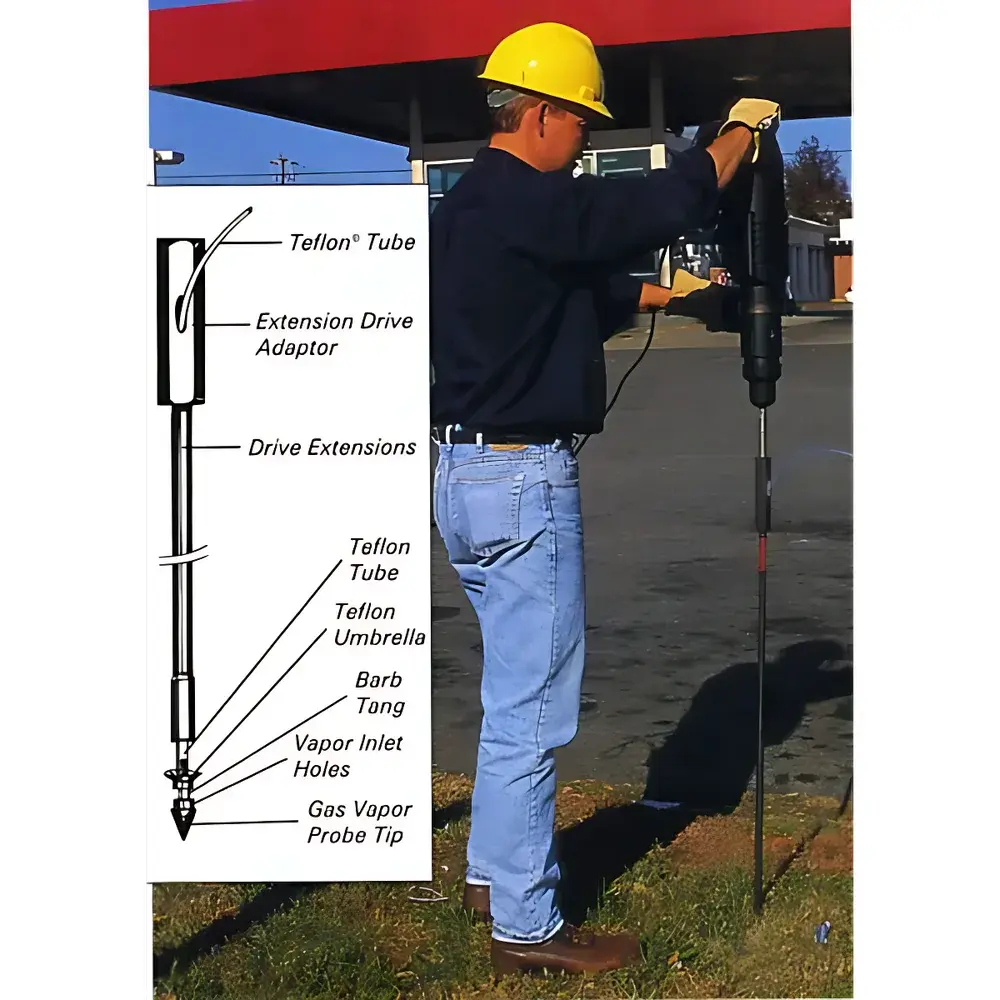
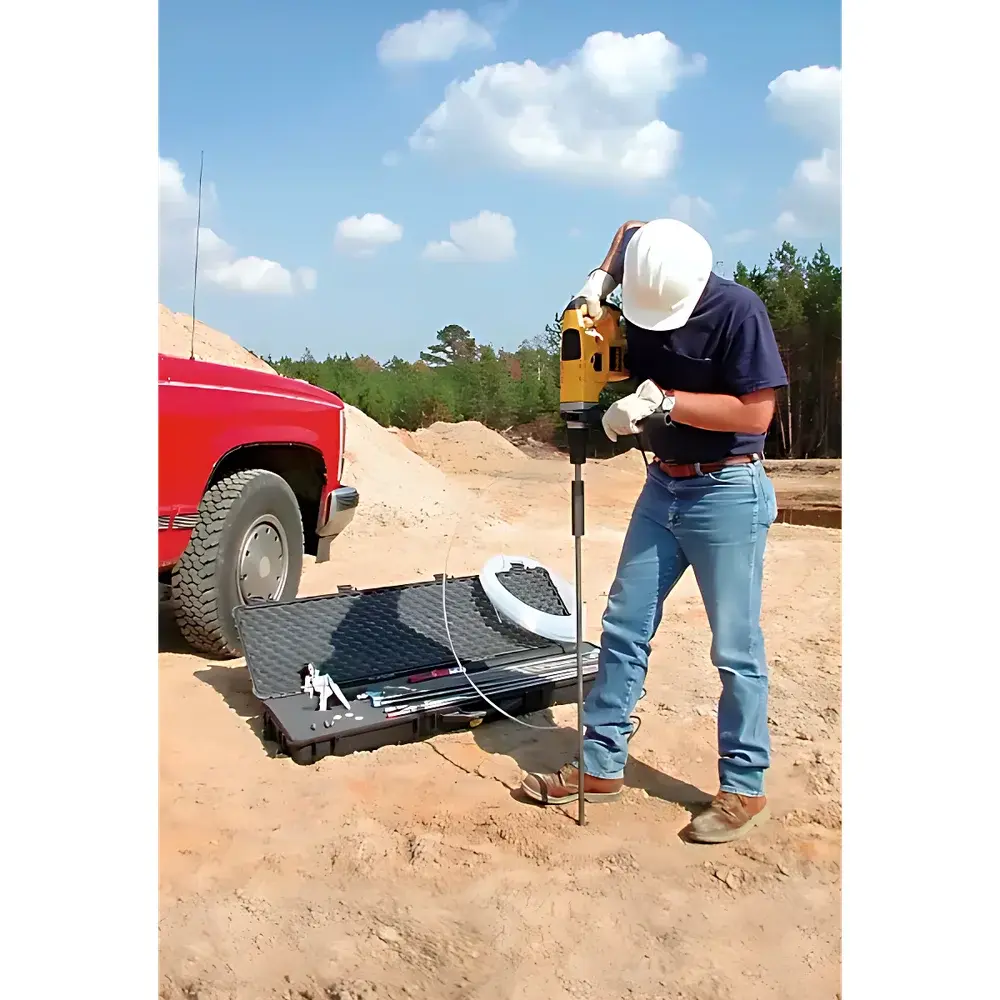
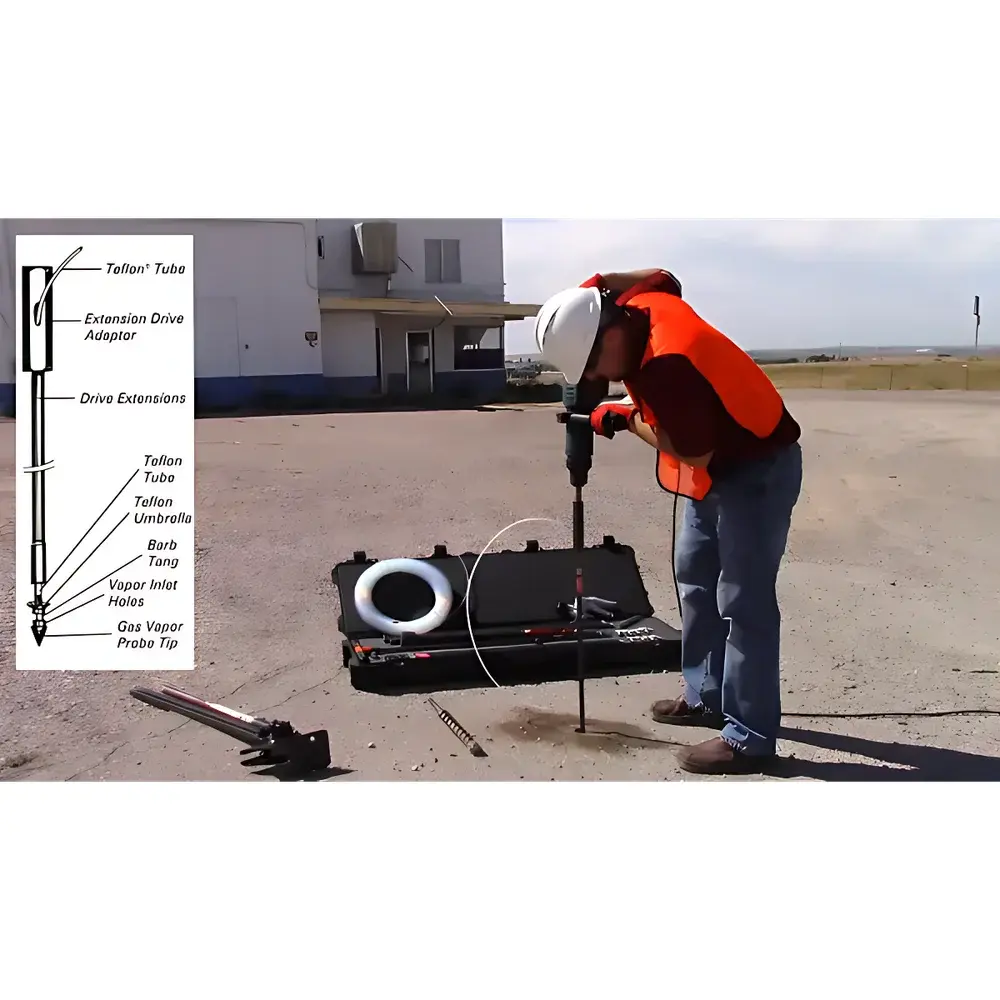
The AMS GVP Soil Gas Sampler is a field-deployable, percussion-driven subsurface gas sampling system engineered for reliable, depth-specific volatile organic compound (VOC) and hydrocarbon vapor profiling in unsaturated zone soils. Designed for environmental site assessments, leak detection at underground storage tanks (USTs), pipeline integrity verification, and landfill gas migration studies, the GVP operates on a direct-push principle—using either a sliding hammer or electric percussive driver to install stainless-steel sampling probes to depths of up to 3–5 meters (depending on soil density and stratigraphy). Once emplaced, the probe’s integrated polyfluoroalkoxy (PFA) sampling tube provides an inert, low-permeability pathway for soil gas transport to the surface, where it is drawn through a calibrated, single-channel handheld vacuum pump. The system’s measurement principle relies on passive equilibrium sampling combined with controlled active extraction, enabling representative vapor-phase concentration capture without significant soil disturbance or preferential flow artifacts.
Key Features
- Robust, field-rugged probe design fabricated from 316 stainless steel with PFA-lined internal channels to prevent adsorption, oxidation, or cross-contamination of reactive VOCs (e.g., BTEX, chlorinated solvents, MTBE).
- Modular percussion-driven installation: Compatible with both manual sliding hammers and industry-standard electric vibratory/impact drivers (e.g., Geoprobe® or Direct Push Technologies models)—no drilling mud or borehole casing required.
- Integrated flow control: Precision-calibrated rotameter and digital flow sensor (±2% full-scale accuracy) ensure traceable, repeatable sampling rates between 0.1 and 2.0 L/min, optimized for EPA Method TO-15 and ASTM D5314-compliant protocols.
- High-stability vacuum generation: Brushless DC motor-driven pump maintains flow stability within ±2% over 60 minutes—even under variable backpressure conditions typical of deep or fine-grained soil profiles.
- Extended operational durability: Rated for >1000 hours of cumulative runtime at maximum load; thermal overload protection and sealed bearing architecture support sustained use across multi-day field campaigns.
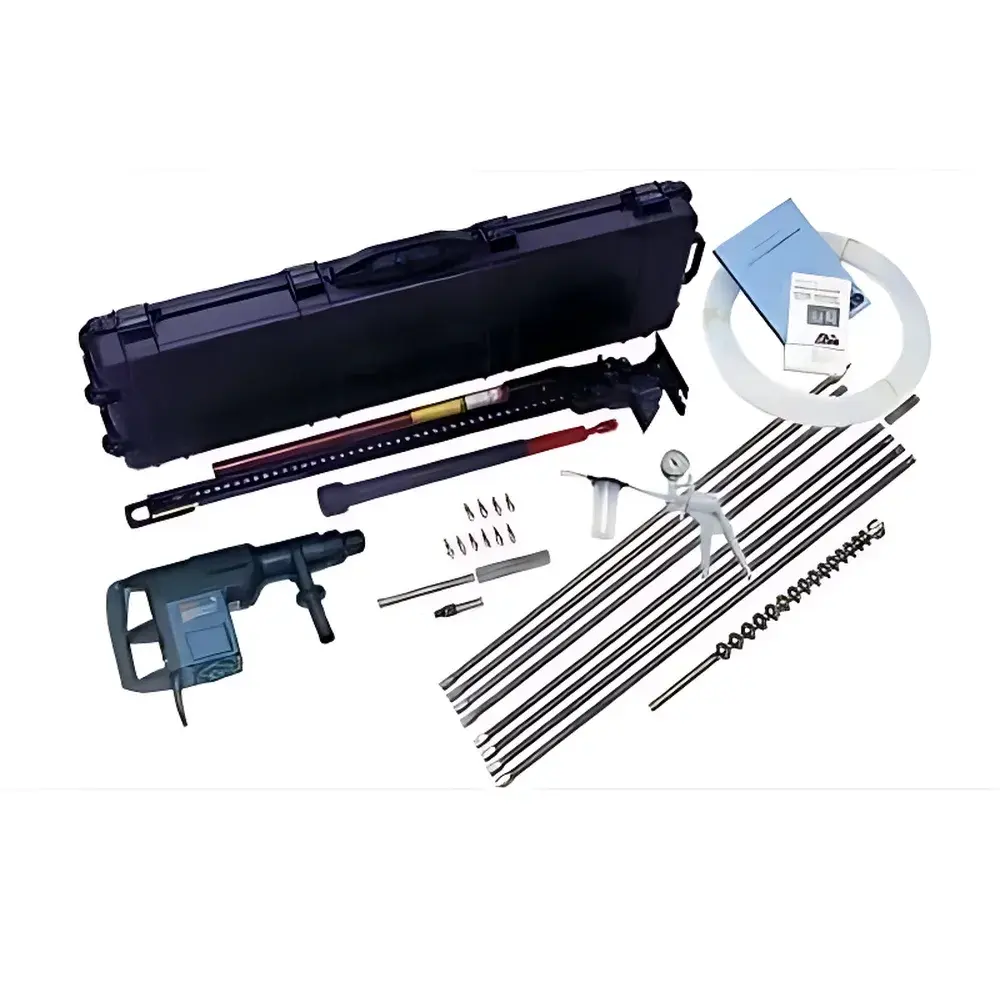
- Complete field kit: Includes ten reusable GVP probes (standard 1.25″ OD × 1.5 m length), telescoping extension rods, PFA sample tubing (1/8″ OD, 100 ft spool), quick-connect fittings, carrying case, and calibration certificate traceable to NIST standards.
Sample Compatibility & Compliance
The GVP system is validated for sampling a broad spectrum of volatile and semi-volatile compounds—including aliphatic and aromatic hydrocarbons, halogenated ethenes and ethanes, oxygenates (e.g., ethanol, ETBE), and sulfur-containing species—across soil matrices ranging from clean sand to moderately cohesive silts. All wetted materials comply with EPA SW-846 Method 5035A requirements for VOC preservation and are certified non-leaching per USP Class VI and ISO 10993-5. Field deployment aligns with ASTM D5088 (Standard Practice for Direct-Push Groundwater Sampling for Environmental Site Assessments) and supports data defensibility under CERCLA, RCRA, and state-level Tier 2/3 remedial investigation frameworks. Optional integration with EPA-certified canisters or sorbent tubes enables chain-of-custody compliance per 40 CFR Part 136.
Software & Data Management
While the GVP is a hardware-centric sampling tool, its flow parameters and operational logs integrate seamlessly into third-party environmental data management platforms (e.g., EQuIS, ArcGIS Field Maps, or GWML2-compliant databases) via Bluetooth-enabled digital flow meters (optional upgrade). All factory calibrations are documented with NIST-traceable certificates, and flow stability records meet GLP audit requirements for reproducibility reporting. For regulated applications requiring electronic signatures and audit trails, the optional AMS FlowLog Pro module provides 21 CFR Part 11–compliant data logging—including user authentication, timestamped event tracking, and immutable export to CSV or PDF.
Applications
- UST and pipeline leak detection via soil gas anomaly mapping (e.g., plume delineation using grid-based GVP arrays).
- Pre-construction vapor intrusion screening in brownfield redevelopment projects.
- Verification of soil vapor extraction (SVE) system performance and treatment zone coverage.
- Long-term monitoring well alternative for sites where permanent installations are impractical or cost-prohibitive.
- Forensic source identification through depth-resolved VOC ratio analysis (e.g., chloroform-to-tetrachloroethene ratios).
- Regulatory submittal support for Phase II ESA reports, ASTM E1527-21 compliant due diligence, and state-mandated vapor mitigation verification.
FAQ
What soil types are compatible with the GVP probe installation?
The GVP is validated for use in granular soils (sand, gravel), loamy sands, and low-to-medium plasticity silts. Installation in clay-rich or highly cemented strata may require pilot hole pre-augering or higher-energy percussive drivers.
Can the GVP be used for quantitative vapor concentration analysis?
Yes—when paired with EPA TO-15–compatible analytical instrumentation (e.g., GC-MS) and proper calibration standards, the GVP delivers quantitative, depth-specific vapor concentration data suitable for risk assessment modeling.
Is field calibration required before each use?
A pre-deployment flow check using the built-in rotameter and certified flow calibrator (e.g., DryCal®) is recommended; full recalibration is required annually or after 200 hours of operation, per AMS maintenance guidelines.
How is sample integrity maintained during transport to the lab?
Samples are collected directly into electropolished stainless-steel canisters or fused-silica sorbent tubes; PFA tubing minimizes wall adsorption, and all connections utilize Swagelok® VCR fittings to eliminate leaks and diffusion losses.
Does the GVP comply with international environmental standards?
Yes—the system meets ASTM D5088, ISO 22475-1 (sampling execution), and EU Council Directive 2004/35/EC Annex III technical criteria for soil gas investigation methodologies.
Related Products







