
Eijkelkamp 04.01.SC Hard-Soil Penetrating Soil Sampler
| Weight | 13 kg |
|---|---|
| Sampling Depth | 1 m |
| Sampling Diameter | 2 cm |
| Sample Type | Intact Cylindrical Soil Core |
| Core Diameter (Internal) | 18 mm |
| Rod Length | 100 cm |
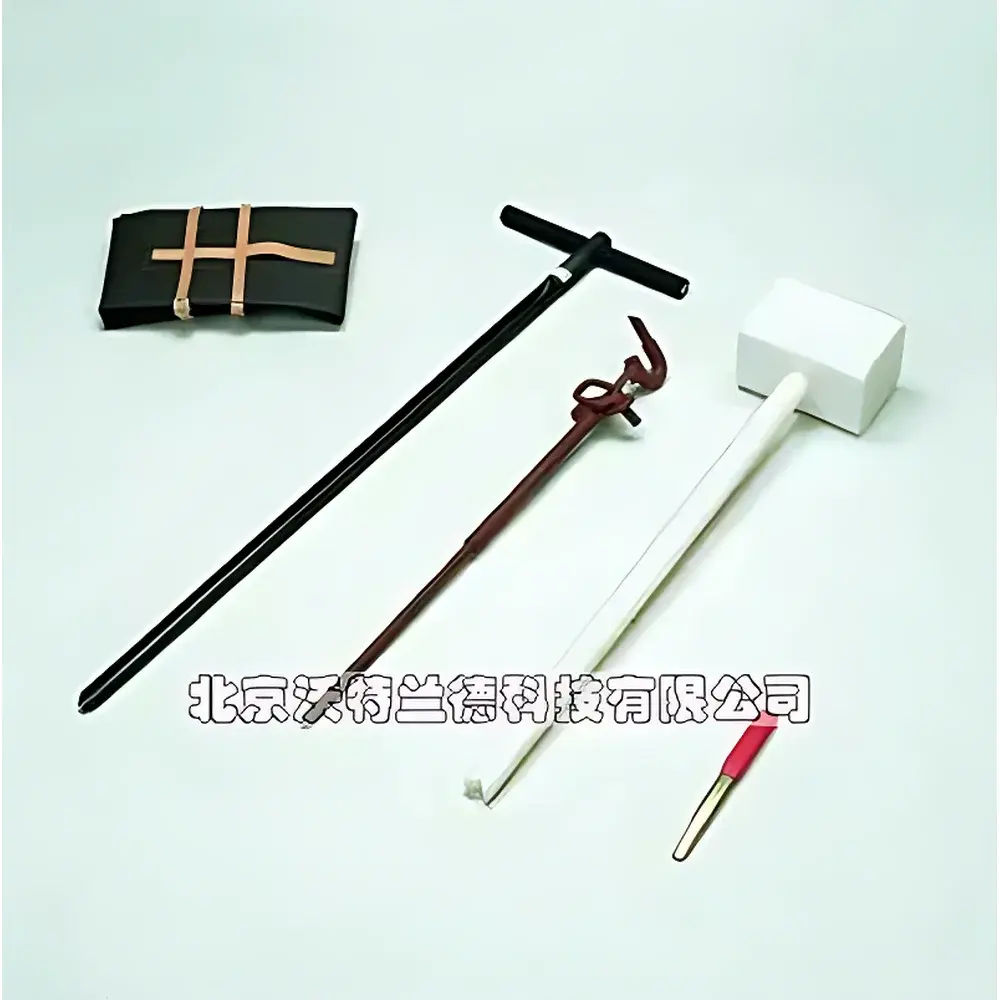
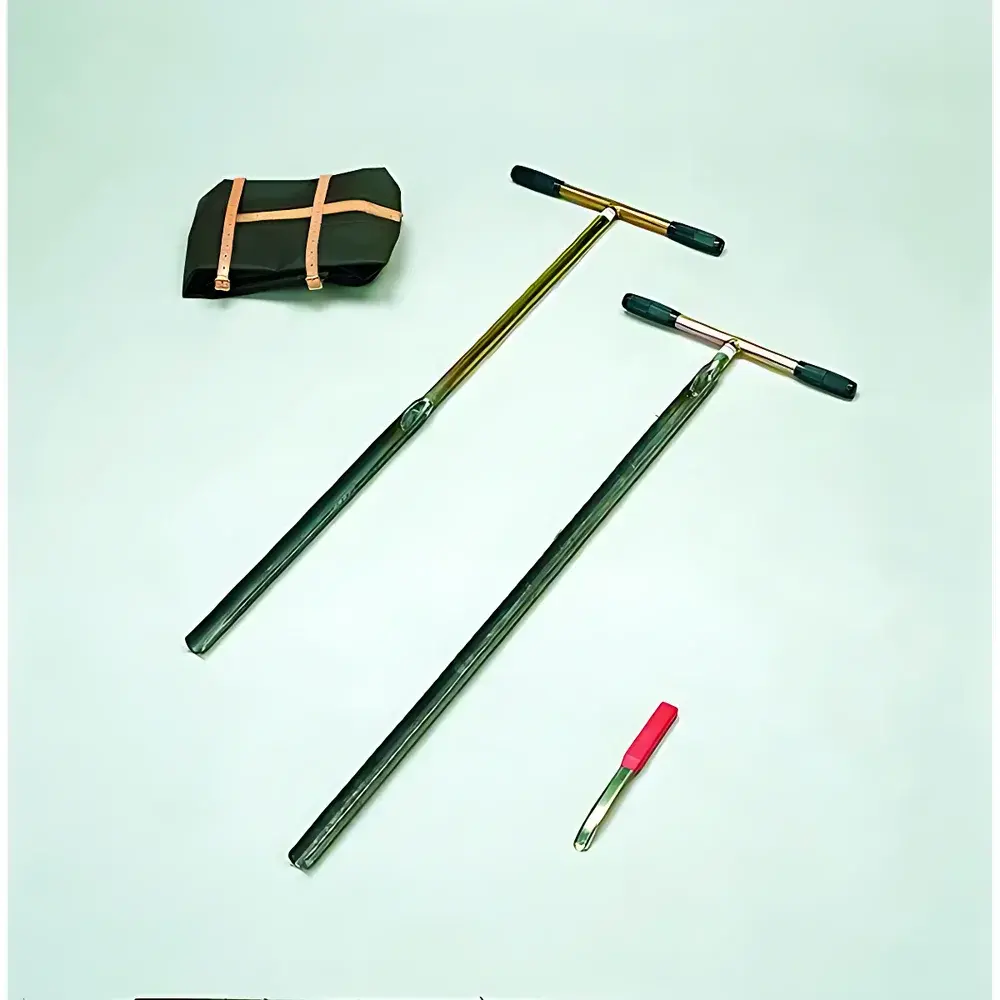
| Includes | Purolhauer-type cylindrical auger, 1-m nylon mallet, mechanical lever extraction system, rugged transport case |
| Compliance | Designed for ASTM D1586 (Standard Test Method for Penetration Testing and Split-Barrel Sampling of Soils), ISO 22027 (Soil Quality — Sampling), and EU Soil Thematic Strategy field protocols |
Overview
The Eijkelkamp 04.01.SC Hard-Soil Penetrating Soil Sampler is an engineered field instrument designed specifically for intact core sampling in highly compacted, gravel-rich, frozen, or otherwise low-penetrability soils where conventional hand-driven samplers fail. Unlike standard push-type or rotary augers, the 04.01.SC employs a high-strength, thick-walled Purolhauer-style cylindrical auger—constructed from hardened carbon steel with optimized wall thickness—to resist bending, buckling, and tip deformation during vertical percussion-driven insertion. Its operational principle relies on controlled kinetic energy transfer: a 1-meter-long, high-mass nylon mallet delivers repeatable impact force without damaging the auger threads or distorting the core geometry. The sampler operates under static load conditions combined with dynamic percussion, enabling penetration into soils with cone resistance exceeding 5 MPa—as commonly encountered in glacial till, lateritic crusts, permafrost-affected layers, and heavily trafficked agricultural subsoils.
Key Features
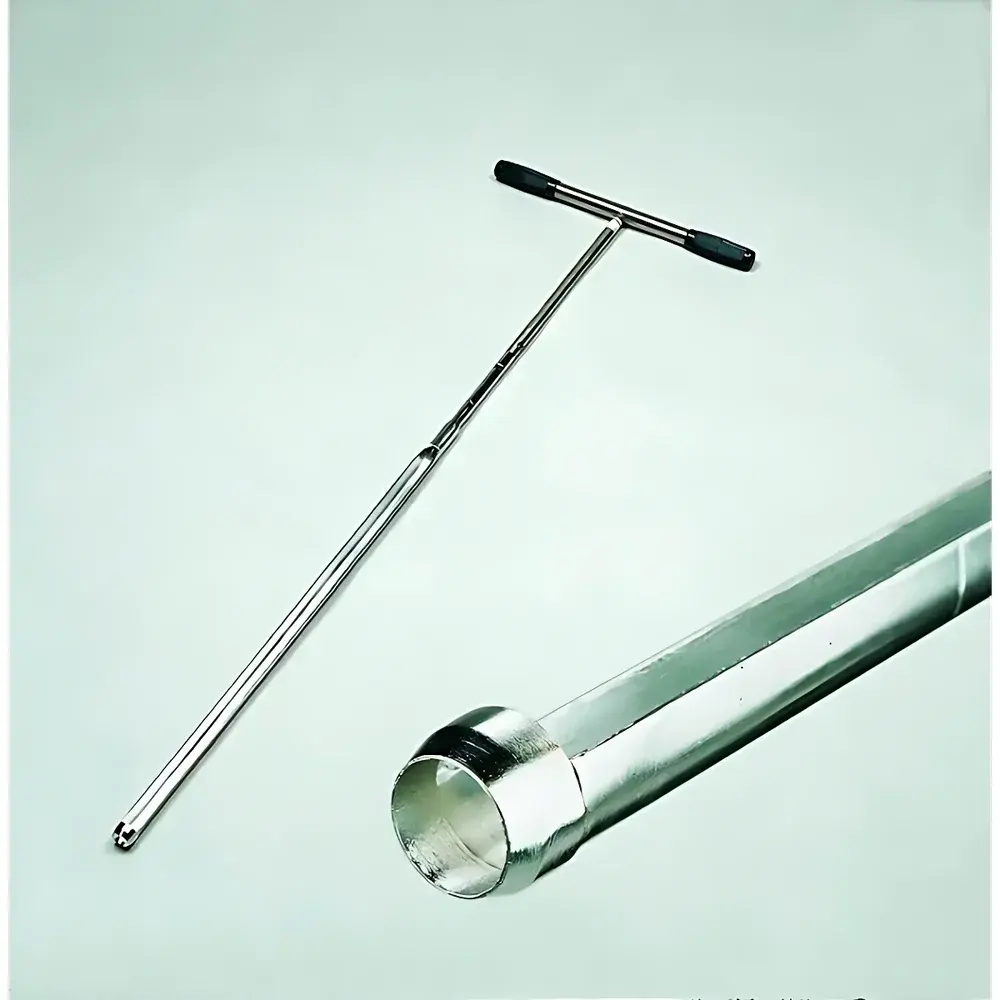
- Thick-walled, hardened steel Purolhauer auger (100 cm length, 18 mm internal diameter, 20 mm outer diameter) optimized for minimal soil disturbance and maximum structural integrity during hard-soil penetration
- 1-meter ergonomic nylon mallet with calibrated mass distribution to ensure consistent impact energy while preventing thread damage or lateral deflection
- Integrated mechanical lever extraction system—comprising a fulcrum bracket, reinforced lifting arm, and adjustable clamping jaws—that applies controlled torque-free vertical force to retrieve the full-length core without slippage or shearing
- Total system weight of 13 kg ensures portability without compromising inertia necessary for effective percussion-driven sampling
- Rugged, waterproof transport case with custom-cut foam inserts for secure storage and field deployment across remote or off-grid monitoring sites
Sample Compatibility & Compliance
The 04.01.SC is validated for collecting undisturbed cylindrical soil cores (2 cm diameter × up to 100 cm length) suitable for laboratory analysis including bulk density, hydraulic conductivity, pore-size distribution, geotechnical strength testing (e.g., unconfined compressive strength), and contaminant profiling (e.g., heavy metals, PAHs, PFAS). It meets the physical sampling requirements of ASTM D1586 for driven split-spoon sampling in cohesionless and stiff cohesive soils, aligns with ISO 22027 protocols for representative field sampling in environmental risk assessment, and supports compliance with EU Regulation (EC) No 1907/2006 (REACH) and national soil monitoring frameworks requiring traceable, minimally disturbed core acquisition. All components are non-reactive to common soil analytes and do not introduce metallic leachates during sampling.
Software & Data Management
While the 04.01.SC is a manual field instrument without embedded electronics, it integrates seamlessly into digital soil data workflows. Each unit is supplied with a unique serial-numbered calibration logsheet documenting material certification (steel grade EN 10025 S355JR), dimensional verification (CMM-measured tolerances ±0.15 mm), and functional test records. Field operators can pair the sampler with Eijkelkamp’s optional FieldLog Pro mobile application (iOS/Android) to geotag sample locations, assign core IDs, record stratigraphic notes, and synchronize metadata directly to LIMS or GIS platforms. Audit trails generated via FieldLog Pro comply with ISO/IEC 17025:2017 documentation requirements and support GLP-aligned chain-of-custody reporting.
Applications
- Permafrost and seasonally frozen ground characterization in Arctic and alpine research stations
- Contaminated site investigation in industrial brownfields where cemented ash layers or slag horizons impede standard coring
- Agricultural soil health monitoring in no-till systems with surface crusting and subsurface compaction
- Geotechnical pre-construction surveys for infrastructure projects in residual soils and weathered bedrock
- National soil monitoring networks requiring standardized, inter-laboratory comparable core geometry (e.g., WOCAT, GLOSOLAN)
FAQ
What soil types is the 04.01.SC specifically rated for?
It is engineered for soils with high dry density (>1.8 g/cm³), low moisture content (<12%), and elevated penetration resistance—such as frozen silt, compacted loam, gravelly clay, and indurated volcanic ash.
Can the auger be sterilized for microbiological sampling?
Yes—the stainless-steel-compatible design allows autoclaving at 121°C for 20 minutes; however, the nylon mallet and lever components must be disassembled and cleaned separately using ethanol or hydrogen peroxide vapor.
Is replacement auger stock available?
Eijkelkamp supplies certified replacement Purolhauer augers (part number 04.01.SC-AUGER) with batch-specific material test reports and dimensional certificates.
Does the lever extraction system require anchoring to the ground?
No—it utilizes a self-contained fulcrum base that distributes reaction force across the surrounding soil surface; no ground anchors or external fixtures are needed.
How does the 04.01.SC compare to hydraulic or motorized coring rigs?
It provides equivalent core integrity at significantly lower logistical footprint—no power source, no vibration transmission, and full operator portability—making it ideal for sensitive ecological zones, rooftop gardens, and heritage site investigations where rig deployment is prohibited.







