
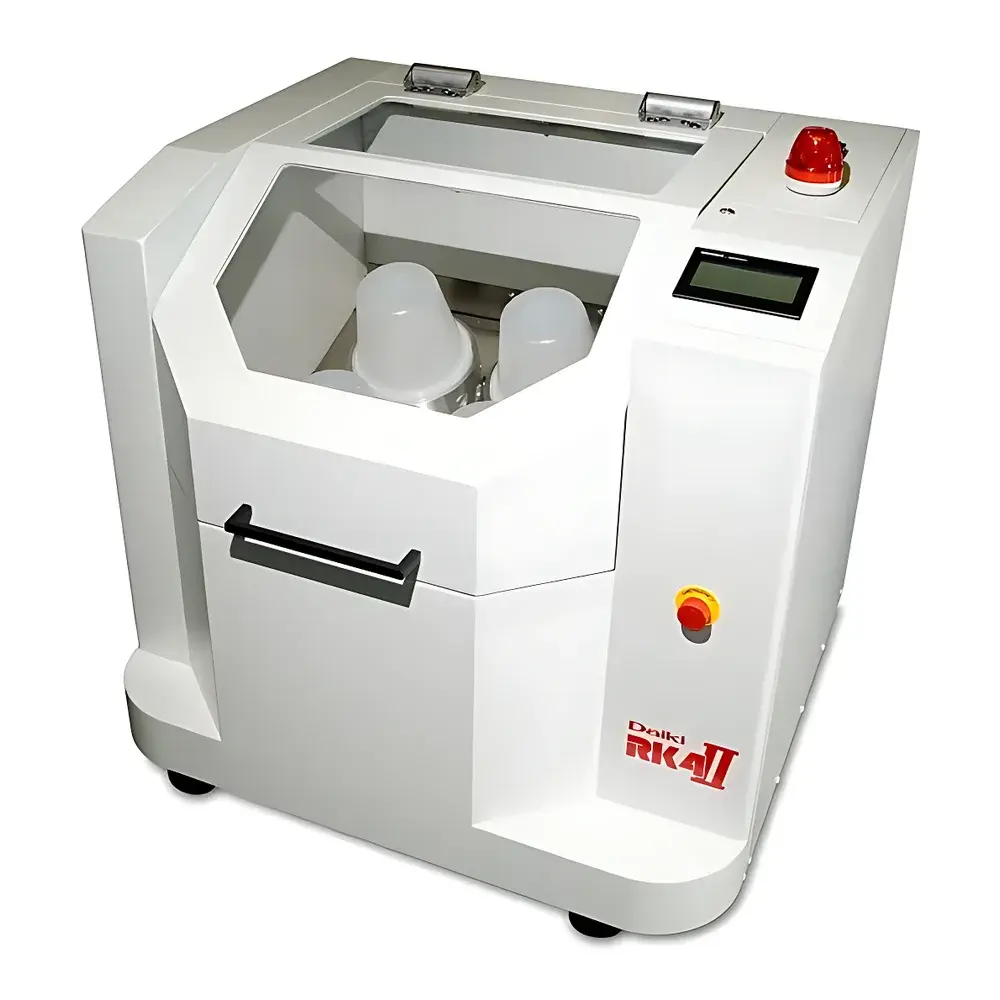
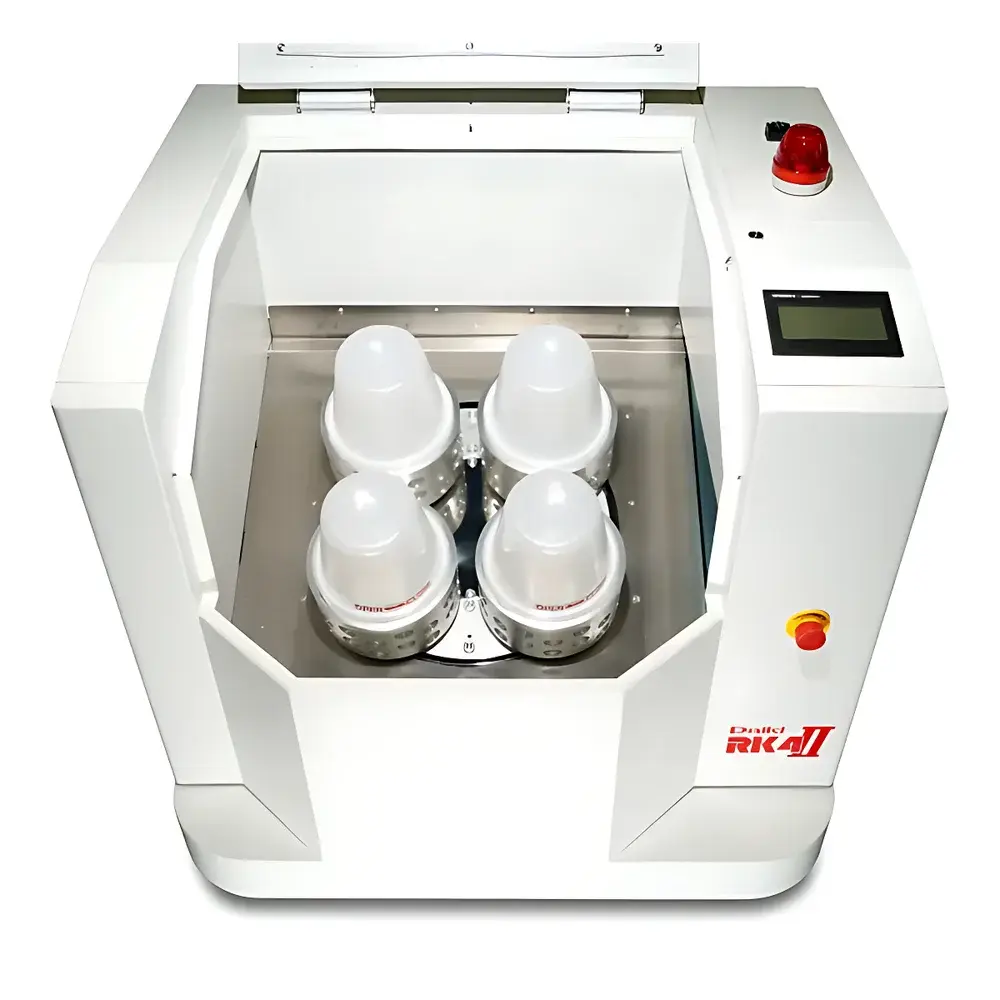
DAIKI DIK-2610 Dust-Free Automated Soil Sieving and Milling System
| Brand | DAIKI |
|---|---|
| Origin | Japan |
| Model | DIK-2610 |
| Instrument Type | Multi-Sample Soil Milling & Sieving System |
| Processing Time | 30–120 s |
| Sample Capacity | 4 × 100–200 g (dry soil) |
| Sieve Cut-off | ≤2 mm |
| Motor Speed | 10–80 rpm |
| Power Supply | 100 V AC, 3 A (with included 220 V to 100 V transformer) |
| Dimensions | 750 (W) × 670 (D) × 700 (H) mm |
| Weight | 160 kg |
| Display | LCD |
| Compliance | Designed for ISO 11277, ASTM D422, and EPA Method 1311-compliant soil preparation workflows |
| Software Interface | Standalone control panel (no PC dependency) |
| Environmental Rating | Lab-grade enclosure |
Overview
The DAIKI DIK-2610 Dust-Free Automated Soil Sieving and Milling System is an integrated laboratory instrument engineered for standardized, operator-safe soil sample preparation in environmental monitoring and regulatory compliance laboratories. It combines planetary rotary milling with simultaneous mechanical sieving—operating on the principle of controlled centrifugal force and oscillatory motion within sealed, reusable sample vessels—to achieve particle size reduction and fractionation in a single automated step. Unlike conventional mortar-and-pestle or sieve-shaking methods, the DIK-2610 eliminates airborne particulate generation during processing, thereby mitigating occupational exposure risks and eliminating post-run cleaning requirements. Its design aligns with core requirements of soil physical characterization protocols, including those specified in ISO 11277 (soil particle-size analysis), ASTM D422 (particle-size analysis of soils), and U.S. EPA Method 1311 (TCLP extraction sample prep), where representative sub-2 mm fractions are mandatory prior to chemical leaching or elemental analysis.
Key Features
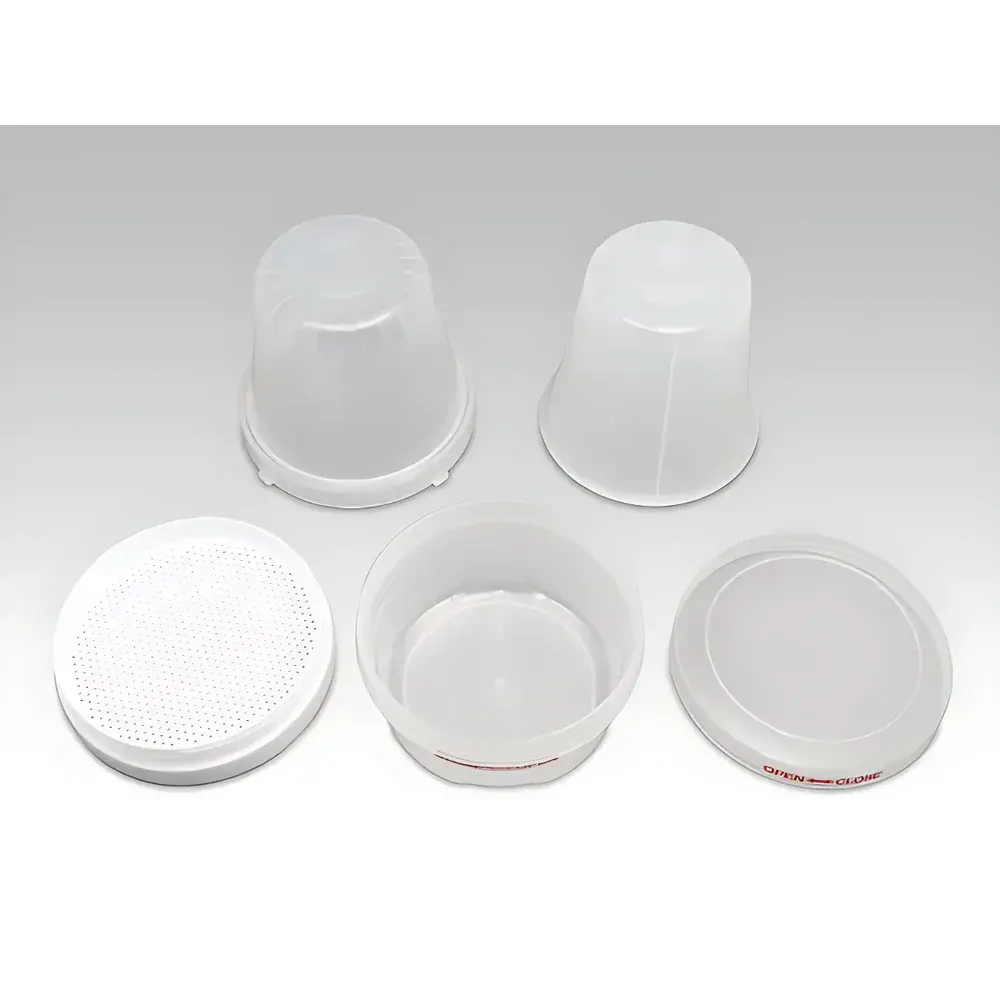
- Four independent, autoclavable stainless-steel sample vessels—each accommodating 100–200 g of air-dried soil—enabling parallel processing without cross-contamination.
- Sealed chamber architecture with IP54-equivalent ingress protection ensures zero dust emission during operation, meeting OSHA PEL and EU Directive 2004/37/EC (carcinogens and mutagens) workplace safety expectations.
- Programmable processing time (30–120 seconds) and adjustable rotational speed (10–80 rpm) allow method optimization for varying soil textures (e.g., clay-rich vs. sandy loam).
- Integrated 2 mm mesh sieve embedded within each vessel enables real-time particle-size fractionation during milling—no secondary sieving step required.
- Compact footprint (750 × 670 × 700 mm) and lab-bench compatibility eliminate need for dedicated vibration-isolated flooring or exhaust ducting.
- LCD interface with intuitive menu navigation supports GLP-compliant parameter logging (date/time stamp, run duration, speed setting) directly to internal memory.
Sample Compatibility & Compliance
The DIK-2610 accepts air-dried, non-aggressive soils—including contaminated site samples (e.g., PAH-, heavy metal-, or hydrocarbon-impacted matrices)—provided organic content does not exceed 15% w/w and moisture content remains below 10%. It is validated for use with soils classified under USDA texture classes from clay to gravelly sand. The system conforms to sample preparation prerequisites defined in ISO 11277 (for particle-size distribution determination), ASTM D422 (for hydrometer or sieve analysis), and EPA SW-846 Methods 1311 (TCLP), 3050B (acid digestion), and 6010D (ICP-OES analysis). Its closed-vessel operation satisfies laboratory biosafety level 1 (BSL-1) containment expectations for non-pathogenic environmental solids. No external vacuum or dust collection infrastructure is required, reducing facility integration complexity.
Software & Data Management
The DIK-2610 operates via an embedded microcontroller with a dedicated LCD control panel—no external PC, driver installation, or proprietary software license is needed. All operational parameters (start time, duration, speed setpoint) are stored internally with timestamped records for up to 500 runs. Data export is not supported via USB or network interface; however, manual transcription of run logs meets minimum documentation requirements under ISO/IEC 17025:2017 Clause 7.5.2 (control of recorded data). For laboratories operating under FDA 21 CFR Part 11 or EU Annex 11, the device is intended for use as a pre-analytical tool only—the final analytical result traceability resides with downstream instrumentation (e.g., ICP-MS, GC-MS). Audit trail functionality is limited to on-device timestamped run history.
Applications
- Preparation of <2 mm fractions for regulatory leaching tests (TCLP, SPLP, EN 12457).
- Routine homogenization of heterogeneous field-collected soils prior to pH, EC, OM, or nutrient analysis (e.g., Mehlich-3, Olsen-P).
- Standardized milling of remediation site soils for metals speciation (e.g., sequential extraction schemes).
- High-throughput sample conditioning in contract environmental labs handling >50 samples/day.
- Research-grade soil fragmentation studies requiring reproducible mechanical energy input (e.g., aggregate stability correlation with milling energy).
FAQ
Is the DIK-2610 suitable for wet or frozen soil samples?
No. Samples must be air-dried to ≤10% moisture content prior to loading. Excess moisture may impair sieve efficiency and induce clumping.
Can the 2 mm sieve be replaced with alternative mesh sizes?
No. The 2 mm aperture is integral to the vessel design and not user-replaceable. Custom sieve configurations are not supported.
Does the instrument meet GLP audit requirements for sample preparation?
Yes—when used with documented SOPs, the device provides traceable, repeatable, and operator-independent sample conditioning. Internal run logs satisfy basic record-keeping needs per OECD GLP Principles Section 5.2.
What maintenance is required beyond routine vessel cleaning?
Annual verification of motor torque consistency and LCD calibration against factory reference values is recommended. No lubrication or belt replacement is required due to direct-drive planetary gear architecture.
Is the 220 V to 100 V transformer supplied with the unit?
Yes. A CE-certified, lab-rated step-down transformer is included and permanently affixed to the rear panel for safe, compliant operation in 220 V regions.
Related Products







