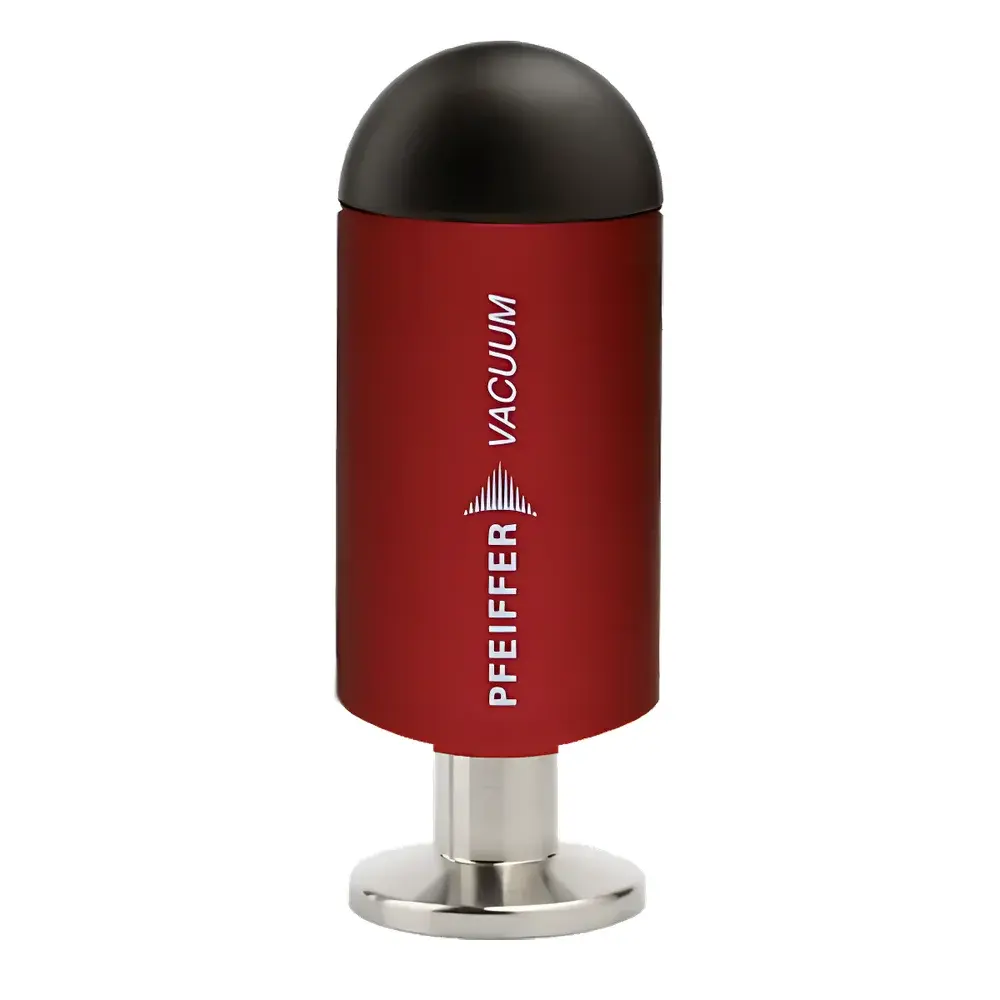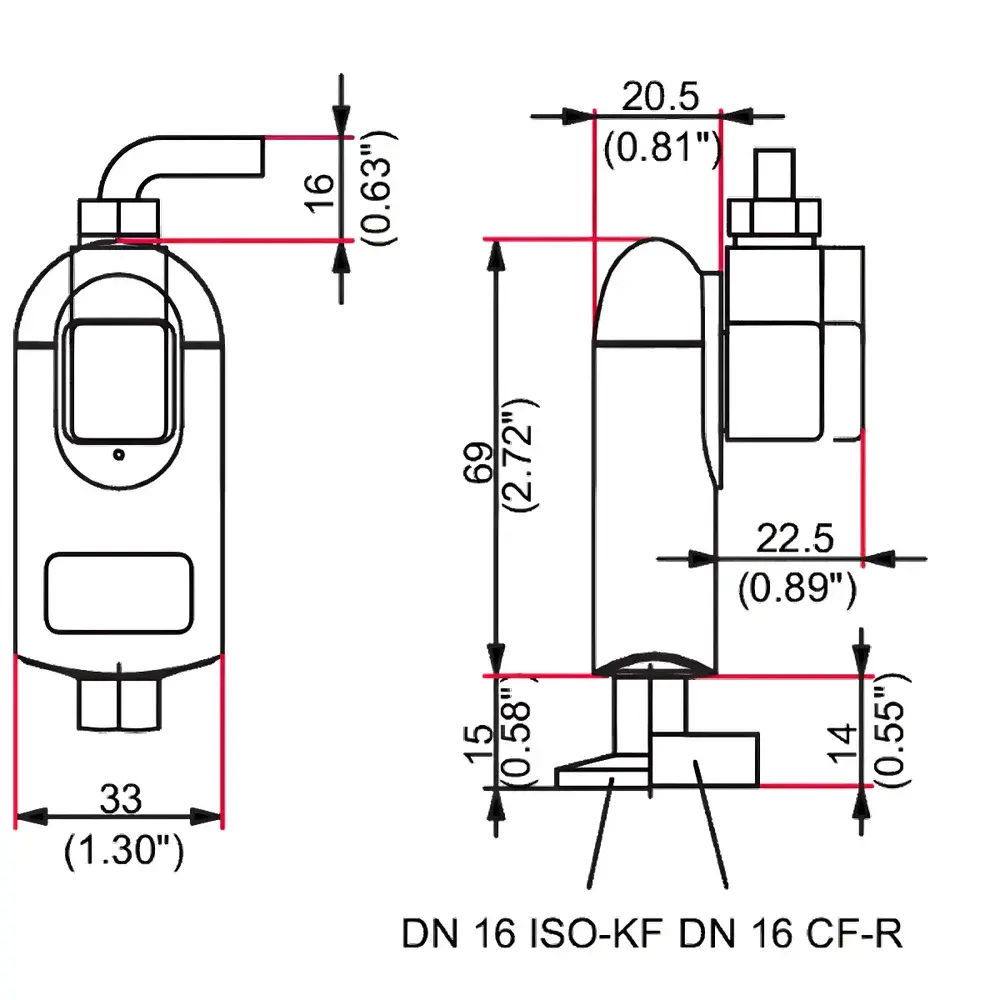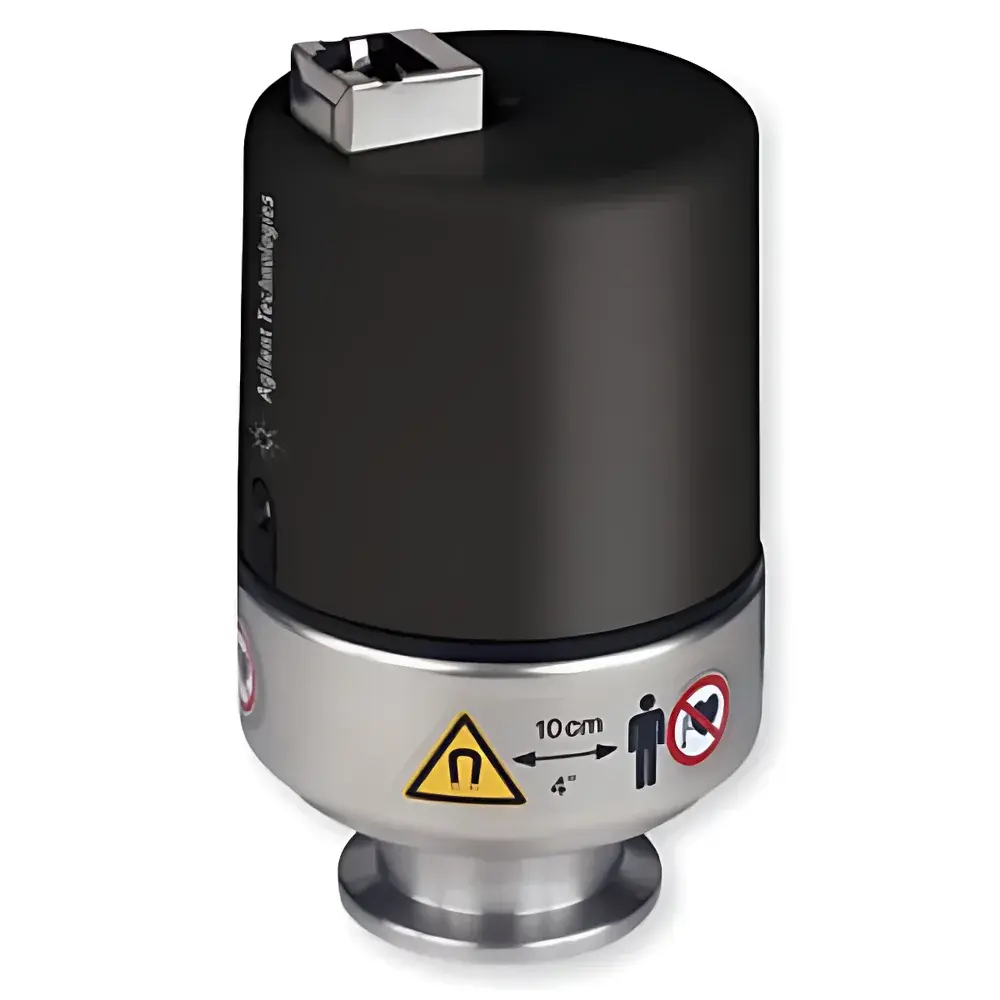
Agilent FRG-700 Full-Range Vacuum Gauge
| Brand | Agilent Technologies |
|---|---|
| Origin | Germany |
| Model | FRG-700 |
| Measurement Principle | Combined Pirani and Cold Cathode |
| Range | 5 × 10⁻⁹ to 1000 mbar |
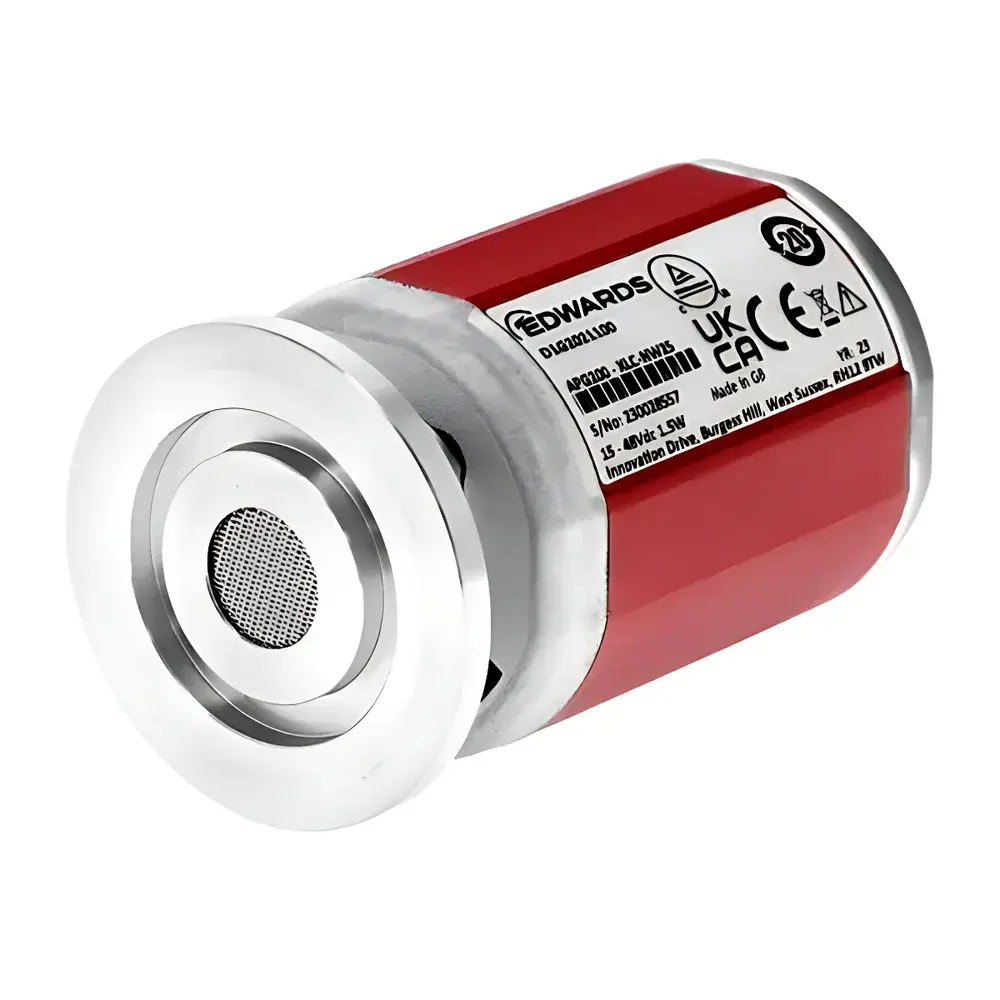
| Vacuum Port | KF 25, CF 40 |
| Accuracy | ±30% |
| Response Time | <10 ms (>10⁻⁶ mbar), ≈1000 ms (at 10⁻⁸ mbar) |
| Operating Temperature | +5 to +55 °C |
| Max Bakeout Temperature | 150 °C |
| Analog Output | 0–10.5 VDC (logarithmic) |
| Electrical Connector | FCC 68, 8-pin female |
| Storage Temperature | –40 to +65 °C |
Overview
The Agilent FRG-700 Full-Range Vacuum Gauge is an integrated, compact vacuum measurement solution engineered for continuous pressure monitoring across the entire vacuum spectrum—from ultra-high vacuum (UHV) through rough vacuum to atmospheric pressure. It combines two complementary physical measurement principles in a single gauge head: a thermally conductive Pirani sensor for low-to-medium vacuum (1000 mbar down to ~1 × 10⁻³ mbar) and a cold cathode ionization sensor for high and ultra-high vacuum (down to 5 × 10⁻⁹ mbar). This dual-sensor architecture eliminates the need for multiple discrete gauges and manual range switching, enabling seamless, uninterrupted pressure logging during pump-down, process stabilization, and venting cycles. Designed for industrial vacuum systems—including thin-film deposition (PVD), sputtering, electron beam evaporation, and analytical instrumentation—the FRG-700 delivers reliable, real-time feedback with minimal footprint and wiring complexity.
Key Features
- Single-gauge full-range coverage from 5 × 10⁻⁹ mbar to 1000 mbar (3.8 × 10⁻⁹ Torr to 760 Torr), eliminating inter-gauge calibration drift and hysteresis.
- Integrated logarithmic analog output (0–10.5 VDC) scaled to pressure decades—enabling direct connection to PLCs, DAQ systems, or vacuum controllers without external signal conditioning.
- Robust mechanical design with KF 25 and CF 40 flange options; compatible with standard UHV-compatible mounting configurations.
- Fast dynamic response: sub-10 ms at pressures above 10⁻⁶ mbar, optimized for real-time process control in reactive sputtering or load-lock cycling.
- High-temperature capability: rated for bakeout up to 150 °C at the flange, supporting applications requiring rigorous outgassing protocols.
- Low-power cold cathode operation—no heated filament—reducing contamination risk and extending operational lifetime in hydrocarbon-sensitive environments.
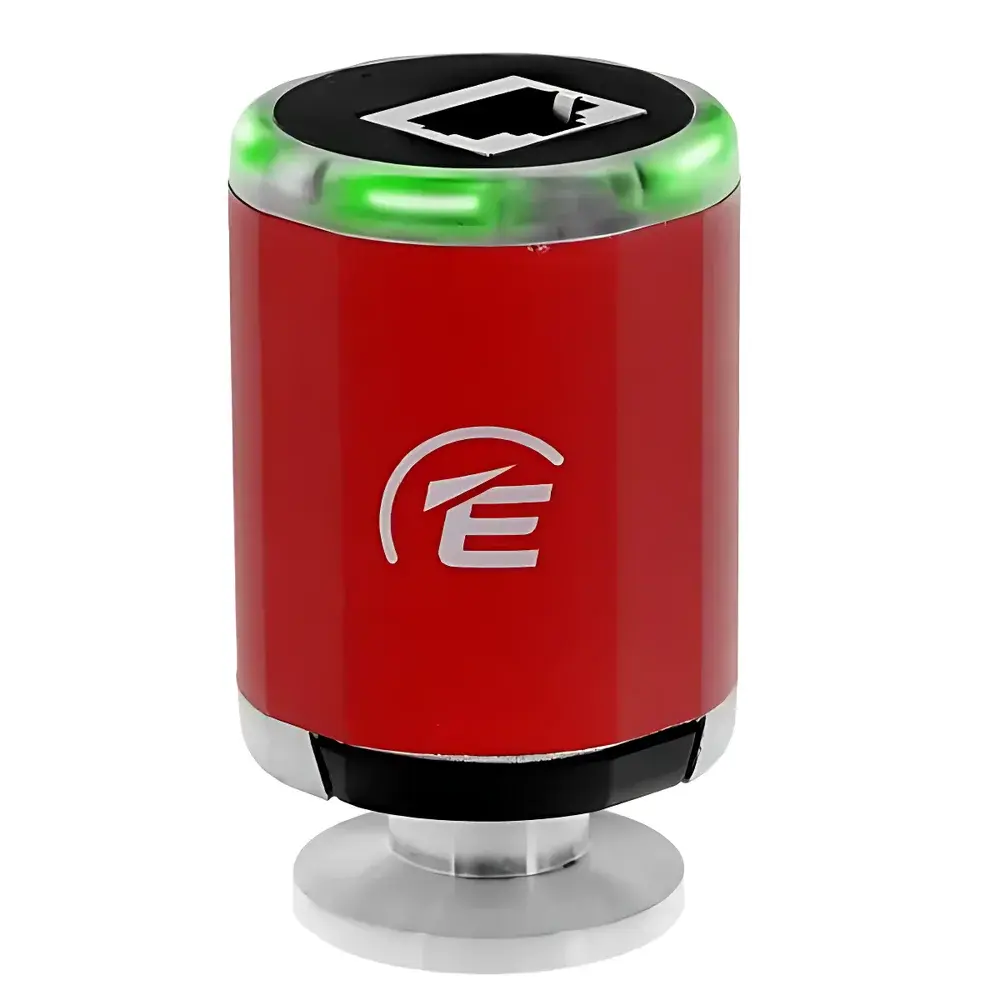
- Front-panel high-brightness LED indicators provide immediate visual status feedback (e.g., sensor active, overpressure, fault condition).
Sample Compatibility & Compliance
The FRG-700 is suitable for inert, non-corrosive gas environments typical of clean vacuum processes (N₂, Ar, O₂, He, vacuum oils in trace amounts). It is not recommended for use with halogenated gases, aggressive plasmas, or condensable vapors without protective isolation. The gauge complies with CE marking requirements per EU Directive 2014/30/EU (EMC) and 2014/35/EU (LVD). Its construction meets ISO 3567:2017 standards for vacuum component dimensional interchangeability and surface finish. While not intrinsically safe, it is widely deployed in Class 1 Div 2 vacuum system architectures under IEC 60079-14 guidelines when installed per manufacturer-recommended grounding and shielding practices. Documentation supports GLP/GMP audit readiness, including traceable calibration certificates (NIST-traceable reference standards available upon request).
Software & Data Management
The FRG-700 operates as a standalone analog sensor but integrates natively with Agilent’s Vacuum Control Suite (VCS) and third-party SCADA platforms via 0–10.5 VDC scaling. Each decade of pressure corresponds to 1 V output—e.g., 10⁻⁵ mbar = 5 V, 10⁻⁷ mbar = 3 V—facilitating straightforward linearization in LabVIEW, Python (PyVISA), or MATLAB. Optional digital interface modules (e.g., Agilent 3070A Vacuum Controller) add RS-485 Modbus RTU support, enabling timestamped data logging, alarm thresholds, and multi-gauge synchronization. All firmware updates and configuration parameters are managed via Agilent’s standardized vacuum instrument protocol (VIP), ensuring compatibility with legacy and next-generation vacuum system architectures.
Applications
- Real-time endpoint detection and pressure stabilization in magnetron sputtering and thermal evaporation systems.
- Process validation and leak rate trending in semiconductor front-end vacuum tools (load locks, transfer chambers, PECVD reactors).
- Baseline vacuum qualification and chamber conditioning in surface science instruments (XPS, AES, LEED).
- Continuous monitoring of turbomolecular pump backing lines and diffusion pump forelines.
- Education and R&D labs requiring cost-effective, full-range vacuum characterization without sacrificing metrological continuity.
FAQ
Does the FRG-700 require periodic recalibration?
Yes—Agilent recommends annual calibration against traceable reference standards for critical process applications. Calibration intervals may be extended per ISO/IEC 17025-based internal procedures if historical stability data support extended intervals.
Can the FRG-700 be used in oxygen-rich or reactive gas environments?
The cold cathode sensor is compatible with O₂ and N₂; however, prolonged exposure to oxidizing plasmas or fluorinated etch chemistries may degrade electrode emissivity and requires evaluation on a case-by-case basis.
Is the analog output linear or logarithmic?
The 0–10.5 VDC output is strictly logarithmic—each 1 V step represents one decade change in pressure—enabling high-resolution discrimination across 12 orders of magnitude.
What is the maximum allowable flange temperature during bakeout?
The gauge head must remain below 55 °C during operation; however, the CF 40 version supports flange temperatures up to 150 °C during system bakeout, provided the sensor body remains externally cooled or shielded.
How does the FRG-700 compare to the FRG-702?
The FRG-702 is the all-metal, metal-sealed variant with enhanced bakeout tolerance (150 °C at flange) and improved UHV compatibility due to lower outgassing rates; the FRG-700 uses elastomer seals and is optimized for general-purpose industrial vacuum applications.