
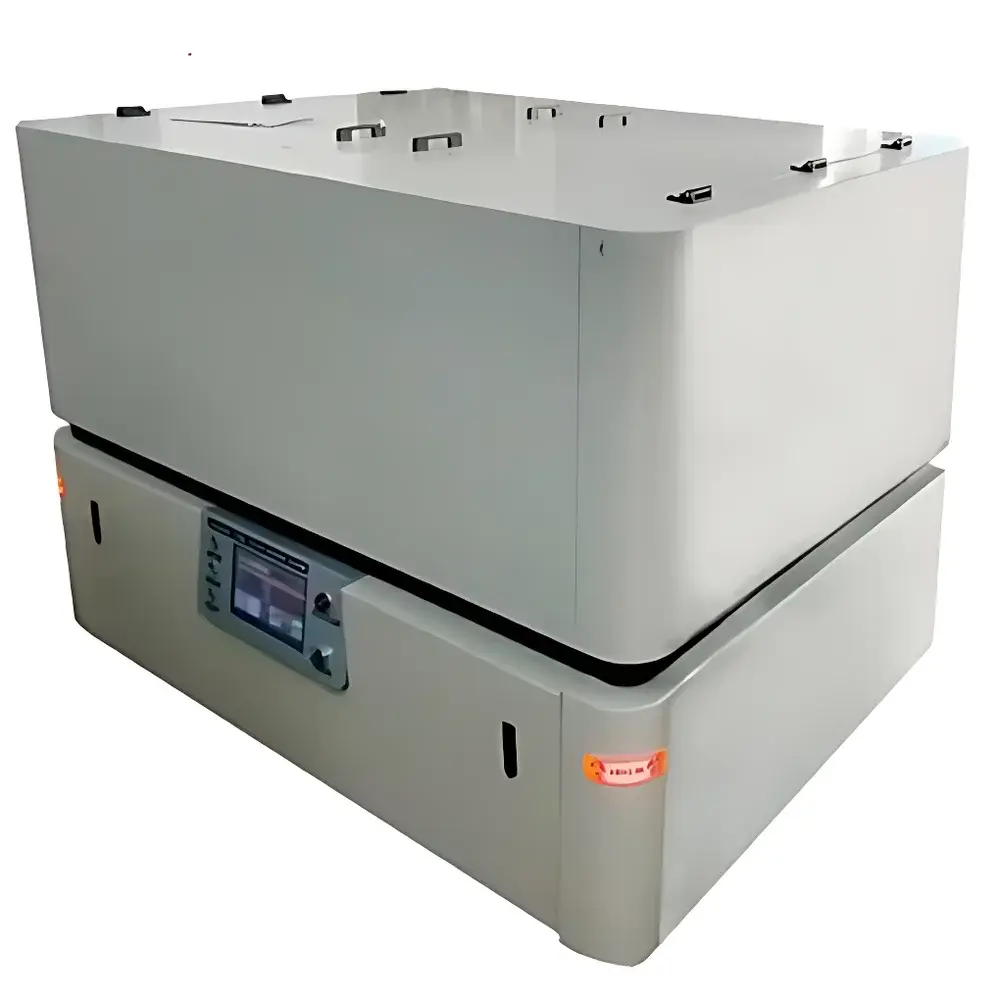
Tongda TD X-ray Absorption Fine Structure (XAFS) Spectrometer
| Brand | Tongda |
|---|---|
| Model | TD |
| Origin | Liaoning, China |
| Manufacturer Type | Authorized Distributor |
| Domestic Product Classification | Yes |
| X-ray Source Power | 1.6 kW |
| Monochromatic X-ray Photon Flux | 1,000,000 photons/s/eV |
| Minimum Detectable Elemental Content | 1 wt% |
| Tunable X-ray Absorption Energy Range | 5–19 keV |
Overview
The Tongda TD X-ray Absorption Fine Structure (XAFS) Spectrometer is a laboratory-scale, high-flux soft-to-hard X-ray spectroscopic instrument engineered for element-specific, local-structure characterization of heterogeneous and disordered materials. Based on the physical principle of X-ray absorption spectroscopy—where core-level electrons are excited by tunable monochromatic X-rays—the system measures fine oscillations in the absorption coefficient above an element’s absorption edge (XANES and EXAFS regions). Unlike conventional XRD or XRF systems, XAFS does not require long-range crystalline order, making it uniquely suited for amorphous catalysts, operando electrochemical interfaces, radiation-sensitive biological samples, and complex environmental matrices. The TD spectrometer delivers synchrotron-comparable data quality through its optimized beamline architecture, including a high-power rotating-anode X-ray source (1.6 kW), double-crystal Si(111) monochromator, and high-throughput ionization chamber detection chain.
Key Features
- High photon flux output: ≥1 × 10⁶ photons/s/eV at the sample position across the 5–19 keV range—enabling rapid acquisition of high signal-to-noise EXAFS spectra in minutes rather than hours.
- Exceptional energy stability: Monochromatic beam intensity drift <0.1% over 8-hour operation; energy calibration reproducibility better than ±50 meV per scan cycle.
- Element-selective sensitivity: Capable of resolving local coordination geometry (bond distances, coordination numbers, disorder parameters) for elements with K-edges between 5 keV (e.g., V, Cr) and 19 keV (e.g., Zn, Se, Br), including transition metals, lanthanides, and heavier p-block elements.
- Robust mechanical and thermal design: Precision-machined granite optical base, active temperature stabilization (±0.1 °C) for monochromator crystals, and vibration-damped sample stage for long-duration in situ/operando measurements.
- Modular vacuum and He-purged beam path options: Supports both air-sensitive samples (e.g., reduced metal catalysts) and ambient-pressure gas-cell experiments.
Sample Compatibility & Compliance
The TD XAFS spectrometer accommodates solid powders, thin films, foils, frozen solutions, and encapsulated liquid cells. Sample forms include pressed pellets, transmission grids, and capillary-loaded specimens. It complies with IEC 61000-6-3 (EMC emissions) and IEC 61000-6-4 (industrial immunity), and meets Class 1 laser safety requirements per IEC 60825-1 for all integrated alignment lasers. While not a GMP-certified instrument per se, its hardware architecture supports audit-ready operation under GLP frameworks: all energy calibrations are traceable to NIST-standard reference foils (e.g., Cu, Ni, Fe), and spectral acquisition metadata (including monochromator angle, detector gain, integration time, and beam current) is automatically embedded in HDF5-formatted raw data files—facilitating full traceability for regulatory submissions (e.g., USP , ASTM E2927-22).
Software & Data Management
Control and analysis are performed via the proprietary XAFS Studio Suite—a Python-based platform integrating EPICS-compatible device drivers, real-time feedback loops for energy stabilization, and automated multi-edge scanning workflows. Raw μ(E) spectra are processed using standard algorithms (autobackground subtraction, k³-weighting, Fourier filtering) compliant with Demeter (Athena/Artemis) conventions. All processing steps generate immutable log files with timestamps, user IDs, and parameter versions—meeting FDA 21 CFR Part 11 requirements for electronic records when deployed with validated network authentication and role-based access control. Export formats include ASCII (.dat), NeXus/HDF5 (.h5), and CIF-compatible structural descriptors for downstream DFT modeling.
Applications
- Catalysis: In situ/operando tracking of oxidation state changes and coordination reorganization during CO₂ hydrogenation, NH₃ synthesis, and selective oxidation over supported Pt, Co, or single-atom M–N–C catalysts.
- Energy Materials: Probing Li local environment evolution in cathode/anode interfaces during battery cycling; identifying transient hydride species in Mg-based hydrogen storage alloys.
- Environmental Science: Speciation of Cr(VI)/Cr(III) in tanned leather and soil colloids; As and Se redox states in coal fly ash and rice husk biochar.
- Materials Science: Quantifying short-range order in high-entropy alloys, glassy oxides, and MOF-derived carbons—beyond the resolution limit of pair-distribution function (PDF) analysis.
- Biological Systems: Mapping Mn–O bond dynamics in photosystem II oxygen-evolving complex analogues; determining Zn site heterogeneity in metalloenzyme mutants.
FAQ
What elements can be measured with the TD spectrometer?
Elements with K-absorption edges between 5 keV (vanadium) and 19 keV (bromine), including but not limited to Ti, Fe, Co, Ni, Cu, Zn, Ga, Ge, As, Se, Rb, Sr, Y, Zr, Nb, Mo, Ag, Cd, In, Sn, Sb, Te, I, Cs, Ba, La, Ce, Pr, Nd, Sm, Eu, Gd, Tb, Dy, Ho, Er, Tm, Yb, Lu.
Is helium purge required for low-energy measurements?
Yes—for measurements below ~7 keV (e.g., V, Cr, Mn K-edges), a He-purged or vacuum beam path is recommended to minimize air absorption and improve signal throughput.
Can the system perform time-resolved XAFS?
Yes—when coupled with external triggers (TTL input), the TD spectrometer supports stroboscopic acquisition down to 100-ms time resolution for pump-probe studies of photoinduced structural dynamics.
Does the software support batch processing of multiple samples?
Yes—XAFS Studio includes scriptable workflow automation for standardized normalization, background removal, and k-space fitting across hundreds of spectra, with QC flagging for outlier detection.
Is remote operation supported?
Yes—secure SSH and VNC-based remote access is enabled by default, with session logging and two-factor authentication configurable per institutional IT policy.




