
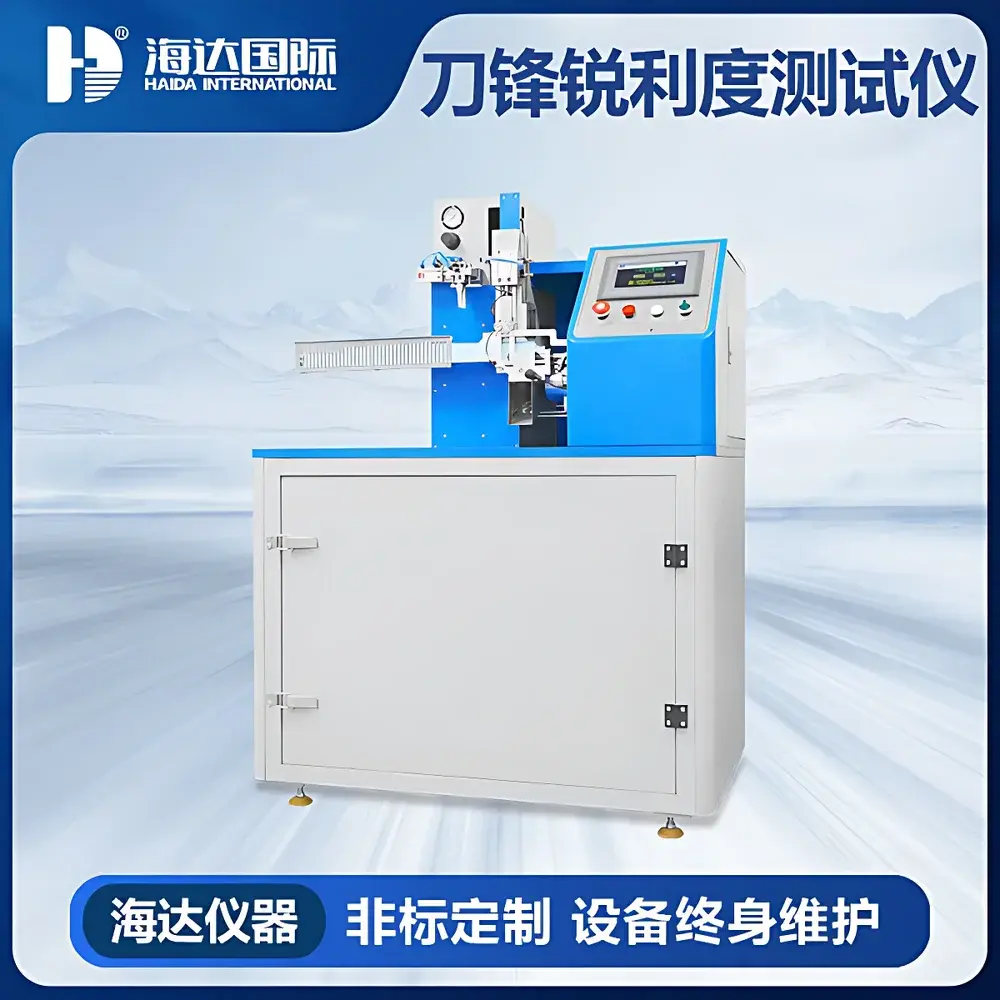
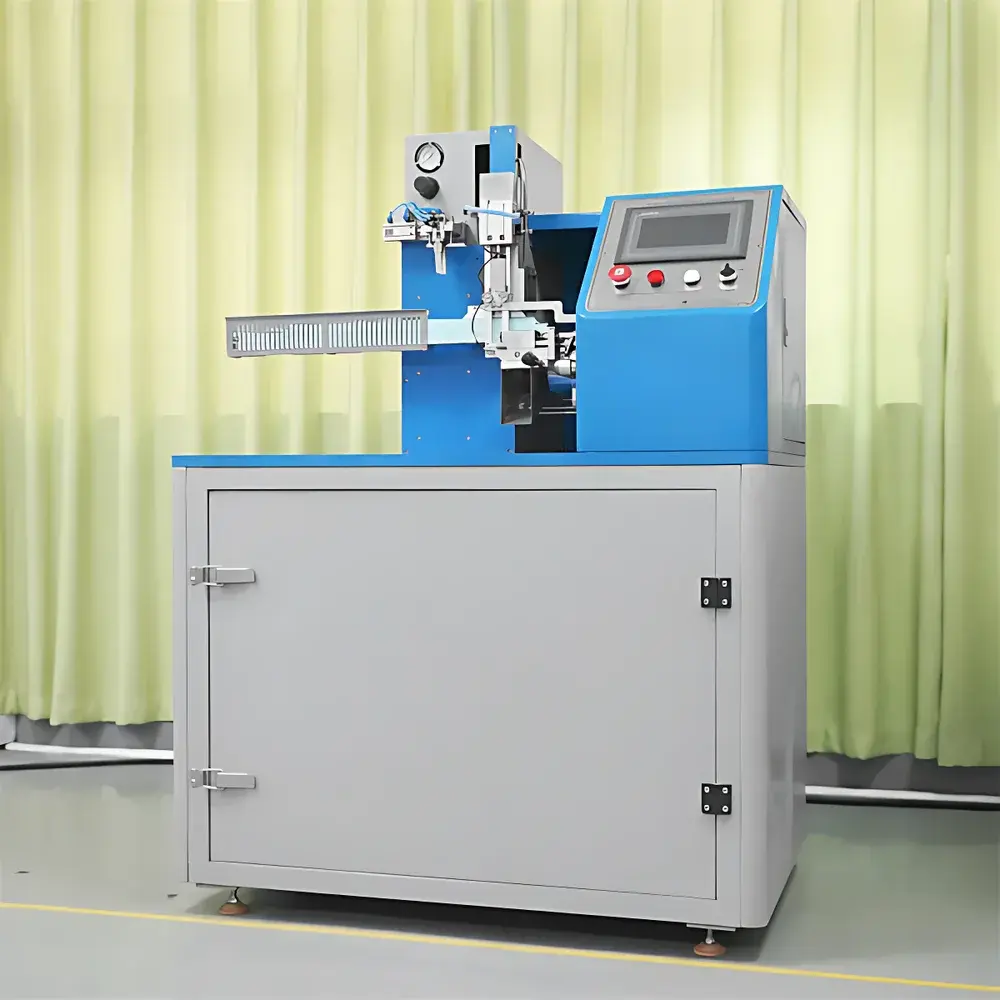
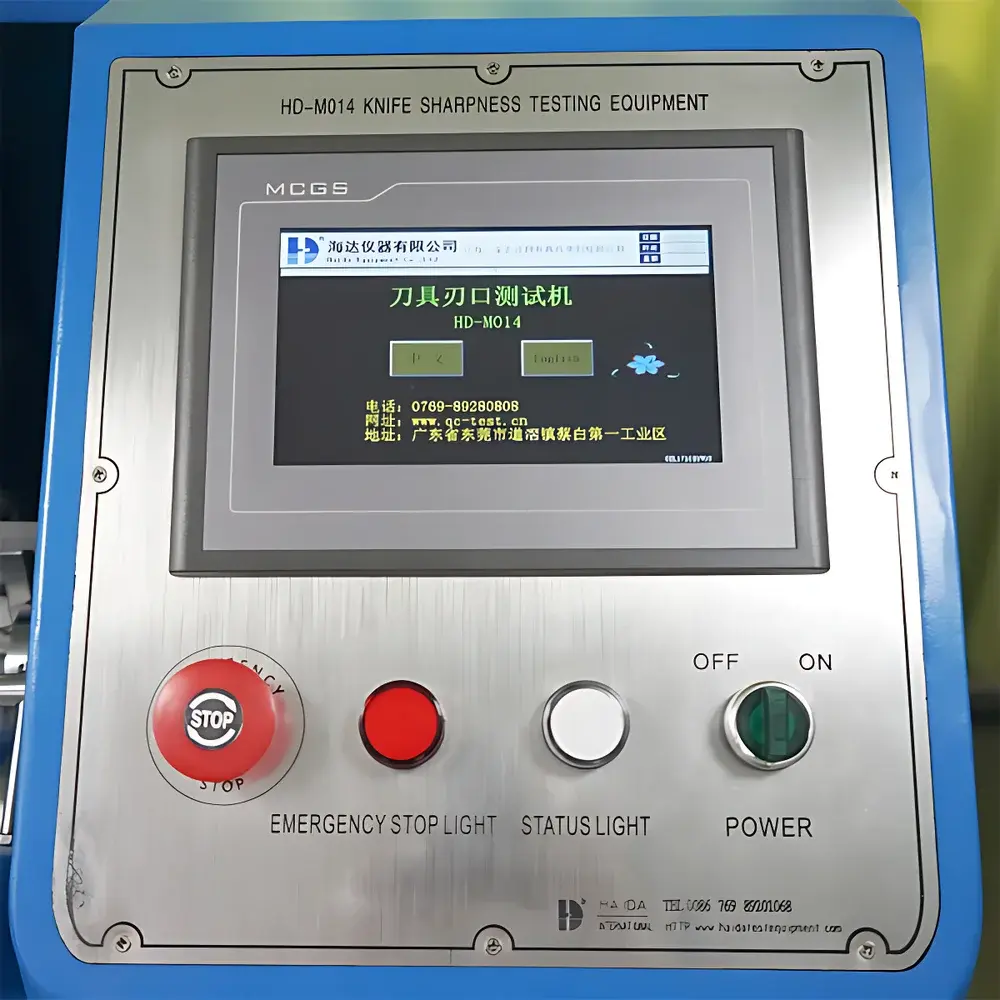
HAIDA HD-M013 Blade Sharpness Tester
| Brand | HAIDA INTERNATIONAL |
|---|---|
| Origin | Guangdong, China |
| Manufacturer Type | Direct Manufacturer |
| Country of Origin | China |
| Model | HAIDA HD-M013 Blade Sharpness Tester |
| Cutting Stroke | 40 mm + 10 mm |
| Test Medium Width | Not Specified |
| Cutting Speed | 50 mm/s |
| Test Load Capacity | 50 N |
| Clamping Pressure | 130 N |
| Cycle Options | 60 or 200 cycles |
| Dimensions (L×W×H) | 1250 × 700 × 1500 mm |
| Weight | 100 kg |
| Power Supply | 1-Phase AC 220 V / 50 Hz |
| Compliance Standard | ISO 8442-5:2004 |
Overview
The HAIDA HD-M013 Blade Sharpness Tester is an electromechanical precision instrument engineered for objective, repeatable quantification of cutting edge performance in industrial and quality assurance environments. It operates on the principle of controlled linear penetration—measuring the dynamic force required for a standardized blade to sever a reference test medium under defined kinematic and mechanical constraints. Unlike subjective tactile assessment or qualitative cut-score methods, the HD-M013 delivers traceable, numerical sharpness values (expressed in Newtons) derived from real-time load-cell acquisition during active cutting motion. Its design conforms strictly to ISO 8442-5:2004, the internationally recognized standard for evaluating the cutting performance of knives, blades, and edged tools used in food processing, medical device manufacturing, packaging, and personal care applications. The system integrates a programmable logic controller (PLC) core with a high-resolution LCD touchscreen interface, enabling precise parameter configuration, automated sequence execution, and synchronized visualization of force-versus-displacement profiles.
Key Features
- Automated cutting cycle control with dual preset modes: 60-cycle and 200-cycle protocols for statistical robustness and wear trend analysis.
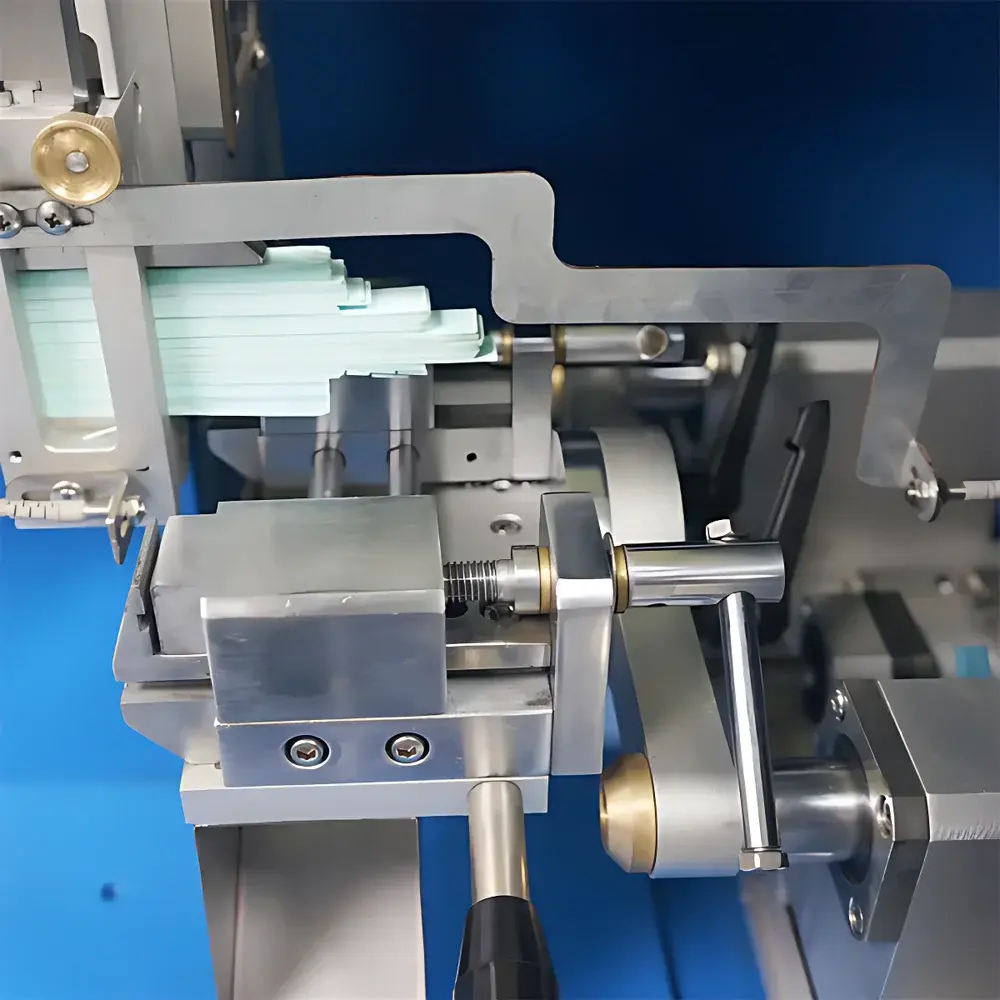
- Integrated optical or mechanical position-sensing system for automatic cut-point localization—ensuring consistent blade engagement depth across repeated trials.
- Motor-driven linear actuator with closed-loop speed regulation maintains constant 50 mm/s cutting velocity, minimizing inertial artifacts and ensuring compliance with ISO 8442-5 kinematic requirements.
- Dual-axis clamping mechanism applies uniform 130 N pre-load to secure test specimens without deformation, preserving material integrity prior to cutting initiation.
- Real-time force acquisition via calibrated 50 N load cell (±0.5% FS accuracy), sampled at ≥1 kHz and displayed as both numeric peak force and time-resolved force curve on the touch interface.
- Self-retracting blade carriage with homing routine ensures reproducible zero-position alignment before each cycle, eliminating manual reset errors.
- Robust welded steel frame with vibration-damped base supports stable operation in shared laboratory or production-floor environments.
Sample Compatibility & Compliance
The HD-M013 accommodates standardized test media per ISO 8442-5:2004—including certified synthetic polymer strips (e.g., polyurethane-based reference substrates) and calibrated cardboard laminates. Specimen width is adjustable within standard mounting fixtures (maximum 100 mm width; exact width determined by user-supplied test medium). The instrument does not impose material-specific limitations beyond dimensional and mechanical compatibility with the 40 mm + 10 mm stroke envelope and 130 N clamping pressure. All measurement outputs are directly traceable to SI units via factory calibration certificates (NIST-traceable load cell verification available upon request). Full documentation support includes IQ/OQ protocols, calibration logs, and audit-ready test reports compliant with GLP and internal QA procedures. While not inherently 21 CFR Part 11–compliant, the system supports integration with external validated data management platforms for regulated industries.
Software & Data Management
The embedded PLC firmware provides local data logging with timestamped storage of up to 1,000 complete test records—including peak force, average force, cut duration, and full force-time arrays—in CSV format exportable via USB port. No proprietary software installation is required for basic operation; however, optional PC-based HAIDA DataLink Suite (v3.2+) enables advanced statistical analysis (Cp/Cpk, X-bar R charts), multi-instrument fleet monitoring, and PDF report generation with digital signature fields. Raw datasets retain full resolution for third-party post-processing in MATLAB, Python (NumPy/Pandas), or Minitab. Audit trail functionality records operator ID, parameter changes, and calibration events—meeting baseline requirements for ISO/IEC 17025 accredited laboratories.
Applications
- Quality control of surgical scalpels, biopsy needles, and disposable razors in medical device manufacturing.
- Validation of blade wear resistance and edge retention in food-grade cutting tools (e.g., deli slicers, meat deboning knives).
- R&D evaluation of novel edge geometries, coating technologies (e.g., DLC, TiN), and substrate-hardening treatments.
- Supplier qualification testing for OEMs requiring contractual sharpness thresholds (e.g., ≥3.2 N initial cut force on PU strip).
- Regulatory submission support for FDA 510(k) or CE Marking dossiers where objective cutting performance data is mandated.
- Process capability studies in high-volume blade production lines to monitor tooling degradation over time.
FAQ
Does the HD-M013 comply with ISO 8442-5:2004 out of the box?
Yes—the mechanical configuration, actuation profile, clamping force, and data acquisition specifications are pre-aligned with Clause 6 (Test Apparatus) and Annex A (Reference Materials) of ISO 8442-5:2004.
Can the instrument be calibrated in-house?
Primary calibration requires NIST-traceable deadweight standards applied to the load cell; recommended annually by an accredited metrology lab. User-level verification using certified reference weights is supported via built-in calibration mode.
Is test medium supplied with the system?
No—ISO-compliant polyurethane test strips and cardboard laminates must be procured separately from approved vendors (e.g., TMI, Thwing-Albert) to ensure inter-laboratory comparability.
What maintenance intervals are recommended?
Lubrication of linear guide rails every 500 operating hours; inspection of belt tension and sensor cabling every 6 months; annual verification of PLC timing accuracy and load cell linearity.
Can the HD-M013 interface with MES or LIMS systems?
Direct OPC UA or Modbus TCP integration is not natively supported; however, CSV exports and optional DataLink Suite provide REST API endpoints for middleware ingestion into enterprise systems.
Related Products



