
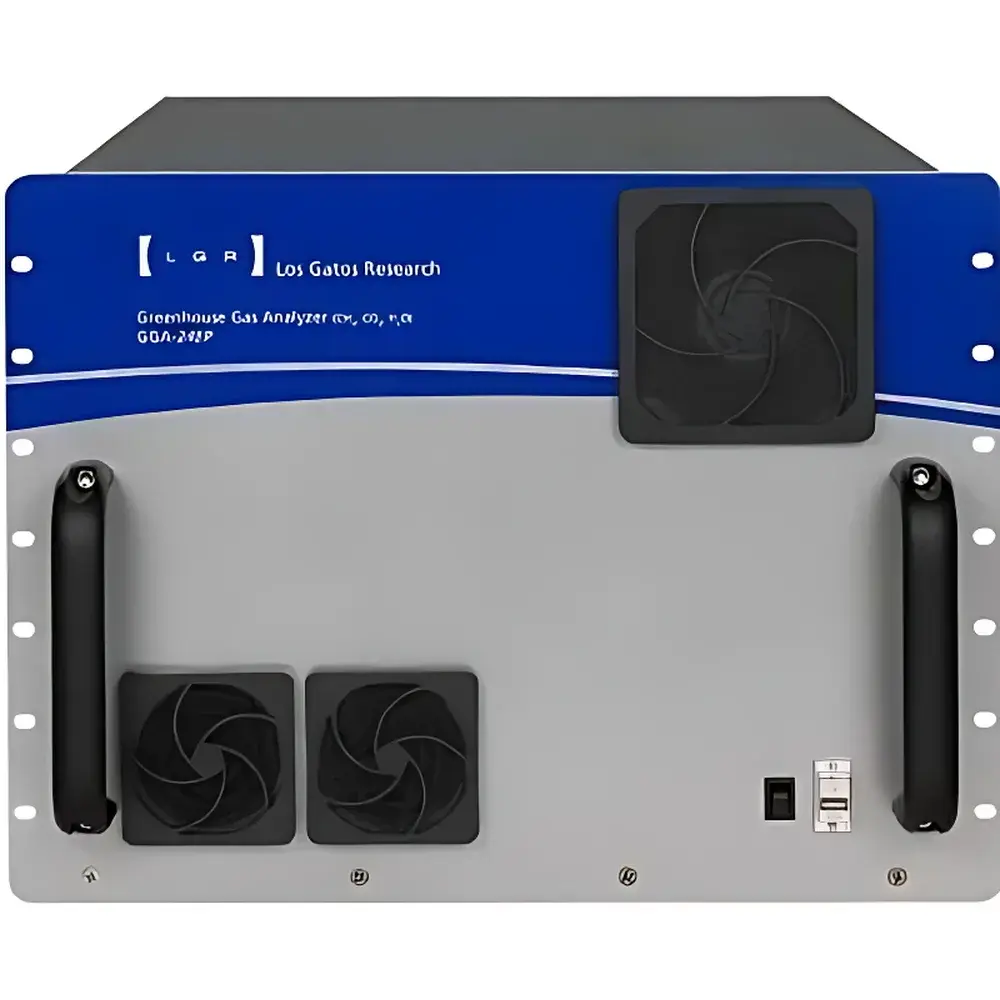
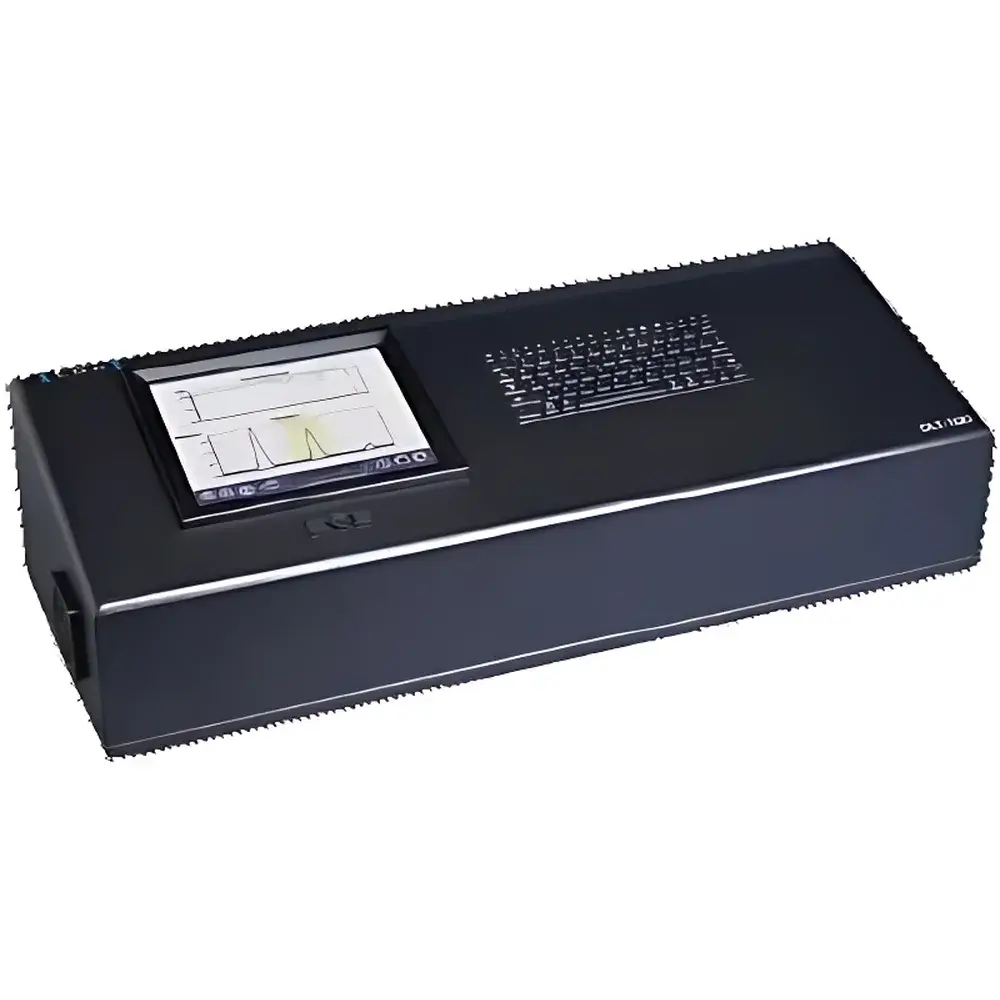
Los Gatos Research Model 907-0010 / 908-0010 / 911-0010 / 907-0011 / 908-0011 / 911-0011 Greenhouse Gas Analyzer (GGA)
| Origin | USA |
|---|---|
| Manufacturer Type | Authorized Distributor |
| Origin Category | Imported |
| Models | 907-0010, 908-0010, 911-0010, 907-0011, 908-0011, 911-0011 |
| Pricing | Upon Request |
Overview
The Los Gatos Research (LGR) Greenhouse Gas Analyzer (GGA) is a high-precision, field-deployable trace gas analyzer engineered for simultaneous, real-time quantification of methane (CH4), carbon dioxide (CO2), and water vapor (H2O) mole fractions in ambient air and controlled gas streams. It employs Off-Axis Integrated Cavity Output Spectroscopy (OA-ICOS)—a patented laser absorption technique that eliminates the need for active cavity-length stabilization or laser wavelength locking, distinguishing it from conventional Cavity Ring-Down Spectroscopy (CRDS) systems. OA-ICOS delivers robust signal-to-noise performance across variable environmental conditions while enabling continuous acquisition and on-board storage of high-resolution absorption spectra. This spectral fidelity permits rigorous physical correction of pressure-broadening and water-vapor dilution effects—allowing direct reporting of dry-mole-fraction CH4 and CO2 without pre-analytical drying or post-processing compensation. The instrument is widely deployed in eddy covariance flux networks (e.g., AmeriFlux, ICOS, FLUXNET), soil chamber studies, atmospheric monitoring stations, and mobile platforms requiring long-term stability, low power consumption, and minimal maintenance.
Key Features
- Simultaneous, independent measurement of CH4, CO2, and H2O at up to 10 Hz (standard models) or 1 Hz (EP models under low-flow configuration)
- Patented OA-ICOS optical architecture with no moving parts, no active cavity alignment, and immunity to mechanical drift
- On-board Linux-based embedded computer for real-time data logging, spectral archiving, remote diagnostics, and network-enabled operation via Ethernet/SSH
- Extended-range CH4 option supporting linear, calibrated measurements up to 10% (100,000 ppm) without external dilution—maintaining <0.03% uncertainty and sub-ppb precision across full span
- EP-series models incorporate ultra-stable thermal and pressure control (±0.003 °C, ±0.001 torr), achieving <0.8 ppb CH4 drift over 24 h (15-min averaging, STP)
- Full-spectrum output enables retrospective analysis, interference identification, and validation against reference standards per ISO 14687 and ASTM D6728
- Compliant with GLP/GMP data integrity requirements: audit-trail-capable firmware, time-stamped raw spectra, and immutable metadata recording
Sample Compatibility & Compliance
The GGA accepts gaseous samples over a wide operational envelope: sample temperature from –10 to +50 °C; ambient operating temperature from 0 to +45 °C (EP) or +5 to +45 °C (standard); and relative humidity from 0–100% RH (non-condensing). It is compatible with standard 1/4″ Swagelok fittings and integrates seamlessly with certified sampling manifolds, Nafion dryers (optional), and multi-port selector valves (e.g., 8- or 16-channel MIU modules). All models meet CE marking requirements for electromagnetic compatibility (EMC Directive 2014/30/EU) and low-voltage safety (LVD Directive 2014/35/EU). Data output formats comply with CF conventions (Climate and Forecast Metadata Conventions) for interoperability with FluxNet and ICOS data repositories. Instrument calibration traceability aligns with NIST SRM 1662 (CH4) and SRM 1660 (CO2), supporting compliance with EPA Method TO-15 and ISO 13861 for ambient air quality monitoring.
Software & Data Management
LGR’s proprietary Data Acquisition Software (v5.x+) provides synchronized timestamping, multi-instrument coordination (including GPS, anemometers, and auxiliary sensors), and automated export to NetCDF, CSV, or HDF5 formats. Raw spectral files (.bin) are stored with full metadata (temperature, pressure, flow rate, laser current, cavity reflectivity), enabling reprocessing using LGR’s SpectralFit™ algorithm suite. Remote access is secured via SSH/TLS with role-based user permissions. Firmware updates and diagnostic logs support FDA 21 CFR Part 11 compliance when configured with electronic signatures and audit trails. All data paths adhere to FAIR principles (Findable, Accessible, Interoperable, Reusable), facilitating integration into institutional data management systems and cloud-based analytics pipelines.
Applications
- Eddy covariance flux measurements of CH4 and CO2 across terrestrial, wetland, and aquatic ecosystems
- In situ soil gas flux chamber studies requiring high temporal resolution and low detection limits
- Urban air quality monitoring networks tracking fugitive emissions from landfills, wastewater treatment, and natural gas infrastructure
- Mobile platform deployments (vehicles, drones, aircraft) where size, weight, and power constraints demand ruggedized instrumentation
- Calibration transfer and intercomparison campaigns among national metrology institutes and reference laboratories
- Long-term atmospheric observatories requiring sub-annual drift stability and traceable calibration history
FAQ
How does OA-ICOS differ from CRDS in practical field deployment?
OA-ICOS eliminates the need for real-time cavity length feedback loops and laser wavelength dithering, resulting in higher optical throughput, reduced sensitivity to vibration and thermal transients, and simplified optical alignment—critical for unattended, outdoor installations.
Can the GGA report dry-mole-fraction values without external drying?
Yes. By fitting the full high-resolution absorption spectrum—including H2O lines and collision-broadening parameters—the instrument computes and corrects for dilution and pressure-broadening effects in real time, delivering validated dry-mole-fraction outputs without hardware-based drying.
What is the significance of the EP-series thermal stability specification (±0.003 °C)?
This level of temperature control suppresses thermally induced refractive index fluctuations in the optical cavity, directly reducing baseline drift and enabling sub-ppb CH4 stability over multi-day periods—essential for compliance with ICOS Tier-1 data quality objectives.
Is the extended-range CH4 option suitable for landfill or biogas applications?
Yes. The 0–10% CH4 extended range operates with the same fundamental spectroscopic accuracy as the ambient range (0.1–100 ppm), eliminating the need for external dilution systems and associated calibration uncertainties.
Does the GGA support regulatory reporting under EPA or EU monitoring frameworks?
When operated within documented SOPs—including routine zero/span verification, pressure/temperature correction, and spectral QA/QC—the GGA meets data quality objectives specified in EPA Guidance for GHG Monitoring (EPA-430-R-15-005) and EU Regulation (EU) No 601/2012 Annex IV.
Related Products







