
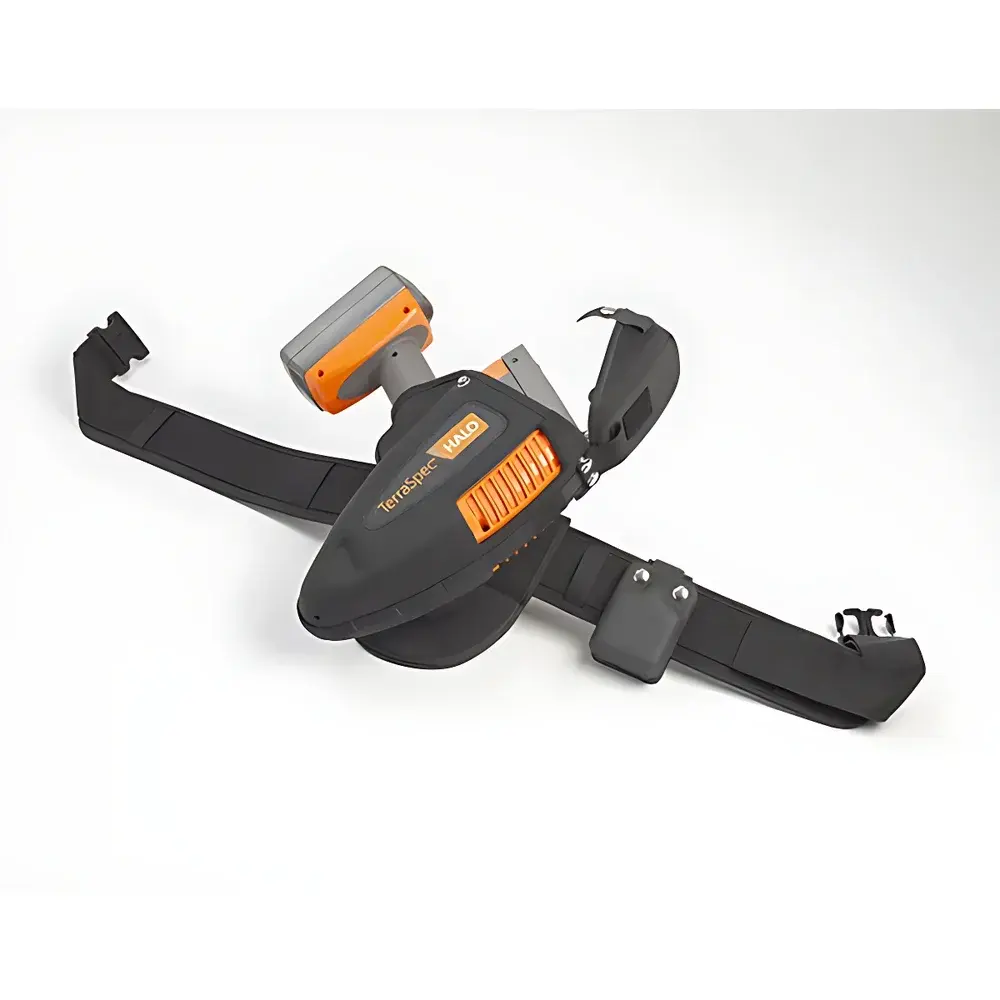
ASD TerraSpec Halo Handheld Mineral Spectrometer
| Brand | ASD |
|---|---|
| Origin | UK |
| Manufacturer Type | Authorized Distributor |
| Import Status | Imported |
| Model | TerraSpec Halo |
| Pricing | Upon Request |
Overview
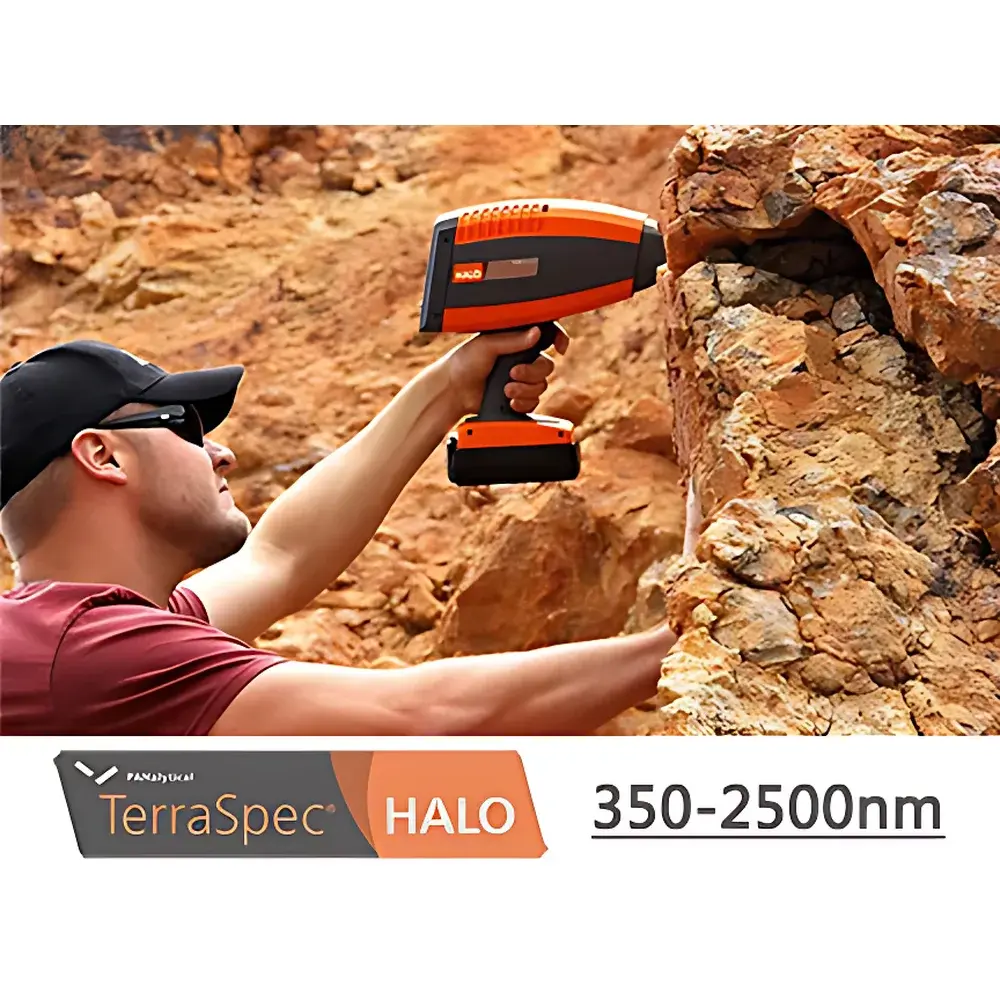
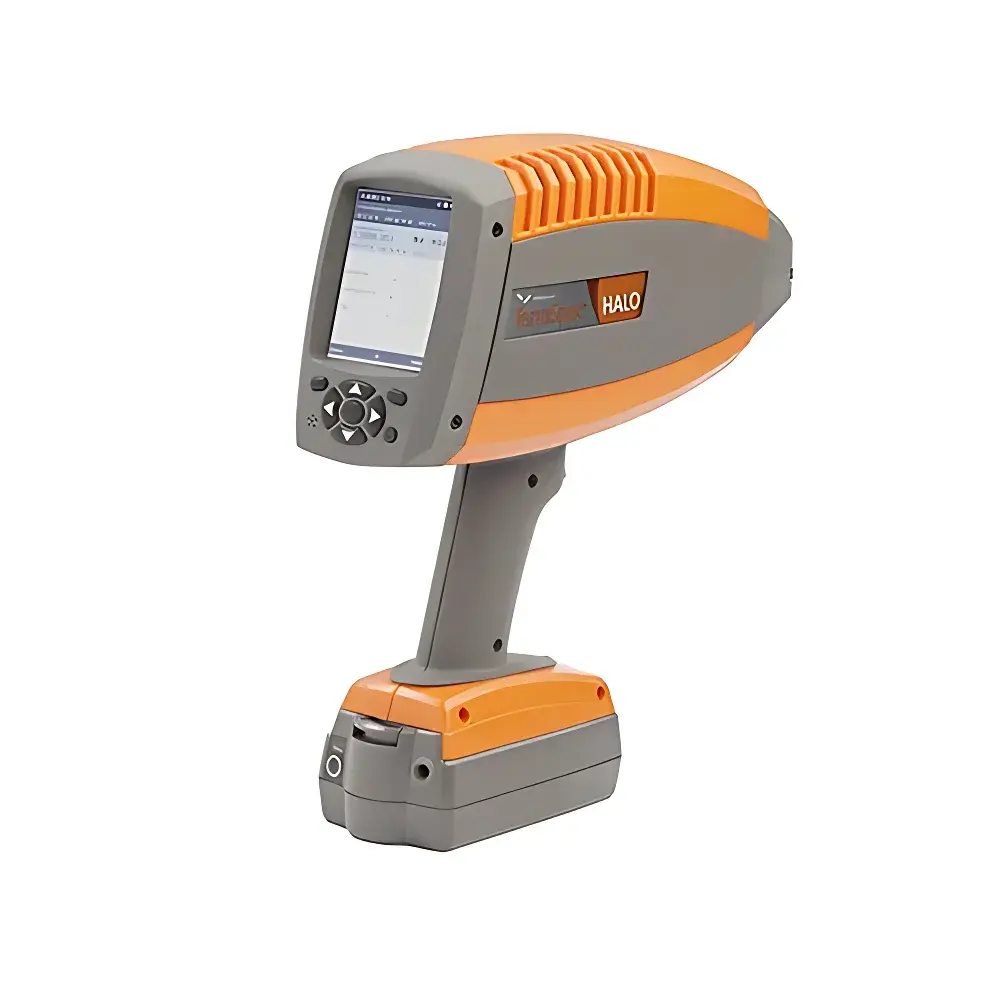
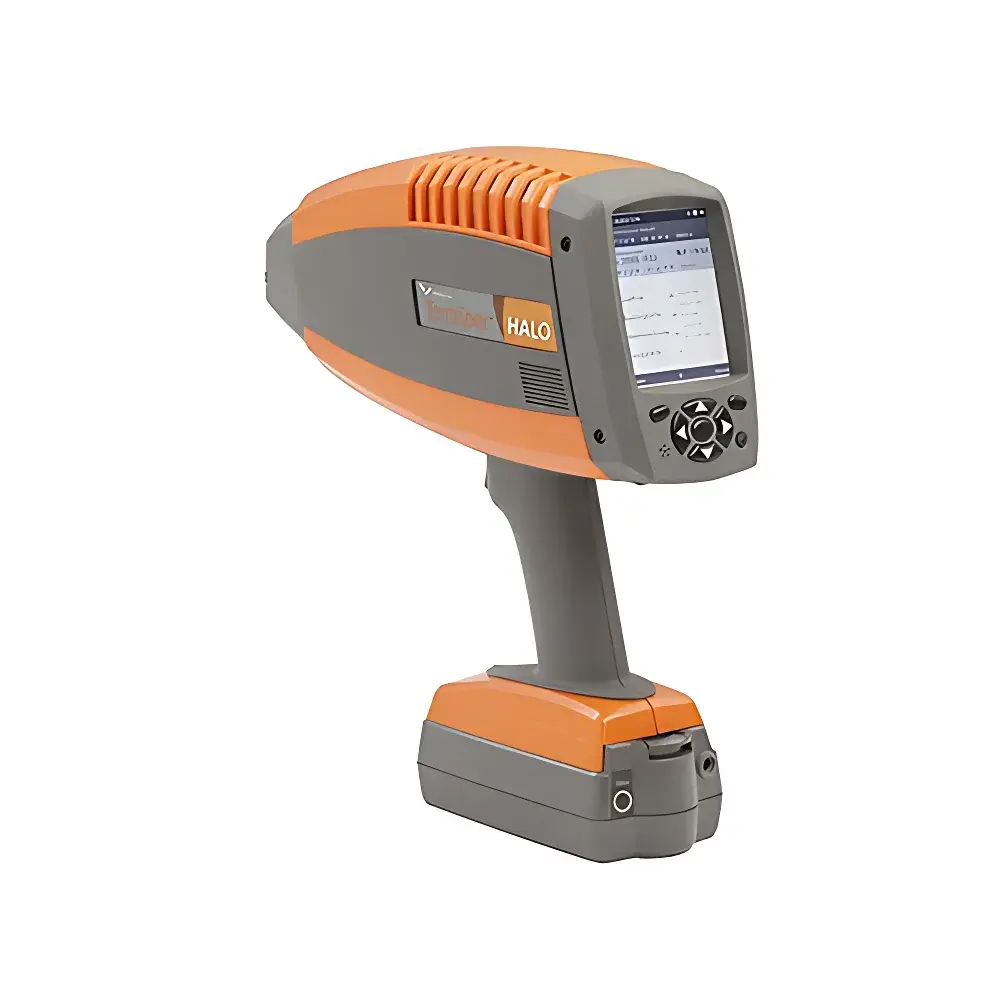
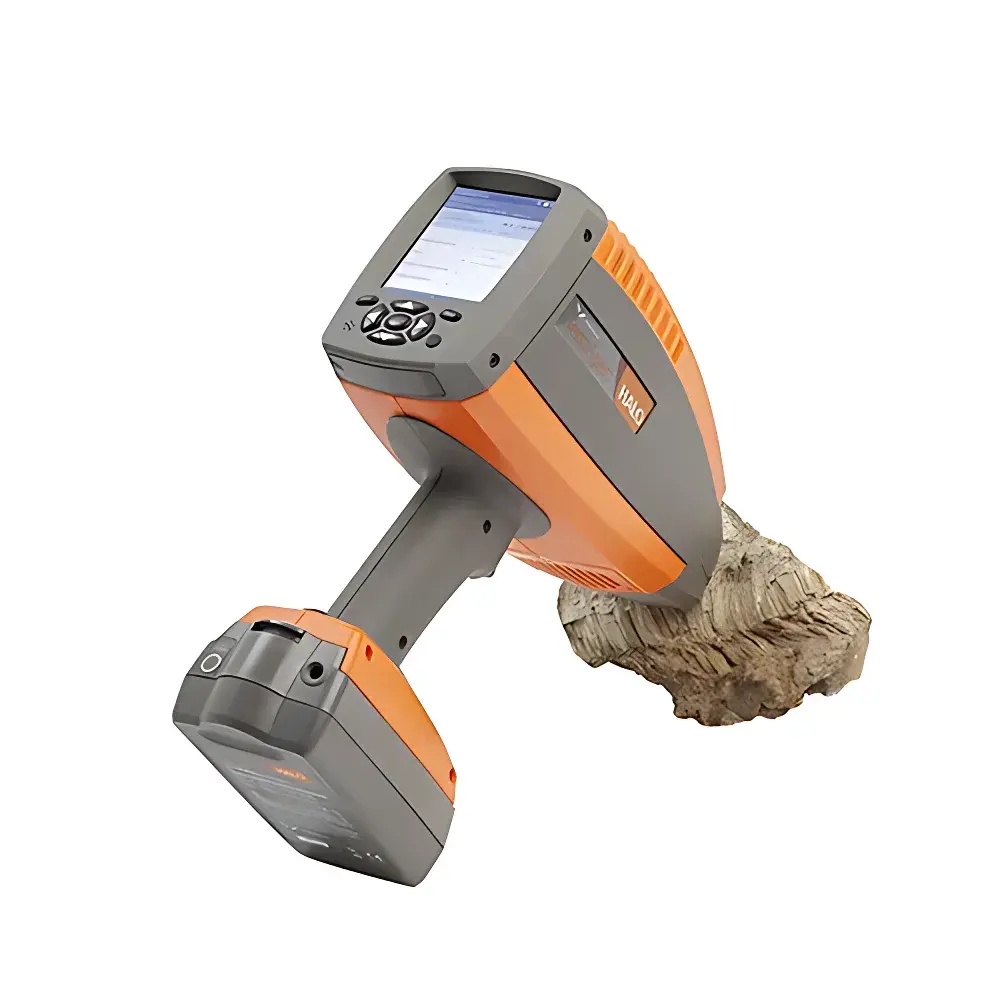
The ASD TerraSpec Halo Handheld Mineral Spectrometer is a field-deployable, full-range visible-to-shortwave infrared (VNIR-SWIR) spectrometer engineered for rapid, non-destructive mineral identification in geological exploration and mining operations. Operating on the principle of diffuse reflectance spectroscopy, the instrument captures spectral signatures across 350–2500 nm—encompassing key absorption features of hydroxyl-bearing minerals (e.g., clays, micas), carbonates, sulfates, iron oxides, and alteration minerals such as kaolinite, illite, and jarosite. Its integrated optical design eliminates reliance on external light sources or fiber-optic cables, enabling true point-and-shoot operation under variable ambient lighting conditions. Designed for rugged field use, the TerraSpec Halo delivers laboratory-grade spectral fidelity in a portable form factor—supporting real-time decision-making during reconnaissance mapping, drill core logging, pit wall assessment, and brownfield evaluation without sample preparation or consumables.
Key Features
- Full-spectrum VNIR-SWIR detection (350–2500 nm) with optimized spectral sampling and resolution: ≤3 nm FWHM at 700 nm, ≤9.8 nm at 1400 nm, and ≤8.1 nm at 2100 nm
- Integrated GPS receiver, voice annotation, and on-device metadata tagging for georeferenced spectral data capture
- Ruggedized magnesium alloy chassis rated for IP54 environmental protection; operational temperature range: –10 °C to +50 °C
- Self-contained lithium-ion battery system providing ≥4 hours of continuous operation; hot-swappable design enables uninterrupted field surveys
- Onboard touchscreen interface with multilingual support (English, Spanish, Simplified Chinese) and intuitive workflow-driven UI
- Pre-loaded mineral identification library compliant with USGS, ASTER, and JPL spectral reference standards
- No external hardware dependencies—no PC, no external power supply, no calibration lamps required for routine operation
Sample Compatibility & Compliance
The TerraSpec Halo supports direct contact measurement of unprepared solid samples including outcrops, drill cuttings, core slabs, trench walls, and bulk ore material. Its 10 mm spot size and fixed 30° incidence angle ensure consistent illumination geometry and minimize surface roughness effects. All spectral acquisitions adhere to ASTM E131-23 (Standard Terminology Relating to Molecular Spectroscopy) and ISO 18381:2016 (Geological characterization — Field spectroscopy). Data files are stored in industry-standard ENVI-compatible .hdr/.sli format with embedded EXIF-style metadata (GPS coordinates, timestamp, operator ID, instrument configuration). The device meets IEC 61326-1:2022 requirements for electromagnetic compatibility in industrial environments and complies with RoHS 3 and REACH directives.
Software & Data Management
The TerraSpec Halo ships with two complementary software modules: HaloField for real-time acquisition and mineral classification in the field, and HaloLab for post-processing, spectral library expansion, and quantitative mineral abundance modeling. HaloField employs a proprietary spectral matching algorithm based on constrained least-squares fitting against user-selectable reference libraries, supporting both supervised and unsupervised classification modes. HaloLab provides advanced tools for atmospheric correction (using empirical line method), continuum removal, spectral derivative analysis, and PCA-based clustering. All software modules enforce audit-trail functionality per FDA 21 CFR Part 11 requirements—including electronic signatures, change logs, and immutable file versioning—ensuring traceability in GLP/GMP-aligned workflows.
Applications
- Primary and secondary mineral exploration targeting porphyry copper, epithermal gold, and IOCG deposits
- Hydrothermal alteration mapping using spectral indices (e.g., Al-OH, Mg-OH, Fe³⁺/Fe²⁺ ratios)
- Brownfield site re-evaluation and resource grade estimation through spectral proxy modeling
- In-pit lithological discrimination and waste-rock delineation for mine planning optimization
- Drill core and chip logging with automated stratigraphic correlation capabilities
- Clay mineralogy quantification for geotechnical risk assessment in open-pit slope stability studies
- Regolith characterization in regolith-hosted rare earth element (REE) prospecting
FAQ
What spectral libraries are included by default?
The instrument ships with the ASD Mineral Library v3.2, containing >1,200 validated spectra of pure minerals, mixtures, and weathered rock types aligned to USGS and JPL spectral databases.
Can the TerraSpec Halo be used for quantitative analysis?
Yes—when paired with calibrated reference standards and validated regression models in HaloLab, it supports semi-quantitative estimation of mineral abundances (e.g., kaolinite %, hematite %) with typical RMSE values <8% for well-characterized systems.
Is the device compatible with third-party GIS platforms?
All exported spectral datasets include WGS84 geotags and can be directly imported into ArcGIS Pro, QGIS, and Leapfrog Geo via standard ASCII or ENVI formats.
Does the instrument require annual factory recalibration?
No—its thermally stabilized optics and internal wavelength reference ensure long-term spectral stability; users perform daily verification using the built-in ceramic reference tile, with optional biennial NIST-traceable calibration available through Malvern Panalytical service centers.
How is data security managed during field deployment?
Local storage uses AES-256 encrypted SDXC cards; all transfers to enterprise servers follow TLS 1.3 protocols, and role-based access control is enforced within HaloLab’s centralized database architecture.
Related Products




