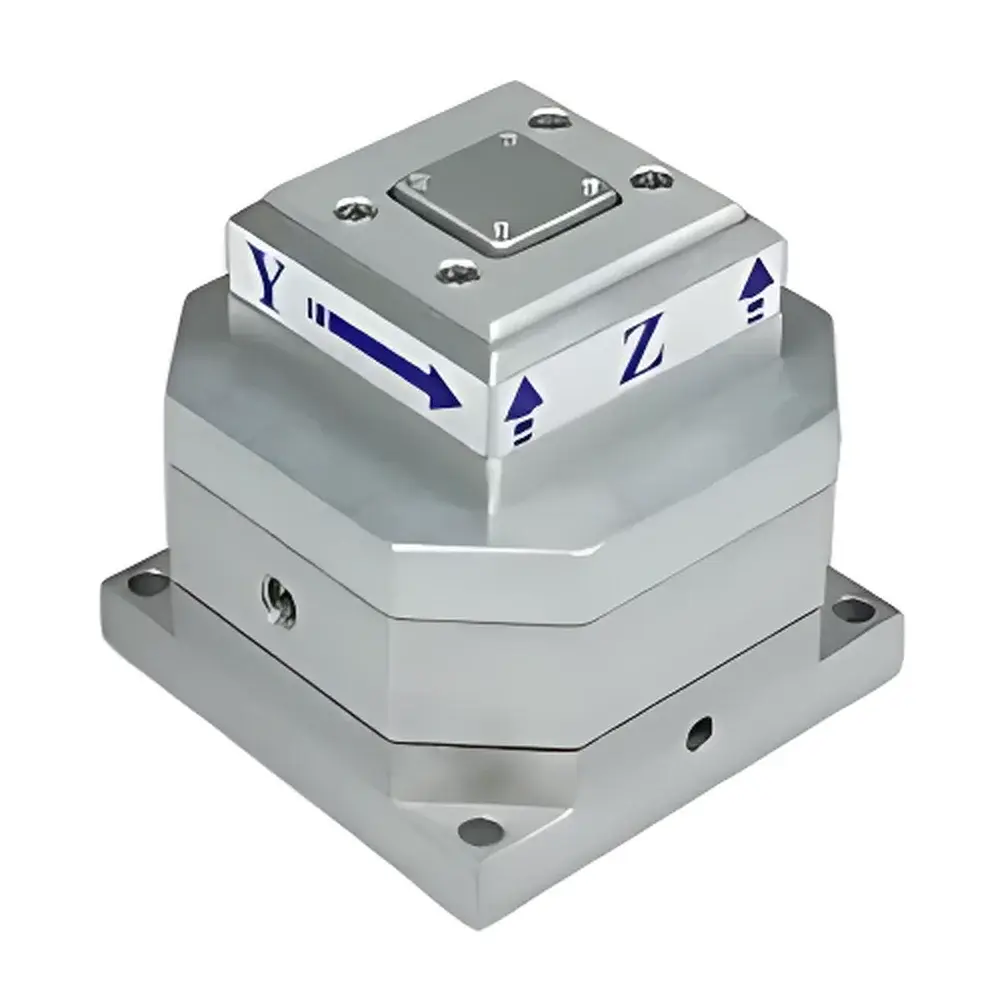
MCL Think Nano Nano-HS3M Three-Axis Piezoelectric Nanopositioning Stage

| Brand | MCL Think Nano |
|---|---|
| Origin | USA |
| Model | Nano-HS3M |
| Motion Range (XY) | 10 µm |
| Motion Range (Z) | 5 µm |
| Positioning Resolution | 0.01 nm |
| Resonant Frequency (X) | 1.6 kHz |
| Resonant Frequency (Y) | 1.5 kHz |
| Resonant Frequency (Z) | 13.5 kHz |
| Max. Horizontal Load | 0.1 kg |
| Max. Vertical Load | 0.1 kg |
| Body Material | Aluminum or Titanium |
| Position Noise | < 2 pm (all axes) |
| Control | Closed-loop with PicoQ® sensor technology |
| Controller | Nano-Drive® |
Ask about pricing, availability and specifications.
Overview
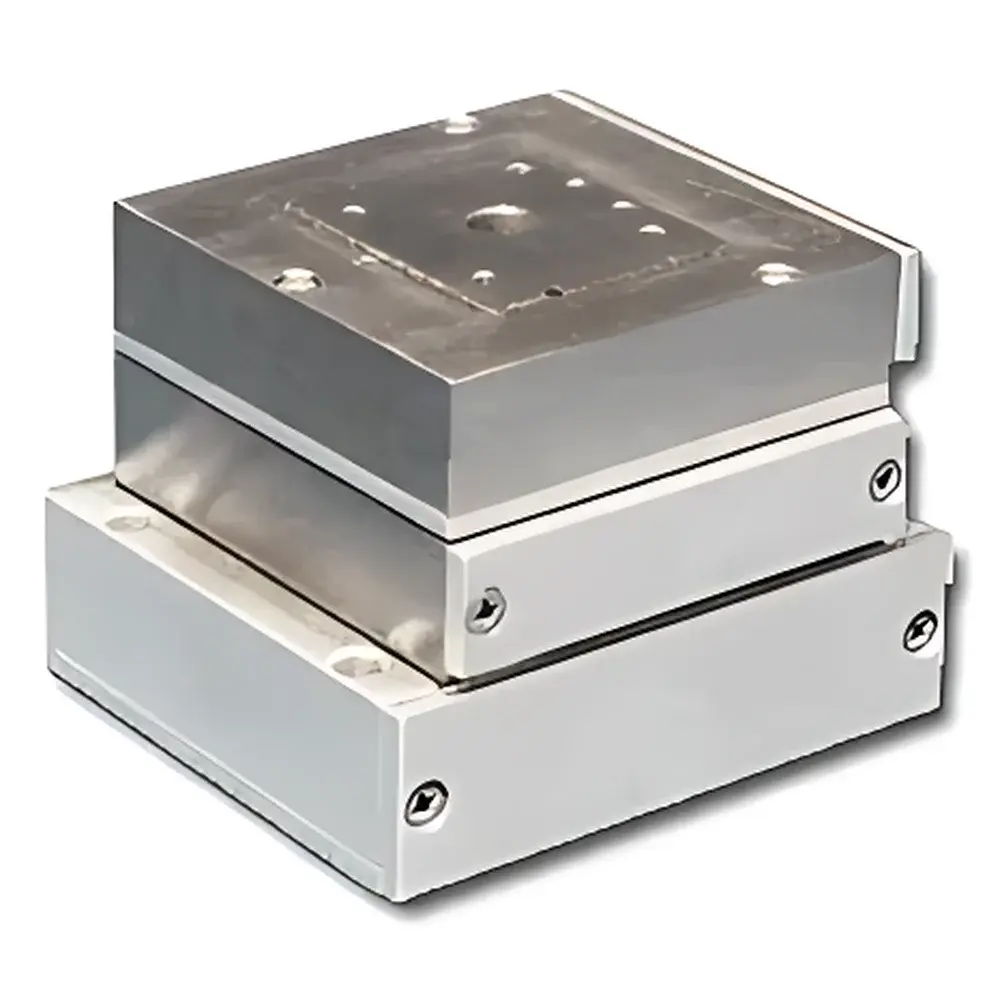
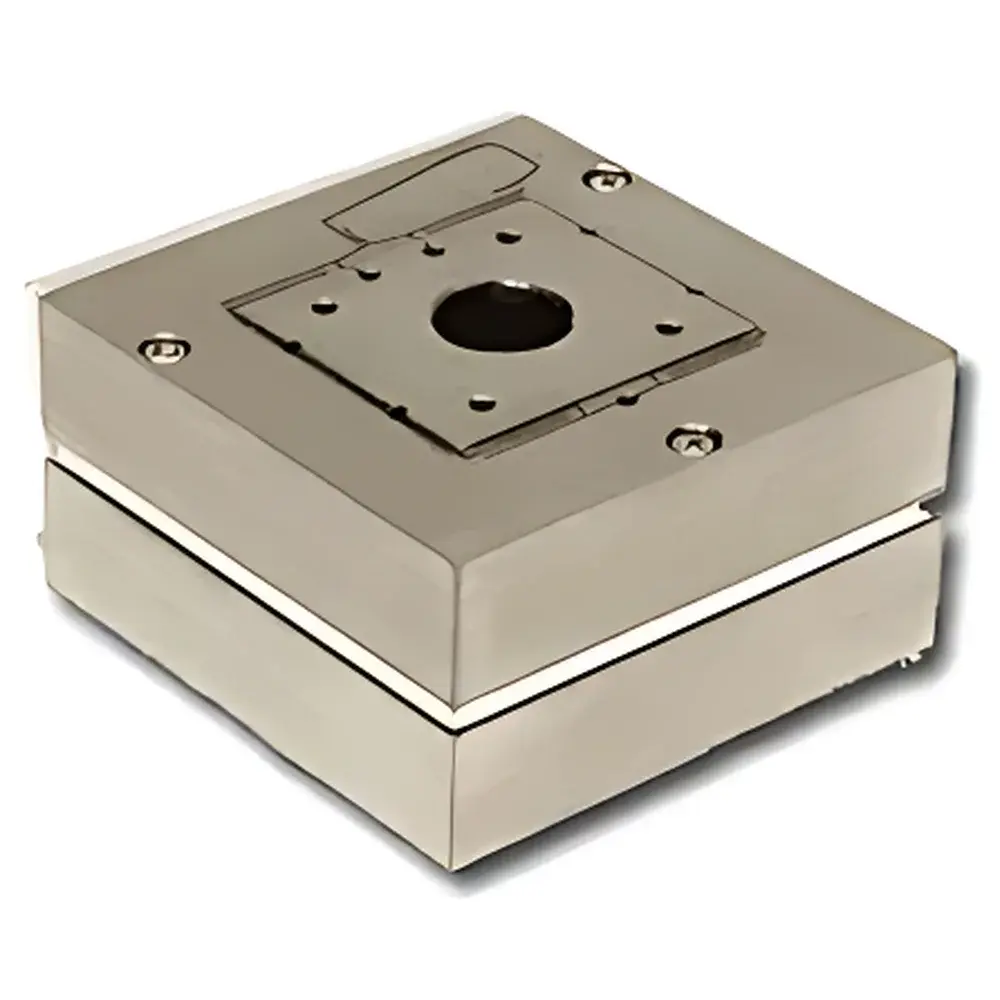
The MCL Think Nano Nano-HS3M is a high-bandwidth, three-axis piezoelectric nanopositioning stage engineered for ultra-precise, dynamic XYZ motion control in demanding optical and scanning probe instrumentation environments. Based on capacitive-sensed closed-loop operation and proprietary PicoQ® position feedback technology, the Nano-HS3M delivers absolute, drift-free positioning with sub-picometer noise performance and nanometer-scale repeatability. Its design integrates monolithic flexure-guided mechanics with low-voltage, high-efficiency piezo actuators—enabling rapid step-and-settle response while maintaining mechanical stability under vacuum, cryogenic, or ambient conditions. The stage operates on fundamental electro-mechanical principles of piezoelectric strain transduction and real-time capacitive displacement sensing, making it suitable for applications where positional fidelity, thermal insensitivity, and minimal hysteresis are non-negotiable requirements.
Key Features
- True closed-loop control architecture with integrated PicoQ® capacitive position sensors on all three axes, delivering absolute position measurement without external interferometric references
- Picometer-class positioning resolution (0.01 nm) and sub-2 pm RMS position noise across X, Y, and Z axes—validated via spectral analysis under controlled environmental conditions
- High resonant frequencies (1.6 kHz X, 1.5 kHz Y, 13.5 kHz Z) enabling fast trajectory tracking, high-speed scanning, and minimized settling time in dynamic operation modes
- Compact footprint (standardized mounting interface compatible with Ø1″ and Ø2″ optical posts) optimized for integration into space-constrained optical tables, AFM/SPM head assemblies, and custom metrology setups
- Low-voltage drive electronics compatibility (±15 V typical), supporting seamless interfacing with third-party DACs, lock-in amplifiers, or OEM controller platforms
- Body constructed from either aerospace-grade aluminum or titanium—selected for optimal stiffness-to-mass ratio, thermal expansion matching, and compatibility with UHV and cleanroom environments
Sample Compatibility & Compliance
The Nano-HS3M is designed for direct integration with optical, scanning probe, and quantum measurement systems requiring nanoscale spatial registration. It supports passive and active sample mounting configurations—including kinematic mounts, magnetic chucks, and vacuum-compatible adhesive bonding—without compromising mechanical resonance or sensor linearity. While the device itself does not carry regulatory certification, its closed-loop architecture, traceable calibration methodology, and deterministic response behavior align with metrological best practices defined in ISO/IEC 17025 and support GLP-compliant workflows when used within validated instrument systems. For FDA-regulated applications (e.g., analytical instrumentation in pharmaceutical QC labs), system-level validation—including controller firmware audit trails and Nano-Drive® software logging—must be performed per 21 CFR Part 11 requirements.
Software & Data Management
Control and data acquisition are enabled through the Nano-Drive® software suite, which provides native support for Windows-based host systems and offers both GUI-driven manual operation and scriptable automation via Python, MATLAB, and LabVIEW APIs. The software implements real-time position logging at up to 100 kHz sampling rate, supports multi-channel waveform generation (including Lissajous, raster, and arbitrary trajectories), and includes built-in tools for hysteresis compensation, creep correction, and cross-axis coupling analysis. All position data are timestamped and stored in HDF5 format, ensuring long-term reproducibility and interoperability with third-party analysis pipelines. Firmware updates and configuration backups are managed through secure, version-controlled channels, preserving audit integrity during routine maintenance or system reconfiguration.
Applications
- Atomic Force Microscopy (AFM) and Scanning Probe Microscopy (SPM) coarse/fine positioning stages, especially in high-speed tapping mode and force spectroscopy
- Interferometric metrology systems requiring sub-nanometer path-length stabilization and active cavity length control
- Near-field optical microscopy (NSOM/SNOM) probe positioning with synchronized laser modulation and detector gating
- Optical trap alignment and multi-beam steering in single-molecule biophysics experiments
- Quantum optics setups involving cavity QED, ion trap electrode positioning, or superconducting qubit gate alignment
- In-situ TEM/STEM sample manipulation stages where electromagnetic compatibility and minimal outgassing are critical
FAQ
What is the maximum recommended payload for vertical orientation?
The Nano-HS3M is rated for a maximum vertical load of 0.1 kg. Loads exceeding this value require mechanical reinforcement consultation with MCL Think Nano engineering staff.
Is vacuum compatibility available as a standard option?
Yes—vacuum-rated versions with UHV-compatible materials, bake-out capable wiring, and non-outgassing adhesives are available upon request and subject to custom configuration review.
Does the Nano-HS3M support analog voltage input for open-loop operation?
While closed-loop operation is strongly recommended for metrological accuracy, the stage accepts ±15 V analog command signals for open-loop use; however, no position feedback or error correction is provided in this mode.
How is thermal drift compensated during extended measurements?
Thermal drift is mitigated by the intrinsic low-thermal-expansion design of the flexure mechanism and the zero-drift characteristics of the PicoQ® capacitive sensors; active temperature stabilization of the surrounding environment remains the primary mitigation strategy.
Can multiple Nano-HS3M stages be synchronized for coordinated motion?
Yes—using the Nano-Drive® master-slave synchronization protocol and shared clock distribution, up to four stages can operate with sub-microsecond timing alignment for multi-degree-of-freedom scanning or compound motion profiles.