
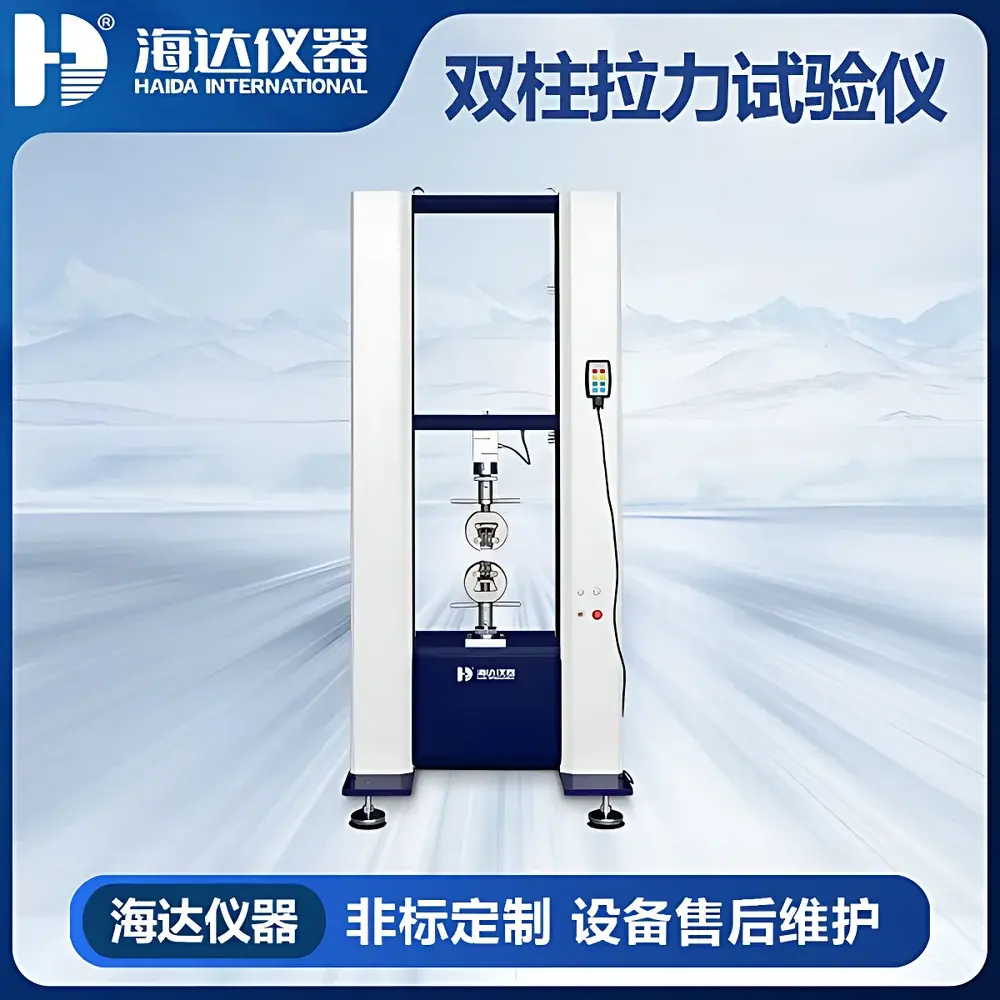
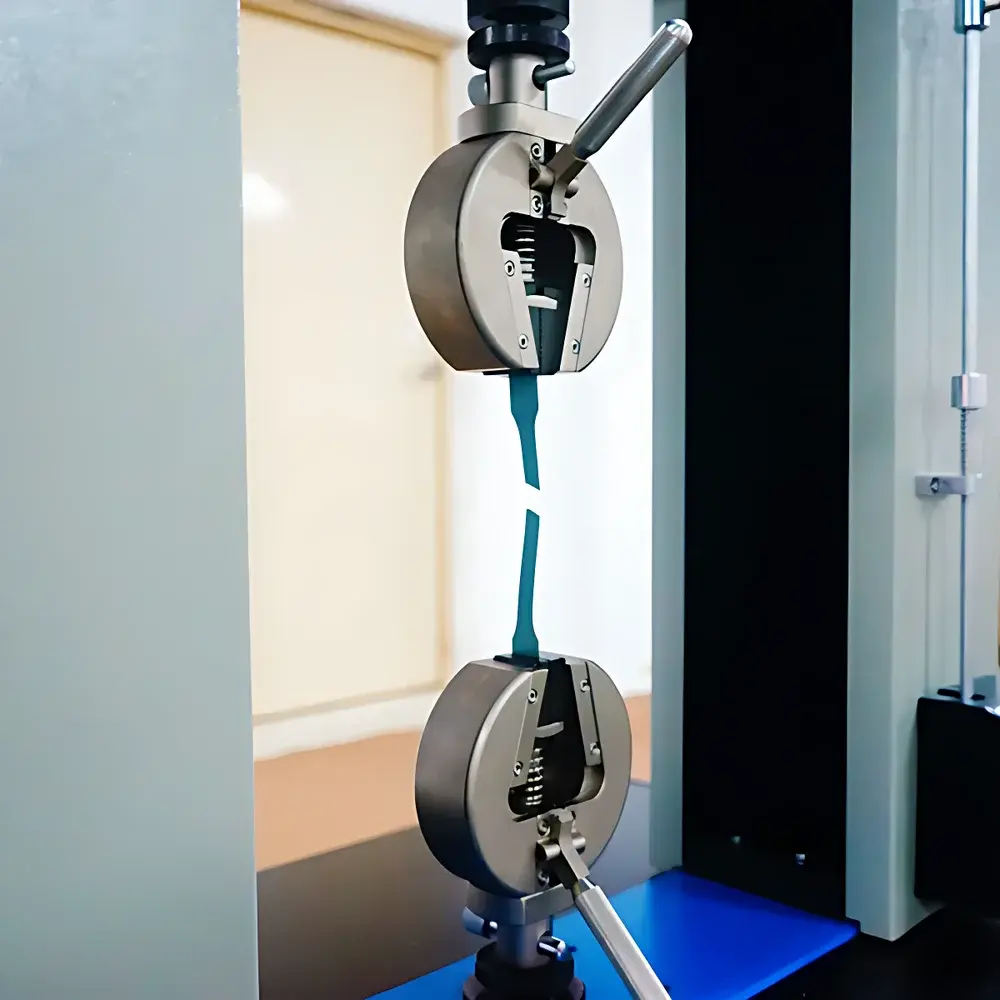
HAIDA HD-B615-S Computer-Controlled Dual-Column Servo Tensile Testing Machine
| Brand | HAIDA INTERNATIONAL |
|---|---|
| Origin | Guangdong, China |
| Manufacturer Type | Direct Manufacturer |
| Product Category | Domestic |
| Model | HD-B615-S |
| Instrument Type | Electronic Tensile Tester |
| Maximum Test Load (Standard) | 50 kN |
| Optional Load Cells | 20 kN / 30 kN |
| Force Measurement Range | 100 N – 50 kN (FS) |
| Force Accuracy | ≤ ±0.5% |
| Test Stroke | 1200 mm (excluding fixtures) |
| Load Resolution | 1/250,000 |
| Crosshead Speed Range | 0.1 – 500 mm/min |
| Effective Width | 450 mm |
| Dimensions (L×W×H) | ≈846 × 600 × 2100 mm |
| Weight | ≈320 kg |
| Power Supply | 1∮ AC 220 V |
| Total Power Consumption | ≈1 kW |
| Drive System | 750 W Servo Motor + Servo Driver |
| Transmission | Precision Ball Screw |
| Control Interface | Windows-based PC Software |
| Data Output | USB, Windows-native export, Office-compatible formats (Excel, PDF) |
| Compliance Standards | GB/T 16491-2008, JJG 475-2018, GB/T 16825.1–2008, GB/T 228.1–2010, GB/T 1040–2006, ASTM D4833–2007, ISO 527, ISO 6892-1, ISO 178 |
Overview
The HAIDA HD-B615-S Computer-Controlled Dual-Column Servo Tensile Testing Machine is a high-precision universal testing system engineered for static mechanical property evaluation of both metallic and non-metallic materials. Based on the fundamental principle of uniaxial force application under controlled displacement or load rate, the system employs a closed-loop servo-controlled actuation architecture to deliver repeatable, traceable, and standards-compliant tensile, compression, flexural, peel, tear, puncture, and shear measurements. Its dual-column rigid frame—reinforced with precision-ground ball screws and preloaded linear guides—minimizes deflection and ensures axial alignment stability across full stroke (1200 mm), critical for maintaining measurement integrity during high-force testing up to 50 kN. Designed for integration into QC laboratories, R&D centers, and third-party certification facilities, the HD-B615-S supports full compliance with international mechanical testing protocols including ISO 6892-1 (metal tensile), ISO 527 (plastics), ISO 178 (flexural), ASTM D4833 (geosynthetic puncture), and GB/T 228.1–2010 (Chinese metal standard), making it suitable for GLP/GMP-aligned environments requiring audit-ready test documentation.
Key Features
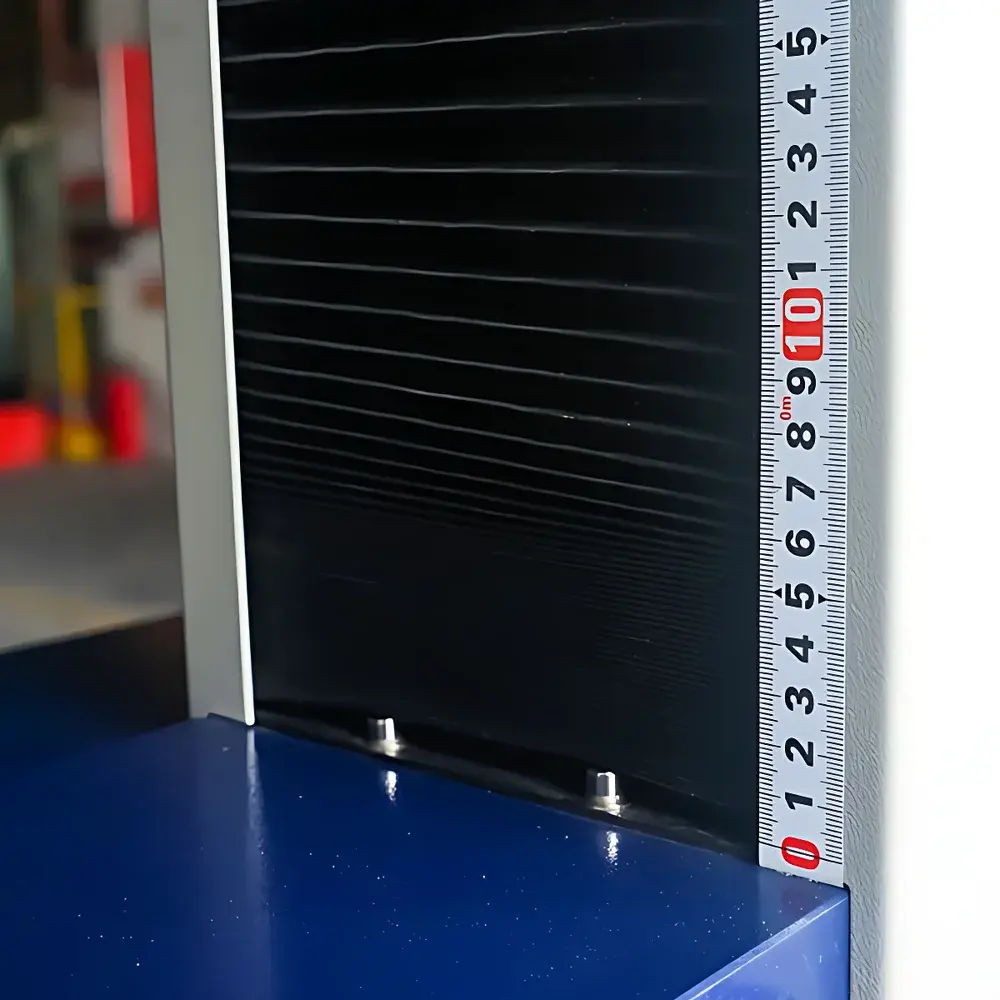
- Dual-column structural design with high-rigidity cast-iron base and reinforced uprights, minimizing frame deformation under maximum load conditions.
- Precision ball screw transmission driven by a 750 W servo motor and matched servo driver, enabling smooth, low-noise crosshead motion across the full speed range (0.1–500 mm/min) with <0.01 mm positioning repeatability.
- High-resolution load measurement system featuring a standard 50 kN S-type load cell (optional 20 kN or 30 kN cells available), calibrated to ≤ ±0.5% full-scale accuracy and offering 1/250,000 internal resolution.
- Windows-native control software supporting multi-mode control strategies: constant rate of extension (CRE), constant rate of loading (CRL), constant strain rate, constant stress rate, and displacement-controlled hold tests.
- Comprehensive hardware safety architecture including mechanical stroke limit switches, electronic overload protection, emergency stop circuitry, and real-time torque monitoring to prevent actuator damage or specimen overloading.
- Integrated USB 2.0 interface and optional Ethernet port for secure data transfer, remote diagnostics, and networked lab deployment; supports direct export to Excel, PDF, and image formats without proprietary viewers.
Sample Compatibility & Compliance
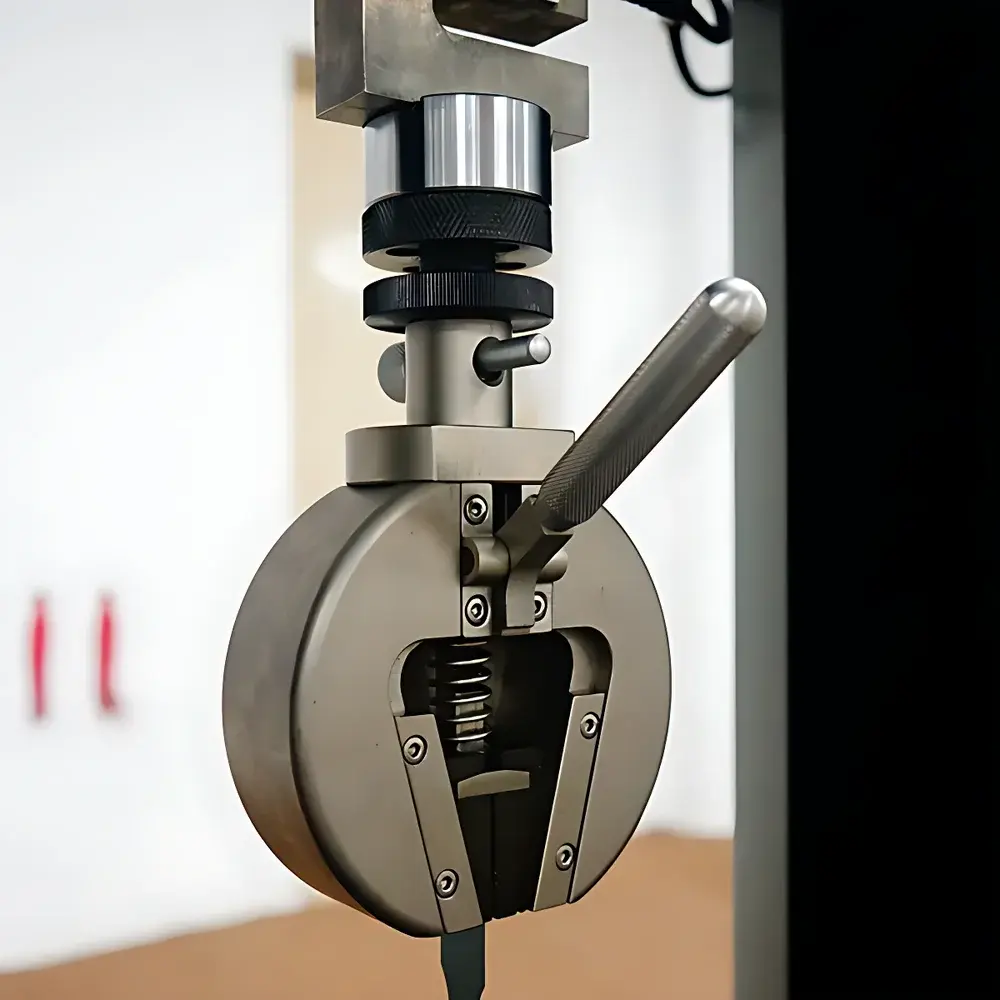
The HD-B615-S accommodates a broad spectrum of specimen geometries and material classes via interchangeable fixture systems—including wedge-action grips, pneumatic clamps, compression platens, bend fixtures, peel arms, and custom-designed holders for medical tubing, geotextiles, or battery separator films. Its 450 mm effective width and 1200 mm test stroke enable evaluation of long-form samples such as plastic pipes, composite laminates, and architectural sealants. The instrument conforms to metrological verification requirements per JJG 475–2018 (Chinese national verification regulation for universal testing machines) and mechanical performance validation per GB/T 16825.1–2008 (equivalent to ISO 7500-1). It is routinely deployed in accredited labs performing tests referenced in ISO/IEC 17025 workflows and supports 21 CFR Part 11-compliant electronic records when paired with validated software configurations and user access controls.
Software & Data Management
The embedded Windows-based testing platform provides intuitive graphical setup, real-time curve visualization (force vs. displacement, stress vs. strain), automatic yield point detection (0.2% offset method), modulus calculation (tangent/secant), and fracture energy integration. All test parameters—including environmental temperature/humidity tags (via optional external sensor input), operator ID, sample ID, and calibration certificate traceability—are logged with time-stamped metadata. Audit trails record all parameter modifications, test executions, and report generations. Data files adhere to XML-based structured storage for interoperability with LIMS and ELN systems. Software updates are delivered via encrypted firmware packages with version-controlled release notes and full backward compatibility for legacy test method templates.
Applications
- Mechanical characterization of thermoplastics, elastomers, composites, and biopolymers per ISO 527 and ASTM D638.
- Tensile strength and elongation-at-break testing of medical device components (e.g., catheter shafts, suture materials) per ISO 10993-12 and USP <51>.
- Adhesion and delamination strength assessment of laminated packaging films (e.g., PET/Alu/PE), solar backsheet materials, and printed electronics substrates.
- Compression testing of foams, concrete specimens, and orthopedic biomaterials per ISO 844 and ASTM C365.
- Peel and tack evaluation of pressure-sensitive adhesives (PSAs) per ASTM D3330 and FINAT FTM 1.
- Quality conformance verification for wire & cable insulation, automotive gaskets, and textile reinforcements under ISO 2062 and ASTM D5035.
FAQ
What load cell options are available for the HD-B615-S?
Standard configuration includes a 50 kN load cell; optional 20 kN and 30 kN load cells can be factory-installed or retrofitted with recalibration and updated software scaling.
Does the system support ASTM E4-compliant verification?
Yes—the HD-B615-S meets Class 1 accuracy requirements per ASTM E4 and is supplied with a manufacturer’s calibration certificate traceable to NIM (China National Institute of Metrology) or equivalent national standards bodies.
Can test methods be saved and reused across multiple operators?
Yes—users may create, name, password-protect, and archive standardized test methods with predefined speed profiles, trigger conditions, and pass/fail criteria, ensuring inter-operator consistency.
Is third-party software integration possible?
The system exposes COM/ActiveX APIs and supports TCP/IP socket communication for integration with LabVIEW, MATLAB, or custom MES/QMS platforms.
What maintenance intervals are recommended?
Ball screw lubrication every 6 months, load cell zero-check before each shift, annual full recalibration, and biannual verification of limit switch functionality and emergency stop response time.



