
ShoLyn ShoPhoC-6 Parallel Photochemical Reactor
| Brand | ShoLyn |
|---|---|
| Origin | Shanghai, China |
| Manufacturer Type | Authorized Distributor |
| Country of Origin | China |
| Model | ShoPhoC-6 |
| Price | USD 9,000 (FOB Shanghai) |
| Temperature Range | 5–45 °C |
| Temperature Control Accuracy | ±3 °C |
| Reaction Positions | 6 |
| Reaction Vessel Capacity | 8–50 mL |
| Light Source Wavelength Range | 365–950 nm (±5 nm bandwidth) |
| LED Power Output | 0–18 W per position (independently adjustable) |
| Stirring Speed | 100–1500 RPM (stepwise, magnetic coupling) |
| Cooling Method | Integrated miniature air-compressor-based active cooling |
| Power Input | 220 V / 50 Hz |
| Light Port Configurations | Single-bore (Φ22.5 mm or Φ27.5 mm) or dual-bore (2 × Φ16.5 mm) |
| Light Source Interface | Plug-and-play modular LED modules |
| Optional Expansion | Dual-bore configuration enables up to 12 simultaneous irradiation zones |
Overview
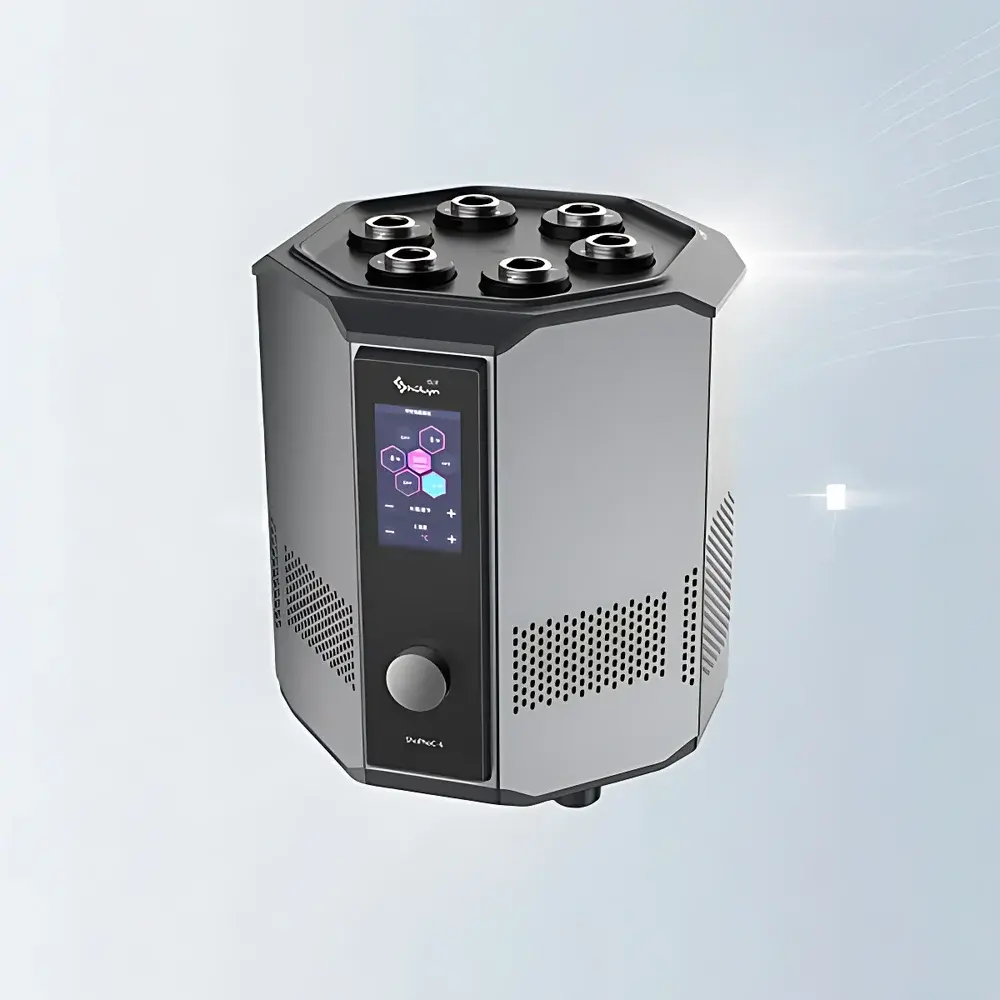
The ShoLyn ShoPhoC-6 Parallel Photochemical Reactor is an engineered platform for high-throughput, temperature-controlled photochemical synthesis under precisely defined irradiation conditions. Designed around the principles of homogeneous photon delivery and thermal management in small-volume reaction vessels, it supports systematic optimization of photocatalytic reaction parameters—including wavelength, photon flux, residence time, and thermal profile—across six independent reaction channels. Unlike conventional batch photoreactors relying on external lamps or passive cooling, the ShoPhoC-6 integrates collimated LED illumination with active air-compressor-driven thermoregulation, enabling reproducible quantum yield assessment and scalable parameter translation from screening to continuous-flow photoreactor development. Its architecture aligns with modern green chemistry objectives by minimizing parasitic heating, reducing energy input per mole of product, and supporting catalyst turnover number (TON) and quantum efficiency (Φ) quantification under GLP-aligned experimental conditions.
Key Features
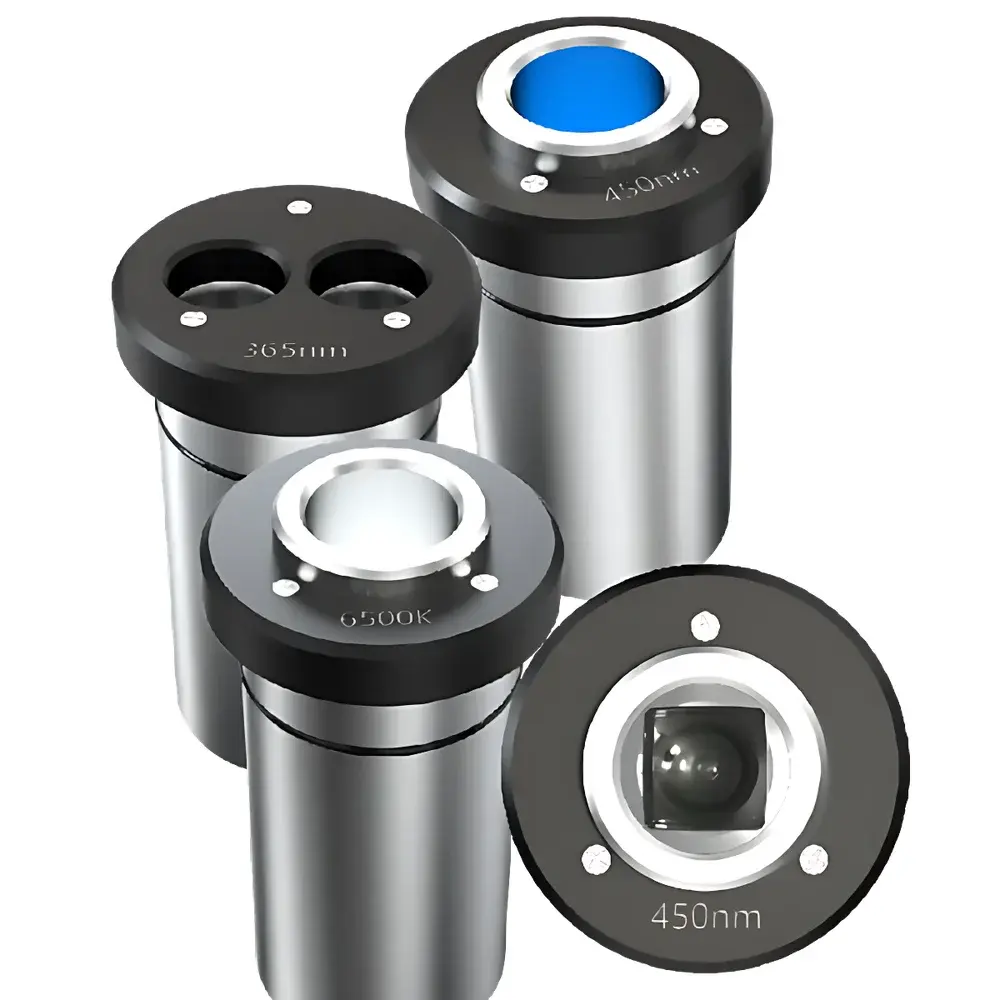
- Modular LED light engine with selectable wavelengths from 365 nm (UVA) to 950 nm (NIR), each module featuring ±5 nm spectral bandwidth and plug-and-play replacement
- Six independently controllable reaction positions, each with 0–18 W optical power adjustment via touchscreen + mechanical rotary encoder interface
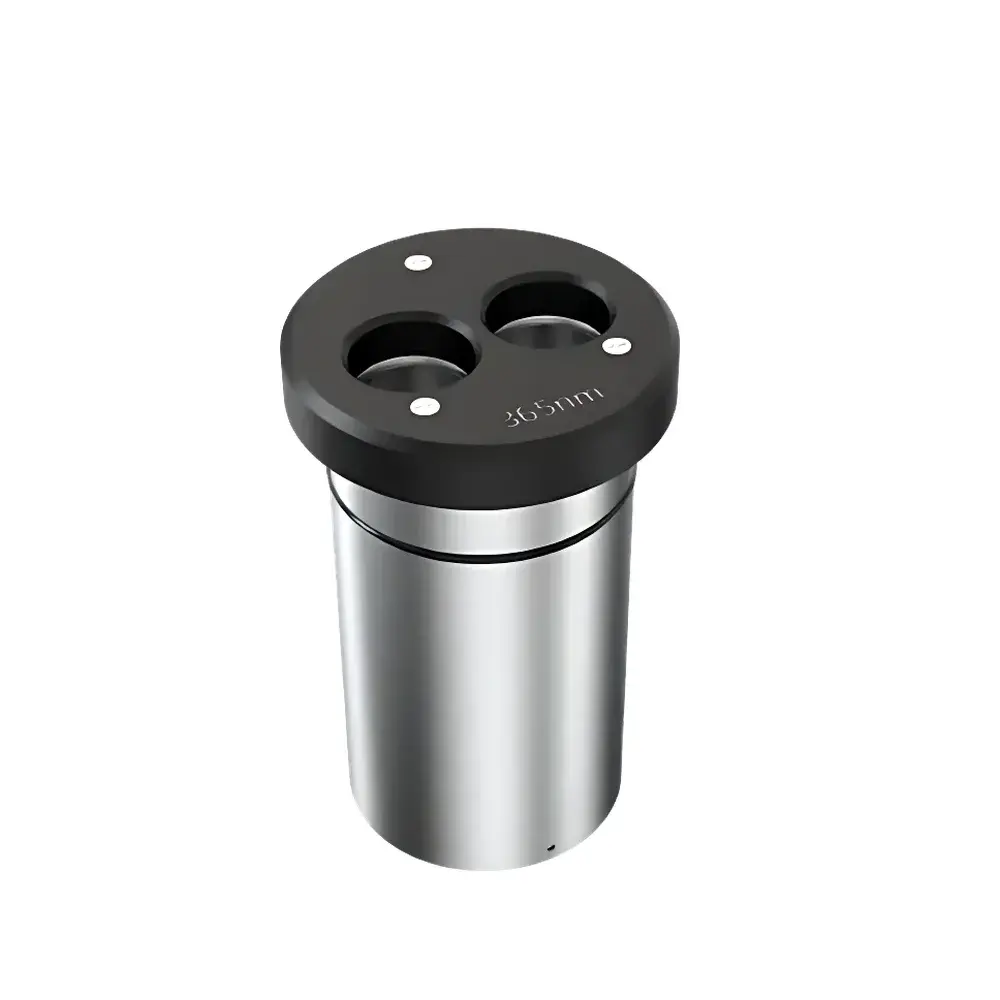
- Dual-configurable optical ports: single-bore (Φ22.5 mm or Φ27.5 mm) for standard cylindrical reactors; dual-bore (2 × Φ16.5 mm) to support up to 12 parallel irradiation zones using split-light-path accessories
- Integrated active cooling system based on a miniature air-compressor assembly—eliminates dependency on external chillers, water lines, or ambient HVAC support
- Precision magnetic stirring (100–1500 RPM, stepwise control) synchronized with real-time temperature monitoring at each vessel base
- Intelligent thermal regulation maintaining setpoint stability within ±3 °C across the full operational range (5–45 °C), validated per ASTM E2877-22 for laboratory thermal uniformity testing
Sample Compatibility & Compliance
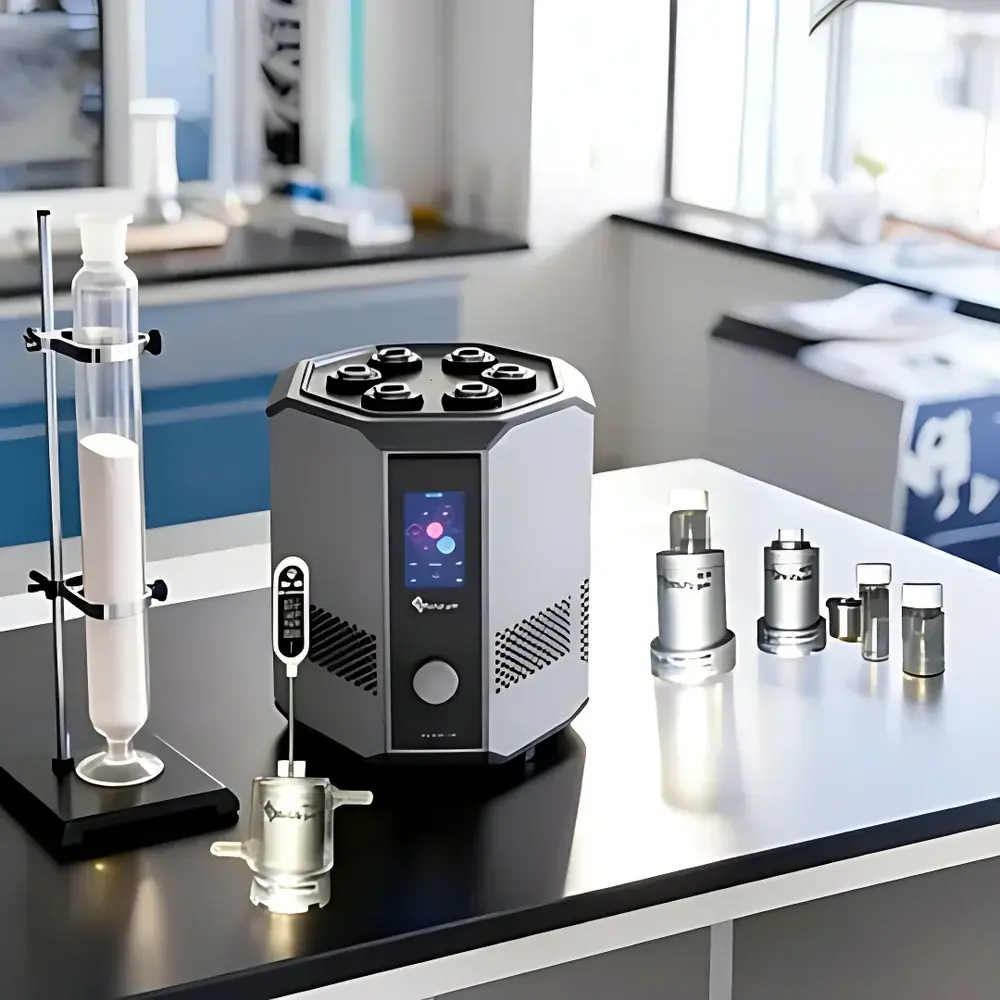
The ShoPhoC-6 accommodates standard borosilicate glass or quartz reaction tubes (8–50 mL volume), compatible with common solvent systems including acetonitrile, DMF, THF, DCM, and aqueous buffers. All wetted components are chemically inert and autoclavable. The system meets IEC 61010-1:2012 safety requirements for laboratory electrical equipment and conforms to CE marking directives for EMC and low-voltage operation. Data logging functionality supports audit-ready records compliant with FDA 21 CFR Part 11 when paired with validated third-party LIMS integration. While not certified for GMP manufacturing environments, its design facilitates IQ/OQ documentation and supports method validation per USP <1058> Analytical Instrument Qualification guidelines.
Software & Data Management
The reactor operates via an embedded Linux-based HMI with capacitive touchscreen interface. All operational parameters—including irradiance setpoints, temperature profiles, stirring speed, and runtime—are timestamped and stored locally in CSV format. USB export enables direct import into MATLAB, Python (Pandas), or ELN platforms such as LabArchives or Benchling. Optional Ethernet connectivity supports remote monitoring via Modbus TCP protocol, allowing synchronization with environmental sensors or upstream/downstream process units in pilot-scale photoreactor workflows. No cloud dependency or proprietary software licensing is required.
Applications
- Rapid screening of photocatalysts (e.g., Ir(III), Ru(II), organic dyes, TiO₂ variants) across variable redox potentials and absorption maxima
- Optimization of C–H functionalization, asymmetric α-alkylation, and decarboxylative couplings under visible-light activation
- Development of photocatalytic polymerizations (PET-RAFT, metal-free ATRP) requiring narrow-band excitation
- Photoinduced biomolecule conjugation (e.g., tyrosine-selective labeling, photocaged prodrug activation)
- Materials science applications including MOF photoactivation, perovskite precursor engineering, and photocorrosion resistance testing
- Translational studies bridging discrete screening data to continuous-flow photomicroreactor design (e.g., matching photon flux density and residence time distributions)
FAQ
Is the ShoPhoC-6 suitable for oxygen-sensitive reactions?
Yes—each reaction position accepts standard septum-capped vials or custom-fitted gas-tight reactors; optional inert-gas purging manifolds can be integrated via side-port fittings.
Can irradiance be calibrated traceably to NIST standards?
Yes—integrated photodiode sensors are factory-calibrated against NIST-traceable reference detectors (SRM 2251); users may perform field recalibration using supplied calibration kits.
Does the system support kinetic profiling with time-resolved sampling?
While not automated for inline sampling, the modular port design allows retrofitting with syringe-pump–actuated micro-sampling manifolds compatible with HPLC autosamplers.
What maintenance is required for the integrated air-compressor cooling system?
No routine maintenance is needed; the sealed compressor unit has a rated service life exceeding 20,000 hours and includes automatic condensate drainage.
Are third-party wavelength modules supported?
Only ShoLyn-certified LED modules are guaranteed for thermal and optical alignment compatibility; non-OEM sources may compromise collimation integrity and accelerate thermal drift.



