
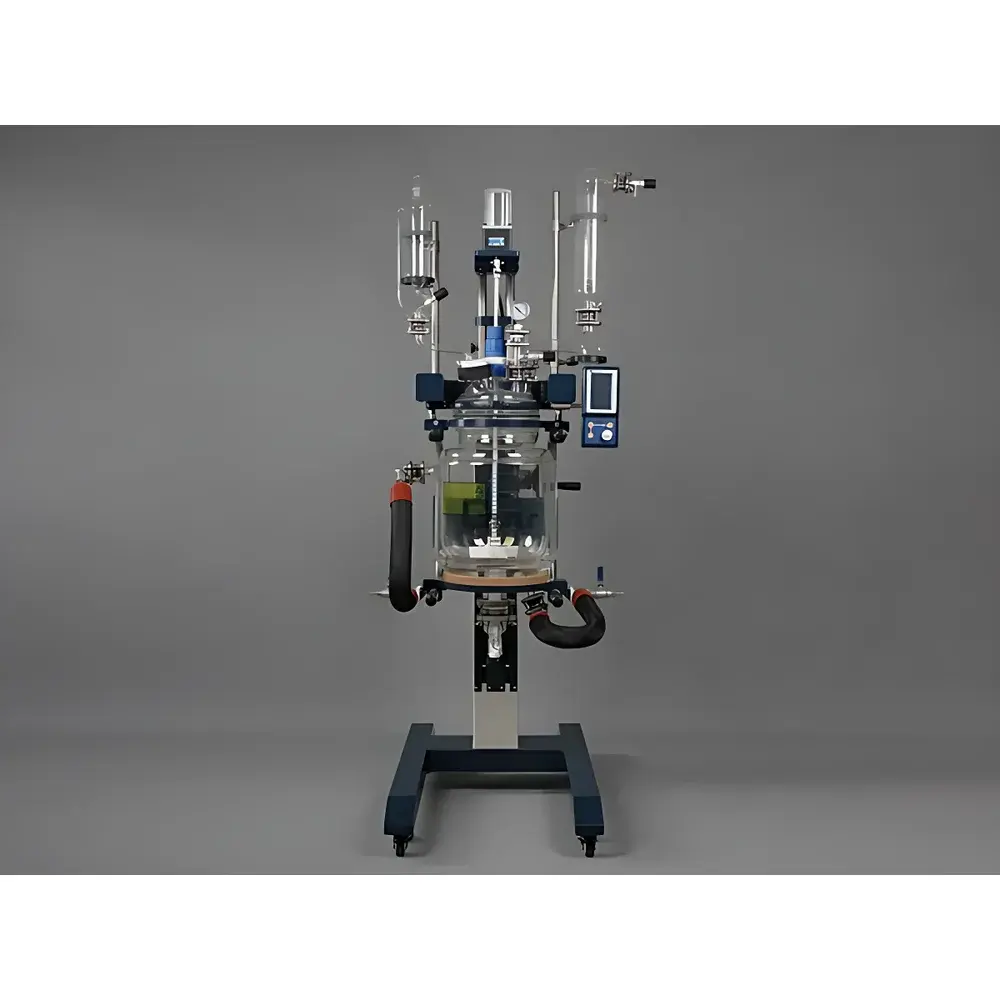
The Great Wall GRL-30 Dual-Jacketed Lifting Glass Reactor
| Brand | The Great Wall |
|---|---|
| Origin | Henan, China |
| Manufacturer Type | Direct Manufacturer |
| Origin Category | Domestic |
| Model | GRL-30 |
| Price Range | USD 7,000–14,000 (FOB) |
| Usable Volume | 30 L (Medium-Scale) |
| Construction Material | Borosilicate Glass 3.3 |
| Operating Pressure Range | –0.1 to 0.0 MPa (Vacuum to Atmospheric) |
| Jacket Pressure Rating | ≤ +0.03 MPa |
| Vacuum Level | ≤ –0.098 MPa (i.e., ≤ 2 kPa absolute) |
| Temperature Range | –80 °C to +200 °C |
| Temperature Differential Limit (Inner vs. Jacket) | ≤ 80 °C |
| Stirring Speed | 50–500 rpm |
| Motor Power | 90 W |
| Temperature Sensing | Pt100 probe (±0.1 °C accuracy), SUS304 sheath with PTFE insulation |
| Sealing Material | PTFE |
| Stirrer Type | Paddle-type, PTFE-coated blades, SUS304 shaft with full PTFE cladding |
| Condenser Heat Transfer Area | ~0.245 m² |
| Constant-Pressure Funnel Capacity | 1000 mL |
| Lifting Stroke | 400 mm |
| Floor-to-Discharge-Valve Height | ~620 mm |
| Footprint | ~860 W × 1100 D × 2500 H mm |
| Ambient Operating Conditions | 5–35 °C, ≤70% RH |
| Electrical Supply | 220–240 V~, 50/60 Hz |
Overview
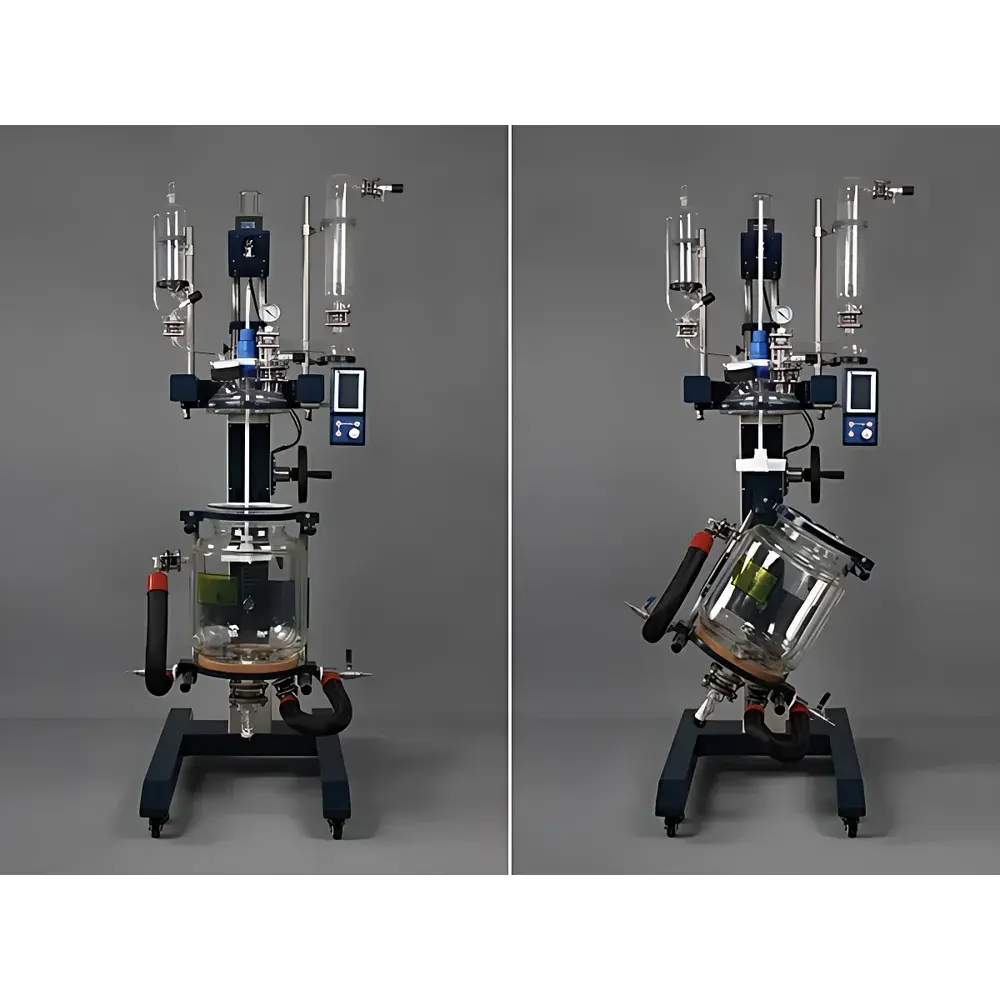
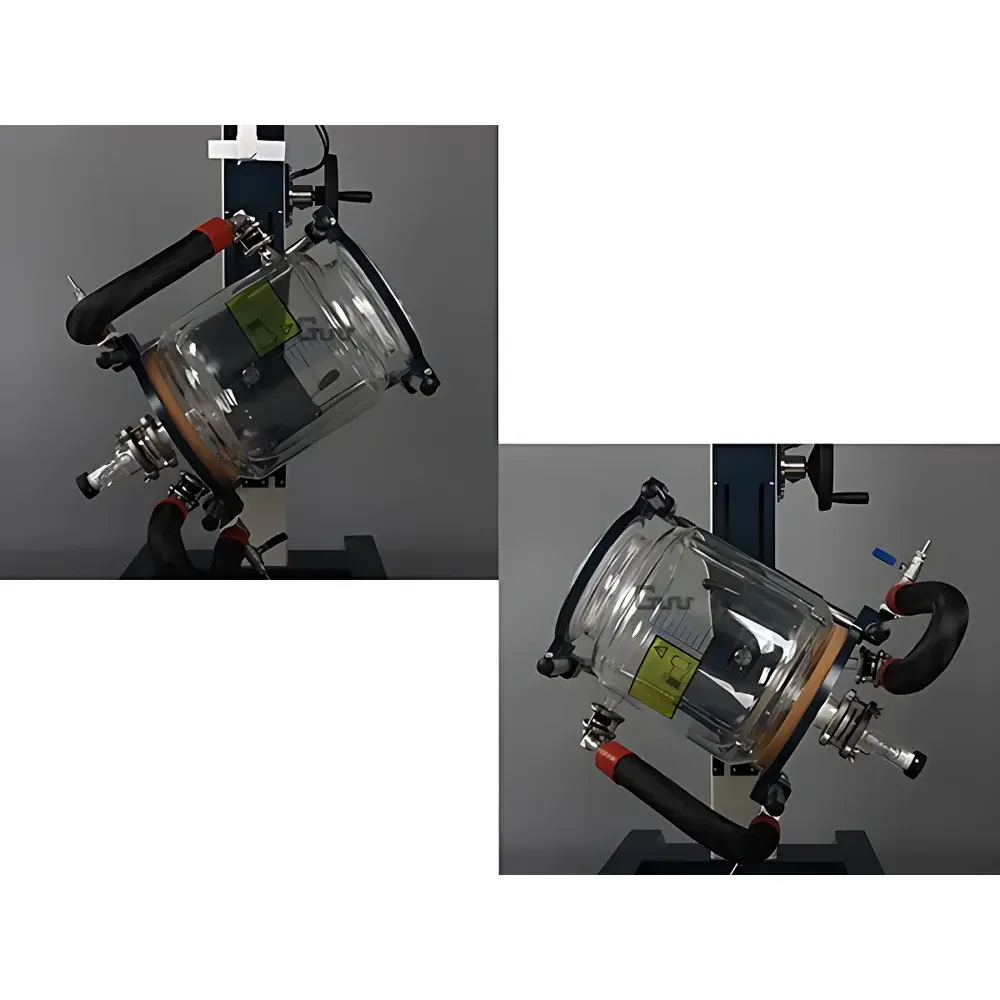
The Great Wall GRL-30 Dual-Jacketed Lifting Glass Reactor is an engineered laboratory-scale synthesis platform designed for controlled chemical reactions under variable thermal and pressure conditions. Built around a seamless borosilicate glass 3.3 vessel system, it enables real-time visual monitoring of reaction progress while maintaining high chemical inertness and thermal stability. Its dual-jacket construction supports simultaneous heating and cooling via external circulators, and the integrated lifting-and-rotation mechanism (up to 120°) facilitates safe catalyst recovery, solid charging, and thorough cleaning without disassembly. The reactor operates within a vacuum range of –0.1 MPa to atmospheric pressure and accommodates temperature extremes from –80 °C to +200 °C—subject to jacket-to-vessel differential limits (≤80 °C) to prevent thermal shock. This architecture aligns with standard practices for batch-wise organic synthesis, crystallization, polymerization, and solvent-sensitive hydrogenation protocols.
Key Features
- Borosilicate glass 3.3 construction across all wetted components—including reactor body, condenser, constant-pressure funnel, and distillation head—for exceptional resistance to thermal stress, alkali corrosion, and hydrolytic degradation.
- Mechanically actuated vertical lift (400 mm stroke) and 120° rotational capability for ergonomic access to internal surfaces, simplifying residue removal and minimizing manual handling risks.
- PTFE-sealed, corrosion-resistant discharge valve with zero-liquid-retention side-mount geometry, enabling complete emptying and reducing cross-contamination in multi-step campaigns.
- Stainless steel (SUS304) jacket inlet/outlet ports fitted with flexible PTFE-insulated stainless braided hoses to eliminate mechanical stress at fluid connections during thermal cycling.
- High-integrity stirring system: 90 W three-phase asynchronous motor with frequency-controlled speed regulation (50–500 rpm), precision-machined PTFE-coated paddle impeller, and sealed bearing assembly preventing metal particulate generation.
- Pt100 temperature sensor housed in a dual-layer protective sleeve (SUS304 outer sheath + PTFE insulation), delivering ±0.1 °C readout accuracy and compatibility with external PID controllers or data loggers.
- Lockable casters for stable positioning during operation and smooth relocation between fume hoods or utility stations; reinforced structural frame ensures vibration damping at elevated stir speeds.
Sample Compatibility & Compliance
The GRL-30 is suitable for processing non-explosive, non-pyrophoric liquid and slurry-phase samples—including aqueous, polar aprotic, and moderately aggressive organic media (e.g., THF, DMF, chlorinated solvents). It complies with general laboratory safety standards for Class I equipment per IEC 61010-1:2010 and incorporates design elements consistent with GLP-aligned workflows: traceable temperature and agitation logging (when paired with external compliant software), documented maintenance intervals for seals and bearings, and material certifications for all glass and metallic components. While not intrinsically rated for ATEX Zone 1 environments, its vacuum integrity (≤2 kPa/h leak rate) and pressure containment meet ASTM E2877-13 requirements for low-pressure reaction apparatus used in academic and industrial R&D labs.
Software & Data Management
The GRL-30 operates as a standalone hardware platform with analog/digital interfaces for integration into centralized lab control systems. Stir speed and temperature setpoints are locally adjusted via front-panel controls, but optional RS485 or 0–10 V analog outputs support connection to SCADA, LabVIEW, or third-party process historians. When deployed with FDA 21 CFR Part 11-compliant data acquisition software (e.g., DeltaV, WinCC OA, or custom Python-based logging), the reactor supports audit-trail-enabled recording of critical parameters—including actual vs. setpoint temperature profiles, torque-derived viscosity trends, and vacuum decay curves—fulfilling documentation requirements for method validation and regulatory submissions.
Applications
- Multi-step organic synthesis requiring sequential reagent addition under inert atmosphere or reduced pressure.
- Catalytic hydrogenation studies using palladium-on-carbon or Raney nickel, where visual catalyst settling and post-reaction filtration are essential.
- Solvent-free or low-solvent crystallization trials with in situ monitoring of nucleation onset and crystal growth kinetics.
- Controlled polymerization (e.g., polycondensation, ring-opening) with precise thermal ramping and volatile byproduct removal via reflux-condenser coupling.
- Extraction and concentration workflows involving heat-labile natural products, leveraging the wide operating temperature window and gentle mechanical agitation.
- Method development for pharmaceutical intermediate synthesis under ICH Q5A/Q5B-relevant stress conditions.
FAQ
What is the maximum allowable temperature differential between the reactor interior and jacket?
The design limit is ≤80 °C to prevent thermal fracture of the borosilicate glass vessel. For example, if the jacket circulates –40 °C coolant, the internal reaction temperature must remain ≥ –40 °C.
Can the GRL-30 be operated under positive pressure?
No—it is rated only for vacuum to atmospheric conditions (–0.1 to 0.0 MPa). Positive pressure operation requires alternative reactor designs with reinforced flanges and ASME-certified metal vessels.
Is the PTFE coating on the stirrer chemically resistant to hydrofluoric acid?
Standard PTFE exhibits limited resistance to HF at elevated temperatures and concentrations; users handling HF should consult material compatibility charts and consider Hastelloy-C276 or quartz-lined alternatives.
How is vacuum integrity verified during commissioning?
A standard test involves isolating the system at –0.098 MPa and measuring pressure rise over one hour; compliance requires ≤2 kPa/h increase, per ISO 2859-1 sampling plans for quality assurance.
Does the unit include a certified calibration certificate for the Pt100 sensor?
Factory calibration is performed against NIST-traceable references; a UKAS- or DAkkS-accredited certificate is available upon request at additional cost and lead time.



