
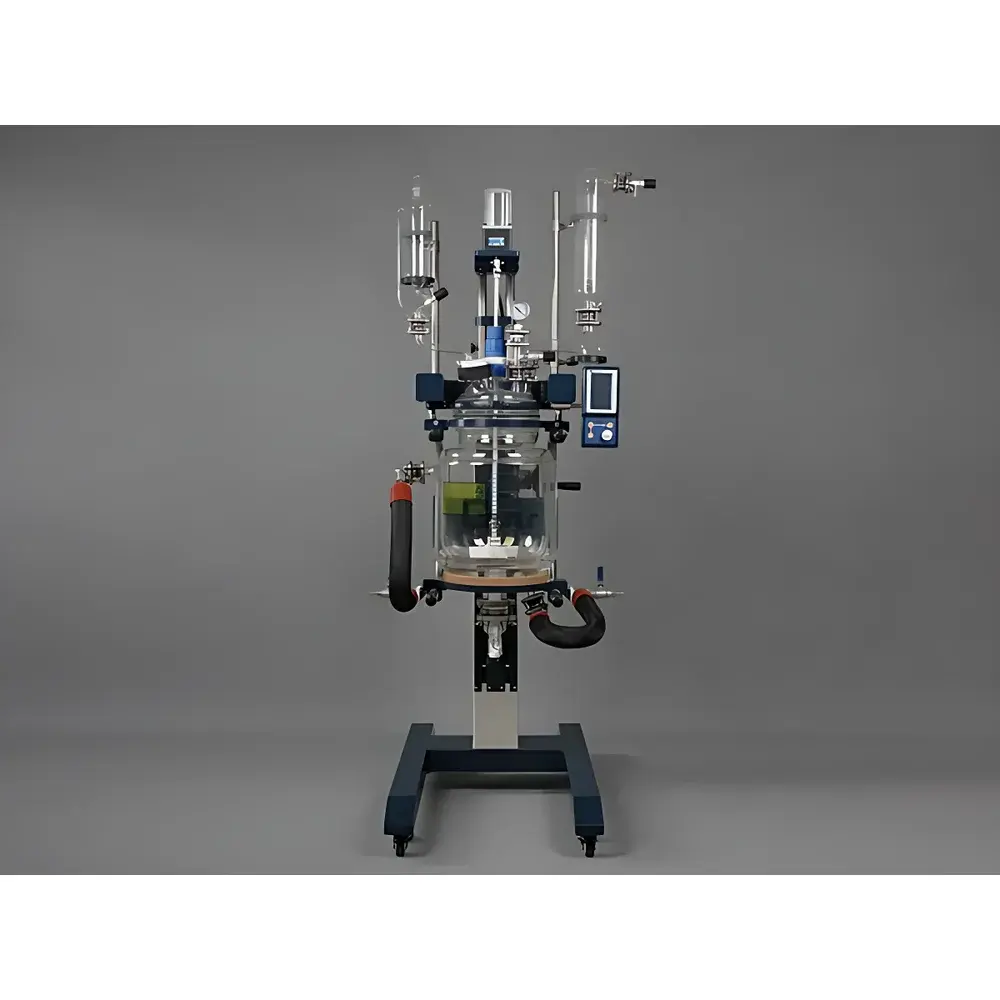
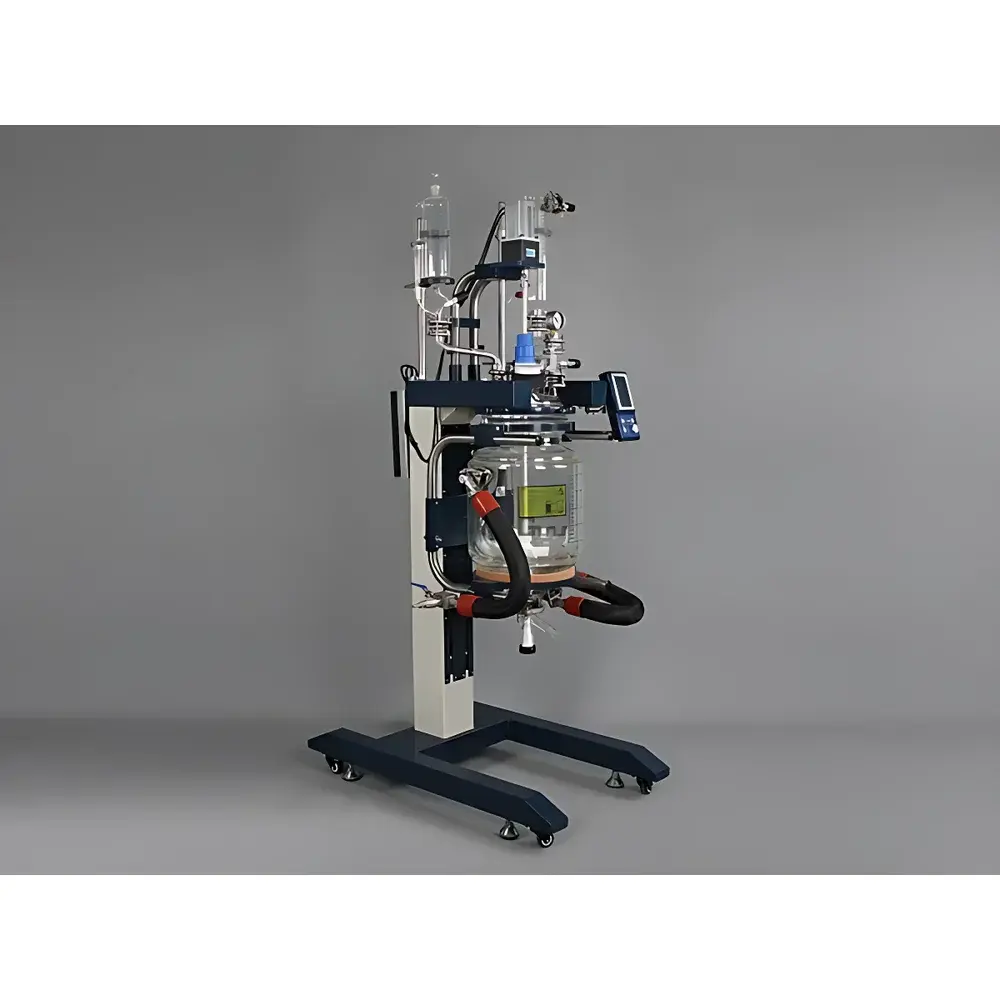
The Great Wall GRL-50 Dual-Layer Lifting Glass Reactor
| Brand | The Great Wall |
|---|---|
| Origin | Henan, China |
| Manufacturer Type | Direct Manufacturer |
| Country of Origin | China |
| Model | GRL-50 |
| Price Range | USD 7,000 – 14,000 (FOB) |
| Usable Volume | 50 L (Medium-Scale) |
| Construction Material | Borosilicate Glass 3.3 |
| Operating Pressure Range | −0.1 to 0.0 MPa (Vacuum to Atmospheric) |
| Jacket Pressure Rating | ≤ +0.03 MPa |
| Maximum Vacuum Level | 0.098 MPa (absolute) |
| Temperature Range | −80 °C to +200 °C |
| Temperature Differential Limit (Inner vs. Outer Wall) | ≤ 80 °C |
| Vacuum System Leak Rate | ≤ 2 kPa/h |
| Stirring Motor | 140 W, Three-Phase Asynchronous, Inverter-Controlled |
| Speed Range | 50–500 rpm |
| Speed Display | Digital LED |
| Temperature Sensor | Pt100 (SUS304 sheath, PTFE-insulated) |
| Temperature Display Accuracy | ±0.1 °C |
| Stirrer Type | Anchor/Flat Blade (PTFE-coated blades, SUS304 shaft with full PTFE cladding) |
| Sealing Material | PTFE |
| Drain Valve | Side-Mounted, Zero-Dead-Volume, Corrosion-Resistant |
| Mobility | Lockable Casters |
| Vertical Travel | 400 mm |
| Rotation Capability | 120° tilt |
| Condenser Heat Transfer Area | ~0.42 m² |
| Constant-Pressure Funnel Capacity | 1000 mL |
| Jacket Volume | ~16.0 L |
| Dimensions (W×D×H) | ~860 × 1100 × 2500 mm |
| Power Supply | 220–240 V~, 50/60 Hz |
| Ambient Operating Conditions | 5–35 °C, RH ≤ 70% |
Overview
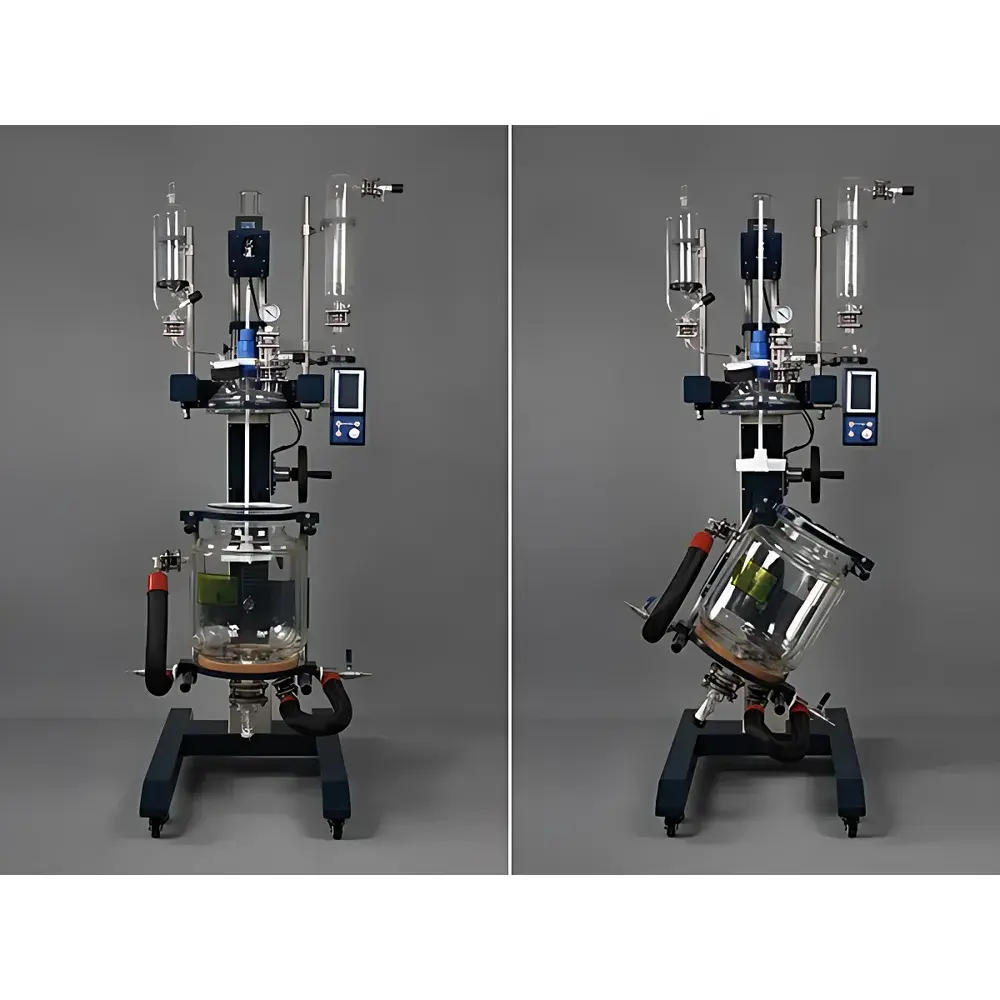
The Great Wall GRL-50 Dual-Layer Lifting Glass Reactor is an engineered platform for controlled chemical synthesis, catalytic reactions, and process development under variable thermal and vacuum conditions. Designed around a seamless borosilicate glass 3.3 vessel system, it supports operation from cryogenic temperatures (−80 °C) to elevated thermal regimes (up to +200 °C), while maintaining structural integrity and optical clarity throughout the full pressure range of −0.1 to 0.0 MPa (i.e., deep vacuum to ambient). Its dual-layer construction—comprising an inner reaction chamber and outer thermal jacket—enables precise external temperature control via circulating heat transfer fluids (e.g., silicone oil, ethylene glycol/water mixtures, or liquid nitrogen). The reactor’s lifting mechanism (400 mm vertical stroke) and 120° tilting capability facilitate safe, residue-free discharge, efficient cleaning, and straightforward solid charging through the 80# standard taper port.
Key Features
- Borosilicate glass 3.3 construction across all primary components—including vessel, condenser, constant-pressure funnel, and distillation head—ensuring exceptional thermal shock resistance, low coefficient of thermal expansion (3.3 × 10⁻⁶/K), and high chemical inertness against acids, alkalis, and organic solvents.
- Integrated lifting and tilting functionality: motor-assisted vertical lift (400 mm travel) combined with manual 120° mechanical tilt, enabling gravity-assisted emptying without disassembly and minimizing operator exposure during hazardous material handling.
- Stirring system featuring a 140 W three-phase inverter-driven motor with digital speed display and continuous adjustment from 50 to 500 rpm; stirrer shaft fabricated from SUS304 stainless steel fully clad in PTFE to prevent metal ion leaching and ensure compatibility with aggressive reagents.
- PTFE-sealed, side-mounted zero-dead-volume discharge valve positioned at 570 mm above floor level—optimized for connection to downstream receivers or inline filtration units while eliminating stagnant volume and cross-contamination risk.
- Thermal management architecture: Rc 3/4″ jacket inlet/outlet ports connected via flexible stainless-steel insulated hoses to eliminate mechanical stress on glass joints; jacket rated for ≤ +0.03 MPa overpressure, compatible with standard recirculating chillers and heating circulators.
- Comprehensive instrumentation interface: Pt100 RTD sensor (SUS304 sheath, PTFE insulation) inserted via 24# standard taper port; real-time temperature readout with ±0.1 °C resolution; dedicated 50# flanged ports for stirrer, condenser, vacuum gauge, and inert gas purging.
Sample Compatibility & Compliance
The GRL-50 is routinely deployed in academic research labs, pharmaceutical process R&D, and fine chemical pilot-scale synthesis where transparency, corrosion resistance, and trace-metal-free operation are critical. It accommodates heterogeneous catalysis, hydrogenation, Grignard reactions, polymerization, crystallization, and solvent recovery workflows. All wetted surfaces—glass, PTFE, and passivated stainless steel—are compliant with USP Class VI and ISO 10993-5 standards for biocompatibility. While not certified to ASME BPVC Section VIII or PED 2014/68/EU out-of-the-box, the reactor’s design adheres to fundamental principles of vacuum vessel safety per ISO 2852 and ASTM E2877 (standard guide for laboratory reactor system validation). Documentation supports GLP-compliant recordkeeping when integrated with validated data acquisition systems.
Software & Data Management
The GRL-50 operates as a standalone analog-digital hybrid system: temperature and stirring speed are monitored locally via front-panel displays but lack native Ethernet or USB connectivity. For regulatory environments requiring audit trails (e.g., FDA 21 CFR Part 11), users integrate third-party DAQ hardware (e.g., National Instruments cDAQ or Omega iSeries loggers) with calibrated Pt100 inputs and pulse-counting tachometer interfaces. Time-stamped datasets—including temperature, pressure (via optional digital vacuum gauge), and RPM—can be exported to CSV or Excel for trending, deviation analysis, and batch record generation. Optional I/O modules support interlock logic (e.g., stirring shutdown upon vacuum loss) and alarm relay outputs tied to facility SCADA systems.
Applications
- Multi-step organic synthesis under reflux, reduced pressure, or inert atmosphere (N₂/Ar).
- Catalytic hydrogenation using Pd/C, Raney Ni, or other heterogeneous catalysts with real-time exotherm monitoring.
- Solvent-free or low-solvent condensation reactions (e.g., polycondensation, esterification) requiring extended hold times at elevated temperature.
- Cryogenic lithiation or organolithium chemistry utilizing dry ice/acetone or liquid N₂-cooled jackets.
- Crystallization kinetics studies with in-situ visual observation and controlled cooling ramp profiles.
- Distillation and fractional separation using the integrated 0.42 m² condenser and 1000 mL constant-pressure addition funnel.
FAQ
What is the maximum allowable temperature differential between the inner vessel wall and jacket surface?
The design limit is ≤ 80 °C to prevent thermal stress-induced microfractures in borosilicate glass 3.3. Rapid jacket temperature changes should be avoided when the reactor contains high-viscosity or solid-laden media.
Can the GRL-50 be used for pressurized reactions?
No. It is rated exclusively for vacuum-to-atmospheric operation (−0.1 to 0.0 MPa). Pressurized applications require ASME-coded metal reactors with appropriate relief protection.
Is the stirring system suitable for highly viscous reaction mixtures?
The anchor-style PTFE-coated impeller provides effective bulk mixing up to ~10,000 mPa·s at 200 rpm; for >50,000 mPa·s, consider supplemental bottom-scraping or helical ribbon configurations (available as custom options).
How is vacuum integrity verified during qualification?
Per ISO 2852 Annex B, vacuum hold tests are performed at 0.098 MPa (absolute) for ≥ 30 minutes; acceptable decay is ≤ 2 kPa/h, measured with a calibrated capacitance manometer.
What maintenance intervals are recommended for the lifting mechanism and PTFE seals?
Lift column lubrication every 6 months using food-grade silicone grease; PTFE valve seats and stirrer seals inspected quarterly and replaced if compression set exceeds 15% or visible extrusion is observed.



