
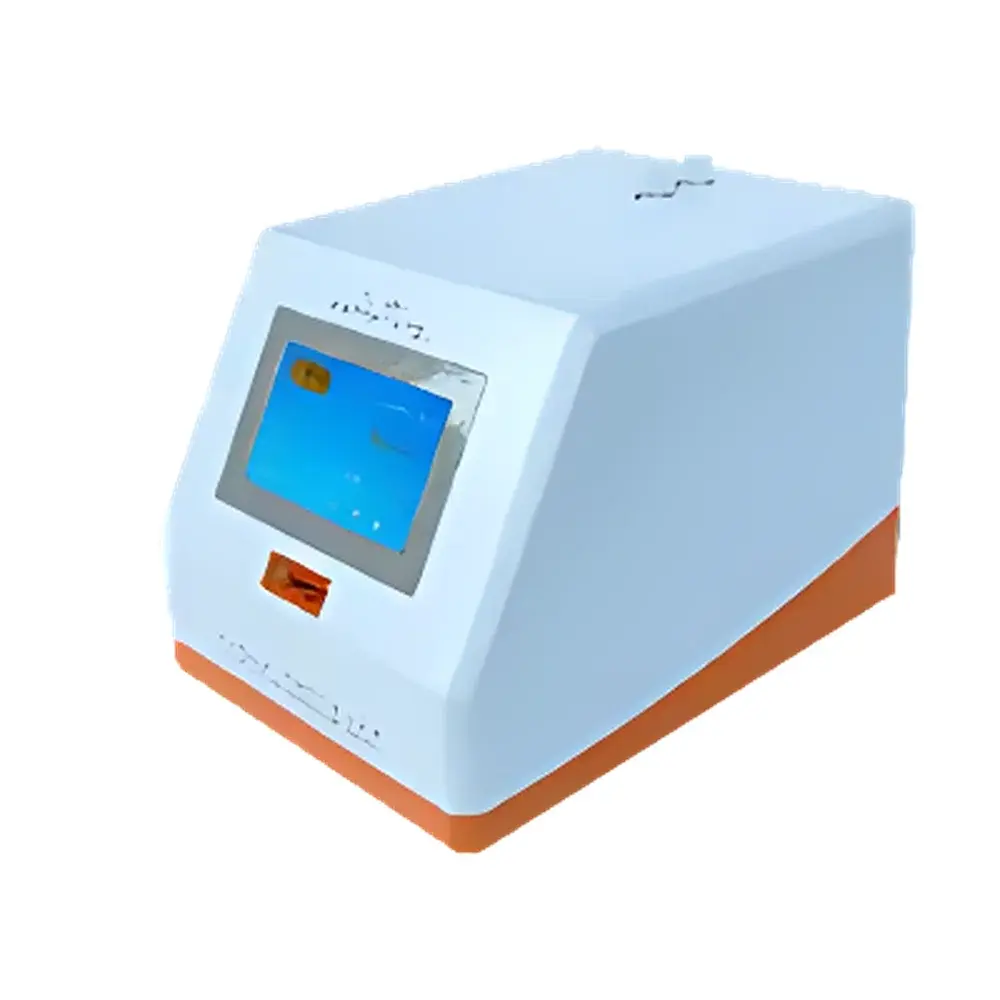
Rocktek RTK-SGMC Ultra-Micro Gas Flow Meter for Catalytic Hydrogen Evolution & Microbial Fuel Cell Testing
| Brand | Rocktek |
|---|---|
| Model | RTK-SGMC |
| Origin | Hubei, China |
| Measurement Principle | Infrared Bubble Volume Detection |
| Flow Range | 30 µL/h – 2 L/h |
| Minimum Detectable Volume | 30 µL |
| Accuracy | <1% FS |
| Sampling Frequency | Up to 1 Hz (1 sample/sec) |
| Operating Pressure Threshold | <300 Pa |
| Temperature & Pressure Compensation | Yes (converted to STP: 0 °C, 101.325 kPa) |
| Multi-Channel Capability | Up to 9 channels via single software instance |
| Gas Compatibility | All gases including corrosive species (e.g., H₂S, NH₃, Cl₂, HCl) and mixed gas streams |
| Output Interfaces | Digital (RS485/USB) and Analog (4–20 mA or 0–5 V) |
Overview
The Rocktek RTK-SGMC Ultra-Micro Gas Flow Meter is an engineered solution for real-time, high-resolution quantification of ultra-low gas evolution rates in laboratory-scale catalytic and biological systems. Based on infrared bubble volume detection—a non-invasive, pressure-insensitive volumetric method—it directly measures discrete gas bubbles as they pass through a calibrated sensing zone, enabling true dynamic flow monitoring without gas accumulation or downstream backpressure dependency. Unlike thermal mass flow meters or pressure-drop-based systems, the RTK-SGMC operates effectively under near-ambient conditions with startup pressure below 300 Pa, making it uniquely suited for low-driving-force processes such as enzymatic hydrogen evolution, anaerobic microbial metabolism, and photoelectrochemical gas generation. Its intrinsic compatibility with corrosive and reactive gases—including H₂, O₂, CO₂, CH₄, H₂S, and NH₃—eliminates the need for gas-specific sensor heads or conditioning modules. All volumetric readings are automatically compensated to standard temperature and pressure (STP: 0 °C, 101.325 kPa) using integrated temperature and absolute pressure sensors, ensuring metrological traceability and inter-laboratory comparability.
Key Features
- Ultra-low detection limit: 30 µL per measurement event, enabling reliable quantification of sub-micromole-per-hour gas evolution rates.
- Wide dynamic range: 30 µL/h to 2 L/h—spanning six orders of magnitude without hardware switching or recalibration.
- High temporal resolution: Real-time sampling at up to 1 Hz, capturing transient kinetics during catalyst activation, biofilm response, or light-pulse experiments.
- Passive, non-contact infrared sensing: No moving parts, no consumables, and immunity to gas composition changes or condensable vapors.
- Integrated environmental compensation: Onboard Pt100 temperature sensor and piezoresistive pressure transducer enable continuous STP conversion with <1% full-scale accuracy.
- Modular multi-channel architecture: Up to nine RTK-SGMC units can be daisy-chained and synchronized under one software instance, supporting parallel reactor studies with time-aligned data streams.
- Industrial-grade I/O: RS485 Modbus RTU, USB-C virtual COM port, and configurable analog output (4–20 mA or 0–5 V) for integration into PLC-controlled test benches or centralized DAQ systems.
Sample Compatibility & Compliance
The RTK-SGMC is chemically inert across a broad spectrum of process gases. Wetted components consist exclusively of borosilicate glass, PTFE, FFKM (Kalrez®), and 316L stainless steel—validated for continuous exposure to acidic, alkaline, and oxidizing environments. It complies with ISO 5167-1:2003 (flow measurement fundamentals) and meets functional requirements outlined in ASTM D1945 (gas analysis) and ISO 10723:2012 (natural gas flow metering). For regulated research environments, the device supports audit-ready data logging with timestamped metadata (UTC-synchronized), user-access logs, and immutable export formats (CSV, HDF5), aligning with GLP and GMP documentation practices. While not FDA 21 CFR Part 11-certified out-of-the-box, its software architecture permits implementation of electronic signature and record retention protocols upon customer specification.
Software & Data Management
The proprietary Rocktek FlowSuite™ software provides cross-platform (Windows/macOS/Linux) control and visualization. It enables adjustable acquisition parameters—including sampling interval (100 ms to 60 s), moving-average filtering, baseline drift correction, and automatic bubble validation based on size/velocity thresholds. Time-series data are rendered as live XY plots with dual-axis support (e.g., H₂ flow vs. applied potential), and derivative functions (dV/dt) can be computed in real time. Export options include timestamped CSV (with header metadata), MATLAB-compatible .mat files, and PDF report generation with embedded calibration certificates. For high-throughput labs, FlowSuite™ supports batch import/export of configuration profiles and automated folder-based archiving with ISO 8601-compliant naming (e.g., “2024-05-22_TiO2_NiFe_01_RTG-SGMC-Ch3.csv”). Remote monitoring is achievable via optional MQTT broker integration.
Applications
- Catalytic hydrogen generation: Quantitative kinetic profiling of formic acid dehydrogenation, NaBH₄ hydrolysis, hydrazine decomposition, and ammonia borane release under ambient or mild heating conditions.
- Photocatalytic and photoelectrocatalytic water splitting: Sub-minute resolution tracking of H₂/O₂ evolution ratios during illumination cycling, bandgap-dependent activity mapping, and stability assessment over >100 h.
- Microbial electrosynthesis and fuel cells: In situ monitoring of cathodic H₂ production or anodic CO₂ reduction in dual-chamber MECs, including coulombic efficiency calculations.
- Anaerobic digestion & rumen fermentation: CH₄/CO₂ co-evolution analysis from mixed-culture digesters or simulated gastrointestinal models, with simultaneous pH and redox potential correlation.
- Aerobic respiration assays: O₂ uptake kinetics in suspended or biofilm-grown cultures, supporting metabolic phenotyping and inhibitor screening.
- Electrochemical gas evolution studies: Faradaic efficiency determination in CO₂RR, NRR, and chlor-alkali systems where gas-phase products dominate charge balance.
FAQ
What gases can the RTK-SGMC measure?
It measures any gas or gas mixture that forms discrete bubbles in liquid media—including H₂, O₂, CO₂, CH₄, N₂, H₂S, NH₃, Cl₂, and HCl—without requiring gas-specific calibration.
Is temperature and pressure compensation mandatory?
Yes; all measurements are internally converted to STP (0 °C, 101.325 kPa) using onboard sensors. Raw uncorrected values are also accessible via API for custom normalization protocols.
Can multiple RTK-SGMC units share one computer?
Yes—up to nine units operate synchronously under FlowSuite™ with channel-identifiable timestamps and unified export.
Does it require gas drying or filtration before measurement?
No; the optical sensing principle is unaffected by humidity or particulates, though inlet filtration is recommended for slurries or viscous media to prevent bubble coalescence artifacts.
How is calibration performed and validated?
Factory calibration uses gravimetrically verified gas standards (NIST-traceable) across the full range. End-users may perform field verification using syringe-driven pulse injection or certified permeation tubes; calibration certificates include uncertainty budgets per ISO/IEC 17025.
Related Products




