
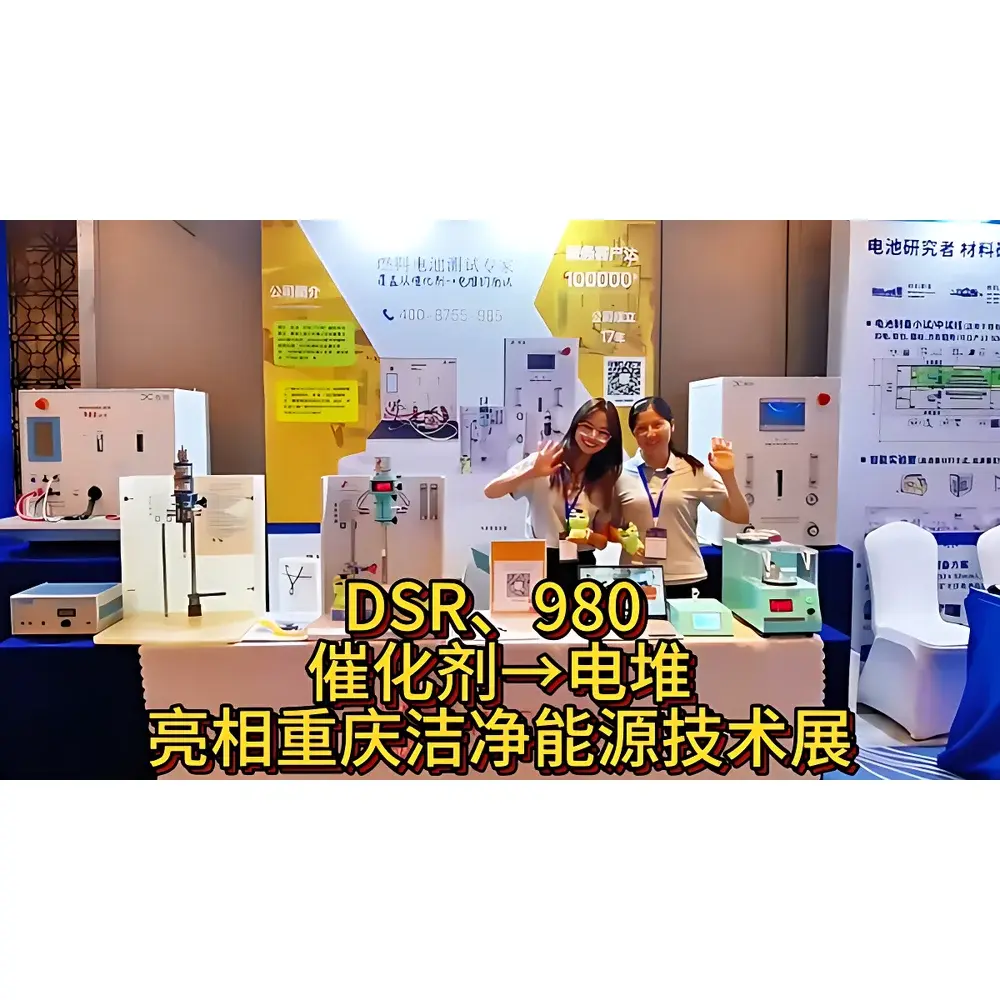
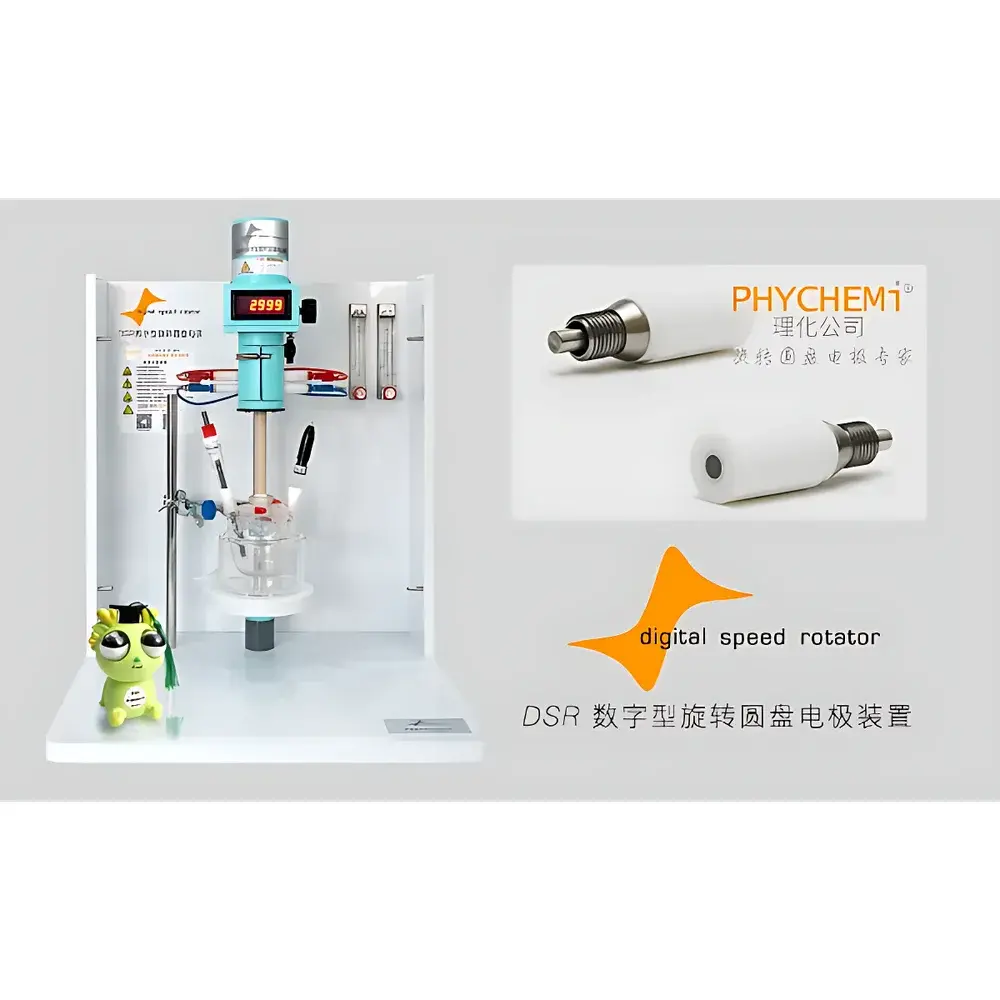
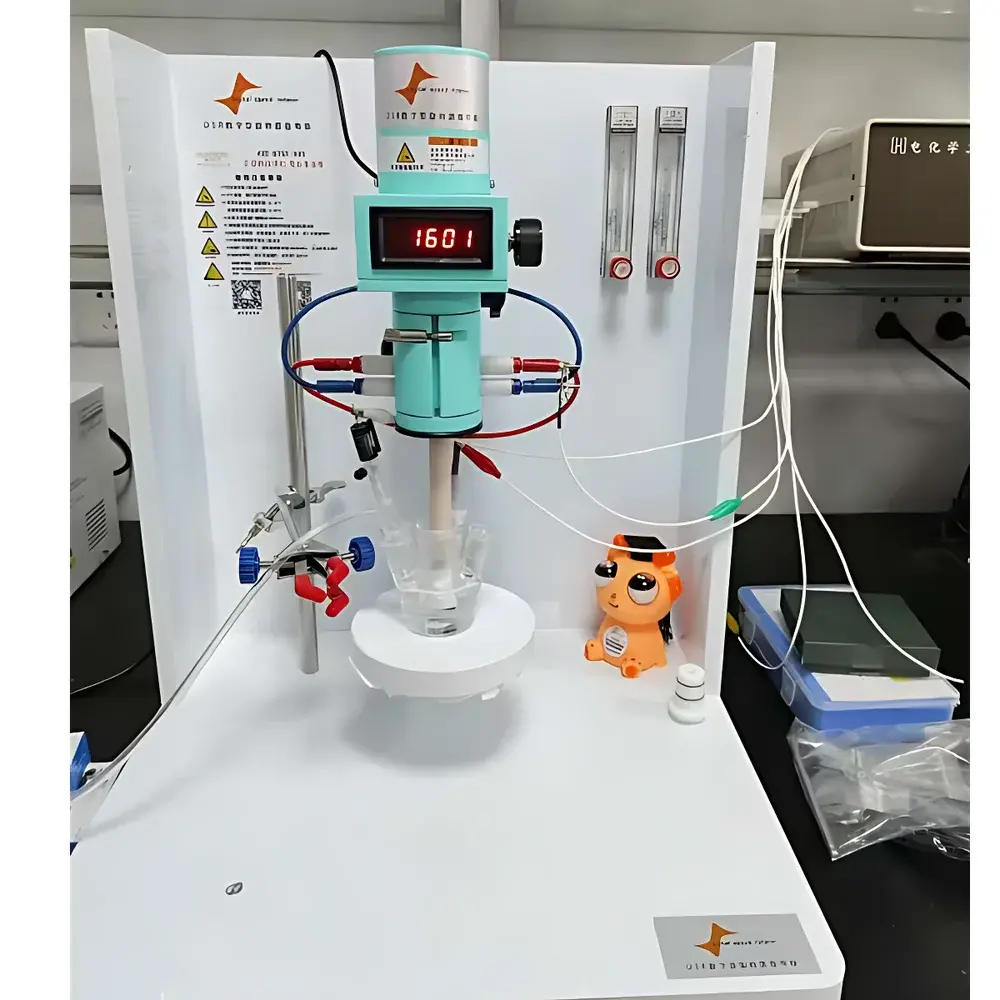
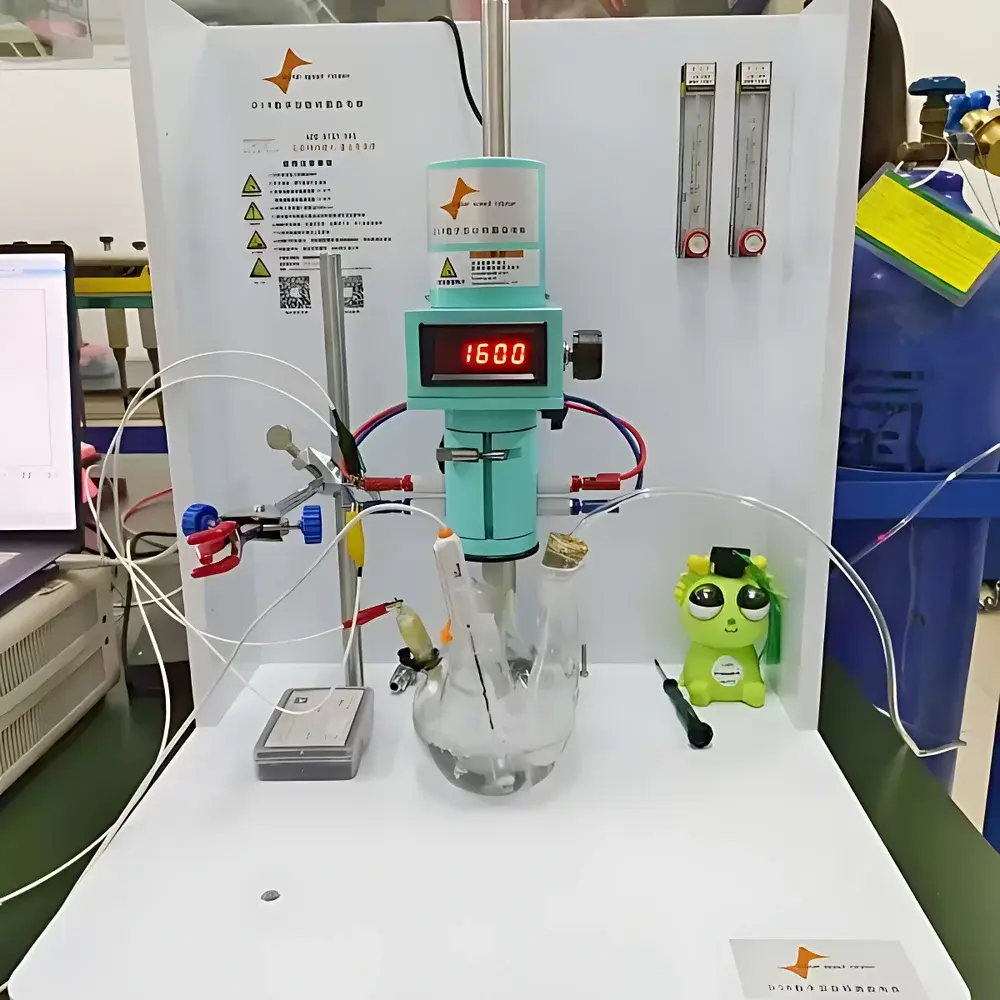
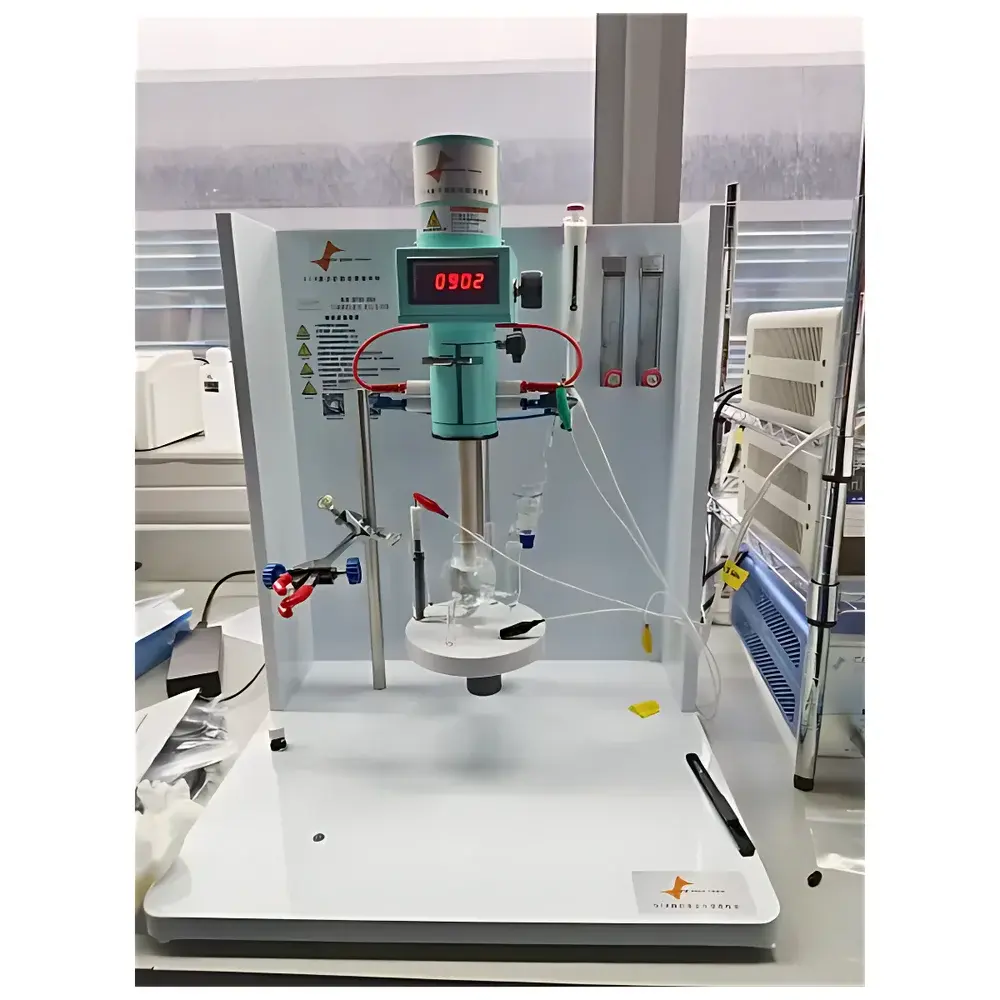
DC-Energies DSR Digital Rotating Disk Electrode (RDE) System
| Brand | DC-Energies |
|---|---|
| Origin | Hubei, China |
| Model | DSR Digital RDE System |
| Rotation Speed Range | 0–10000 rpm |
| Motor Power | 20 W |
| Contact Material | Eco-friendly Ag–C brush |
| Control Architecture | Integrated digital control chip, DC-powered, EMI-resistant |
| Rotating Shaft | 170 mm length, 15 mm OD |
| Disk Electrode | Glassy carbon, 5.0 mm disk diameter, 15 mm outer diameter, PTFE or PEEK insulation |
| Ring-Disk Electrode (RDE/RRDE) | Disk diameter 5.61 mm, ring inner diameter 6.25 mm, ring outer diameter 7.92 mm, inter-electrode gap ≤320 µm, collection efficiency 37%, dimensional tolerance ±0.01 mm |
| Gas Flow Control | Dual calibrated mass flow meters (inert gas + O₂) |
| Compliance | Designed for glovebox integration, explosion-proof enclosure, modular U-CUP adapter for product capture and electrode exchange |
| Warranty | 12-month limited warranty, lifetime technical support and application assistance |
Overview
The DC-Energies DSR Digital Rotating Disk Electrode (RDE) System is a precision-engineered electrochemical hydrodynamic measurement platform designed for quantitative kinetic and mass-transport analysis in fundamental and applied electrocatalysis research. Based on the Levich and Koutecký–Levich theoretical frameworks, the DSR system enables controlled convective mass transport at the electrode surface through well-defined laminar flow generated by high-precision rotation. Its core architecture integrates a digitally regulated brushless motor drive, low-noise DC power supply, and galvanically isolated signal interface—ensuring minimal electromagnetic interference during synchronized potentiostat coupling. The system supports both rotating disk electrode (RDE) and rotating ring-disk electrode (RRDE) configurations, with traceable geometric tolerances and certified collection efficiency (37% for standard RRDE geometry), making it suitable for rigorous kinetic deconvolution in oxygen reduction (ORR), oxygen evolution (OER), hydrogen evolution (HER), and CO₂ reduction (CO₂RR) studies.
Key Features
- Digital speed control with resolution of ±1 rpm across 0–10000 rpm range, enabled by embedded microcontroller and closed-loop feedback
- Eco-compliant silver–carbon brushes ensure low-contact-resistance, high-fidelity current transmission without signal attenuation or thermal drift
- Modular, glovebox-compatible design: detachable rotating shaft (170 mm L × 15 mm OD) and compact control unit facilitate inert-atmosphere operation
- Explosion-proof housing rated per IEC 60079-0 general requirements for electrical equipment in explosive atmospheres
- U-CUP interchangeable electrode holder allows rapid disk replacement, in situ product capture, and material-flexible experimentation (e.g., Pt, IrO₂, NiFe-LDH, Fe–N–C)
- Dual independent mass flow controllers: one for inert gas purging (N₂/Ar), one for O₂ saturation—calibrated to ±1% full scale
- PTFE and PEEK insulating sleeves provide chemical resistance from −20 °C to +180 °C, compatible with aqueous, non-aqueous, and high-temperature electrolytes
Sample Compatibility & Compliance
The DSR system accommodates standardized 5-neck electrochemical cells as well as custom-designed reactors. Disk electrodes feature M4 external threading for secure, low-inductance contact; RRDE geometries adhere to ASTM D7212–16 guidelines for inter-electrode gap verification (≤320 µm) and dimensional repeatability (±0.01 mm). All insulating materials comply with UL 94 V-0 flammability rating. The system supports GLP-aligned experimental workflows: rotation speed logs are timestamped and exportable via RS-232/USB, enabling audit-ready metadata linkage with potentiostat data (e.g., BioLogic SP-300, Pine AFCBP1). No proprietary drivers required—interfacing uses industry-standard TTL-level trigger signals and analog voltage input (0–5 V = 0–10000 rpm).
Software & Data Management
Rotation parameters are configured via front-panel keypad or optional PC-based utility (Windows/Linux/macOS compatible). Real-time speed status is displayed on integrated OLED. For automated experiments, the DSR accepts external analog voltage inputs from potentiostats or DAQ systems, enabling synchronized ramping (e.g., linear sweep + rotation acceleration). All operational logs—including start/stop timestamps, target vs. actual rpm, and error codes—are stored in non-volatile memory and exportable as CSV. Data integrity complies with FDA 21 CFR Part 11 principles: user access levels, electronic signatures, and immutable audit trails can be implemented via third-party LIMS integration.
Applications
- Quantitative ORR mechanism analysis via Koutecký–Levich plots and H₂O₂ yield determination (RRDE mode)
- Electrocatalyst stability assessment under accelerated stress tests (ASTs) with controlled hydrodynamic boundary layers
- CO₂RR selectivity mapping using multi-potential step rotation modulation
- Corrosion kinetics evaluation of alloy electrodes in chloride-containing media
- In situ generation and detection of reactive intermediates (e.g., OOH*, *OOH) in acidic/alkaline PEM and AEM environments
- Mass-transport-limited current calibration for sensor validation and diffusion coefficient determination
FAQ
Can the DSR system be operated inside an argon-filled glovebox?
Yes—the fully modular mechanical design, DC-only power architecture, and absence of internal fans or transformers allow safe, long-term operation in inert-atmosphere enclosures.
Is the RRDE collection efficiency independently verified?
Yes—each RRDE assembly undergoes optical interferometry and electrochemical validation against ferrocyanide/ferricyanide redox couple per ISO 13033:2012 Annex B, with certificate of conformance supplied.
Does the system support third-party potentiostat triggering?
Yes—TTL-compatible start/stop and analog 0–5 V speed command inputs enable seamless synchronization with Gamry, Metrohm Autolab, or CH Instruments platforms.
What maintenance is required for the Ag–C brushes?
Brush wear is negligible below 8000 rpm continuous operation; recommended inspection interval is 500 hours. Replacement kits include torque-calibrated mounting hardware.
Are custom shaft lengths or electrode geometries available?
Yes—DC-Energies offers OEM engineering support for application-specific adaptations, including high-temp ceramic shafts, micro-RDE variants (<1 mm disk), and multi-ring configurations.
Related Products







