
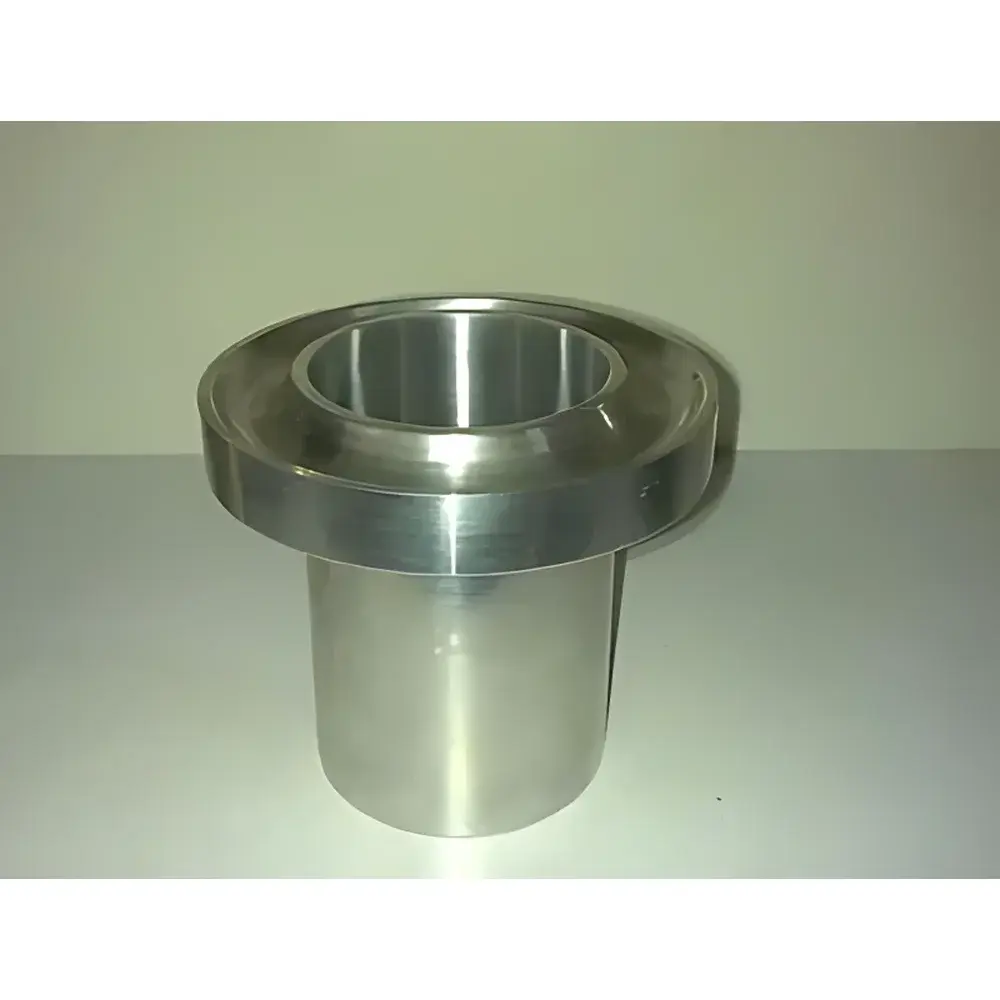
Ford Cup Viscometer (ASTM D1200 Compliant) – Model Ford Cup 2, 3, 4
| Origin | Shanghai, China |
|---|---|
| Manufacturer Type | Authorized Distributor |
| Origin Category | Domestic (China) |
| Models | Ford Cup No. 2, No. 3, No. 4 |
| Orifice Diameter | 2.54 mm (No. 2), 3.30 mm (No. 3), 3.81 mm (No. 4) |
| Cup Volume | 100 ± 1 mL |
| Kinematic Viscosity Range | 25–120 cSt (No. 2), 40–220 cSt (No. 3), 70–370 cSt (No. 4) |
| Temperature Control Requirement | 23 ± 0.5 °C (or agreed-upon test temperature) |
| Compliance | ASTM D1200, D333, D365, D4212 |
Overview
The Ford Cup Viscometer is a gravity-driven efflux viscometer engineered for rapid, standardized measurement of kinematic viscosity in low- to medium-viscosity Newtonian and near-Newtonian fluids—primarily coatings, inks, varnishes, lacquers, and solvent-based paints. Its operational principle follows Poiseuille’s law under laminar flow conditions: viscosity is derived from the efflux time required for a fixed volume (100 ± 1 mL) of sample to drain through a precisely dimensioned orifice under gravitational force at a controlled temperature. Unlike rotational rheometers, the Ford Cup provides a single-point, time-based viscosity value expressed in seconds (s), which can be converted to centistokes (cSt) using empirical calibration constants (k and c values per cup number) defined in ASTM D4212. This method delivers high reproducibility for routine QC applications where speed, simplicity, and compliance with industry-standard test protocols are prioritized over full rheological profiling.
Key Features
- Precision-machined anodized aluminum cup body ensuring dimensional stability, thermal uniformity, and corrosion resistance for repeated solvent exposure
- Three interchangeable orifice sizes (No. 2: 2.54 mm; No. 3: 3.30 mm; No. 4: 3.81 mm) enabling optimal efflux time selection within the recommended 20–80 s range per ASTM D1200
- Factory-calibrated orifices traceable to NIST-certified Newtonian reference oils; no user recalibration required within first 12 months of operation
- Integrated leveling bubble and compatible optional stand for vertical alignment—critical for consistent hydrostatic head and laminar flow initiation
- Designed for ambient or thermostatically controlled environments (23 ± 0.5 °C standard per ASTM); compatible with standard laboratory temperature baths or climate-controlled rooms
- No moving parts or electronics—minimal maintenance, zero power requirement, and intrinsic suitability for hazardous or solvent-rich environments
Sample Compatibility & Compliance
The Ford Cup is validated for use with homogeneous, particle-free, low-sediment Newtonian liquids meeting ASTM D1200 scope criteria. Samples must be filtered through ≥567 mesh/cm² (e.g., 25 µm stainless steel screen) prior to testing to prevent orifice clogging. It is not suitable for non-Newtonian, thixotropic, or highly filled suspensions without prior validation. The instrument complies fully with ASTM D1200 (Standard Test Method for Kinematic Viscosity of Transparent and Opaque Liquids by the Ford Viscosity Cup), as well as supporting standards ASTM D333 (for lacquers), D365 (for varnishes), and D4212 (for conversion of efflux time to kinematic viscosity). While not inherently GLP/GMP-compliant, its use in regulated environments is supported by documented calibration records, operator training logs, and adherence to written SOPs aligned with ISO/IEC 17025 requirements for testing laboratories.
Software & Data Management
The Ford Cup operates as a manual, analog measurement system requiring no embedded software or firmware. Data acquisition relies on external timing devices—typically a digital stopwatch with 0.1 s resolution—as specified in ASTM D1200. Users record efflux times manually and apply cup-specific conversion formulas (e.g., ν = k × t − c, where ν = kinematic viscosity in cSt, t = efflux time in seconds) per ASTM D4212 Annex A1. For digital workflow integration, laboratories commonly log results into LIMS or Excel-based QC templates with built-in calculation fields and audit trails. Though the cup itself lacks electronic data output, its methodology supports 21 CFR Part 11-compliant documentation when paired with validated electronic recording systems and controlled access protocols.
Applications
- Quality control of solvent-borne industrial coatings during batch release and incoming raw material inspection
- Routine viscosity screening in R&D labs developing new ink formulations for flexographic and gravure printing
- Production line verification of paint thinning consistency before spray application or dip coating
- Supplier qualification testing against contractual viscosity specifications referenced to ASTM D1200
- Educational demonstrations of Newtonian fluid behavior and empirical viscosity correlation methods
- Field testing in manufacturing facilities where portability, ruggedness, and minimal infrastructure are essential
FAQ
What is the recommended efflux time range for accurate measurements?
ASTM D1200 specifies an optimal efflux window of 20–80 seconds. Results outside this range may suffer from increased uncertainty due to transitional flow effects or evaporation artifacts.
Can the Ford Cup be used for non-Newtonian fluids like thixotropic paints?
No—efflux time alone does not characterize shear-dependent behavior. Non-Newtonian samples require rotational viscometry (e.g., Brookfield or Anton Paar systems) for yield stress and flow curve analysis.
How often must the cup be recalibrated?
Per ASTM D1200 and manufacturer guidance, annual recalibration is recommended. The orifice is factory-traceable to NIST oils; users should retain calibration certificates and perform functional checks using certified reference oils before critical measurements.
Why must the cup be cleaned with non-metallic tools only?
Metallic implements risk deforming the orifice or introducing micro-scratches that alter flow dynamics. Soft lint-free cloth, solvent-soaked swabs, or flexible polymer cleaning wires are acceptable alternatives.
Is temperature control mandatory during testing?
Yes—kinematic viscosity is highly temperature-sensitive. ASTM D1200 mandates temperature control within ±0.5 °C of the specified test point (typically 23 °C or 25 °C) to ensure inter-laboratory comparability and result validity.



