
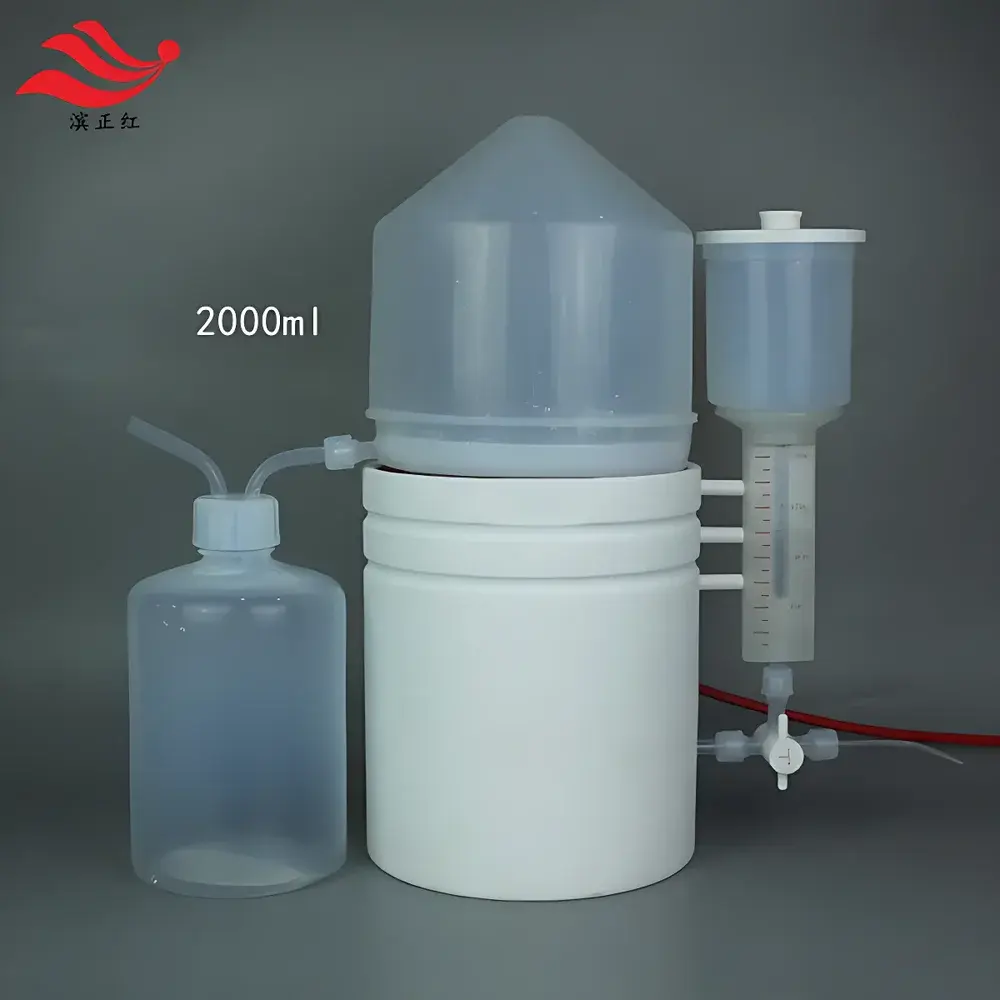
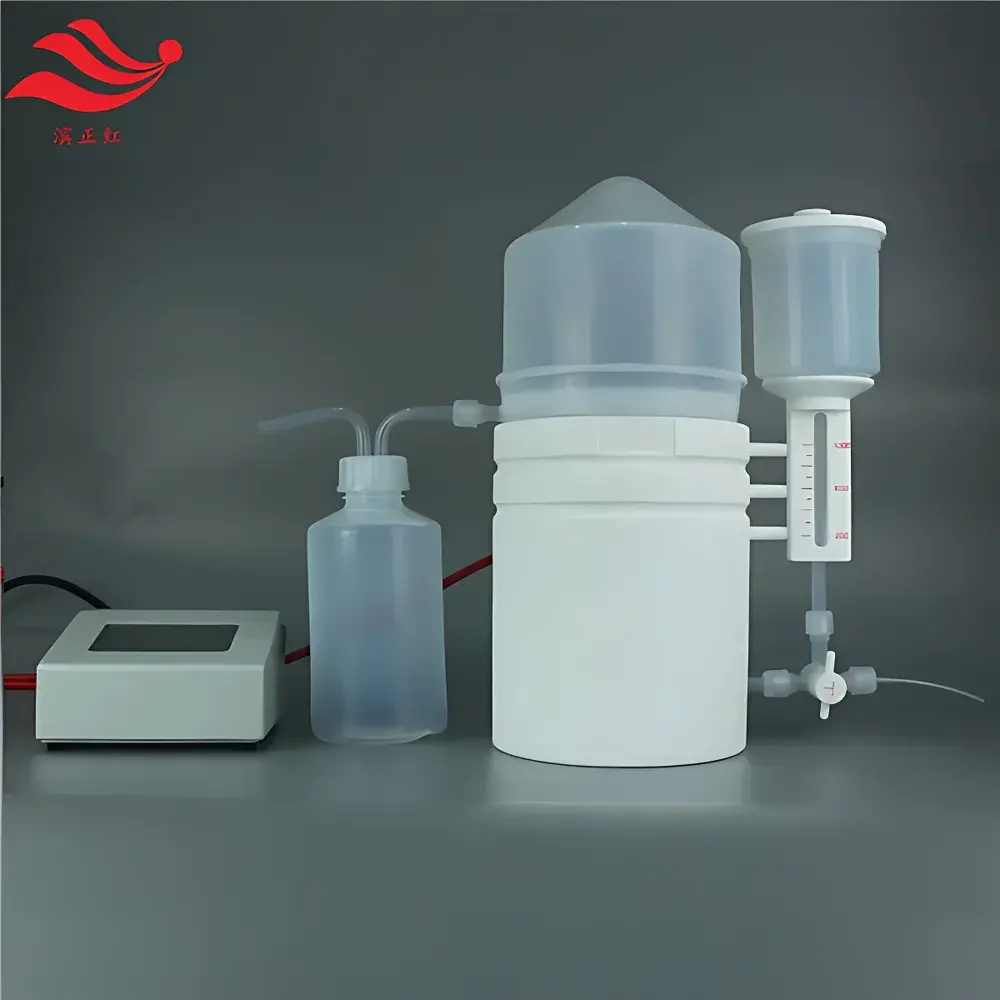
Binzhenghong NJ-SCH Sub-Boiling Acid Distillation System
| Brand | Binzhenghong |
|---|---|
| Model | NJ-SCH-II / NJ-SCH-III / NJ-SCH-IV |
| Capacity | 1 L / 2 L / 4 L |
| Acid Output Rate | 50 mL/h / 70 mL/h / 100 mL/h |
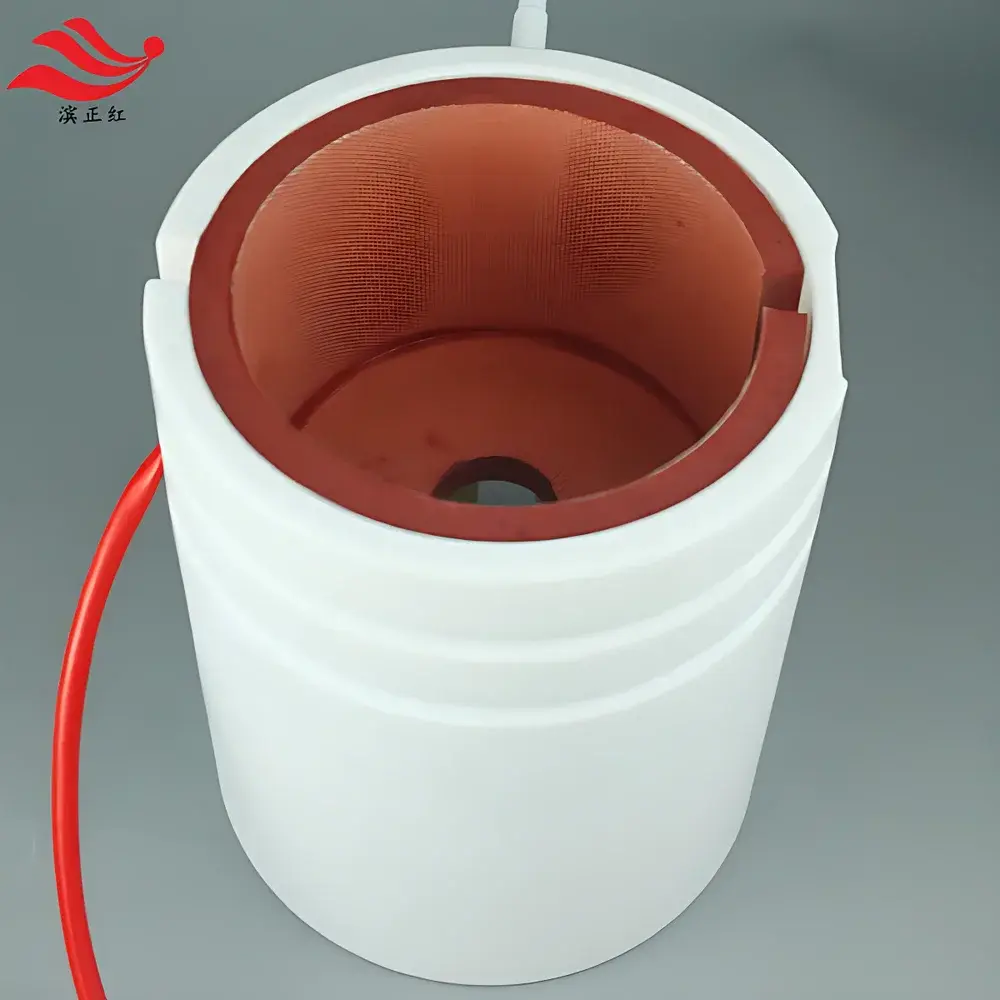
| Heating Method | Silicone Rubber Heater (Fully Enclosed, Overheat Protected) |
| Temperature Control | PID Digital Display, ±1 °C Accuracy |
| Max Operating Temp | Up to 180 °C |
| Cooling | Ambient Air Cooling (No External Water Required) |
| Power | ≤400 W (NJ-SCH-II) / ≤500 W (NJ-SCH-III & IV), Variable-Frequency Adjustable |
| Voltage | 220 V / 50 Hz |
| Wetted Materials | High-Purity PFA Only (Metal-Free Construction) |
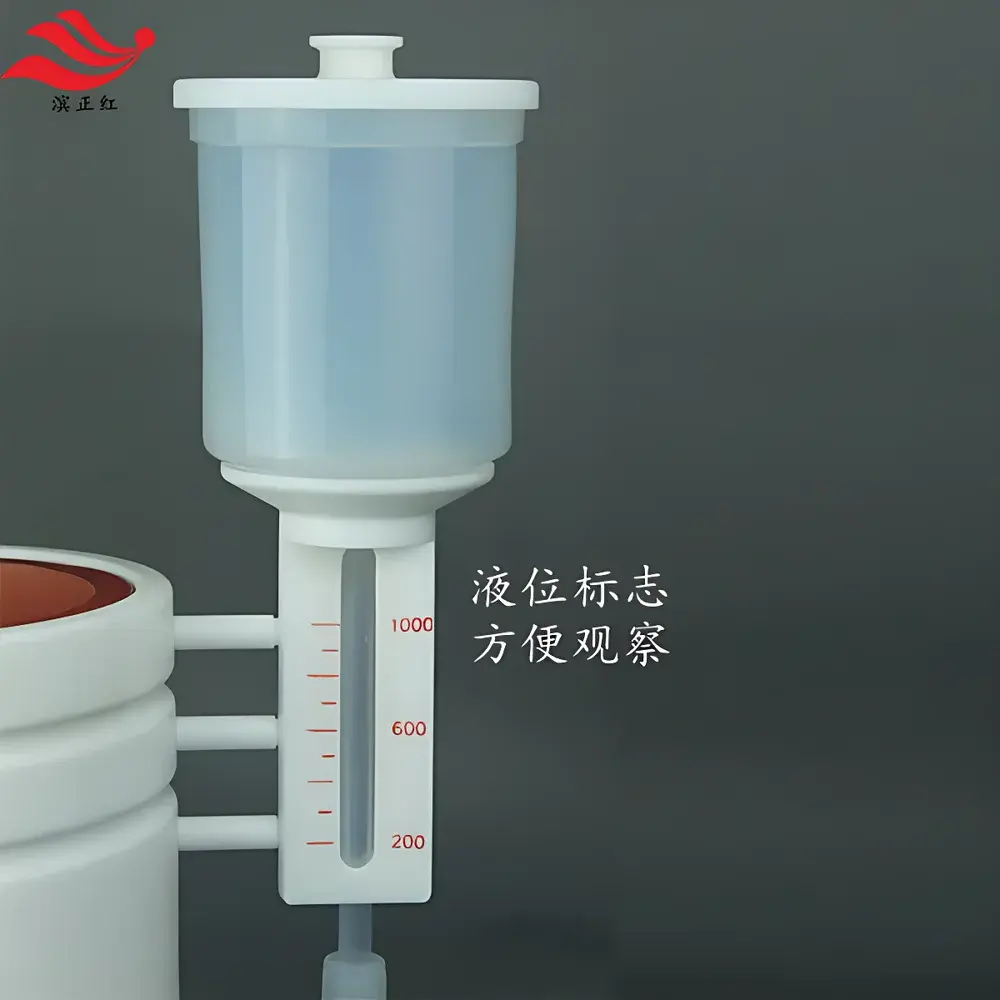
| Liquid Level Options | 200/600/1000 mL |
| Dry-Out Protection | Yes |
| Collection Vessel | GL45-threaded PFA Bottle (Stretch-Blown, Seal-Intact Without Inner Cap) |
| Metal Impurity Reduction | From ~10 ppb → ~0.01 ppb (Single-Pass Distillation) |
Overview
The Binzhenghong NJ-SCH Sub-Boiling Acid Distillation System is a laboratory-grade, metal-free purification apparatus engineered for the production of ultra-high-purity acids and solvents required in trace elemental analysis, semiconductor wafer cleaning, ICP-MS calibration, and low-background radiochemistry. Unlike conventional boiling-point distillation, this system operates under sub-boiling conditions—maintaining liquid-phase temperatures just below the atmospheric boiling point of the target reagent. This thermodynamically controlled regime minimizes volatile impurity carryover, suppresses decomposition pathways (e.g., HNO₃ oxidation or HF polymerization), and eliminates aerosol entrainment—thereby achieving consistent removal of metallic contaminants (e.g., Al, Fe, Cr, Ni, Pb) to sub-10 ppt levels. The entire fluid path—from evaporation chamber to condensate collection—is constructed exclusively from perfluoroalkoxy alkane (PFA), a material certified to ASTM D4894 and compliant with USP Class VI biocompatibility requirements. Its monolithic, heat-fused architecture ensures zero dead volume, no gasket leaching, and full compatibility with aggressive media including hydrofluoric acid (HF), aqua regia components, and high-purity water.
Key Features
- Metal-free PFA construction throughout all wetted surfaces—no stainless steel, quartz, or glass joints; eliminates extractable metal contamination.
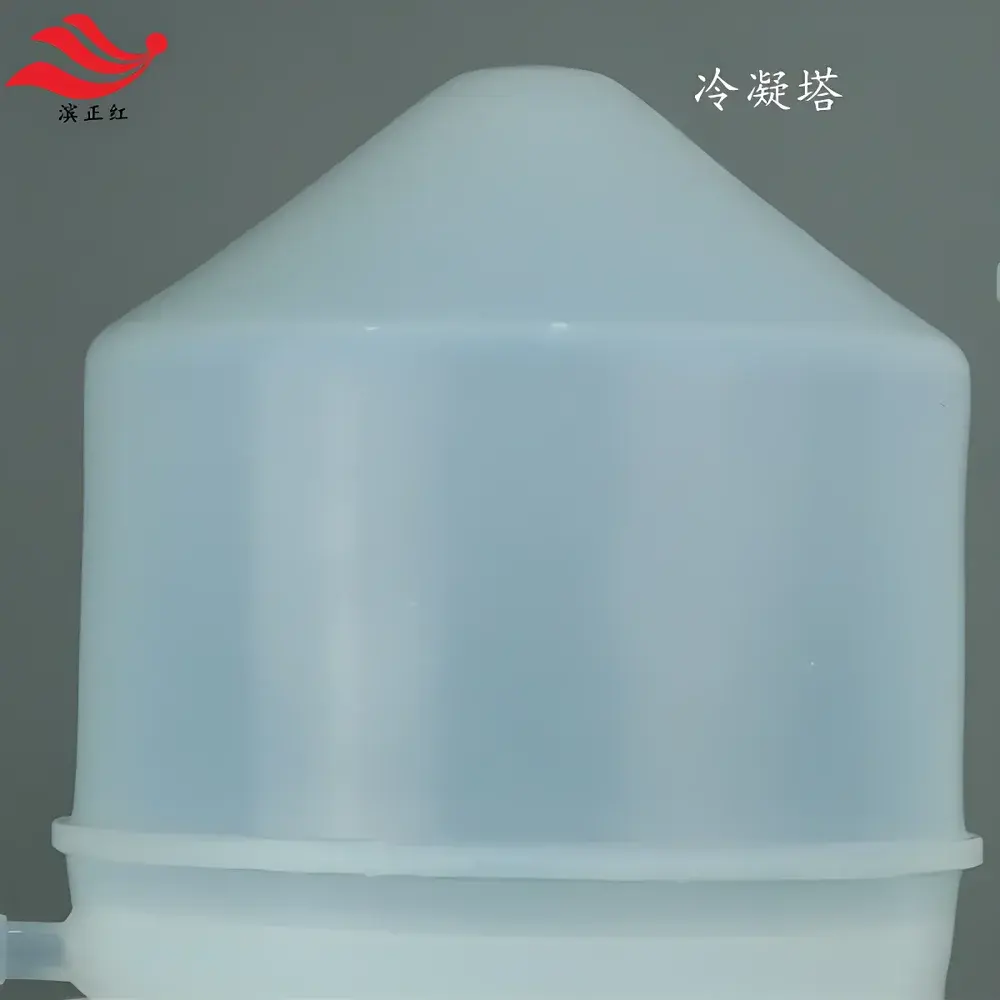
- Integrated evaporator-condenser unit fabricated via thermal fusion bonding—no seals, O-rings, or threaded interfaces that compromise purity or longevity.
- PID-controlled silicone rubber heating mantle with real-time digital display and ±1 °C setpoint stability; temperature range programmable from ambient to 180 °C.
- Three standardized configurations (1 L, 2 L, 4 L) with multi-level fill indicators and calibrated addition funnels—enabling precise volumetric dosing without external measurement.
- Ambient-air cooling design eliminates dependency on chilled water recirculators or tap-water lines—reducing infrastructure complexity and cross-contamination risk.
- Dry-run protection circuit automatically deactivates heating upon low-liquid detection—supporting unattended operation inside fume hoods under GLP-compliant protocols.
- GL45-threaded PFA collection bottles manufactured via stretch blow molding—ensuring dimensional consistency, leak-tight sealing without secondary caps, and trace-metal certification documentation.
- Triple-port waste valve with directional labeling and drip-proof discharge tubing—facilitating safe, segregated disposal of residual mother liquor after distillation cycles.
Sample Compatibility & Compliance
The NJ-SCH system is validated for sub-boiling purification of nitric acid (HNO₃), hydrochloric acid (HCl), hydrofluoric acid (HF), ultrapure water (UPW), and select organic solvents such as methanol and acetonitrile. Each configuration adheres to ISO/IEC 17025 method validation principles when used in conjunction with certified reference materials (CRMs) like NIST SRM 3100 series. The absence of metallic components satisfies stringent requirements outlined in ASTM D5127 (for semiconductor process chemicals), EPA Method 200.8 (for ICP-MS sample preparation), and USP (water conductivity testing). Full traceability of PFA resin lot numbers and third-party elemental assay reports (ICP-MS tested for ≤0.01 ppb Al, Fe, Cr, Cu, Zn, Ni, Pb) are supplied with each unit to support FDA 21 CFR Part 11–aligned audit trails.
Software & Data Management
While the NJ-SCH operates as a standalone analog-digital hybrid instrument (no embedded OS or network interface), its PID controller supports RS-232 output for optional integration into centralized lab data acquisition systems. Temperature logging at 1-second intervals can be captured using industry-standard software (e.g., LabVIEW, MATLAB, or custom Python scripts) via serial communication. All operational parameters—including setpoint, actual temperature, elapsed time, and power draw—are retained in non-volatile memory across power cycles. For regulated environments, the system supports manual logbook entries aligned with ALCOA+ (Attributable, Legible, Contemporaneous, Original, Accurate, Complete, Consistent, Enduring, Available) data integrity criteria. Optional calibration certificates (NIST-traceable thermocouple verification) and IQ/OQ documentation packages are available upon request.
Applications
- Preparation of matrix-matched calibration standards for ICP-OES and ICP-MS analysis in environmental, clinical, and geological laboratories.
- Generation of high-purity etchants and rinses for photomask cleaning and front-end-of-line (FEOL) semiconductor fabrication.
- Production of low-blank reagents for radiochemical separation workflows involving alpha spectrometry or accelerator mass spectrometry (AMS).
- Refinement of digestion acids prior to microwave-assisted closed-vessel sample dissolution (e.g., EPA 3052, ISO 11885).
- Reclamation of spent analytical-grade acids where economic recovery outweighs single-use disposal costs—subject to compatibility verification per acid type.
FAQ
Can the NJ-SCH system purify hydrofluoric acid (HF) safely?
Yes. All PFA components meet ASTM F2219 specifications for HF resistance up to 49% concentration at elevated sub-boiling temperatures (≤120 °C); no fluoropolymer degradation or fluoride ion leaching has been observed during accelerated lifetime testing.
Is it necessary to pre-filter acids before loading into the NJ-SCH?
Pre-filtration through 0.1 µm PTFE membrane filters is recommended for acids containing visible particulates or precipitated silicates—but not required for commercially sourced “trace-metal grade” reagents.
How often should the PFA chamber be cleaned between different acid types?
Cross-contamination risk is mitigated by dedicated unit assignment per acid species, as recommended in ISO 17025 Clause 5.8.1; however, if shared use is unavoidable, a 2-hour blank run with ultrapure water at 100 °C followed by visual inspection suffices.
Does the system comply with GLP or GMP documentation requirements?
Yes—when operated with documented SOPs, maintenance logs, and periodic temperature calibration records, the NJ-SCH meets core GLP Annex 11 and EU GMP Annex 11 expectations for equipment qualification and data integrity.
What is the expected service life of the PFA evaporator-condenser assembly?
Under normal usage (≤8 h/day, ≤5 days/week), the fused PFA structure demonstrates ≥5 years of functional integrity without measurable erosion or haze formation, as verified by SEM surface morphology analysis post-2000 distillation cycles.



