
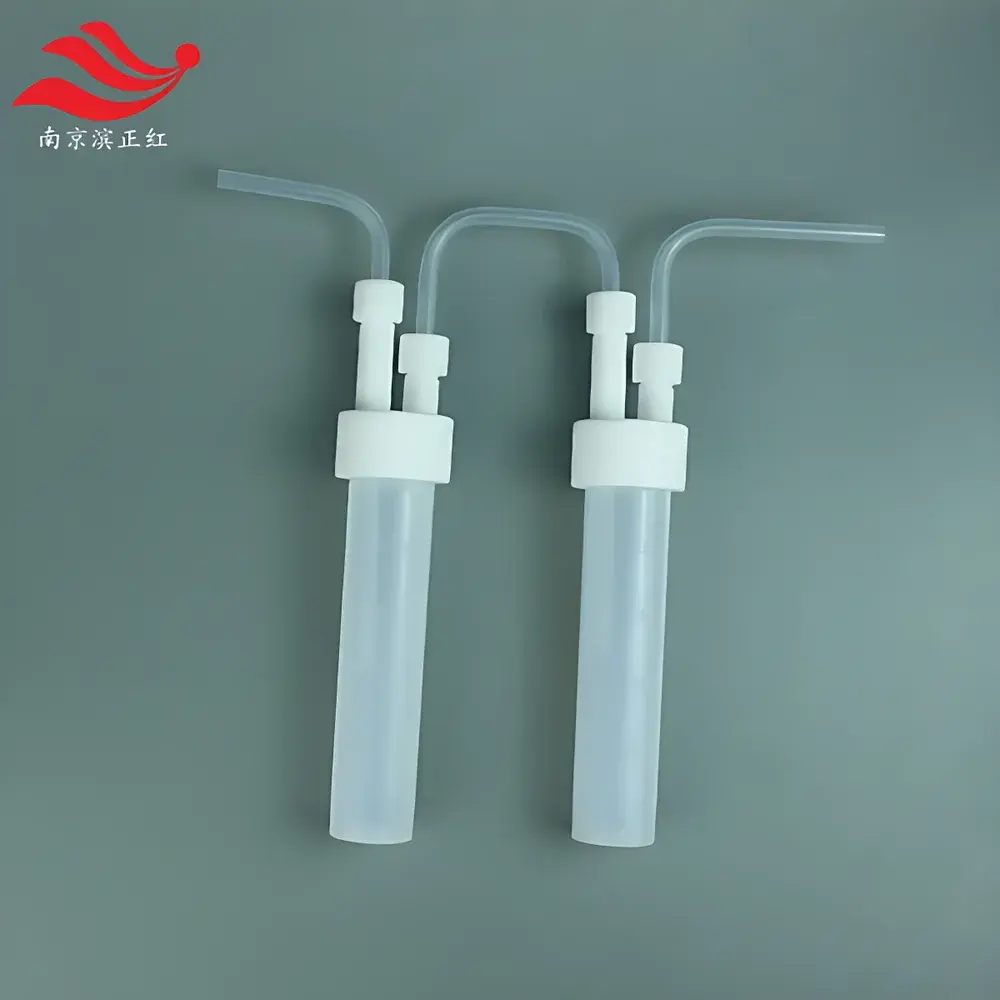
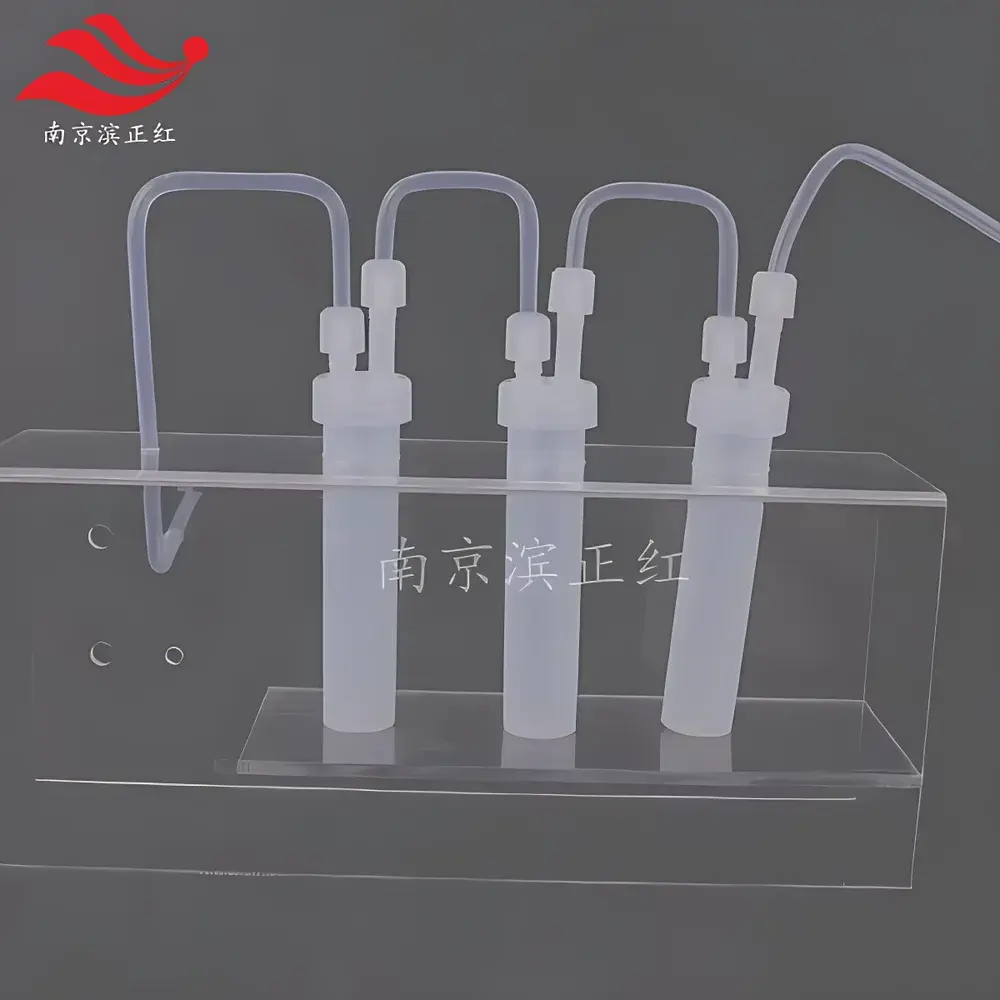
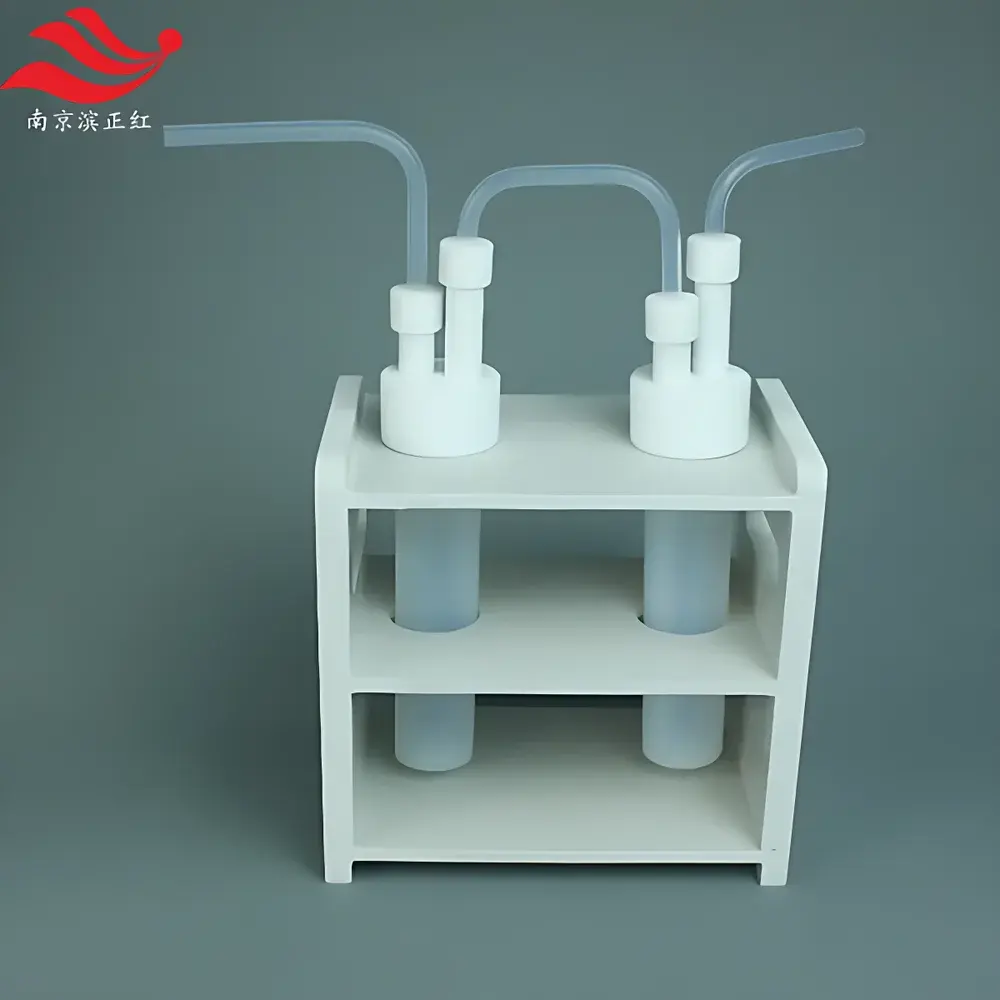
PFA Gas Washing Bottle (50 mL) for Hydrogen Fuel Purification in PEMFC Vehicles
| Brand | Binzhenghong |
|---|---|
| Origin | Jiangsu, China |
| Manufacturer Type | Direct Producer |
| Country of Origin | China |
| Model | NJ-PFA-XSP-060 |
| Price | USD 170 (approx.) |
Overview
The Binzhenghong NJ-PFA-XSP-060 is a high-purity, chemically inert gas washing bottle engineered specifically for the pre-conditioning and impurity removal of hydrogen fuel used in proton exchange membrane fuel cell (PEMFC) systems—particularly in automotive applications. Constructed entirely from perfluoroalkoxy alkane (PFA), this 50 mL capacity washing bottle offers exceptional resistance to strong acids, bases, oxidizers, and halogens across a wide temperature range (–200 °C to +260 °C). Its design follows fundamental gas–liquid absorption principles: hydrogen gas is introduced via a precision-fitted inlet tube, dispersed through a sintered PFA frit into a liquid scrubbing medium (e.g., aqueous palladium chloride, copper sulfate, or sodium hydroxide solutions), and exits through an upper outlet after soluble contaminants—including CO, H₂S, NH₃, halides, and metal ions—are selectively absorbed or catalytically converted. This unit serves as a critical first-stage purification component upstream of catalytic purifiers and membrane dryers in hydrogen quality assurance workflows compliant with ISO 8583-1:2021 and SAE J2719 standards.
Key Features
- Monolithic PFA construction ensures zero metallic leaching and ultra-low extractables—essential for maintaining <1 ppb-level trace contaminant control in PEMFC-grade hydrogen.
- Integrated sintered PFA frit (pore size: 10–25 µm) enables uniform gas dispersion and maximizes interfacial contact area between H₂ stream and scrubbing solution.
- Double-tapered neck with standard 10/32 UNF threaded ports facilitates leak-tight integration into modular gas purification manifolds using PFA or PTFE-lined fittings.
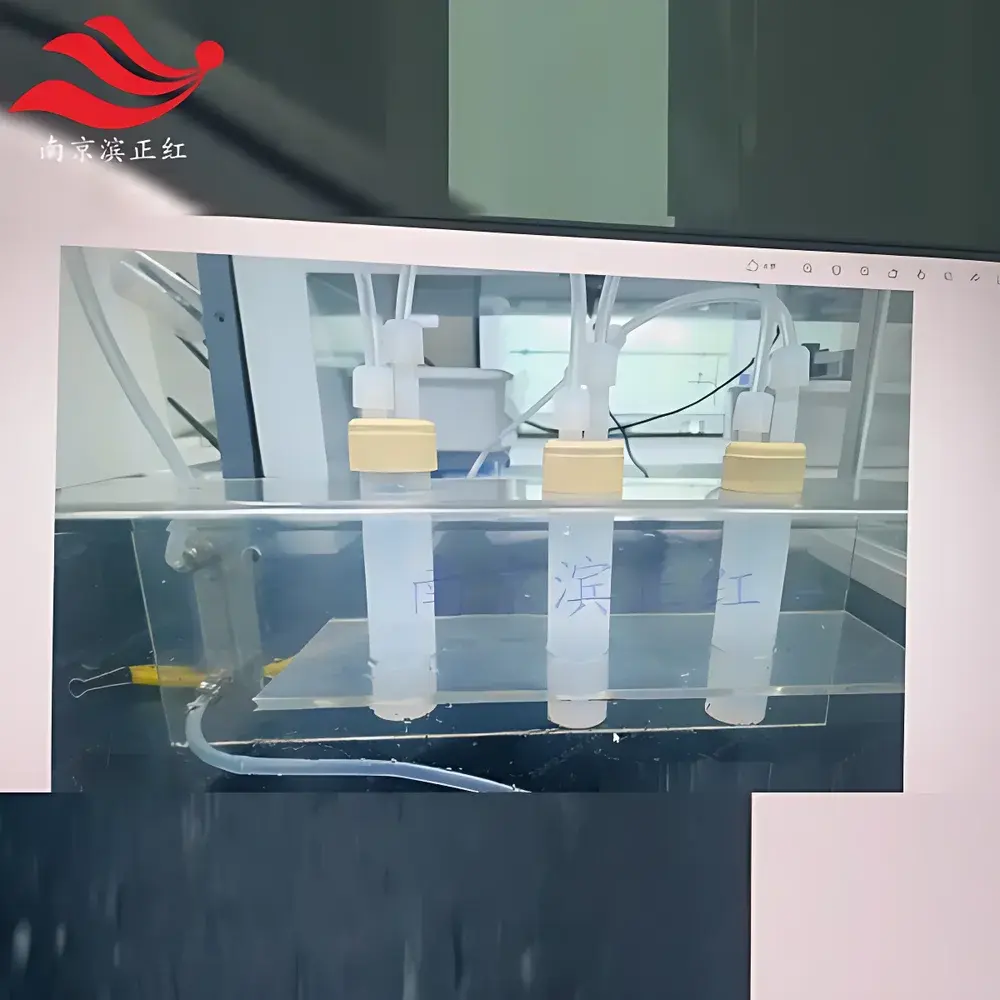
- Translucent body allows real-time visual monitoring of liquid level, bubble dynamics, and potential precipitate formation without system interruption.
- Autoclavable and compatible with cleanroom Class 100 handling; certified for repeated use under cyclic pressure (0–1 MPa gauge) and thermal cycling conditions.
Sample Compatibility & Compliance
The NJ-PFA-XSP-060 accommodates a broad spectrum of aqueous and non-aqueous scrubbing reagents—including acidic (HCl, HNO₃), alkaline (NaOH, KOH), and redox-active solutions (PdCl₂/HCl, CuSO₄/NH₃)—without degradation or swelling. It supports continuous or batch-mode operation at flow rates up to 500 mL/min (N₂-equivalent) while maintaining >95% removal efficiency for targeted impurities when paired with validated chemical protocols. The device conforms to material requirements specified in ISO 14687-2:2019 (Grade 2 hydrogen purity) and supports laboratory-scale validation of fuel conditioning trains aligned with DOE Hydrogen Program Targets and EU FCH JU certification pathways. All units undergo individual hydrostatic pressure testing and certificate-of-conformance documentation per ISO 9001 manufacturing controls.
Software & Data Management
As a passive, hardware-only purification component, the NJ-PFA-XSP-060 does not incorporate embedded electronics or firmware. However, it is fully interoperable with industry-standard gas quality monitoring ecosystems: its inlet/outlet ports integrate seamlessly with mass flow controllers (e.g., Bronkhorst EL-FLOW), online GC-TCD analyzers (e.g., Agilent 490 Micro GC), and data acquisition systems logging pressure differentials, temperature gradients, and cumulative throughput. When deployed within GLP-compliant laboratories, usage logs—including lot-specific reagent batches, exposure duration, and post-use residue analysis reports—are maintained manually or via LIMS platforms supporting 21 CFR Part 11 audit trails.
Applications
- Front-end hydrogen polishing in on-site electrolyzer-to-vehicle refueling stations.
- Validation of impurity removal kinetics during PEMFC catalyst poisoning studies (e.g., CO tolerance testing).
- In-line sulfur scavenging in biogas-derived hydrogen upgrading lines prior to membrane separation.
- Calibration gas conditioning for FTIR and CRDS-based hydrogen purity analyzers requiring matrix-matched reference streams.
- Research-scale screening of novel liquid-phase sorbents for ASTM D7832-22 method development.
FAQ
Can this washing bottle be used with aggressive oxidizing agents such as hydrogen peroxide or chlorine dioxide?
Yes—PFA exhibits full compatibility with ≤30% H₂O₂ and gaseous ClO₂ at ambient temperatures; however, elevated temperatures (>60 °C) require validation of long-term dimensional stability.
Is the sintered frit replaceable or field-serviceable?
No—the frit is fused integrally during molding and is not designed for replacement; each unit is serialized and tested for frit integrity prior to shipment.
Does the bottle meet USP Class VI or EP 3.1.1 extractables requirements?
While not formally certified to pharmacopoeial monographs, the raw PFA resin complies with USP and has demonstrated <0.5 µg/cm² total organic extractables in 24-hr water immersion per ASTM D1248.
What is the maximum recommended operating pressure?
Rated for continuous service up to 1.0 MPa (145 psi) at 25 °C; derating to 0.7 MPa is advised above 100 °C.
Are custom port configurations or volume variants available?
Yes—Binzhenghong offers OEM engineering support for modified neck threads, integrated thermowells, or scaled capacities (10 mL to 500 mL) under NDA.
Related Products



