
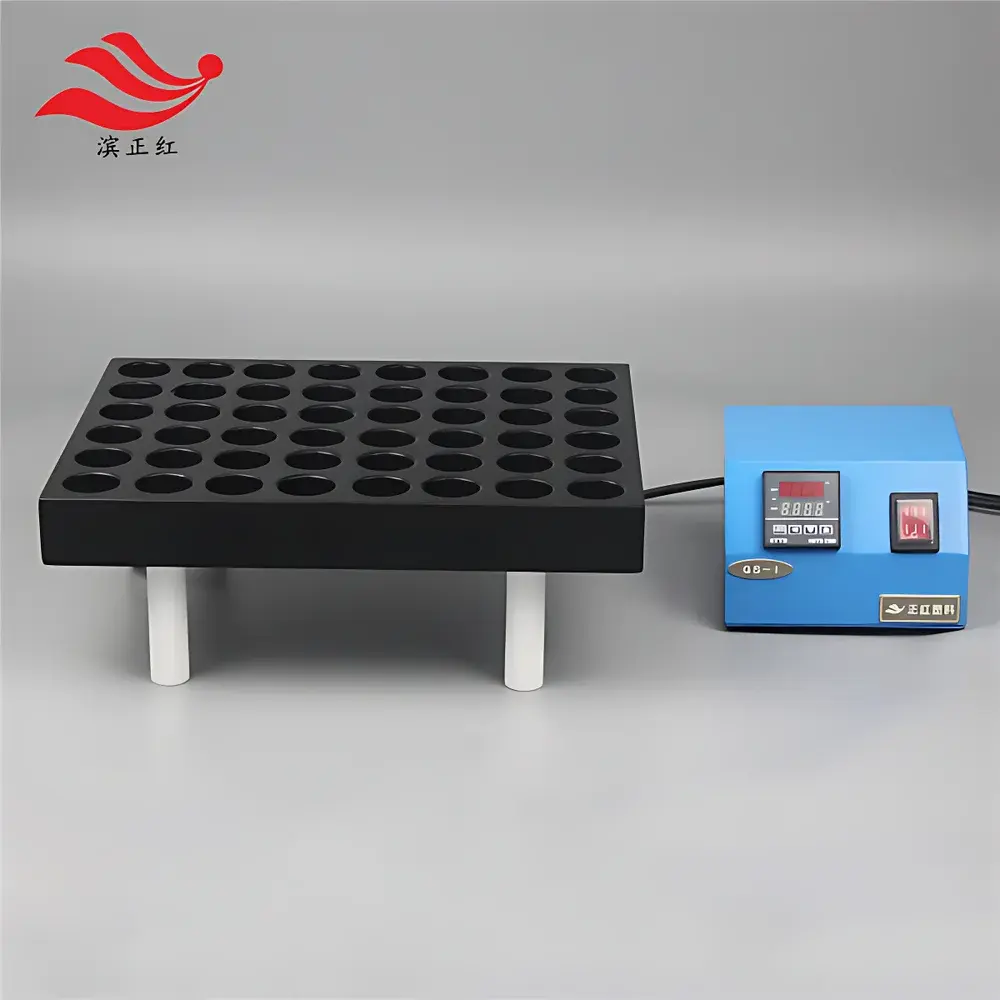
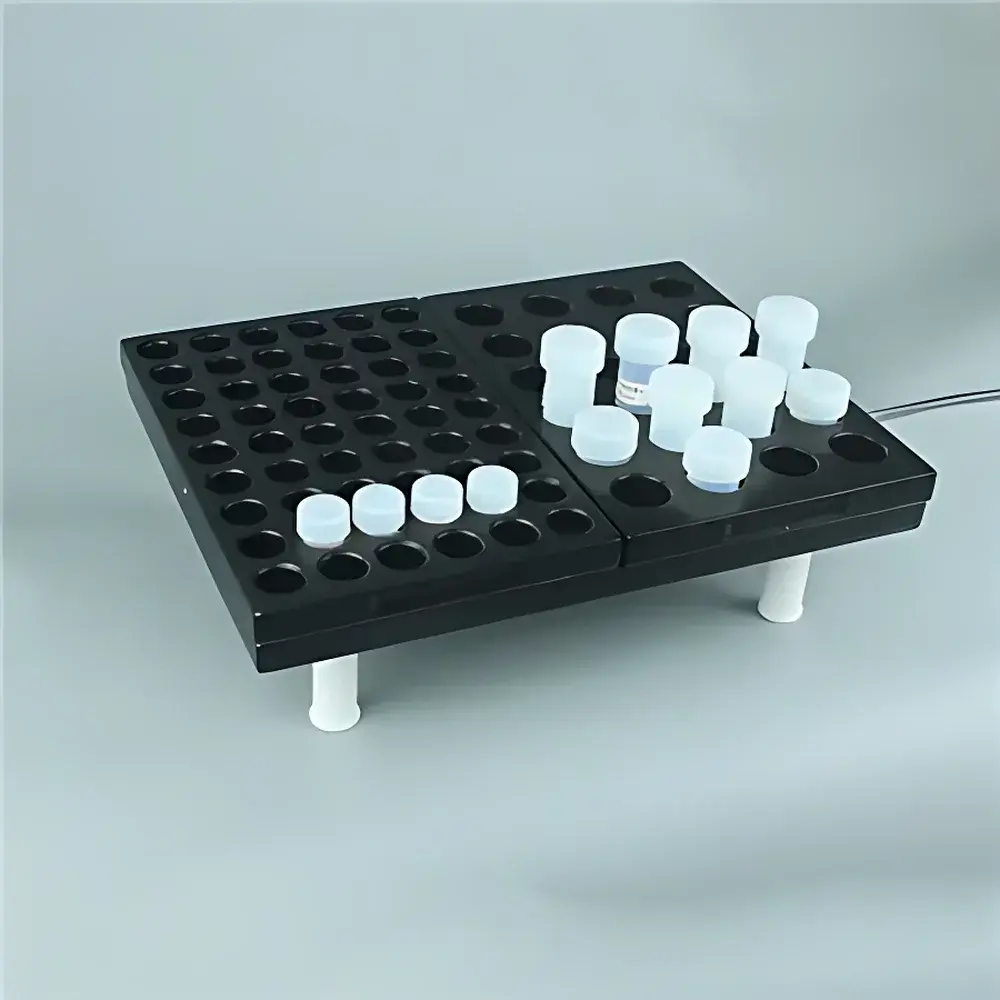
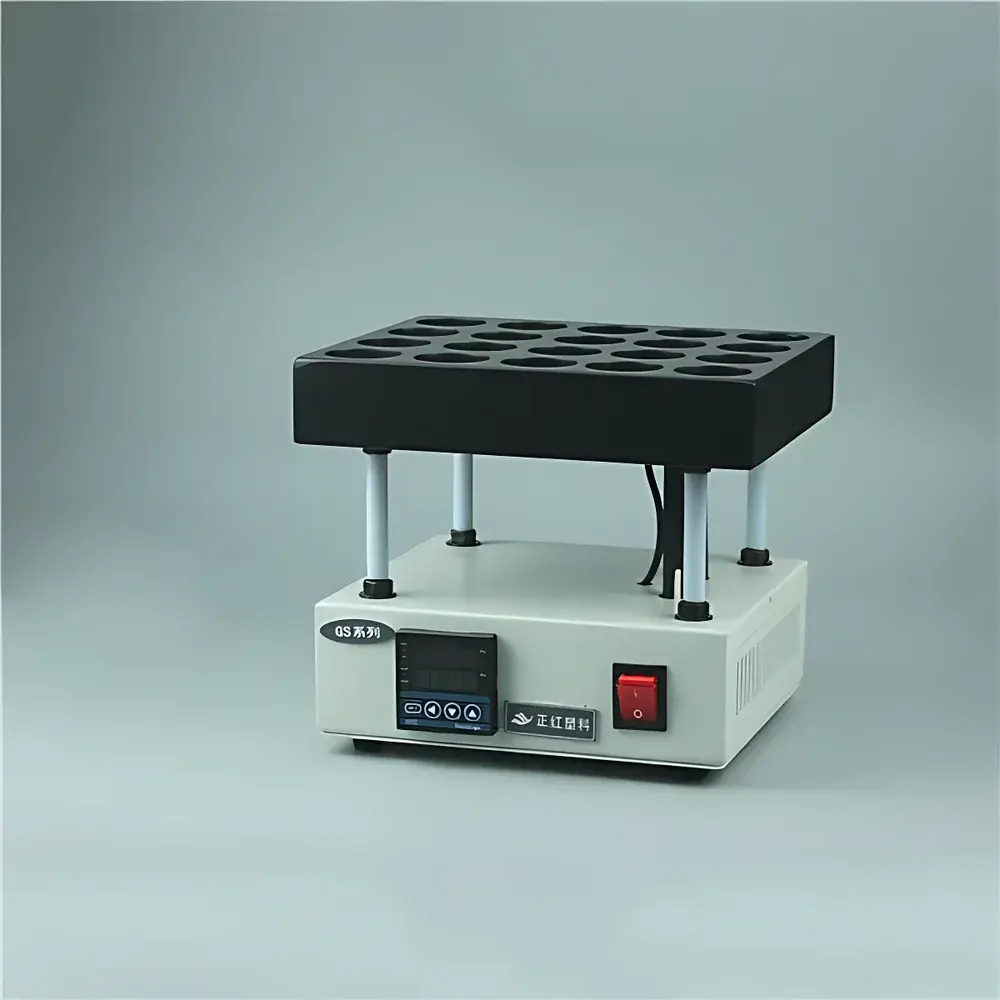
Binzhenghong XJ-Series Temperature-Controlled Multi-Function Digital Digestion Block with Acid Evaporation Capability
| Brand | Binzhenghong |
|---|---|
| Origin | Jiangsu, China |
| Manufacturer Type | Direct Manufacturer |
| Country of Origin | China |
| Model | XJ-Series Digestion Block |
| Instrument Type | 升降炉 (Lift-Type Heating Block) |
| Max Operating Temperature | 260 °C |
| Temperature Control Accuracy | ±1 °C |
| Heating Method | 360° Circumferential Heating |
| Surface Coating | PTFE (Teflon®) |
| Heating Plate Material | Precision Anodized Aluminum Alloy |
| Rated Voltage | 220 V AC |
| Continuous Operation Time | ≥48 h |
| Ramp Time to 200 °C | ≤30 min (dependent on sample volume and vessel depth) |
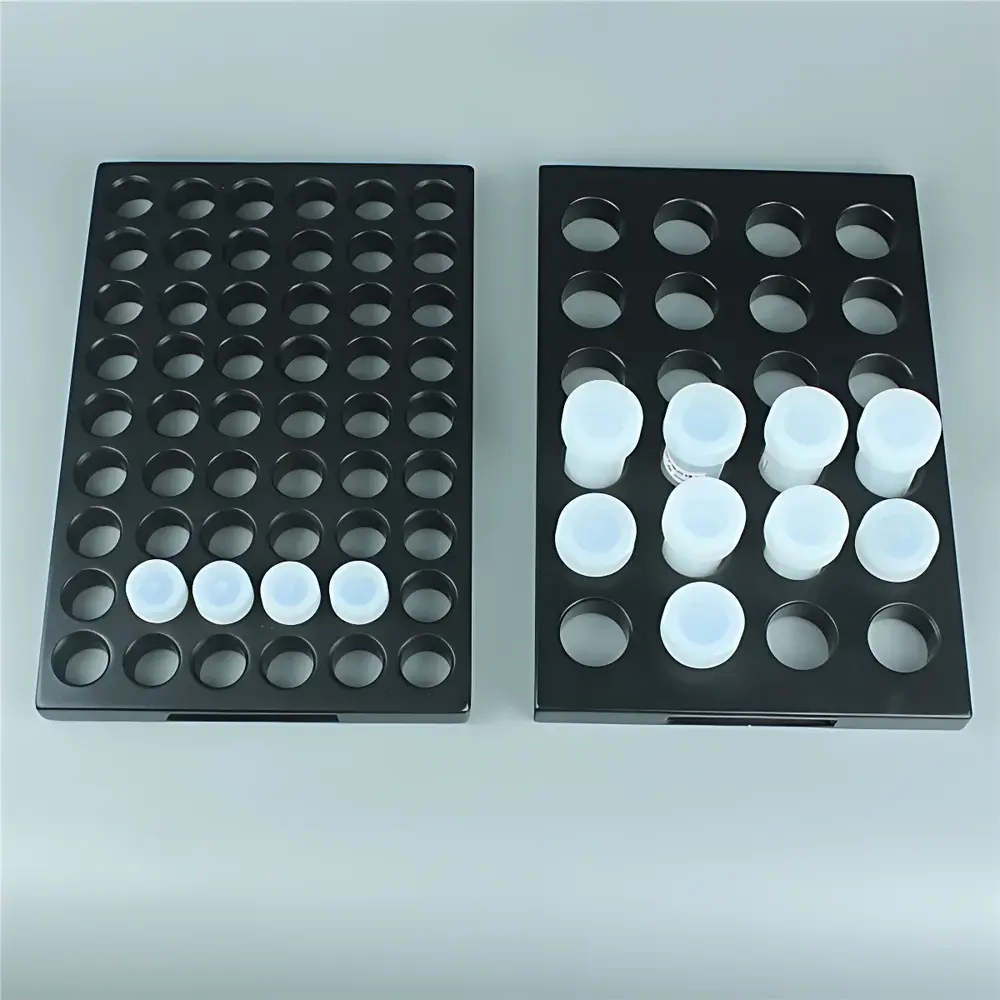
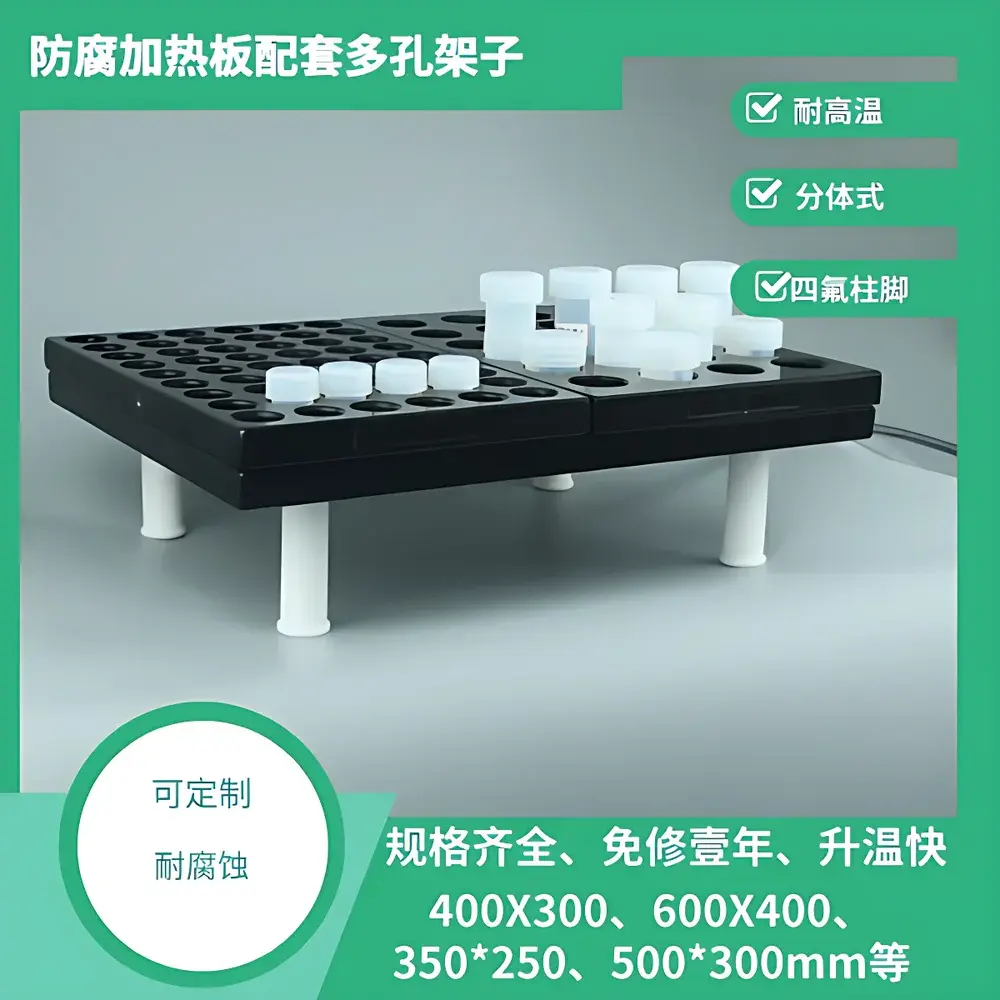
| Customizable Well Configuration | 12–72 positions, with adjustable well diameter and depth |
| Optional Features | Programmable Ramp/Soak Temperature Profiles, Timer-Based Auto-Shutdown, Detachable Control Module with PFA-Sheathed Wiring |
Overview
The Binzhenghong XJ-Series Temperature-Controlled Multi-Function Digital Digestion Block is an engineered solution for post-digestion acid evaporation (commonly referred to as “acid removal” or “acid fuming”) and controlled thermal processing of samples following microwave-assisted or high-pressure closed-vessel digestion. Designed for rigorous laboratory environments, it operates on the principle of uniform, circumferential resistive heating—ensuring consistent thermal transfer to digestion vessels from the base and lateral surfaces simultaneously. Unlike conventional flat-surface hot plates or single-point heated blocks, this system eliminates thermal gradients across wells by enveloping each sample tube in a 360° heated zone, thereby minimizing inter-well temperature deviation (<±0.8 °C at 200 °C) and eliminating cold spots that compromise digestion completeness or analyte recovery. Its operational range spans ambient temperature to 260 °C, supporting HNO₃, HCl, HF, and H₂O₂-based protocols used prior to elemental analysis by ICP-OES, ICP-MS, AAS, and HG-AFS.
Key Features
- PTFE-coated aluminum alloy heating surface—chemically inert, non-stick, and resistant to aggressive mineral acids including hydrofluoric acid under standard operating conditions
- High-reproducibility PID digital temperature control with ±1 °C accuracy across full range (RT–260 °C), validated per ASTM E220 and ISO/IEC 17025 calibration traceability requirements
- Circumferential heating architecture ensures radial and axial thermal symmetry—critical for achieving uniform matrix decomposition and preventing premature analyte volatilization
- Detachable control module with fully PFA-insulated wiring harness—prevents acid vapor ingress into electronics, extending service life and supporting GLP-compliant maintenance logs
- Programmable multi-step temperature ramping (optional): enables method-defined heating profiles (e.g., 95 °C → hold 30 min → ramp to 160 °C → hold 20 min), compatible with USP and EPA Method 3050B workflows
- Robust mechanical design rated for uninterrupted operation up to 48 hours—validated under continuous load at 220 V, 50 Hz with thermal cutoff and audible alarm redundancy
Sample Compatibility & Compliance
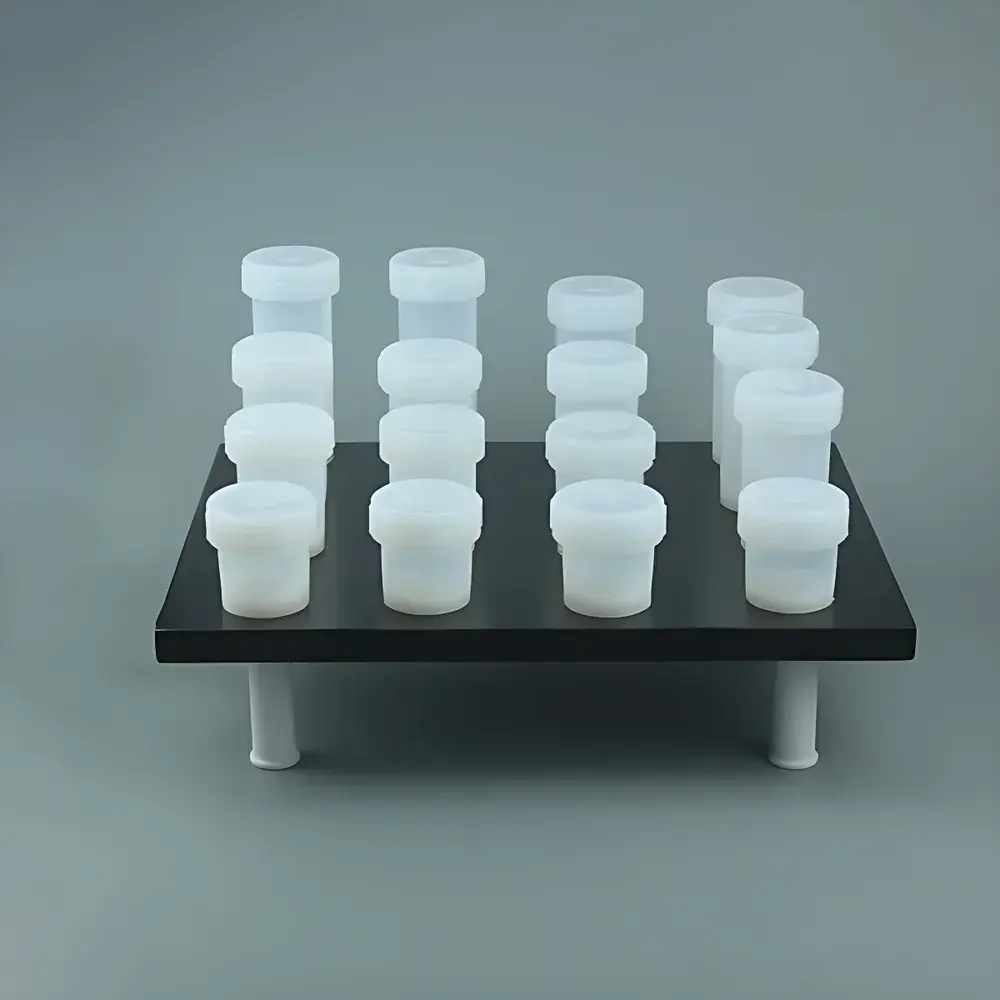
The XJ-Series accommodates standard borosilicate glass, quartz, and PTFE digestion tubes (e.g., SCP Science, Milestone, Anton Paar formats) with customizable well diameters (12–32 mm) and depths (up to 150 mm). All configurations maintain strict dimensional repeatability (±0.15 mm tolerance) to ensure secure vessel seating and optimal heat coupling. The system complies with IEC 61010-1:2010 for electrical safety in laboratory equipment and meets CE marking requirements for electromagnetic compatibility (EN 61326-1). For regulated environments, optional audit-trail-enabled firmware supports 21 CFR Part 11–compliant electronic records when integrated with validated LIMS platforms.
Software & Data Management
While the base unit operates via front-panel LCD interface with real-time temperature display and setpoint adjustment, optional RS-485 or USB-C connectivity enables integration with laboratory informatics systems. Logged data—including actual vs. setpoint temperature, elapsed time, alarm events, and power-on cycles—is exportable in CSV format for QC review. Firmware supports user-defined method storage (up to 10 protocols), timestamped event logging, and password-protected parameter modification—facilitating adherence to ISO/IEC 17025 clause 7.7 (Control of Equipment) and internal SOP documentation.
Applications
This digestion block serves as a critical preparatory tool in accredited environmental labs performing EPA Methods 3050B, 3051A, and 3052; clinical toxicology labs applying CLIA-validated heavy metal extraction; food safety testing per AOAC 999.10 and GB 5009.12-2017; and geochemical laboratories executing ISO 11466 soil digestion protocols. It is routinely deployed after microwave digestion to remove residual nitric or hydrochloric acid prior to dilution and instrumental analysis—ensuring low blank values, improved precision (RSD <2.5% for triplicate Cd determinations in NIST SRM 2711a), and reduced instrument downtime due to polyatomic interference.
FAQ
What is the maximum recommended operating temperature for long-term use?
The system is rated for continuous operation at 260 °C; however, for optimal heater longevity and coating stability, sustained use above 220 °C is limited to ≤4 hours per cycle.
Can the unit be validated for GMP/GLP compliance?
Yes—when equipped with optional data-logging firmware and calibrated using NIST-traceable thermocouples, it supports IQ/OQ/PQ documentation per Annex 15 and FDA guidance on laboratory equipment qualification.
Is HF-compatible digestion possible?
The PTFE-coated surface and PFA-sheathed wiring are resistant to diluted HF (≤5% v/v); however, extended exposure to concentrated HF (>20%) requires supplemental quartz shielding and is not covered under standard warranty.
How is inter-well temperature uniformity verified?
Uniformity is measured per ASTM E220 Annex A3 using nine calibrated Type-K thermocouples placed at defined radial and axial locations within representative wells; results are supplied with each unit’s factory calibration certificate.
Does the system support external temperature feedback control?
Not natively—but third-party PT100 probes can be interfaced via analog input modules (sold separately) for external loop control in custom automation setups.



