
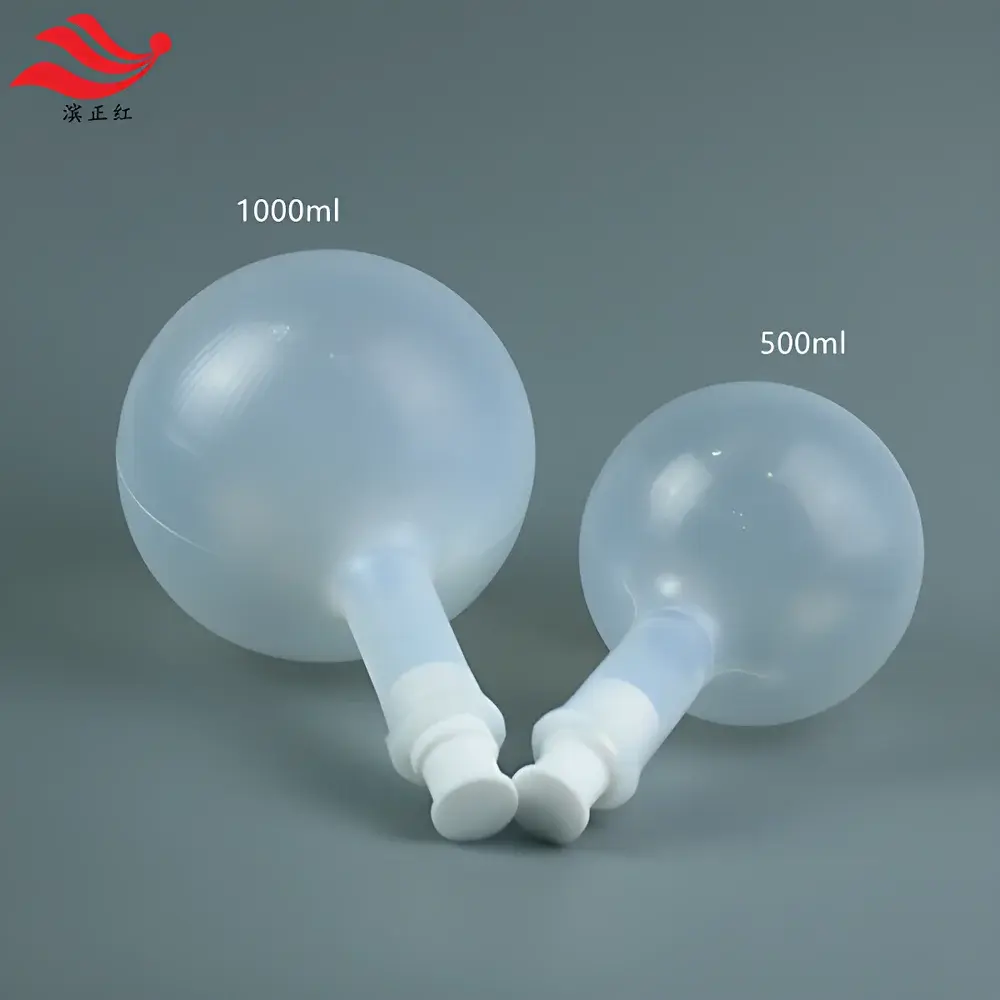
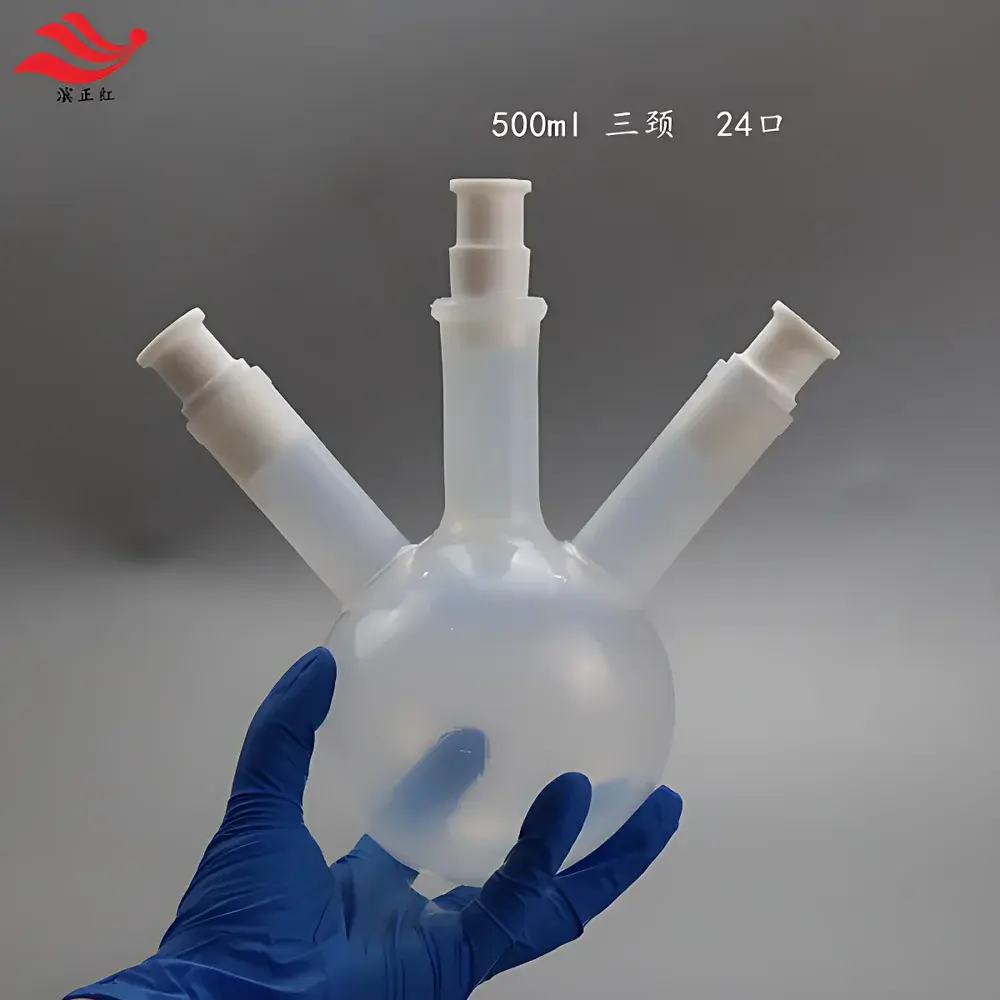
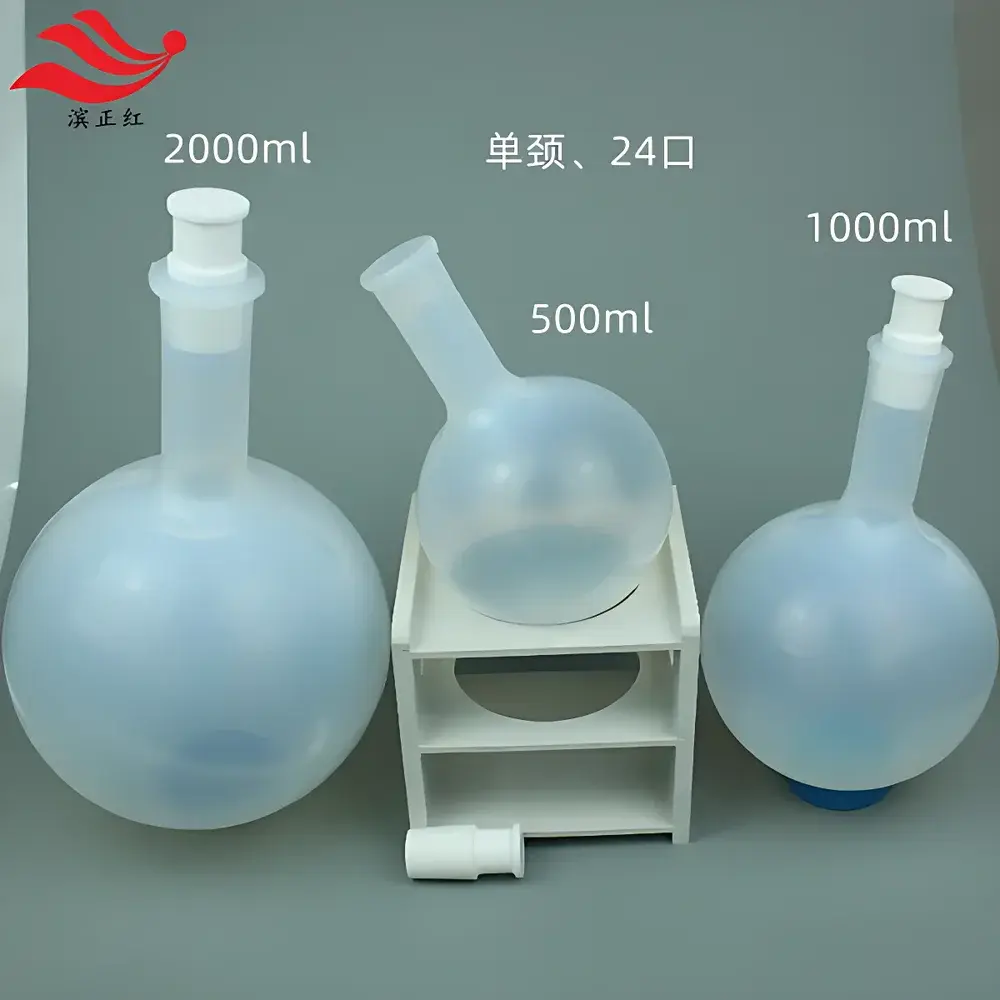
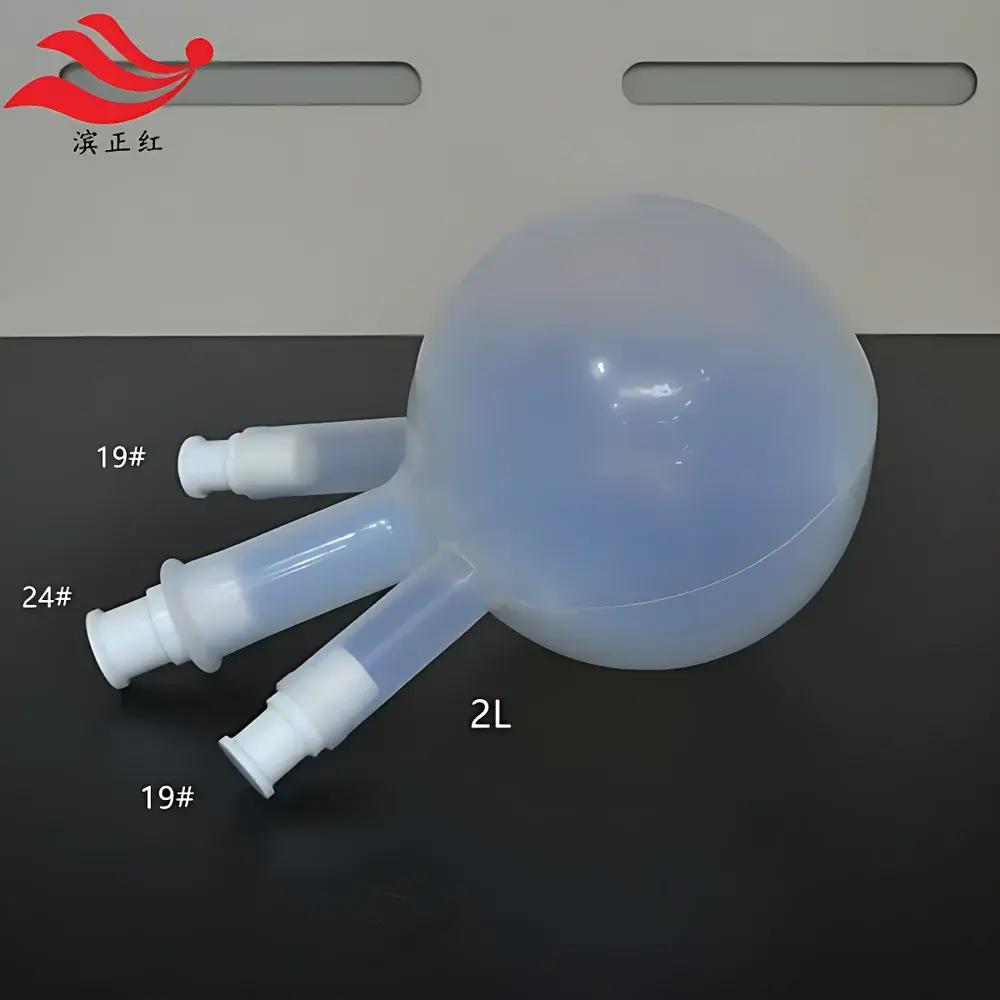
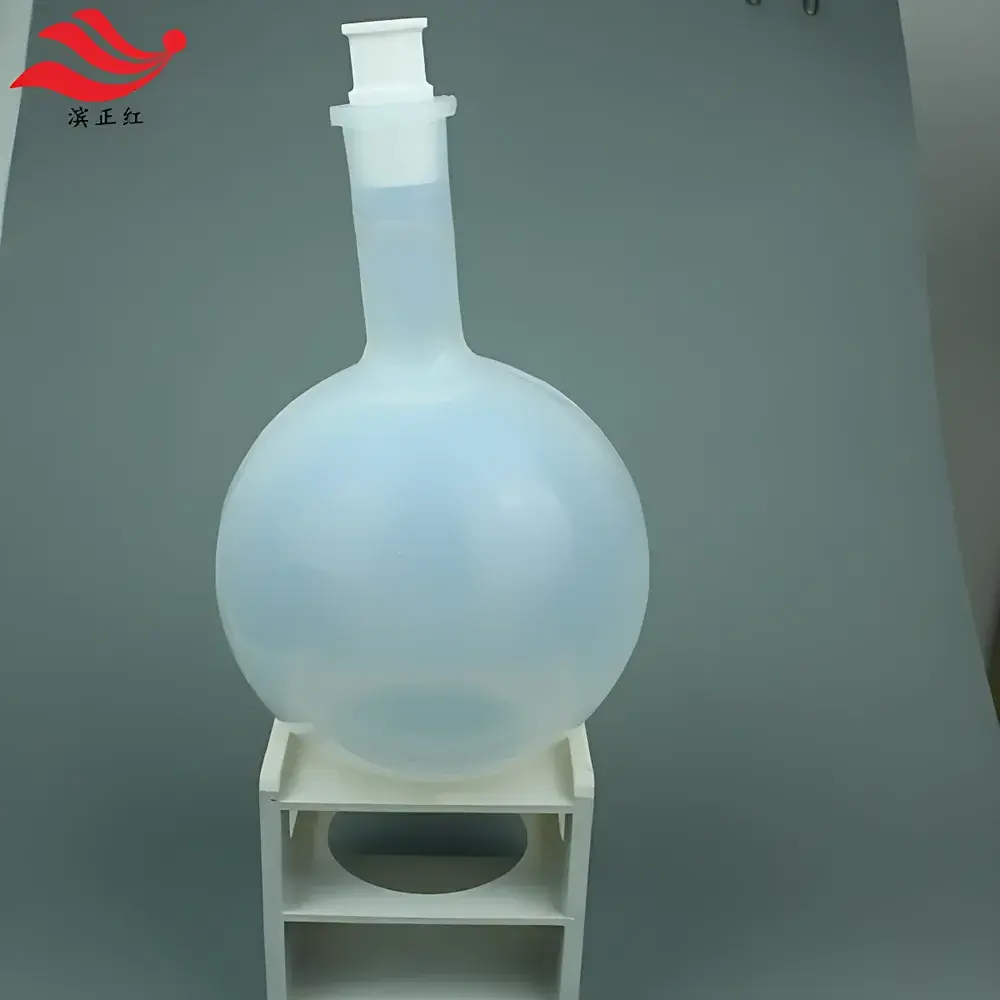
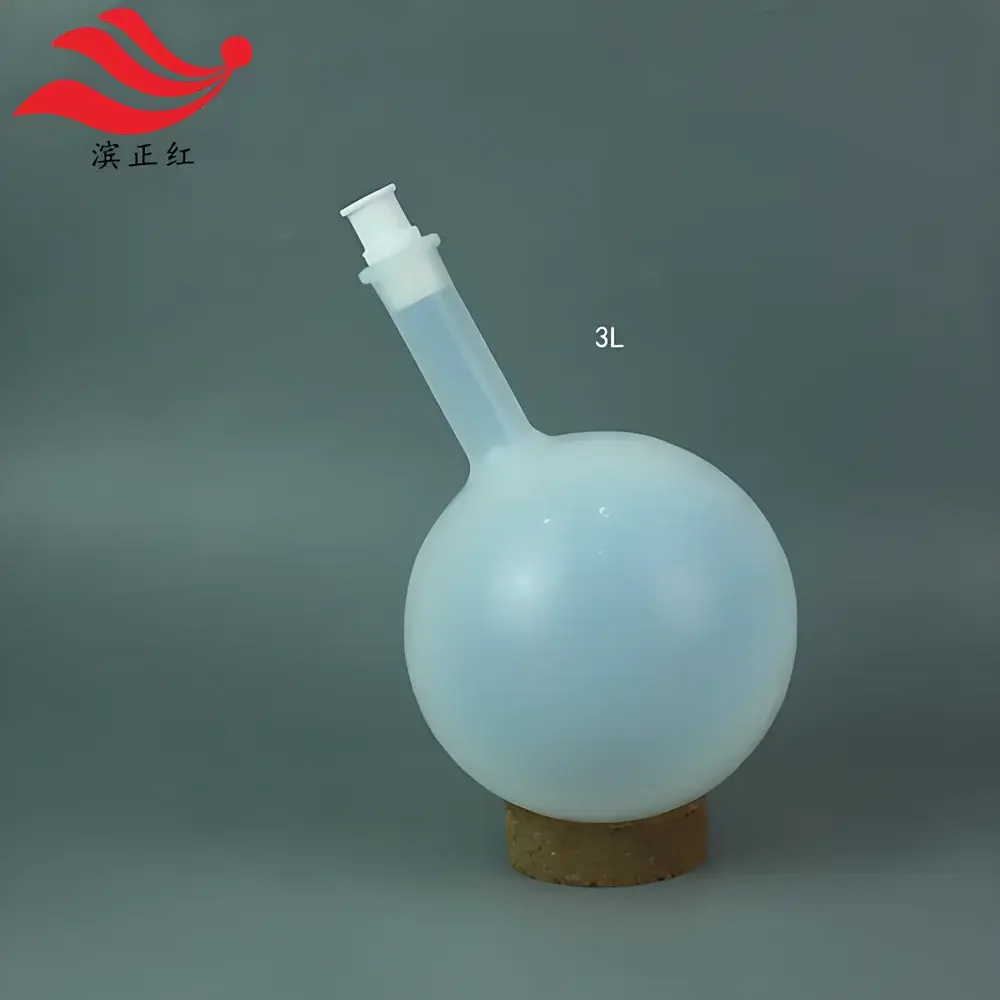
PFA Single-Neck & Multi-Neck Reaction Vessel
| Brand | Binzhenghong |
|---|---|
| Origin | Jiangsu, China |
| Manufacturer Type | Direct Producer |
| Product Category | Domestic Laboratory Equipment |
| Capacity Options | 250 mL, 500 mL, 1000 mL, 2000 mL |
| Neck Configurations | Single-neck, Two-neck, Three-neck, Four-neck |
Overview
The Binzhenghong PFA Single-Neck and Multi-Neck Reaction Vessel is a high-purity, chemically inert laboratory vessel engineered for demanding synthetic, analytical, and process-scale applications where resistance to aggressive reagents, thermal stability, and ultra-low extractables are critical. Constructed entirely from premium-grade perfluoroalkoxy alkane (PFA), these vessels exhibit exceptional transparency—enabling real-time visual monitoring of reaction progress—while maintaining full compliance with USP Class VI and ASTM D3307 standards for fluoropolymer purity and biocompatibility. Unlike glass or standard PTFE, PFA offers superior melt-processability, allowing seamless fabrication of complex neck configurations without compromising wall integrity or dimensional accuracy. These vessels operate reliably across a continuous temperature range of –200 °C to +260 °C and withstand repeated autoclaving (121 °C, 15 psi) without hazing, cracking, or leaching. Their design supports both atmospheric and controlled-pressure environments when paired with compatible PFA or Kalrez-sealed caps and adapters.
Key Features
- Full-body PFA construction ensures zero metal ion contamination and negligible organic extractables—validated per ICH Q3D and USP / cytotoxicity testing protocols
- Optical clarity equivalent to borosilicate glass (transmittance >90% at 400–800 nm), facilitating endpoint detection, colorimetric analysis, and in-situ spectroscopic observation
- Precision-molded necks with standardized ISO-KF (QF) or NPT thread interfaces (10/12 mm, 14/20 mm, 24/29 mm) ensure leak-tight integration with condensers, thermowells, gas inlets, and mechanical stirrers
- Uniform wall thickness (±0.15 mm tolerance) minimizes thermal stress during rapid heating/cooling cycles and supports consistent microwave-assisted synthesis
- Autoclavable, gamma-sterilizable, and compatible with ultrasonic cleaning—fully compliant with ISO 13485 cleanroom handling requirements
Sample Compatibility & Compliance
These vessels are routinely employed in trace-metal analysis (ICP-MS, ICP-OES), HF-based etching, lithium battery electrolyte formulation, and pharmaceutical intermediate synthesis involving anhydrous AlCl₃, oleum, molten alkali metals, and concentrated HNO₃/HF mixtures. All units undergo batch-certified extractables testing per ASTM D5965 and are supplied with CoA (Certificate of Analysis) documenting residual catalyst metals (Fe, Ni, Cr < 1 ppb), fluorinated monomer content (< 5 ppm), and non-volatile residue (< 0.1 mg/L). The design conforms to GLP documentation requirements for vessel traceability (batch ID laser-etched on base) and supports 21 CFR Part 11–compliant electronic lab notebook (ELN) integration via optional RFID tagging.
Software & Data Management
While inherently hardware-only, the Binzhenghong PFA reaction vessels are fully interoperable with third-party process monitoring systems—including Mettler Toledo EasyMax/RC1e, ChemSpeed AutoMate, and Thermo Fisher Orion Star Titrator platforms—via standardized DIN 12575 mounting flanges and pressure-rated PFA tubing manifolds. Vessel geometry data (neck spacing, centerline offsets, volume calibration curves) are provided in STEP and IGES formats for CAD-based reactor modeling and CFD simulation (ANSYS Fluent, COMSOL Multiphysics). Calibration certificates include gravimetric volume verification per ISO/IEC 17025-accredited methodology at 20 °C, traceable to NIM (National Institute of Metrology, China).
Applications
- High-purity hydrometallurgical leaching of rare-earth oxides under reflux conditions
- Synthesis of air-sensitive organolithium reagents under inert atmosphere (Ar/N₂ glovebox integration)
- Accelerated solvent extraction (ASE) of persistent organic pollutants (POPs) from soil matrices using dichloromethane or acetone at 100 °C
- In-line pH and conductivity monitoring during continuous-flow crystallization of monoclonal antibody formulations
- Photochemical reactions requiring UV-A (315–400 nm) transmission without quartz-cost premium
FAQ
Can these PFA vessels be used under vacuum or positive pressure?
Yes—they are rated for continuous operation from 0.01 mbar to 6 bar(g) when fitted with PFA-reinforced diaphragm seals and torque-calibrated caps.
Is volume calibration certified per ISO 1042?
Gravimetric calibration is performed per ISO/IEC 17025 requirements; however, ISO 1042 applies specifically to volumetric glassware—PFA vessels follow ASTM D2500 for polymer labware certification.
Do you offer custom neck configurations or port drilling?
Yes—custom ISO-KF, Swagelok, or Camlock port layouts, side-arm orientations, and integrated Pt100 sensor sleeves are available under NDA with lead times of 4–6 weeks.
How does PFA compare to FEP or ETFE for high-temperature reflux?
PFA maintains tensile strength above 200 °C where FEP softens significantly; ETFE exhibits higher stiffness but lower chemical resistance to strong oxidizers—making PFA the optimal balance for prolonged reflux applications.
Are replacement caps and septa available separately?
Yes—PFA-coated aluminum caps with Viton-free PFA diaphragms and pre-slit silicone/PFA composite septa are stocked in all standard thread sizes and shipped with endotoxin-free packaging.



