
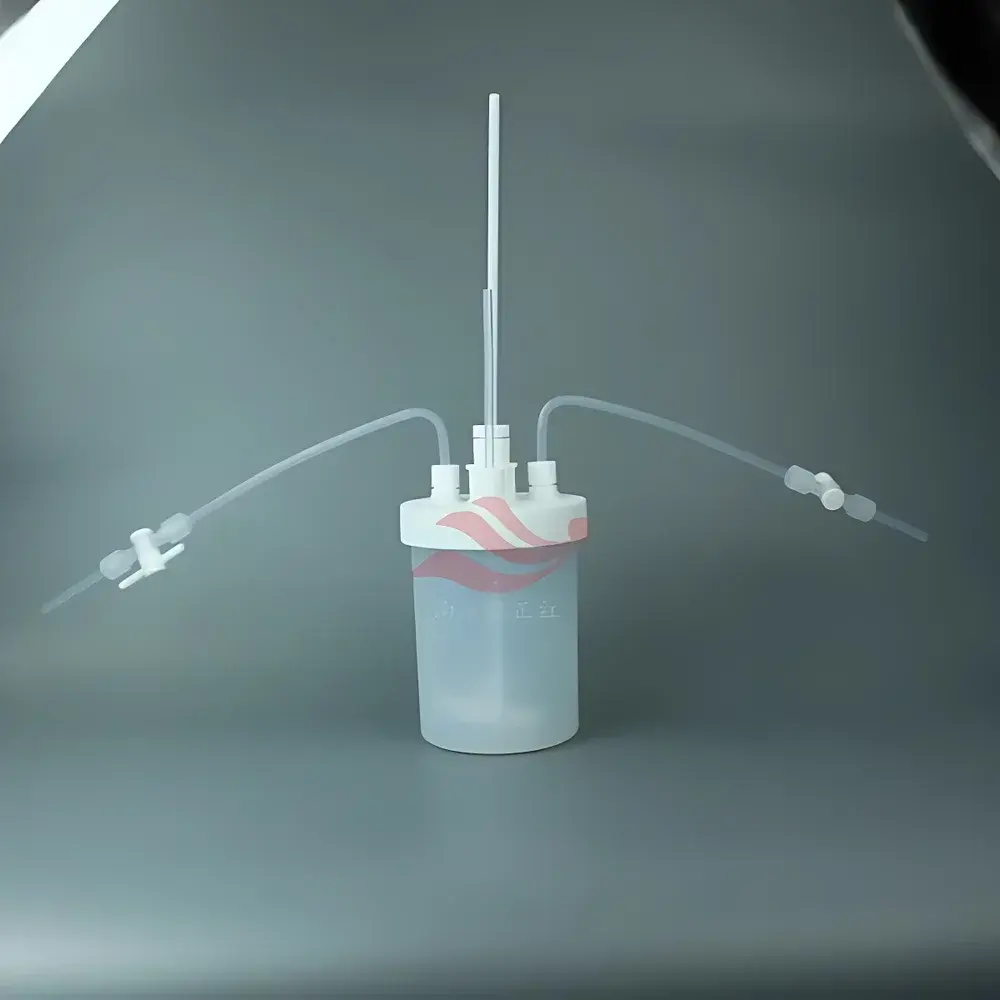
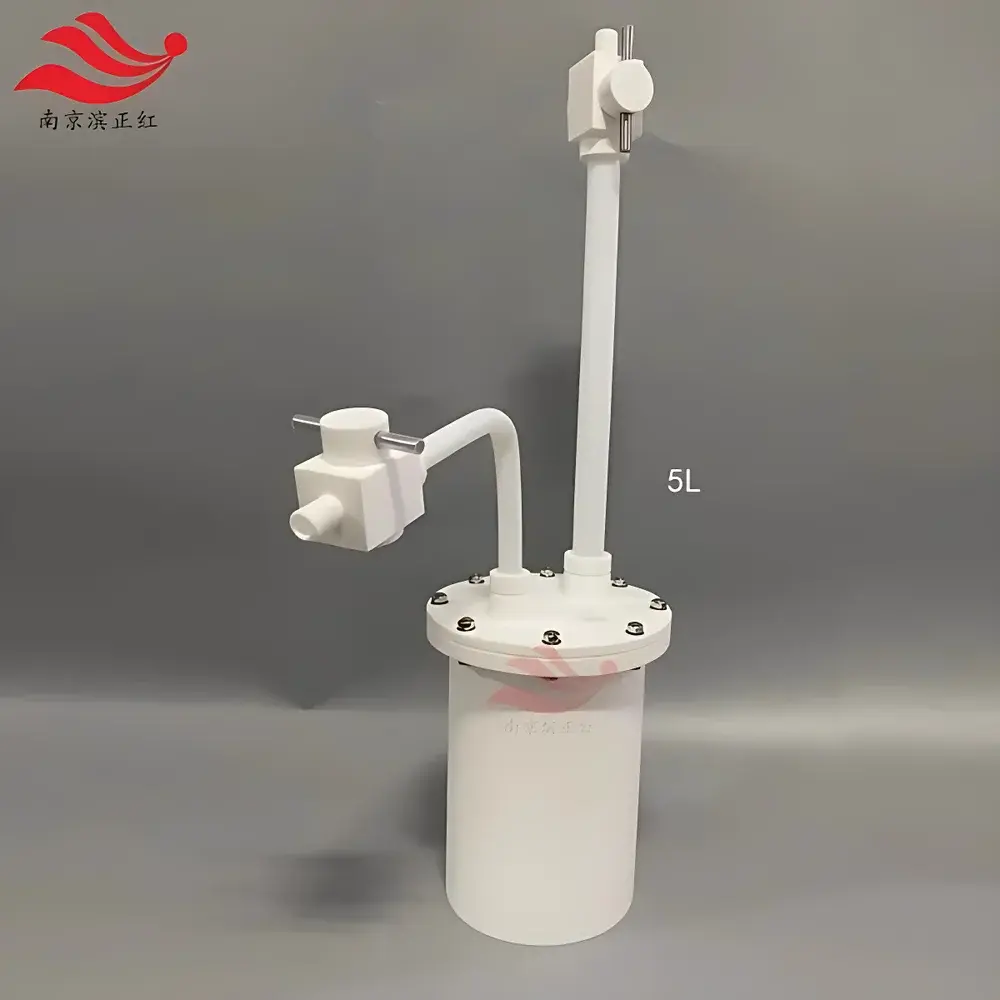
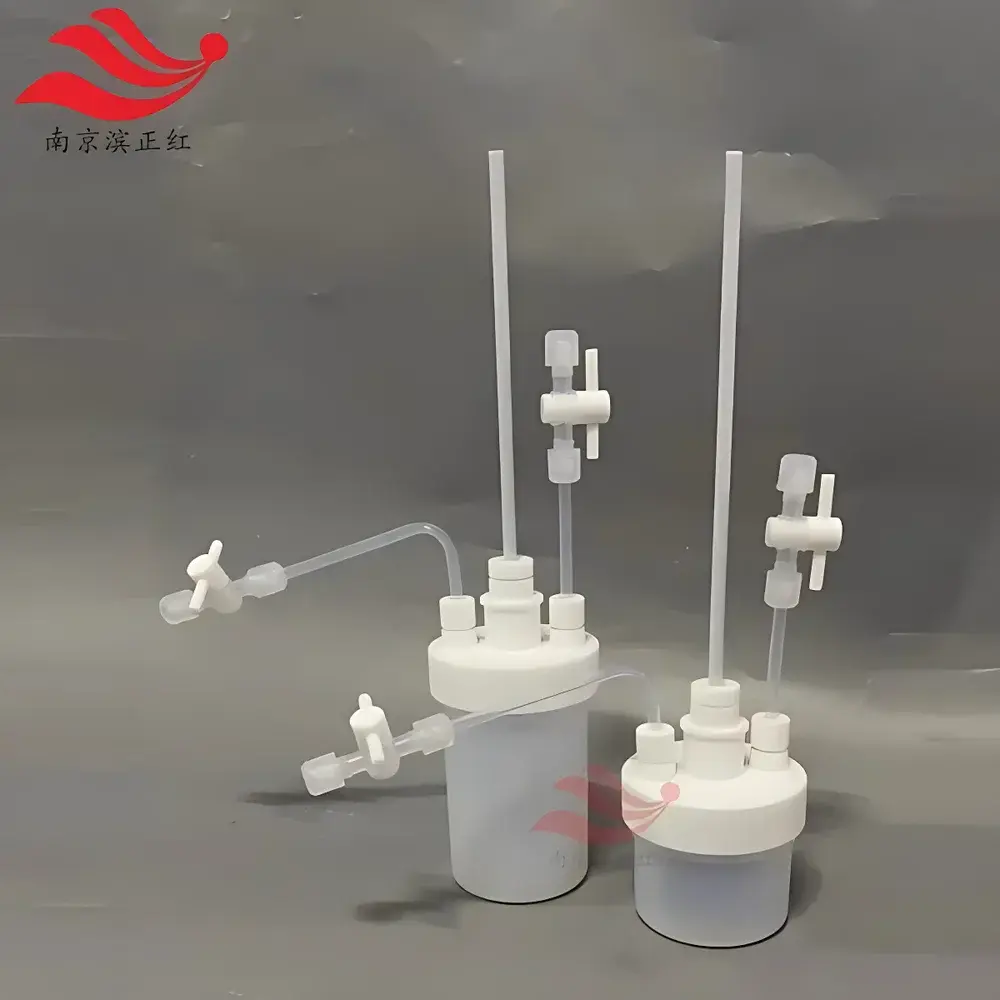
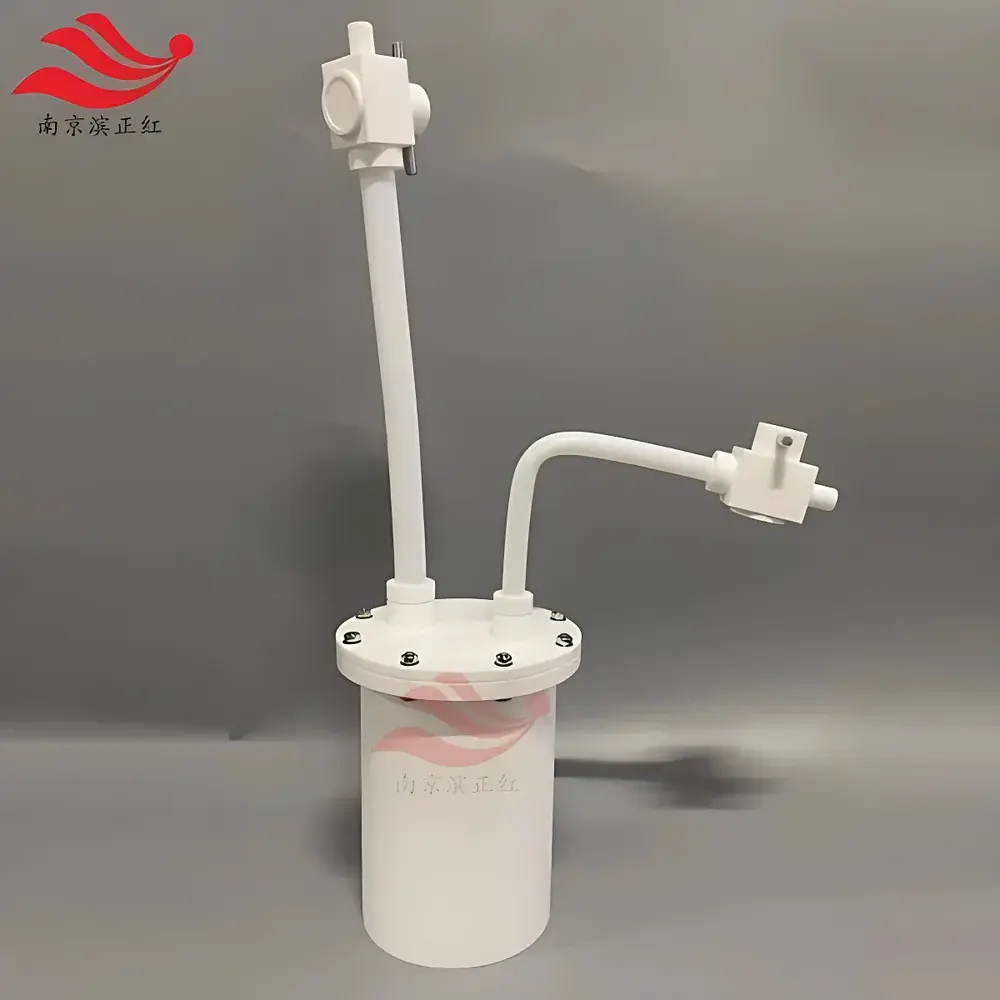
PTFE Custom 5L Three-Neck Evaporation Flask with Flanged Sealing and Integrated Valve
| Brand | Binzhenghong |
|---|---|
| Origin | Jiangsu, China |
| Manufacturer Type | Direct Producer |
| Model | Custom 5L |
| Pricing | Available Upon Request |
Overview
The PTFE Custom 5L Three-Neck Evaporation Flask is a high-purity, chemically inert laboratory reactor engineered for demanding synthetic, purification, and solvent recovery applications under corrosive or high-temperature conditions. Constructed entirely from premium-grade polytetrafluoroethylene (PTFE), this vessel leverages the material’s exceptional resistance to strong acids (e.g., HF, aqua regia), alkalis, oxidizers, and organic solvents—even at elevated temperatures up to 260 °C. Its flanged sealing design ensures leak-tight integrity under vacuum (down to <1 mbar) and mild positive pressure (<0.3 bar), eliminating reliance on elastomeric gaskets that degrade or leach contaminants. The three-neck configuration (standardized 24/40 or 29/32 ground glass joints, customizable upon order) enables simultaneous integration of condensers, thermometers, addition funnels, or gas inlets—supporting reflux, distillation, inert-atmosphere reactions, and controlled evaporation protocols.
Key Features
- Monolithic PTFE construction—no metal reinforcement, adhesives, or composite layers—ensuring zero metal ion contamination and full compliance with trace-metal-sensitive workflows (e.g., semiconductor wafer cleaning, ultra-trace elemental analysis).
- Flanged, bolted sealing system with machined PTFE gasket interface—designed for repeatable torque-controlled assembly and long-term dimensional stability without cold flow creep.
- Integrated PTFE ball valve (standard 6 mm bore, optional 8 mm or custom port geometry) mounted directly on the bottom outlet, enabling precise, drip-free discharge without disassembly.
- Customizable neck geometry, joint size (ISO/DIN or ASTM-standard taper), and accessory ports—including side-arm vapor outlets, thermowell sleeves, or pressure-equalization vents.
- Electropolished internal surface finish (Ra < 0.4 µm) minimizes residue adhesion and facilitates complete solvent recovery and cleaning validation per GLP/GMP guidelines.
Sample Compatibility & Compliance
This reactor is compatible with all common laboratory solvents (acetone, THF, DMF, chlorinated hydrocarbons), aggressive reagents (oleum, fuming nitric acid, bromine), and high-boiling-point media (e.g., ethylene glycol, silicone oils). It meets ASTM D4897–22 requirements for fluoropolymer chemical resistance classification and conforms to ISO 10993–1 biocompatibility principles for non-leaching behavior. While not certified for ASME BPVC Section VIII Div. 1 pressure service, its design supports routine use under vacuum-assisted evaporation and nitrogen-purged synthesis environments compliant with OSHA 1910.1200 (Hazard Communication) and EU CLP Regulation (EC No. 1272/2008). Documentation includes material traceability certificates (ASTM D4897 test reports) and RoHS/REACH declarations.
Software & Data Management
As a passive, manually operated reactor, this PTFE flask does not incorporate embedded electronics, sensors, or digital interfaces. All operational parameters—including temperature (monitored externally via calibrated probe), pressure (measured using external vacuum gauge), and flow rate (controlled via external regulator)—are recorded manually or integrated into third-party lab information management systems (LIMS) or electronic lab notebooks (ELN) such as LabArchives or Benchling. The unit supports audit-trail-ready documentation when used within FDA 21 CFR Part 11–compliant workflows, provided external instrumentation and procedural controls are validated accordingly.
Applications
- Synthesis of air- and moisture-sensitive organometallic compounds under Schlenk-line or glovebox conditions.
- Acid digestion of geological or biological samples prior to ICP-MS analysis—eliminating borosilicate glass contamination risks.
- High-purity recrystallization of pharmaceutical intermediates where sodium or potassium leaching must be avoided.
- Vacuum concentration of corrosive extracts (e.g., fluorochemical process streams, electroplating bath reclaimants).
- Long-duration stability testing of battery electrolytes exposed to LiPF6-based formulations at elevated temperature.
FAQ
Can this flask be used with heating mantles or oil baths?
Yes—its uniform wall thickness (6–8 mm) and thermal stability permit direct contact with silicone oil baths (max 250 °C) and ceramic heating mantles; however, rapid thermal cycling should be avoided to prevent mechanical stress at joint interfaces.
Is sterilization by autoclaving supported?
No—autoclaving at 121 °C/15 psi exceeds PTFE’s recommended continuous-use limit and may induce irreversible deformation; dry-heat sterilization at ≤200 °C for ≤2 h is permissible.
What joint standards are available beyond 24/40?
Custom options include 14/20, 19/22, 29/32, DIN 19, and ISO K29—specify required taper and tolerance class (ISO 3585 Class A or B) at time of order.
Do you provide validation support for GMP environments?
Yes—material certifications, dimensional inspection reports, and cleaning validation templates (per USP ) can be supplied upon request for qualified users.



