
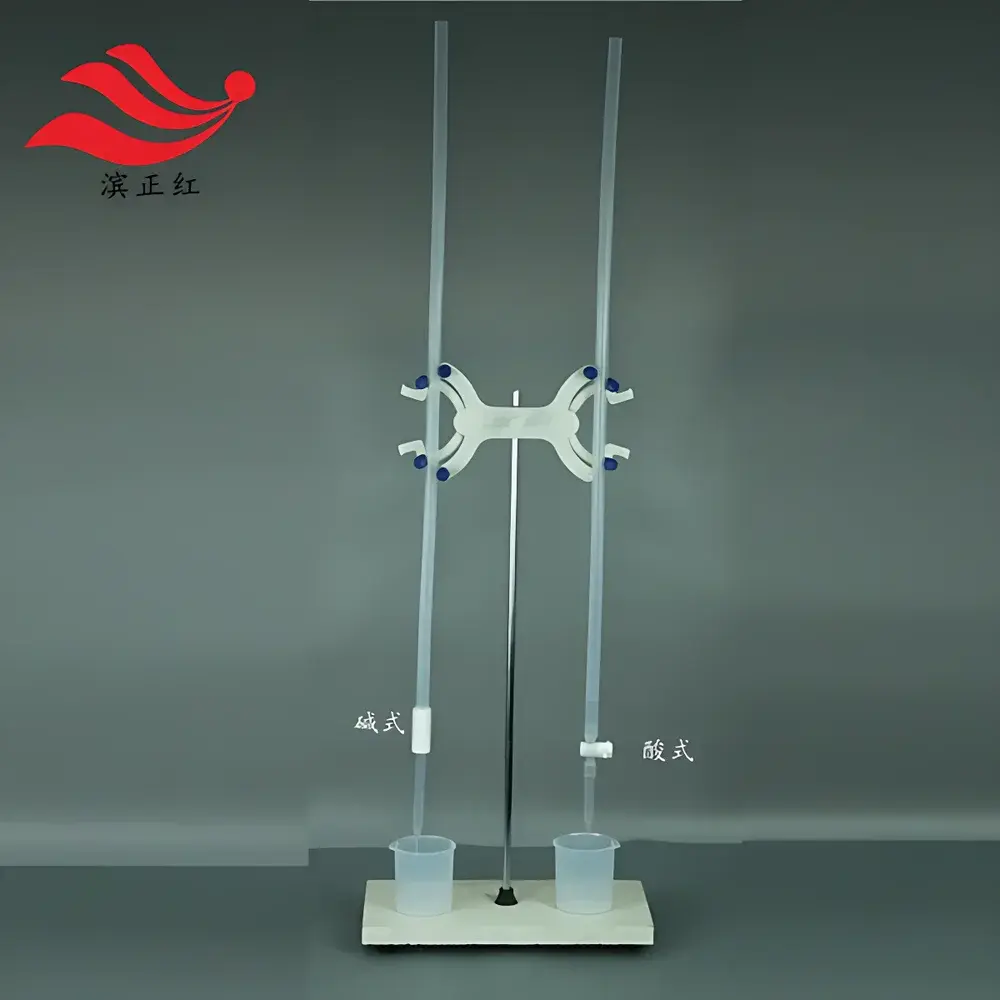
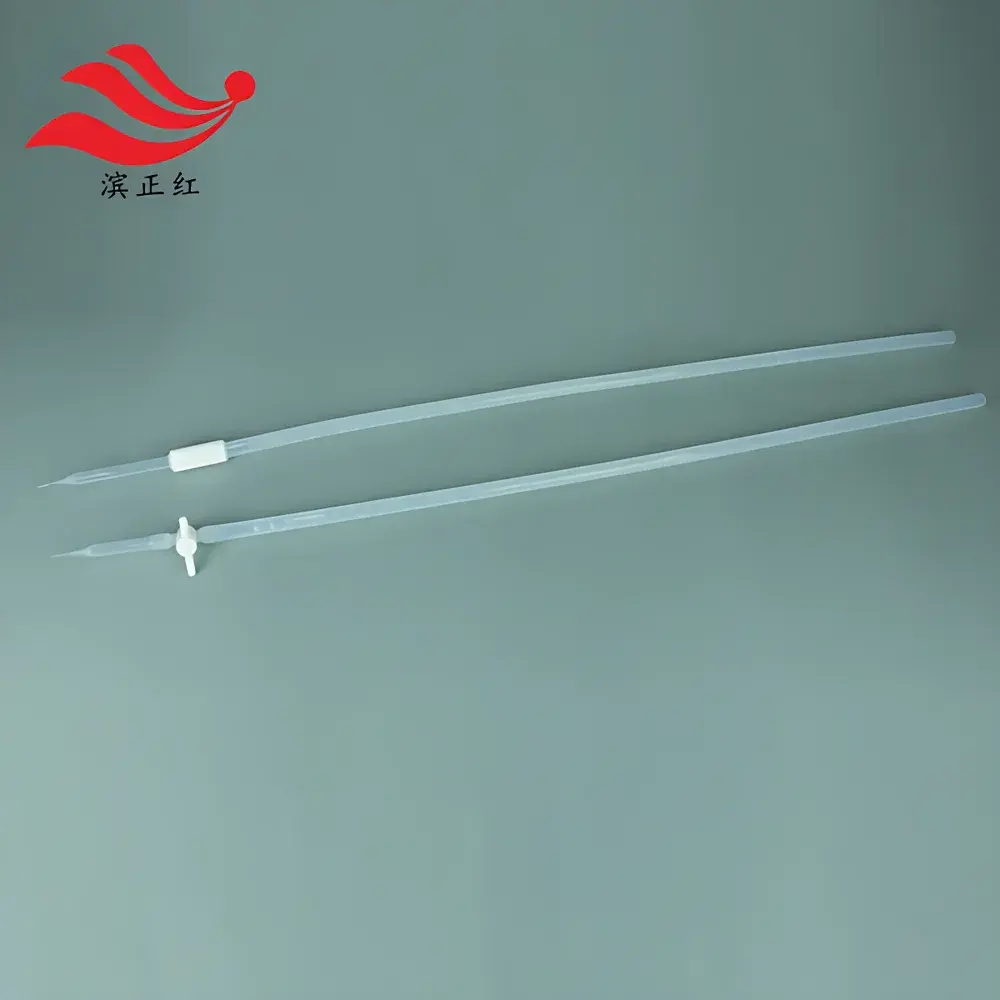
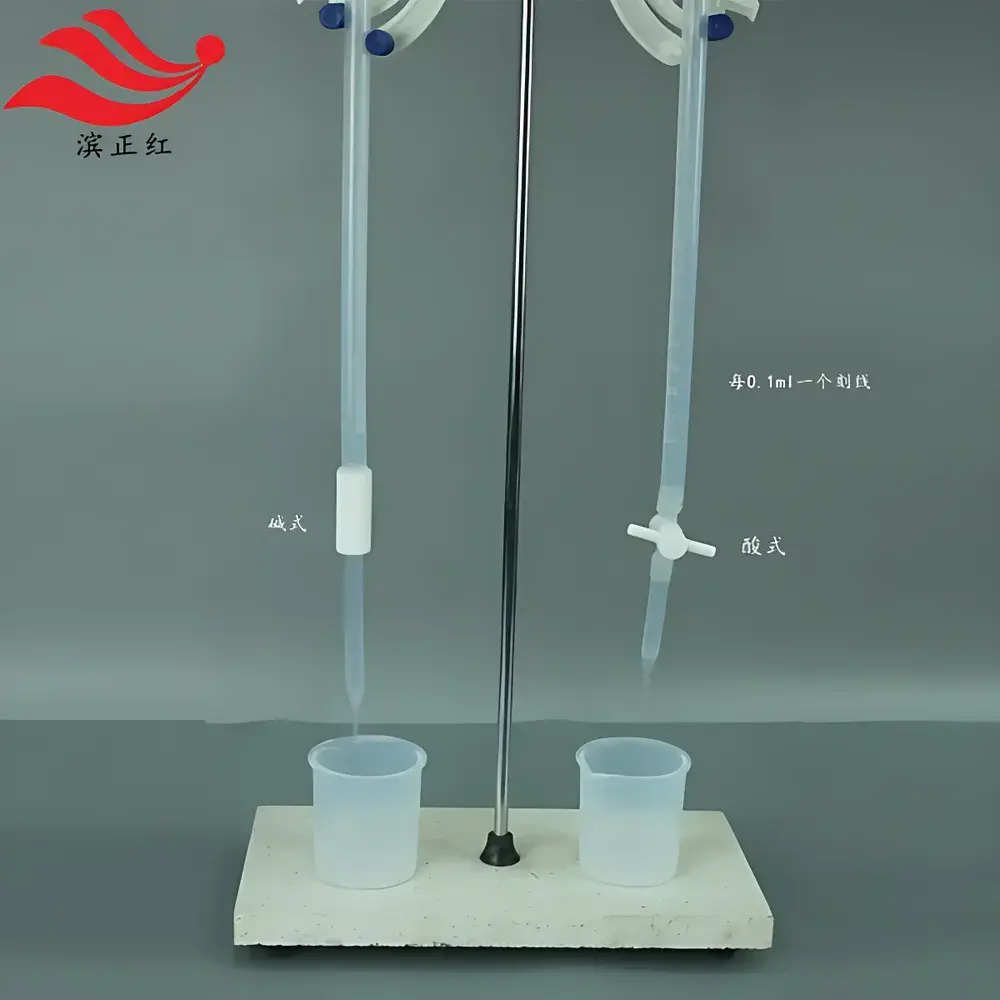
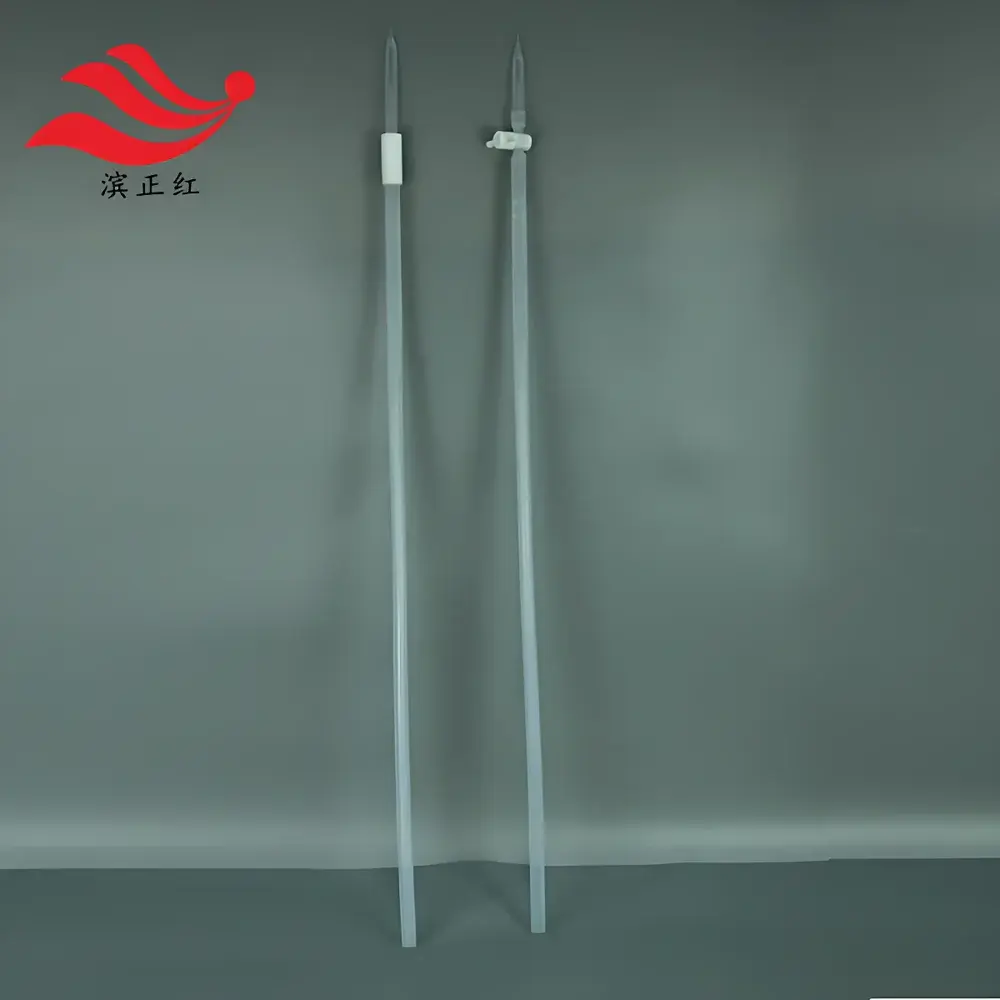
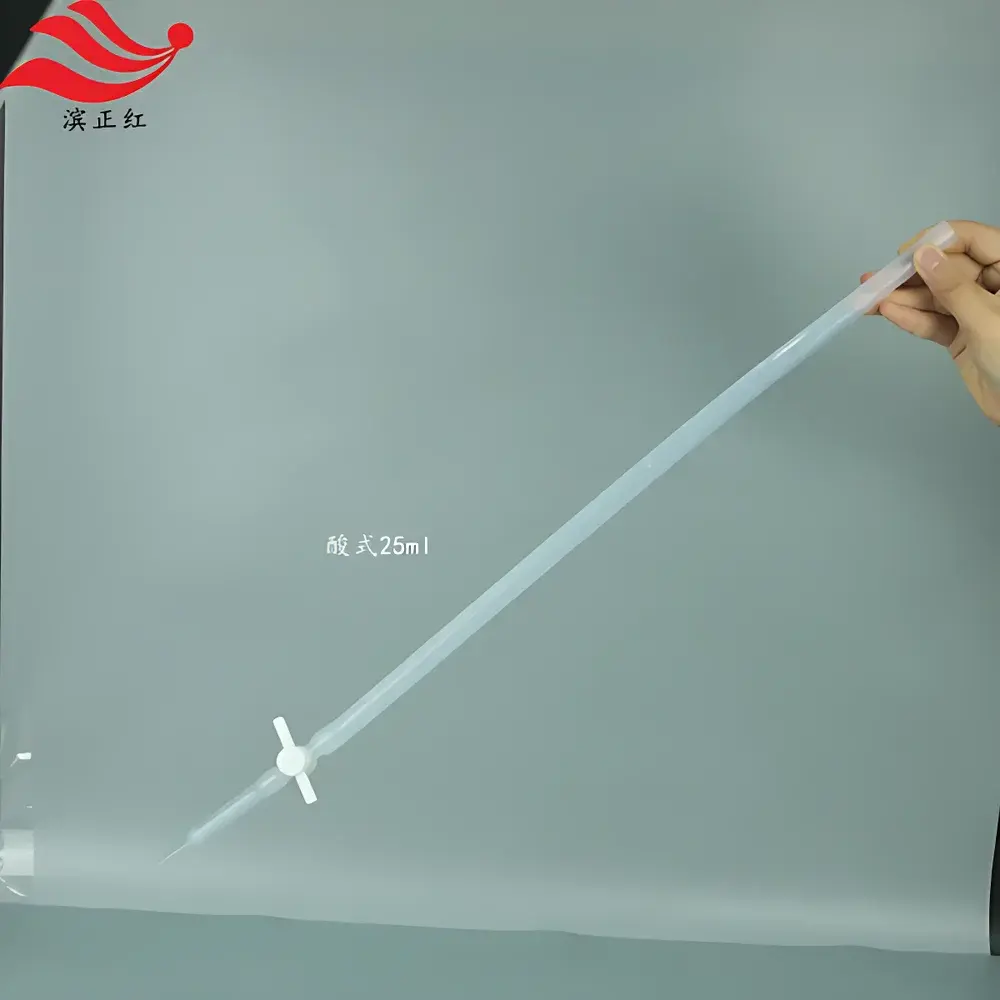
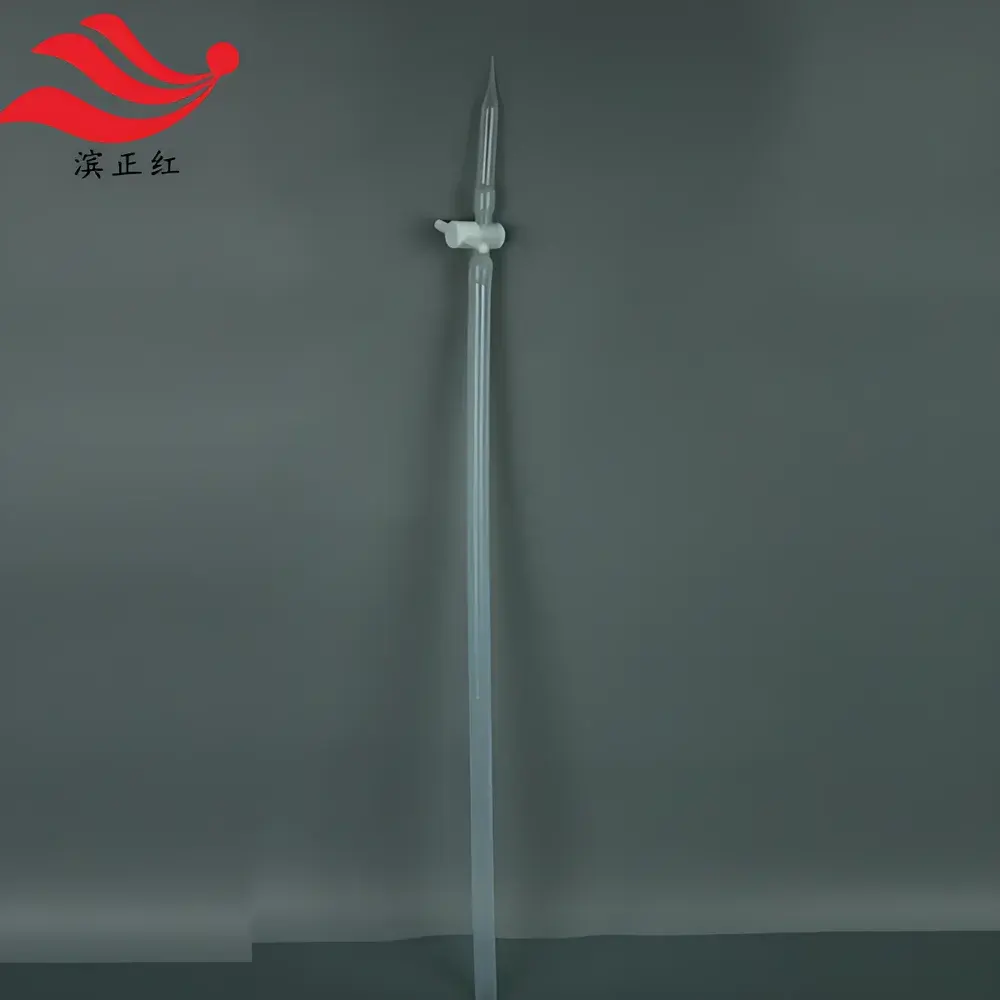
PFA Acid-Base Buret 50 mL with 0.1 mL Graduations
| Brand | Binzhenghong |
|---|---|
| Origin | Jiangsu, China |
| Manufacturer Type | Direct Producer |
| Model | Acid-Base 50 mL |
| Graduation Interval | 0.1 mL |
| Material | Perfluoroalkoxy (PFA) |
| Capacity | 50 mL |
| Configuration | Dual-Function (Acid & Base) |
| Compliance | Suitable for ISO/IEC 17025-compliant laboratories requiring inert fluid handling |
Overview
The Binzhenghong PFA Acid-Base Buret 50 mL is a dual-function volumetric dispensing instrument engineered for high-precision titration workflows in analytical chemistry laboratories. Constructed entirely from perfluoroalkoxy (PFA) resin—a fluoropolymer offering exceptional chemical resistance, thermal stability (−200 °C to +260 °C), and ultra-low extractables—the buret eliminates glass-related contamination risks and ensures compatibility with aggressive reagents including concentrated acids (e.g., HCl, HNO₃, HF), strong alkalis (e.g., NaOH, KOH), oxidizers (e.g., KMnO₄, H₂O₂), and organic solvents. Unlike conventional borosilicate glass or polypropylene burets, PFA provides non-stick surface properties and negligible ion leaching—critical for trace metal analysis, pharmaceutical assay validation, and electrochemical titrations where background interference must be minimized. The device operates on standard gravity-driven dispensing principles, with calibrated volume delivery verified per ISO 648 and ASTM E287 for Class A accuracy (±0.05 mL at 50 mL full scale). Its dual-function design integrates both acid-type stopcock (PTFE-tipped PFA valve) and base-type rubber bulb assembly (PFA-compatible elastomer), enabling seamless switching between acidic and alkaline titrants without cross-contamination.
Key Features
- Monolithic PFA construction ensures zero metal ion leaching and resistance to hydrofluoric acid, molten alkalis, and halogenated solvents—validated per ASTM D1600 and ISO 10993-12 for extractables profiling.
- Precision-engraved graduations at 0.1 mL intervals across the full 50 mL scale, laser-etched for permanent legibility and traceable to NIM (National Institute of Metrology, China) reference standards.
- Dual-configurable operation: integrated PTFE-sealed PFA stopcock for acid applications; detachable, chemically inert PFA-compatible elastomeric bulb and tube assembly for base titrations—eliminating latex or natural rubber degradation.
- Autoclavable up to 121 °C (250 °F) for sterility-critical applications in biopharmaceutical QC labs; compatible with cleanroom Class 100 environments.
- Low-wall-thickness design minimizes meniscus distortion and improves parallax correction during endpoint reading—optimized for use with digital buret readers and automated titration systems.
Sample Compatibility & Compliance
This buret is validated for use with aqueous, non-aqueous, and mixed-phase titrants across pH 0–14 and temperatures from −10 °C to +80 °C. It meets material safety requirements under USP , EU Pharmacopoeia Chapter 3.1, and FDA Guidance for Industry on Container Closure Systems. Its dimensional conformity adheres to ISO 648:2020 (volumetric instruments) and supports GLP/GMP documentation via optional calibration certificate (NIST-traceable, as-tested data included). The absence of metallic components ensures compliance with ICH Q5C stability protocols for protein-based therapeutics and avoids catalytic decomposition of peroxides or hydrazines.
Software & Data Management
While the buret itself is manually operated, its graduation fidelity and dimensional repeatability support integration into LIMS and electronic lab notebook (ELN) ecosystems. When used with digital buret readers (e.g., Mettler Toledo DL58 or Hanna HI901), raw volume readings are exportable via RS232/USB as CSV or XML, retaining audit trail metadata (operator ID, timestamp, ambient T/RH). Calibration records—including gravimetric verification logs per ISO/IEC 17025 Clause 6.4—can be archived with version-controlled digital signatures compliant with FDA 21 CFR Part 11.
Applications
- Redox titrations involving KMnO₄, K₂Cr₂O₇, or Ce(SO₄)₂ in environmental water testing (EPA Method 365.2).
- Complexometric EDTA titrations for Ca²⁺/Mg²⁺ quantification in ultrapure water systems for semiconductor manufacturing.
- Non-aqueous titrations (e.g., perchloric acid in glacial acetic acid) per USP for amine content determination in APIs.
- Trace halide analysis via Volhard or Fajans methods where chloride adsorption onto glass surfaces compromises accuracy.
- Calibration of automated titrators and validation of potentiometric endpoints in method transfer studies.
FAQ
Is this buret suitable for hydrofluoric acid (HF) titrations?
Yes. PFA exhibits the highest known resistance to HF among commercially available polymers, with no measurable etching or weight loss after 72 h exposure to 48% HF at 25 °C.
Can it be sterilized using gamma irradiation?
No. Gamma exposure degrades PFA’s molecular weight; autoclaving (121 °C, 15 psi, 20 min) or ethylene oxide gas sterilization is recommended.
Does the 0.1 mL graduation meet ISO Class A tolerances?
Yes. Full-scale tolerance is ±0.05 mL per ISO 648:2020 Annex A, verified by independent gravimetric calibration against certified weights traceable to NIM.
How is leakage prevented at the stopcock interface?
The PTFE-tipped PFA valve employs a precision-ground conical seat with 0.5 µm surface finish, achieving leak rate <1 × 10⁻⁷ mbar·L/s per helium leak test (ASTM E499).
Is a calibration certificate included?
Standard units ship without certification; an optional NIST-traceable certificate (including uncertainty budget per GUM) is available upon request with documented gravimetric test data.





