
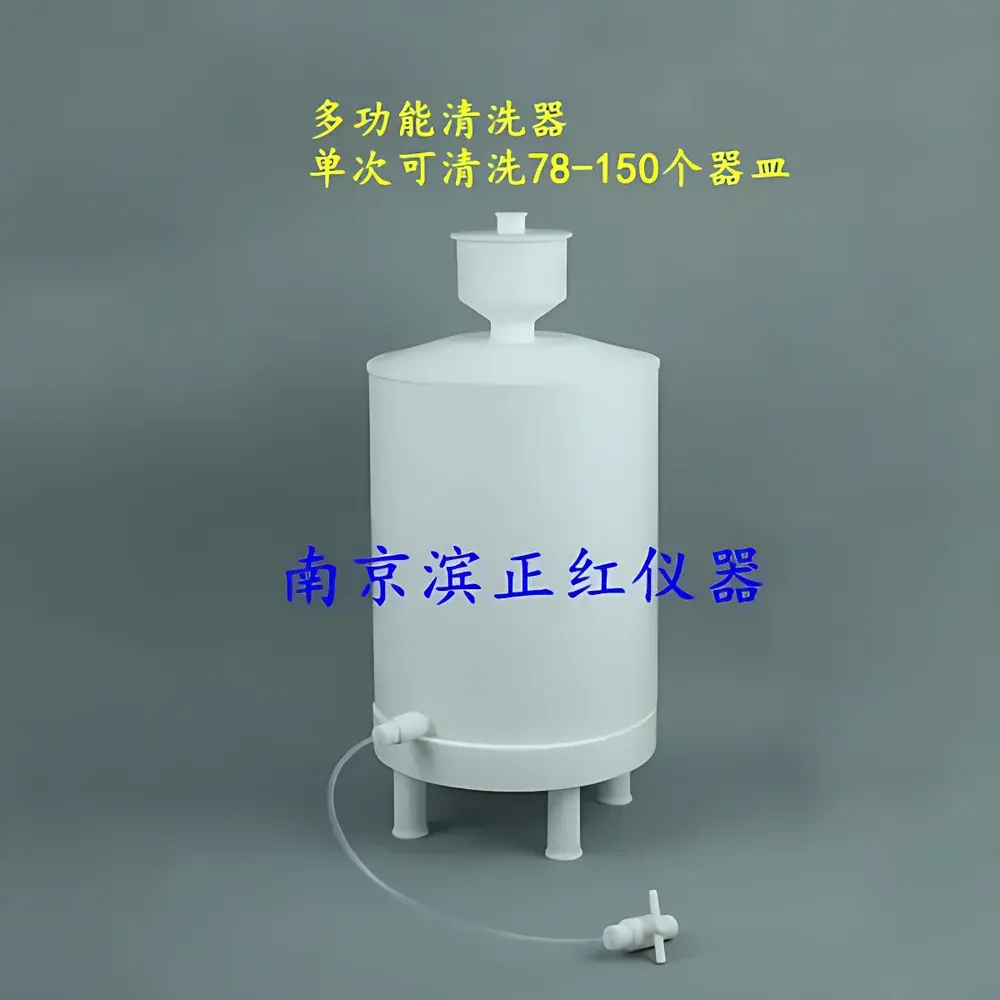
Binzhenghong SQ-210 & SQ-330 Acid Vapor Cleaning System for Trace-Metal-Free Labware
| Brand | Binzhenghong |
|---|---|
| Origin | Jiangsu, China |
| Manufacturer Type | OEM/ODM Producer |
| Country of Origin | China |
| Model | SQ-210, SQ-330 |
| Max Temperature | 200 °C |
| Max Pressure | 1 MPa |
| Sample Capacity | up to 150 vessels (configurable by height and diameter) |
| Microwave Source | Not applicable — resistive heating system |
| Heating Options | 350 W silicone heating film or 2000 W PTFE-coated ceramic heating plate |
| Chamber Material | High-purity laboratory-grade PTFE (≥99.999% purity) |
| Compatible Vessels | PFA/PTFE digestion vessels (7–60 mL), microwave digestion inner liners (CEM, Milestone, Anton Paar,屹尧/YiYao, XinYi, Haineng, Xintuo, LabTech), centrifuge tubes, test tubes, crucibles, beakers, volumetric flasks, quartz vials, ICP torches & spray chambers |
Overview
The Binzhenghong SQ-210 and SQ-330 Acid Vapor Cleaning Systems are engineered for ultra-trace contamination control in analytical laboratories requiring sub-part-per-trillion (ppt) cleanliness. Unlike conventional acid soaking or ultrasonic cleaning, these systems employ a precisely controlled sub-boiling vapor-phase cleaning mechanism—leveraging thermally generated, high-purity acid or base vapors (e.g., HF, HCl, HNO₃, H₂SO₄, NH₄OH, or ultrapure water) to condense uniformly onto vessel surfaces. This process achieves molecular-level removal of metallic residues—including Cr, Ni, Cu, Zn, Pb, and rare earth elements—without mechanical abrasion or liquid immersion. The chamber operates under closed-loop, ambient-pressure conditions with passive air cooling, enabling unattended overnight operation while maintaining strict containment of corrosive vapors. Designed specifically for pre-analytical preparation in ICP-MS, ICP-OES, HR-ICP-MS, and low-background radiochemistry workflows, the SQ series delivers consistent PPb-level residual metal reduction from initial PPM-contaminated substrates.
Key Features
- High-purity PTFE construction throughout all wetted and vapor-contact surfaces—ensuring negligible leaching and ultra-low blank values (≤0.1 pg/mL for most transition metals)
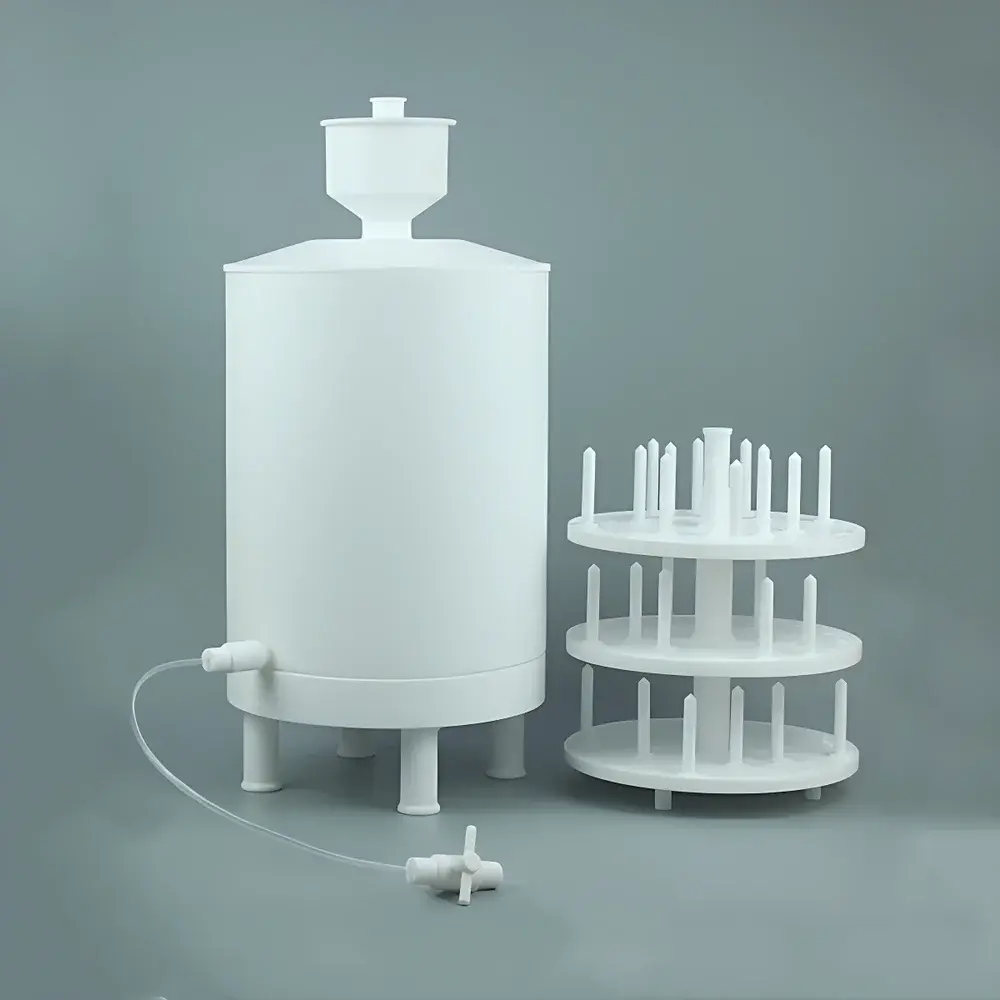
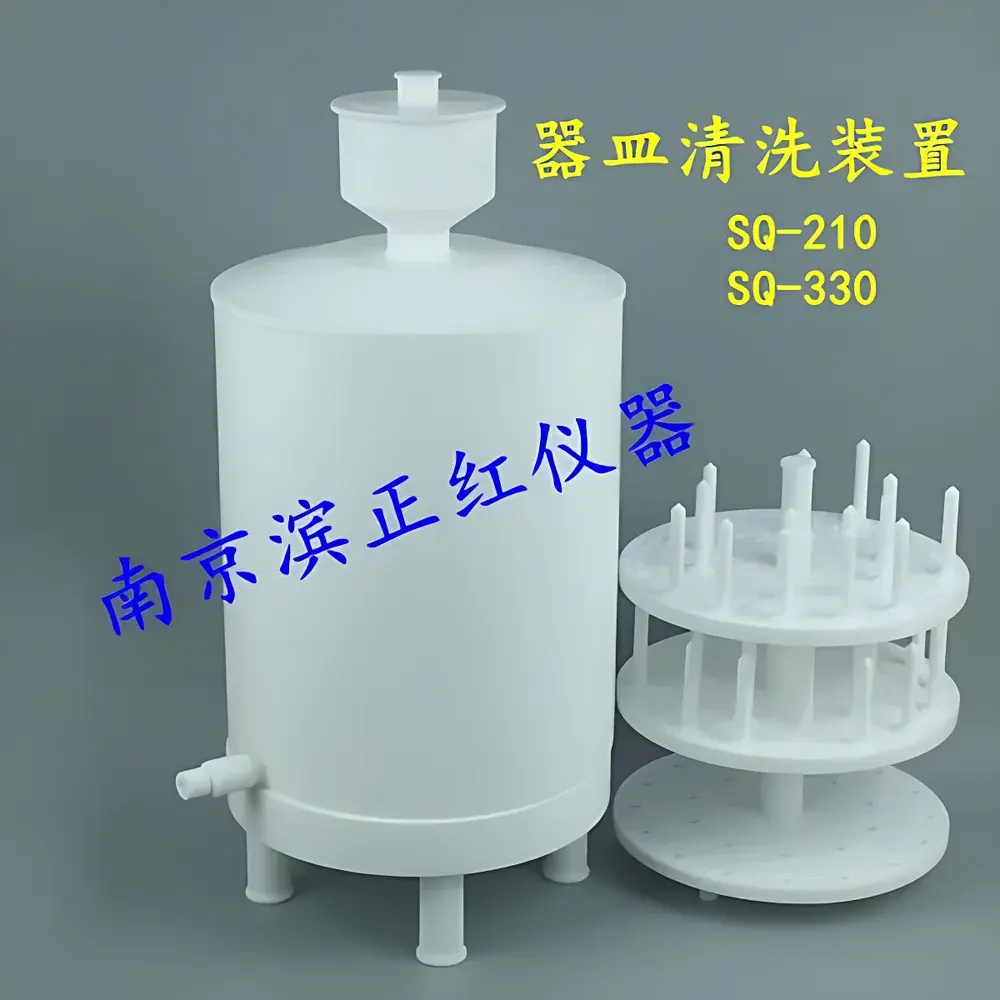
- Two configurable platform options: SQ-210 (210 mm outer diameter; up to 3 × 26 = 78 vessels per run) and SQ-330 (330 mm outer diameter; up to 3 × 50 = 150 vessels per run), both accommodating vessels ≤30 mm OD and ≤280 mm height
- Dual heating architecture: energy-efficient 350 W silicone heating film (for low-power labs) or high-output 2000 W PTFE-encapsulated ceramic heating plate (for rapid ramp and stable plateau control)
- No external coolant required—passive convection cooling enables safe, silent, continuous operation without plumbing or chiller integration
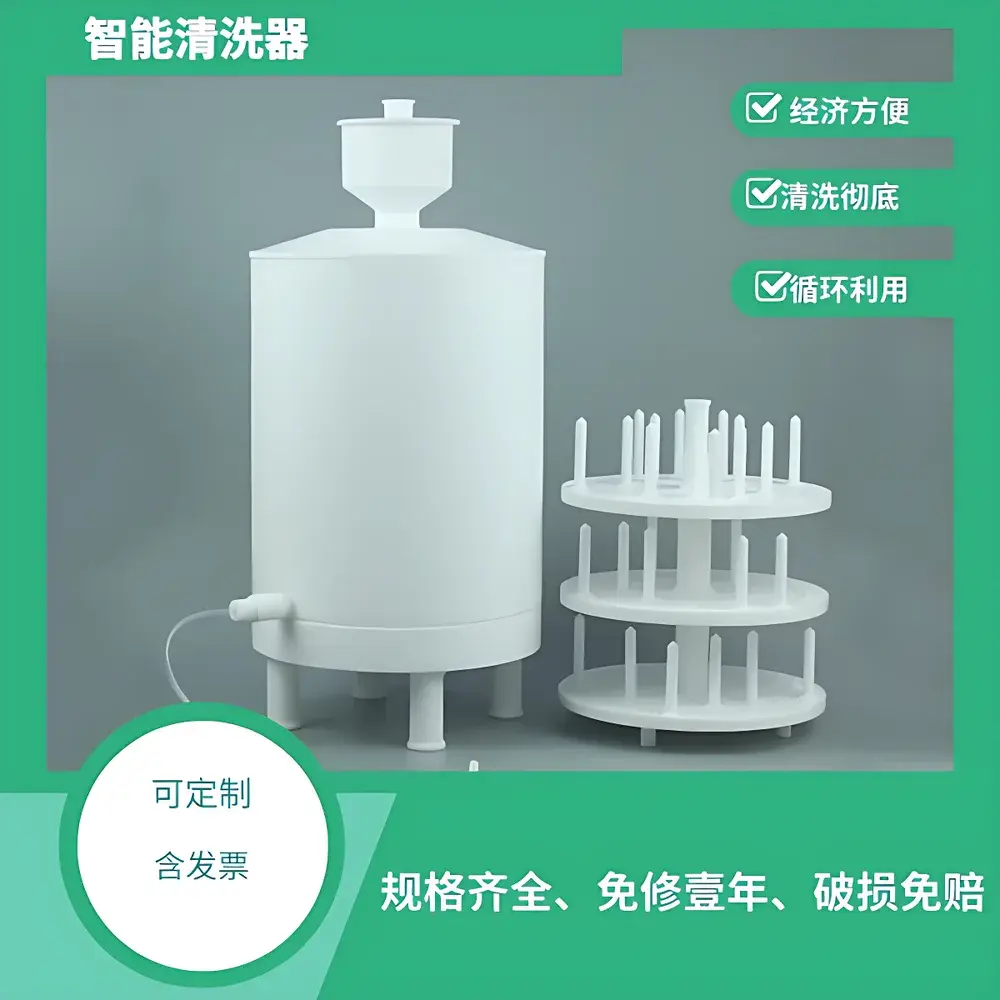
- Modular multi-tier rack design allows vertical stacking of sample holders to maximize throughput while preserving uniform vapor distribution across all layers
- Acid vapor recycling capability: condensed rinse solution is collected and can be reused for subsequent cycles, reducing reagent consumption by >60% versus batch immersion methods
Sample Compatibility & Compliance
The SQ systems accommodate a broad spectrum of labware geometries and chemistries, including PFA and FEP digestion vessels (7–60 mL), microwave digestion inner liners (compatible with CEM MARS, Milestone ETHOS, Anton Paar Multiwave, YiYao TANK, XinYi EDT, Haineng MWAVE, Xintuo WX, and LabTech UltraWave platforms), quartz ICP torches and nebulizer chambers, borosilicate and fused-silica crucibles, polypropylene centrifuge tubes, and glass volumetric flasks. All vessel contact surfaces are restricted to ASTM D4897-compliant, USP Class VI-certified PTFE. The system supports GLP/GMP-aligned documentation through optional logbook integration and satisfies ISO/IEC 17025 traceability requirements when paired with calibrated temperature sensors and validated cleaning protocols. While not microwave-based, its thermal stability and pressure tolerance (up to 1 MPa at 200 °C) align with ASTM D5511 and EPA Method 3050B preconditioning benchmarks.
Software & Data Management
The SQ-210 and SQ-330 operate via analog-digital hybrid control: a microprocessor-regulated PID temperature controller ensures ±0.5 °C stability over full operating range (room temperature to 200 °C), with programmable ramp/soak profiles stored locally on non-volatile memory. Optional RS-485 Modbus RTU interface enables integration into LIMS or centralized lab automation networks for remote monitoring and audit trail generation. All temperature logs, cycle timestamps, and operator IDs (via optional RFID badge reader) are exportable as CSV for FDA 21 CFR Part 11–compliant record retention. No proprietary software installation is required—configuration is performed via intuitive front-panel keypad with backlit LCD.
Applications
These systems serve critical roles in environmental testing (EPA 200.8, 6020B), clinical trace element analysis (CLIA, CAP), nuclear fuel cycle QA/QC (ASTM C1174), semiconductor metrology (SEMI F57), and geological geochemistry (ASTM D5173). They are routinely deployed prior to acid digestion, solvent extraction, or direct introduction into high-resolution mass spectrometers where background interference from vessel-derived metals would compromise detection limits. Their ability to clean complex geometries—including ICP torch injector tubes and concentric nebulizer capillaries—makes them indispensable for labs performing routine method validation per ISO 17025 Clause 7.7.
FAQ
Is this a microwave digestion instrument?
No—the SQ series uses resistive heating to generate sub-boiling acid vapors; it contains no magnetron or microwave cavity.
Can I clean quartz ICP components with hydrofluoric acid vapor?
Yes—provided quartz parts are free of metallic coatings and used exclusively with HF vapor; PTFE chamber integrity remains unaffected at ≤200 °C.
What is the typical cleaning cycle duration for PFA vials?
Standard protocol: 2–4 hours at 120 °C with HNO₃/HF mixture; time varies based on contaminant load and acid concentration.
Does the system meet FDA or ISO regulatory requirements for pharmaceutical labs?
While not certified as a medical device, its material compliance (USP Class VI PTFE), temperature accuracy, and data logging capability support adherence to FDA 21 CFR Part 11 and ISO/IEC 17025 when validated per internal SOPs.
How often must the heating element be replaced?
Silicone heating films typically last ≥5 years under continuous use; ceramic heating plates exceed 10,000 operational hours with proper thermal cycling management.



