
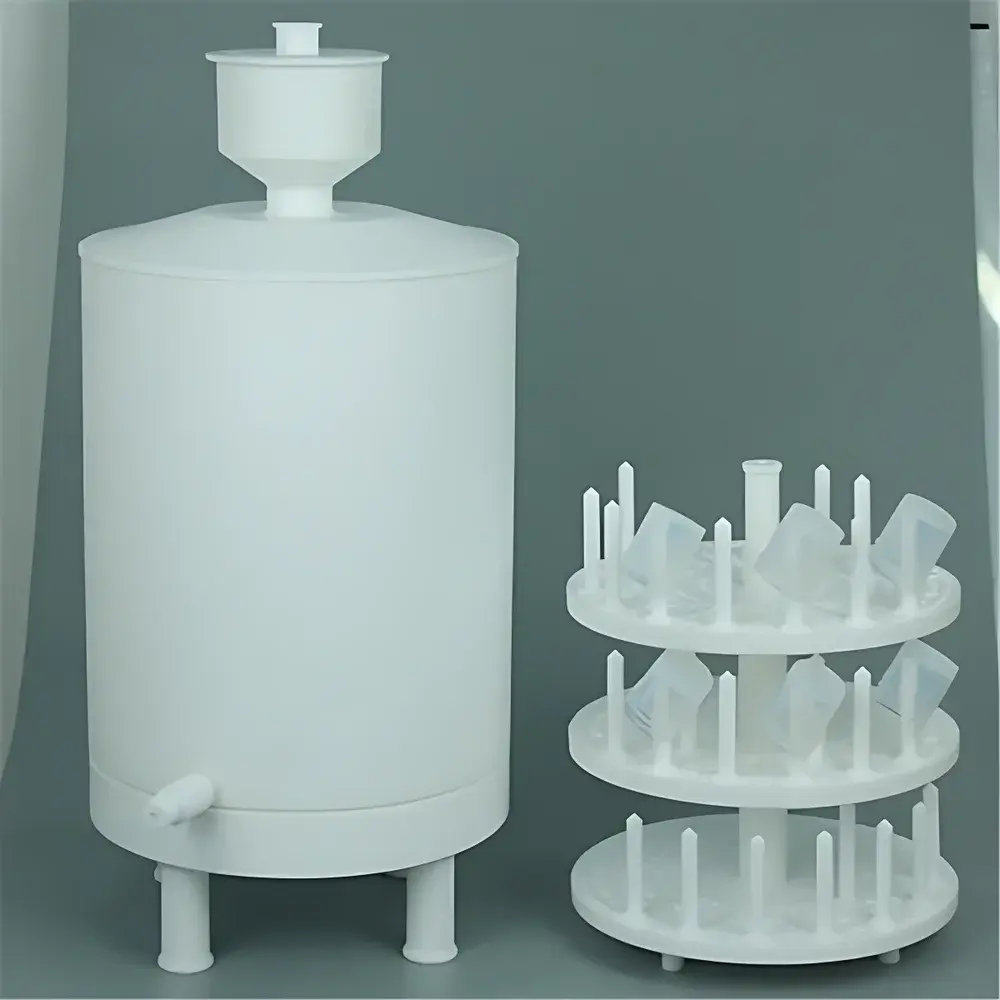
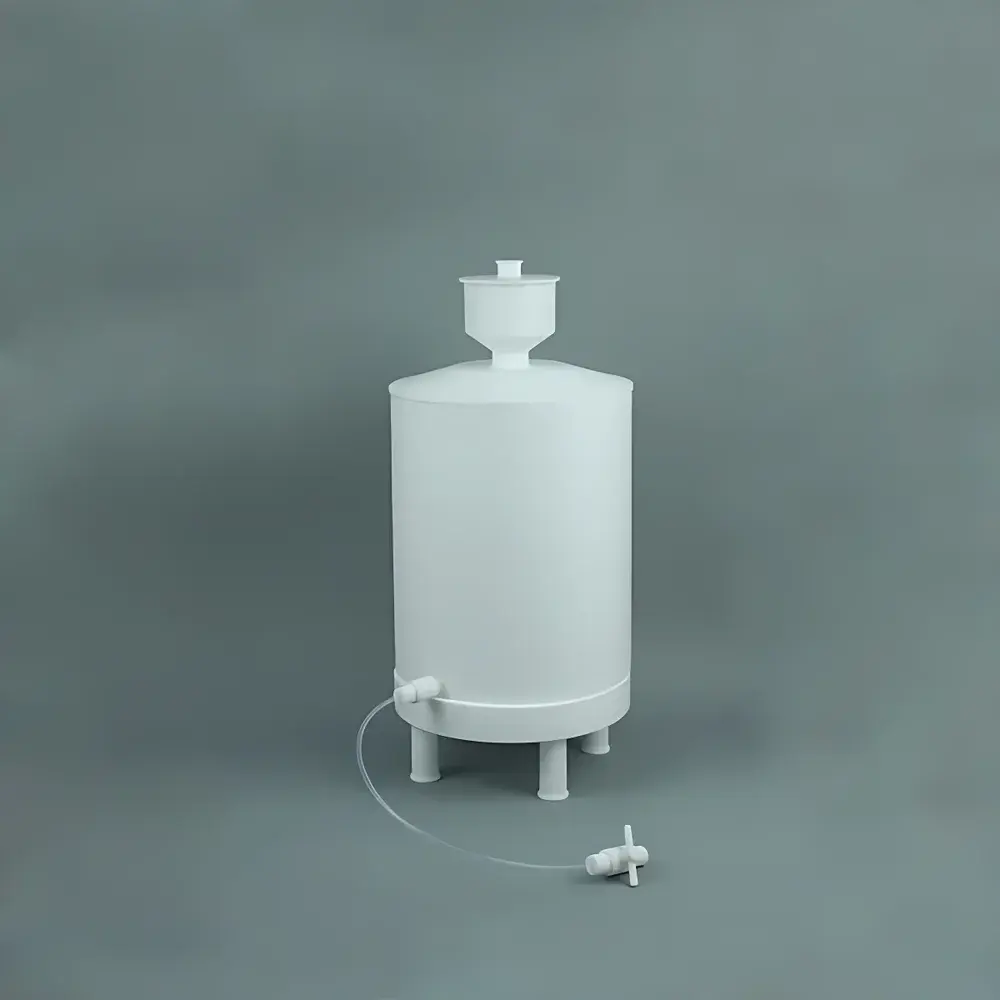
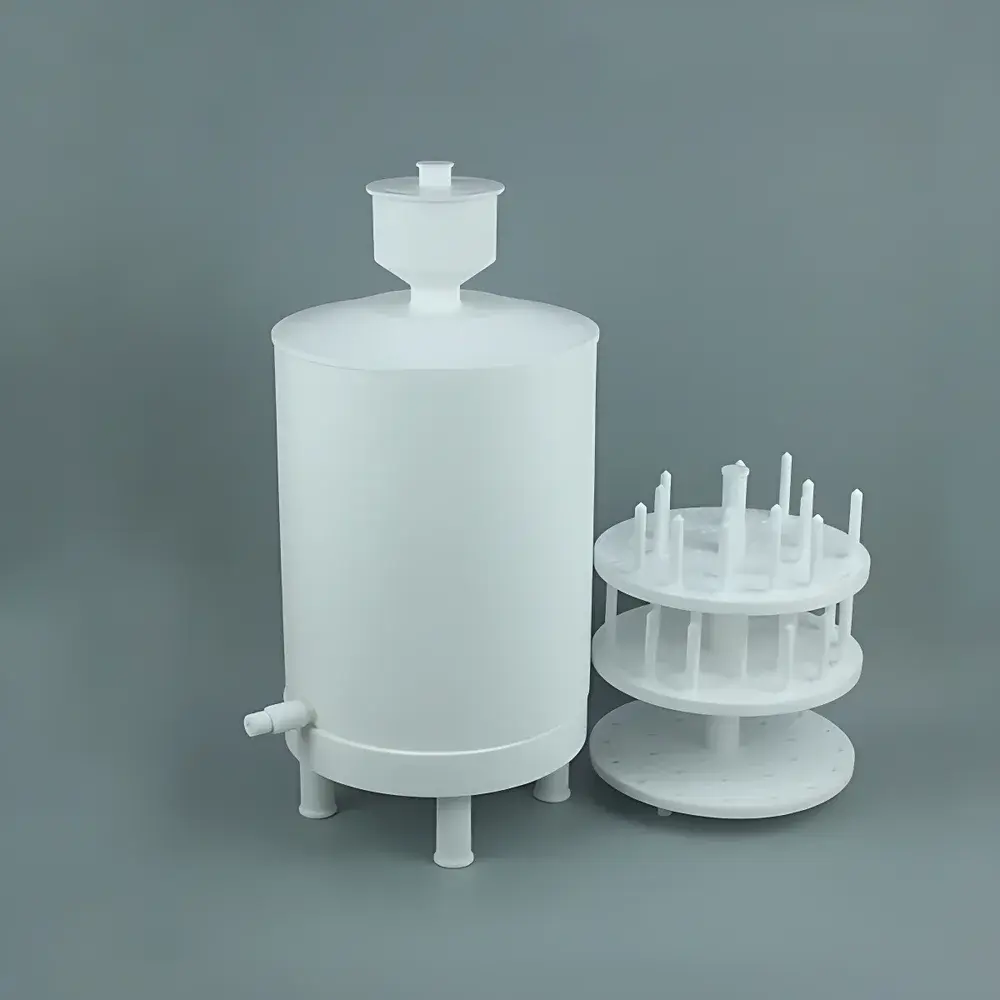
Binzhenghong SQ-210 Acid Vapor Countercurrent Vessel Cleaning System for PFA Digestion Vessels
| Brand | Binzhenghong |
|---|---|
| Origin | Jiangsu, China |
| Manufacturer Type | Direct Manufacturer |
| Model | SQ-210 / SQ-330 |
| Heating Power Options | 350 W Silicone Heater or 2000 W PTFE-Coated Heating Plate |
| Chamber Material | High-Purity Laboratory-Grade PTFE (Teflon™) |
| Max. Vessel OD | ≤30 mm |
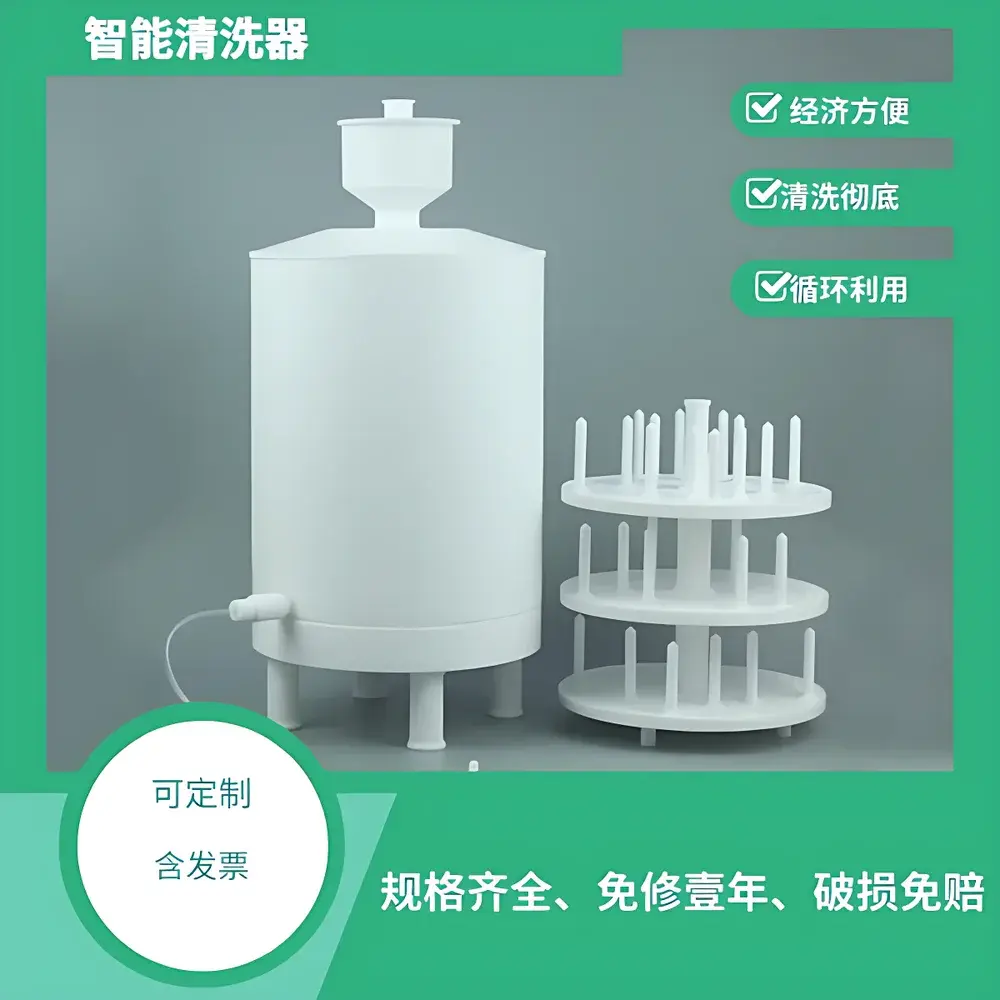
| Chamber Dimensions (SQ-210) | Ø210 mm × H260 mm |
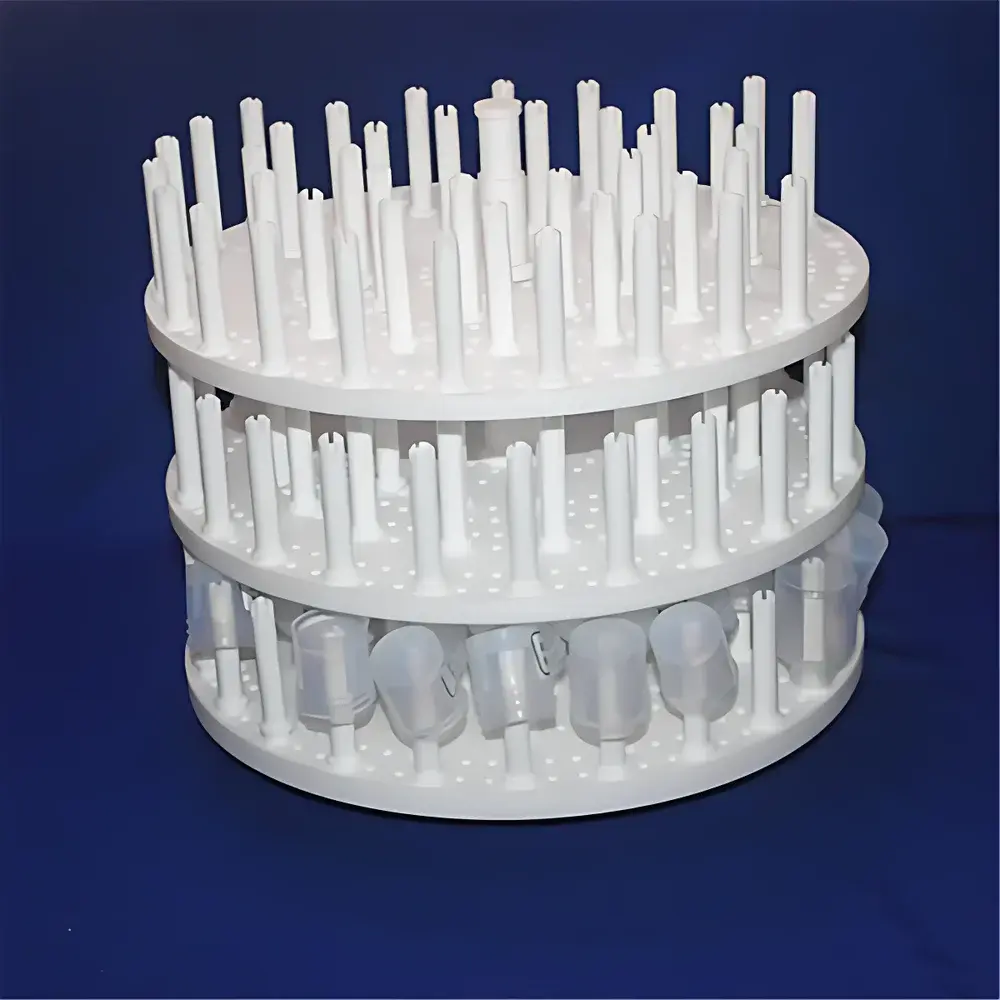
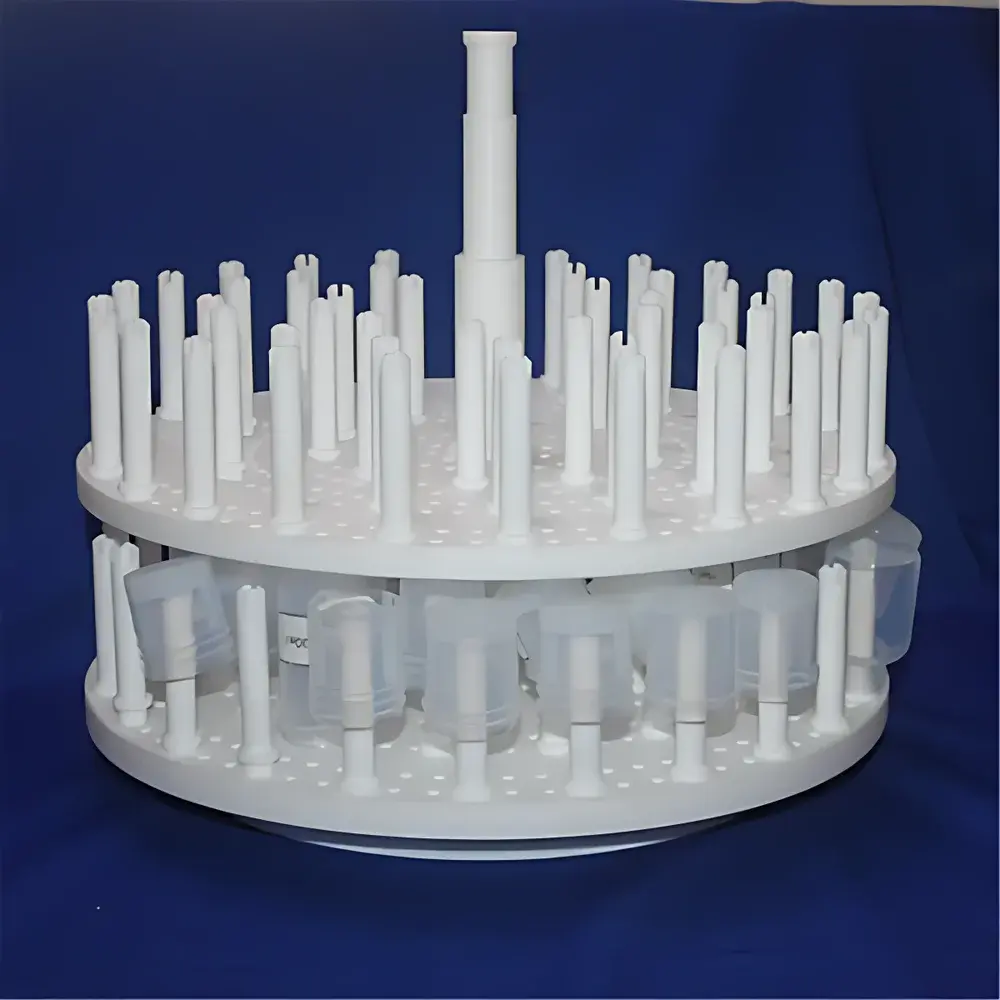
| Standard Capacity | 26 positions per layer (up to 3 layers = 78 vessels) |
| Compatible Vessels | PFA/PTFE digestion vessels (7–60 mL), microwave digestion inner liners (CEM, Milestone, Anton Paar, Titan, Xinyi, Haineng, Xintuo, Labtech), quartz tubes, ICP torches & spray chambers, centrifuge tubes, crucibles, vials, beakers |
| Cleaning Agents | Sub-boiling HF, HCl, HNO₃, H₂SO₄, ultra-pure water, NaOH/KOH solutions |
| Cooling Method | Passive air cooling |
| Compliance Basis | Designed for ISO/IEC 17025 traceability environments |
Overview
The Binzhenghong SQ-210 Acid Vapor Countercurrent Vessel Cleaning System is an engineered solution for ultratrace-level decontamination of laboratory consumables used in elemental analysis workflows—particularly those supporting ICP-MS, ICP-OES, and high-sensitivity AAS applications. It operates on the principle of sub-boiling acid vapor generation and controlled countercurrent condensation: a precisely regulated heating plate elevates reagent temperature just below its boiling point, generating saturated vapor that rises, contacts cooler vessel surfaces, condenses, and flows downward under gravity—repeatedly washing interior and exterior walls without mechanical agitation or liquid immersion. This thermodynamic cycle eliminates particulate adhesion, organic residues, and adsorbed metal ions while avoiding leaching from gaskets, seals, or chamber components. Unlike static acid soaking or ultrasonic methods, the SQ-210 ensures zero cross-contamination between cycles and maintains consistent vapor-phase purity through exclusive use of high-purity PTFE (≥99.999% fluoropolymer content) in all wetted and structural zones—including chamber walls, support trays, lid gasket, and vapor deflection baffles.
Key Features
- Full-system construction from laboratory-grade PTFE: no metallic fasteners, silicone elastomers, or epoxy adhesives contact vapors or vessels.
- Dual heating configuration options: energy-efficient 350 W silicone heating film (ideal for overnight unattended operation) or high-output 2000 W PTFE-encapsulated resistive plate (optimized for rapid ramping with HNO₃/HF mixtures).
- Air-cooled condensation architecture: eliminates dependency on external chillers or tap water, reducing infrastructure requirements and enabling continuous 24/7 operation in climate-controlled labs.
- Modular tray design: standardized 26-position single-layer configuration (SQ-210); scalable to three stacked tiers (78 total capacity) for uniform thermal distribution across height-adjustable PFA/PTFE vessels (7–60 mL).
- Sub-boiling vapor control: temperature regulation accuracy ±1.5 °C prevents aerosol formation and ensures only molecular-phase reagents interact with surfaces—critical for preserving low-blank integrity.
- Zero-reagent carryover architecture: condensed acid drains back into the reservoir; no siphoning, overflow, or secondary collection required—enabling ≥5× reuse of same acid batch without performance degradation.
Sample Compatibility & Compliance
The SQ-210 accommodates cylindrical vessels with outer diameters ≤30 mm and heights up to 260 mm, including PFA digestion vials (7, 15, 30, 60 mL), microwave inner liners from CEM MARS, Milestone ETHOS, Anton Paar Multiwave, Titan, Xinyi, Haineng, Xintuo, and Labtech platforms, quartz ICP torches and spray chambers, polypropylene centrifuge tubes, fused silica crucibles, and borosilicate glass vials. All cleaning protocols align with ASTM D5686–22 (Standard Guide for Trace Metal Cleanliness of Glassware), ISO 15195:2018 (Laboratory accreditation for clinical testing and in vitro diagnostic test systems), and USP (Total Organic Carbon). The system’s passive cooling and sealed vapor path meet EPA Method 1638 (Determination of Metals in Water by ICP-MS) prerequisites for blank minimization. When operated with certified 10 ppt HF and 1 ppq HNO₃, validated studies demonstrate reduction of residual Cr, Ni, Cu, and Pb from ppm-level contamination to ≤5 ppt—verified via sequential ICP-MS rinse validation per CLSI EP29-A guidelines.
Software & Data Management
The SQ-210 is a hardware-only platform with no embedded microcontroller or digital interface—intentionally designed to eliminate firmware vulnerabilities, electromagnetic interference, and calibration drift associated with integrated electronics. Temperature setpoint is adjusted manually via calibrated analog potentiometer; real-time monitoring relies on external Class A platinum RTD probes (optional accessory). This analog-first architecture ensures full auditability under FDA 21 CFR Part 11 when paired with lab-wide electronic lab notebook (ELN) systems. Operators record start/stop times, reagent lot numbers, vessel types, and post-cleaning rinse volumes directly into validated SOP templates compliant with ISO/IEC 17025 clause 7.7 (Ensuring validity of results). Raw data—such as acid reuse cycles, observed condensate clarity, and post-clean ICP-MS blanks—is retained in paper-based or ELN-tracked logbooks meeting GLP Annex 11 and GMP Annex 11 traceability standards.
Applications
- Preparation of ultra-low-background PFA vials for environmental water analysis (EPA 200.8, ISO 17294-2).
- Routine cleaning of microwave digestion liners prior to multi-element quantitation in geological samples.
- Decontamination of ICP torch injection tubes and nebulizer chambers following high-TDS sample runs.
- Restoration of quartz combustion boats used in TOC/TC analysis where carbon memory effects are unacceptable.
- Reclamation of expensive Pt/Ir crucibles after alkali fusion procedures—avoiding HF dissolution damage common with soak methods.
- Supporting method validation per ICH Q2(R2) by delivering consistent blank performance across ≥100 consecutive runs.
FAQ
What acid concentrations and temperatures are recommended for optimal PFA vial cleaning?
Sub-boiling operation at 115–125 °C with 2–5% v/v HF in 2% HNO₃ delivers maximum removal efficiency for silicate-bound metals without etching PFA surfaces.
Can the SQ-210 be used with ammonium bifluoride or other fluoride alternatives?
Yes—ABF solutions (5–10% w/w) may be substituted for HF in applications requiring reduced volatility; temperature setpoint should be lowered to 95–105 °C to maintain sub-boiling conditions.
How is cleaning efficacy verified post-cycle?
A minimum of three sequential 2 mL ultra-pure water rinses are collected and analyzed by ICP-MS using collision-cell mode; acceptable blanks must remain ≤0.5 ppt for all target analytes over three independent validations.
Is the system compatible with cleanroom Class 1000 environments?
Yes—the fully PTFE construction emits no volatile organics (per ASTM D6886), and passive cooling eliminates condensate drip paths—meeting ISO 14644-1 particle emission requirements when installed with HEPA-filtered exhaust ducting.
What maintenance intervals are required for long-term reliability?
Annual visual inspection of PTFE chamber integrity and heater surface uniformity is recommended; no scheduled lubrication, filter replacement, or firmware updates are necessary due to the solid-state analog design.



