
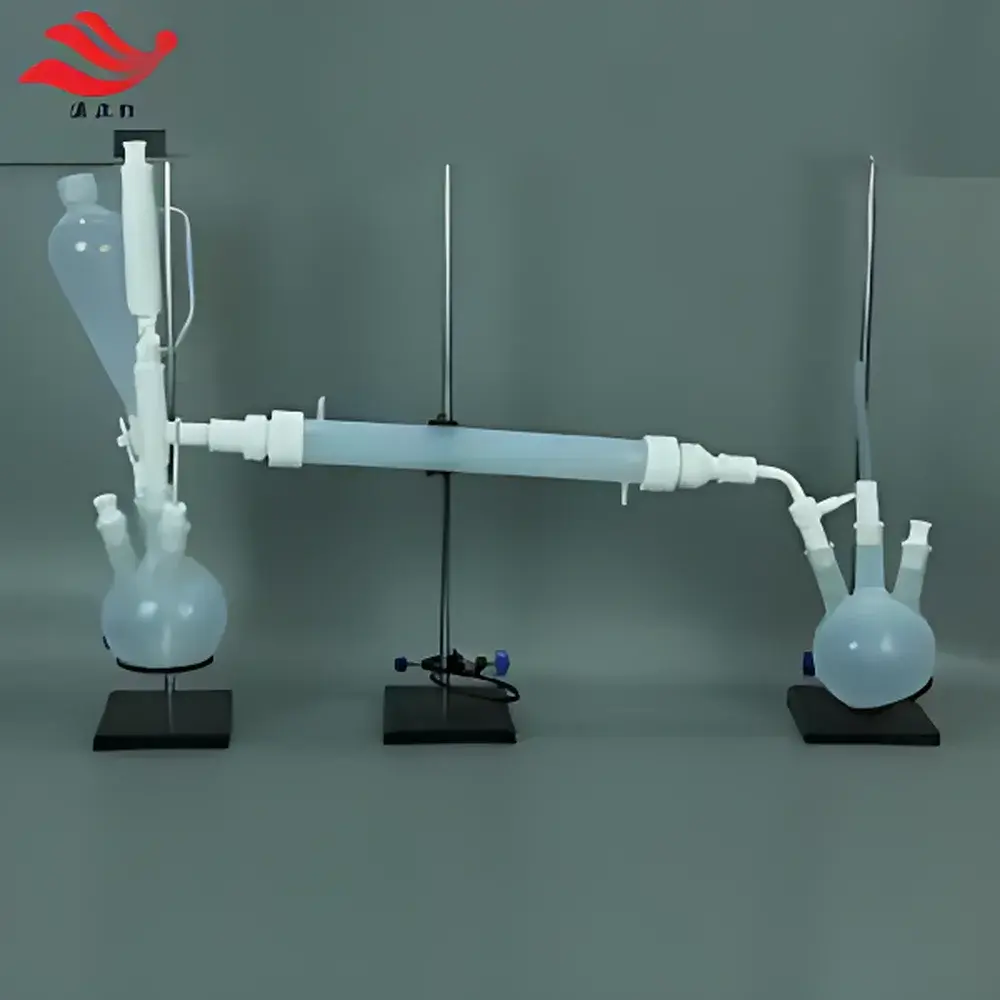
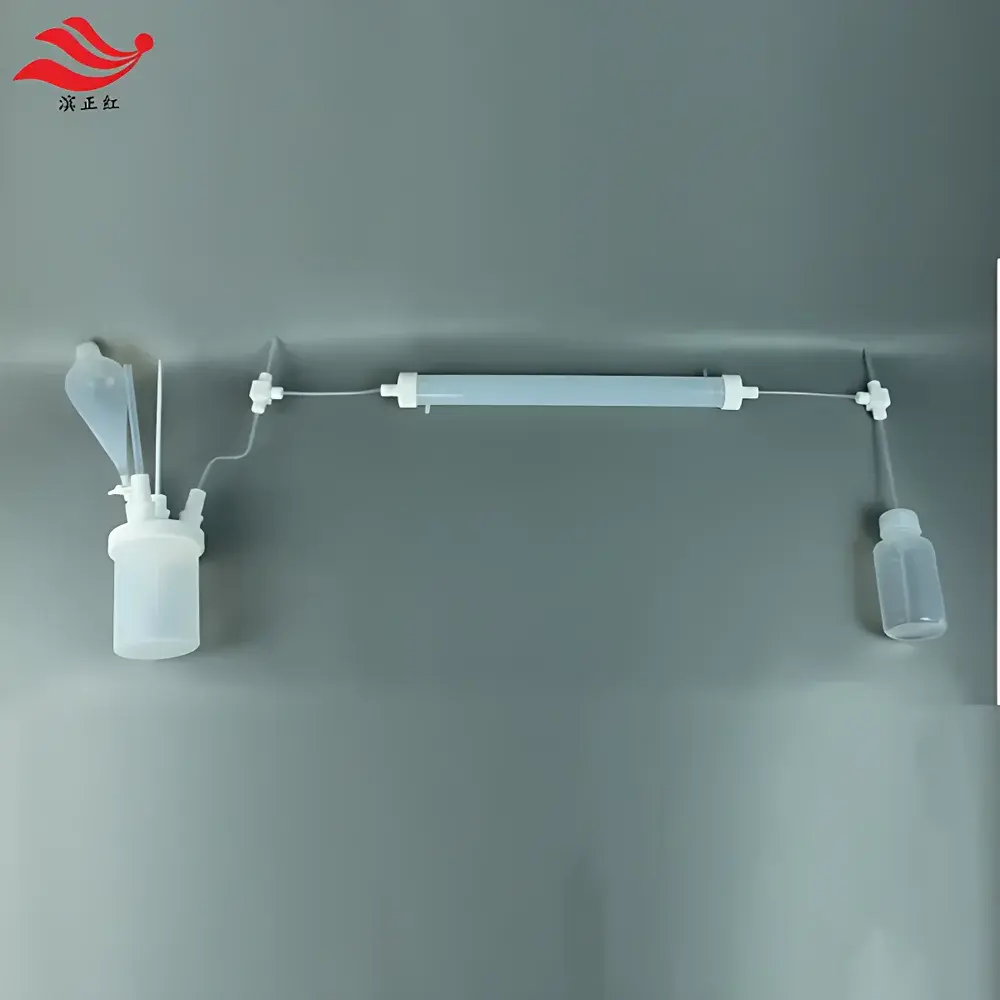
Binzhenghong ZL-250ml PFA Transparent Condenser Assembly for HF Distillation and Reflux Systems
| Brand | Binzhenghong |
|---|---|
| Origin | Jiangsu, China |
| Manufacturer Type | Direct Producer |
| Origin Category | Domestic |
| Model | ZL-250ml |
| Instrument Type | Fluoropolymer Distillation Apparatus |
| Heating Method | Water Bath or Oil Bath |
| Cooling Method | Integrated Air-Cooled Condensation |
| Material | Perfluoroalkoxy (PFA) |
| Capacity | 250 mL |
| Standard Joint Size | 19# or 24# |
| Configuration | Single-Neck with Optional Multi-Neck Adaptability (up to 4 necks) |
| Compatible Components | PFA Round-Bottom Flask, Constant-Pressure Dropping Funnel, Gas Scrubbing Bottle, PFA Thermometer Sleeve, Magnetic Stirrer Shaft Port, Customizable Separatory Funnel |
Overview
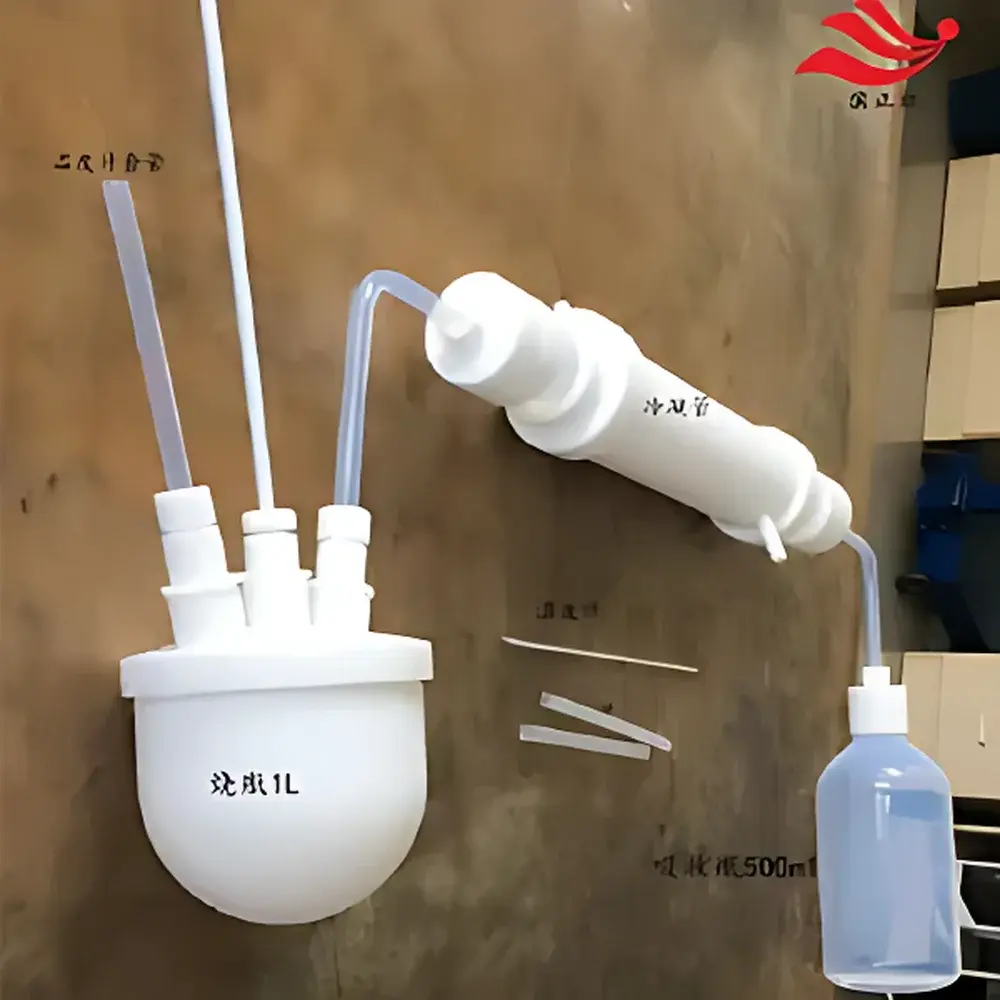
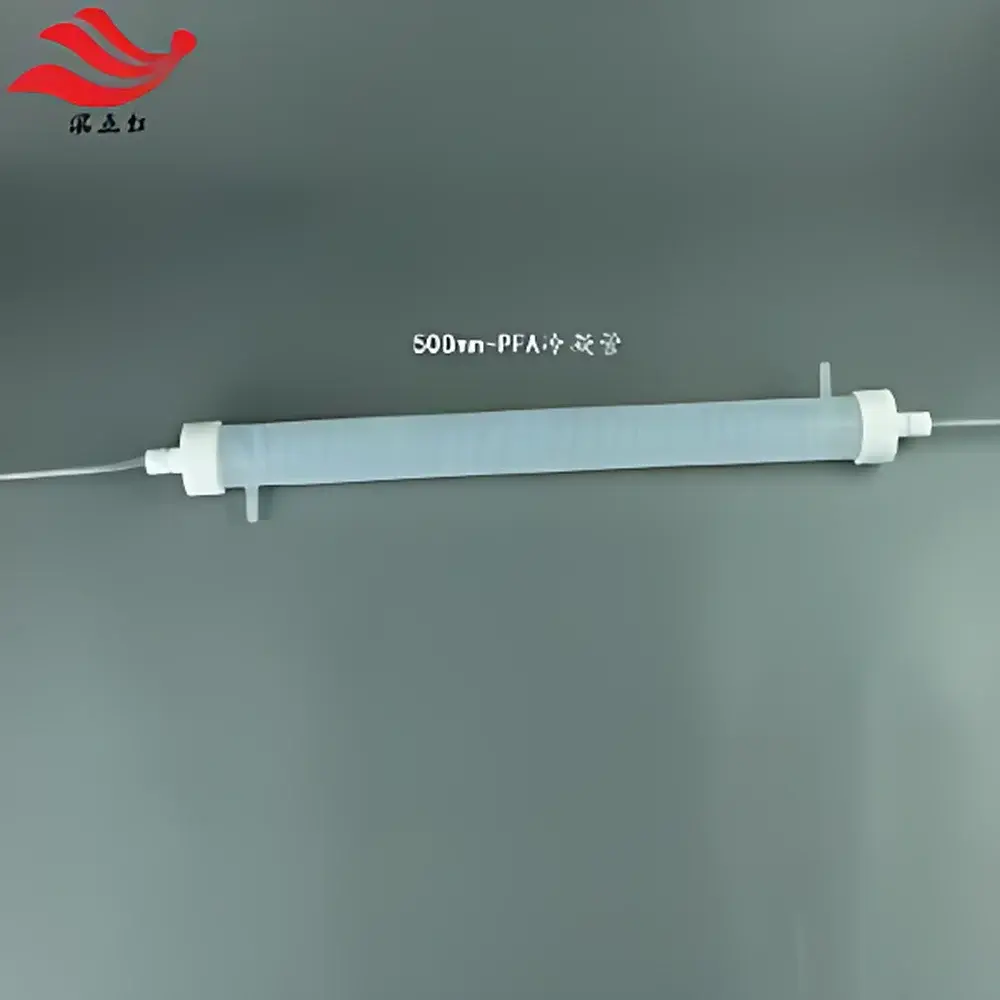
The Binzhenghong ZL-250ml PFA Transparent Condenser Assembly is a purpose-engineered fluoropolymer distillation and reflux system designed for safe, high-integrity handling of highly corrosive reagents—particularly hydrofluoric acid (HF), anhydrous hydrogen fluoride, and other aggressive fluorinating agents. Unlike conventional borosilicate glass or stainless-steel systems, this apparatus utilizes fully fused PFA (perfluoroalkoxy alkane) components—including the condenser tube, round-bottom flask, and interconnecting joints—to deliver exceptional chemical resistance across the full pH range (−22 to +22), thermal stability from −200 °C to +260 °C, and ultra-low extractables. The transparent PFA construction enables real-time visual monitoring of vapor condensation, phase separation, and reflux dynamics without compromising containment integrity. Its design adheres to fundamental principles of fractional distillation and reflux kinetics: vapor generated in the heated PFA flask rises into the vertically oriented PFA condenser, where ambient-air–cooled walls induce controlled condensation; condensed liquid returns to the reaction zone via gravity-driven reflux or is diverted through a PFA separatory funnel for continuous product isolation.
Key Features
- Fully transparent, seamless PFA condenser tube with optional internal packing (e.g., PFA spheres) to increase effective surface area and enhance condensation efficiency
- Modular, standardized joint compatibility (19# and 24# ground-glass–equivalent PFA taper interfaces) enabling direct coupling with PFA flasks, dropping funnels, scrubbers, and thermowell sleeves
- Integrated air-cooling architecture—no external coolant lines or chiller dependency—reducing system complexity and eliminating cross-contamination risks associated with water-circulated jackets
- Single-neck 250 mL base configuration, scalable to 4-neck arrangements for simultaneous addition, temperature monitoring, stirring, and venting under inert atmosphere
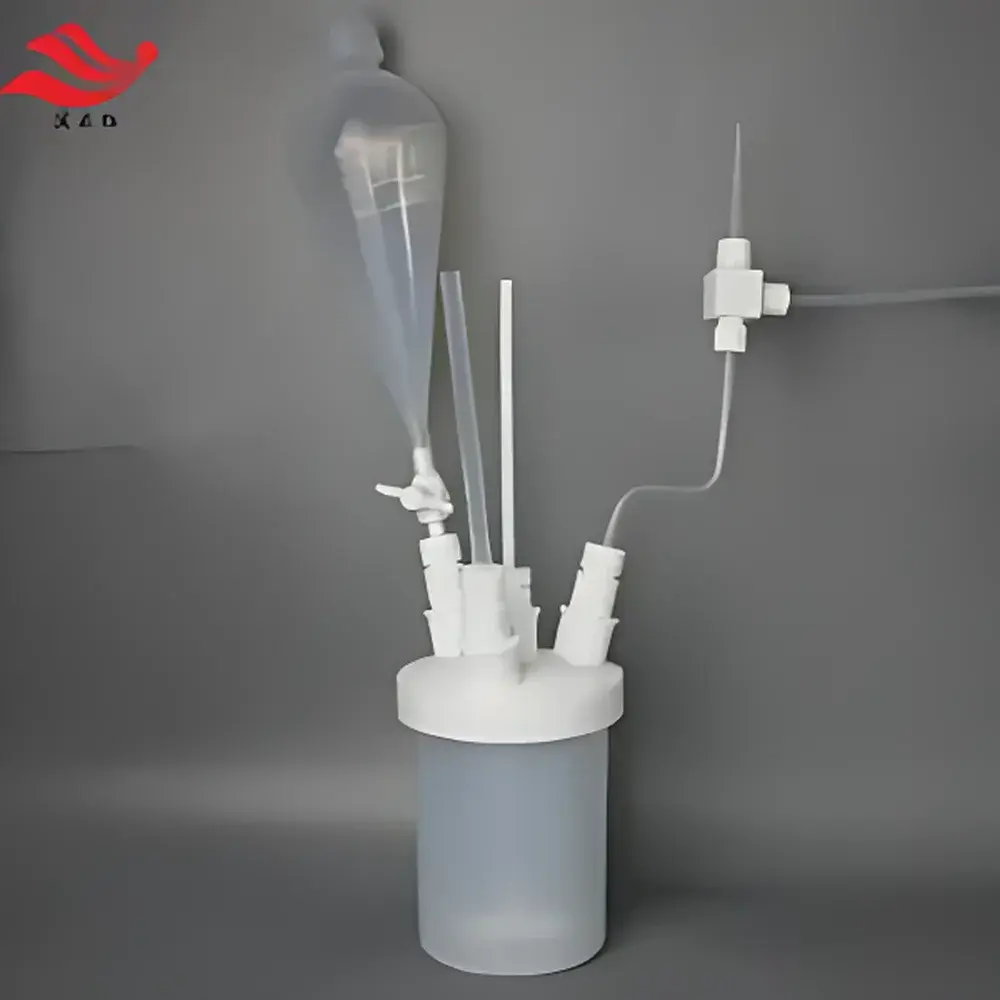
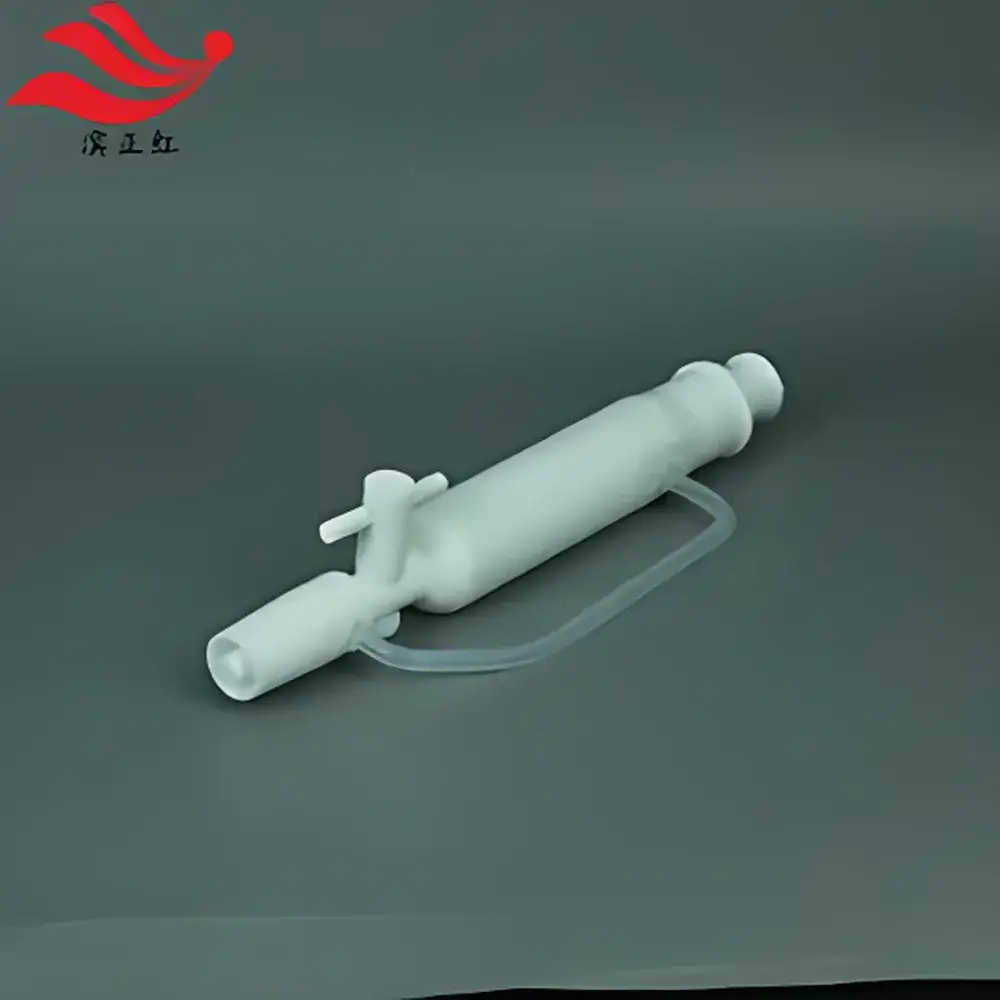
- Chemically inert PFA stirrer shaft port and constant-pressure dropping funnel with PFA stopcock and threaded sealing cap—designed to maintain pressure equilibrium during controlled reagent addition
- Optional梨形 (pear-shaped) PFA separatory funnel with calibrated volume markings and PTFE-coated stopcock for post-distillation phase separation of immiscible fluorinated solvents or aqueous HF layers
Sample Compatibility & Compliance
This system is validated for use with hydrofluoric acid (≥49% w/w), ammonium bifluoride, fluorosulfuric acid, chlorine trifluoride precursors, and other Class 3–4 corrosives defined in ASTM D1655 Annex A1. All wetted surfaces comply with USP and ISO 10993-1 for extractables profiling. The PFA material meets FDA 21 CFR 177.1550 for repeated-use food-contact applications—indicative of its low leachability profile under aggressive conditions. While not certified to ASME BPE or PED, the apparatus is engineered for laboratory-scale GLP-compliant purification workflows requiring audit-ready documentation of material traceability, cleaning validation, and operational parameters (temperature, reflux ratio, residence time). No metallic components contact process streams—eliminating risk of catalytic decomposition or metal fluoride precipitation.
Software & Data Management
As a manually operated, non-electronic benchtop apparatus, the ZL-250ml system does not incorporate embedded controllers or digital interfaces. However, it is fully compatible with third-party lab data management ecosystems: temperature readings from calibrated Pt100 probes inserted into the PFA thermometer sleeve can be logged via USB-connected data loggers compliant with 21 CFR Part 11 (audit trail, electronic signature, and data integrity controls). Reflux duration, feed rate (via graduated dropping funnel), and phase separation timing are recorded in paper-based or ELN-integrated SOPs aligned with ISO/IEC 17025 documentation requirements.
Applications
- Purification of anhydrous HF for semiconductor etching precursor synthesis
- Recovery and concentration of spent HF-based pickling baths in metal surface treatment
- Distillative removal of volatile fluorocarbons (e.g., HFC-134a, HCFC-22) from reaction mixtures
- Acid-catalyzed fluorination reactions requiring inert, non-reactive reflux environments
- Preparative-scale synthesis of fluorinated pharmaceutical intermediates under nitrogen or argon blanket
- Teaching laboratories demonstrating corrosion-resistant distillation principles per ACS undergraduate curriculum guidelines
FAQ
Can this system be used with hydrochloric or nitric acid?
Yes—PFA exhibits broad resistance to mineral acids including HCl, HNO₃, and H₂SO₄ up to boiling point; however, HF compatibility remains its primary design rationale.
Is the PFA condenser truly transparent across UV-Vis wavelengths?
PFA transmits >90% of light from 250 nm to 2500 nm; suitable for visual endpoint detection but not intended as a spectroscopic cell.
What is the maximum recommended operating temperature?
Continuous use at ≤200 °C is advised; short-term excursions to 260 °C are permissible with derated mechanical load.
How is cleaning validated between runs?
Standard protocol includes sequential rinses with ultrapure water, acetone, and nitrogen purge; residue verification via ICP-MS of rinse supernatants per ISO 8573-1 Class 2 purity criteria.
Are custom joint sizes (e.g., 29#) available?
Yes—custom taper machining and multi-neck flask configurations are offered directly by Binzhenghong upon technical specification submission.



