
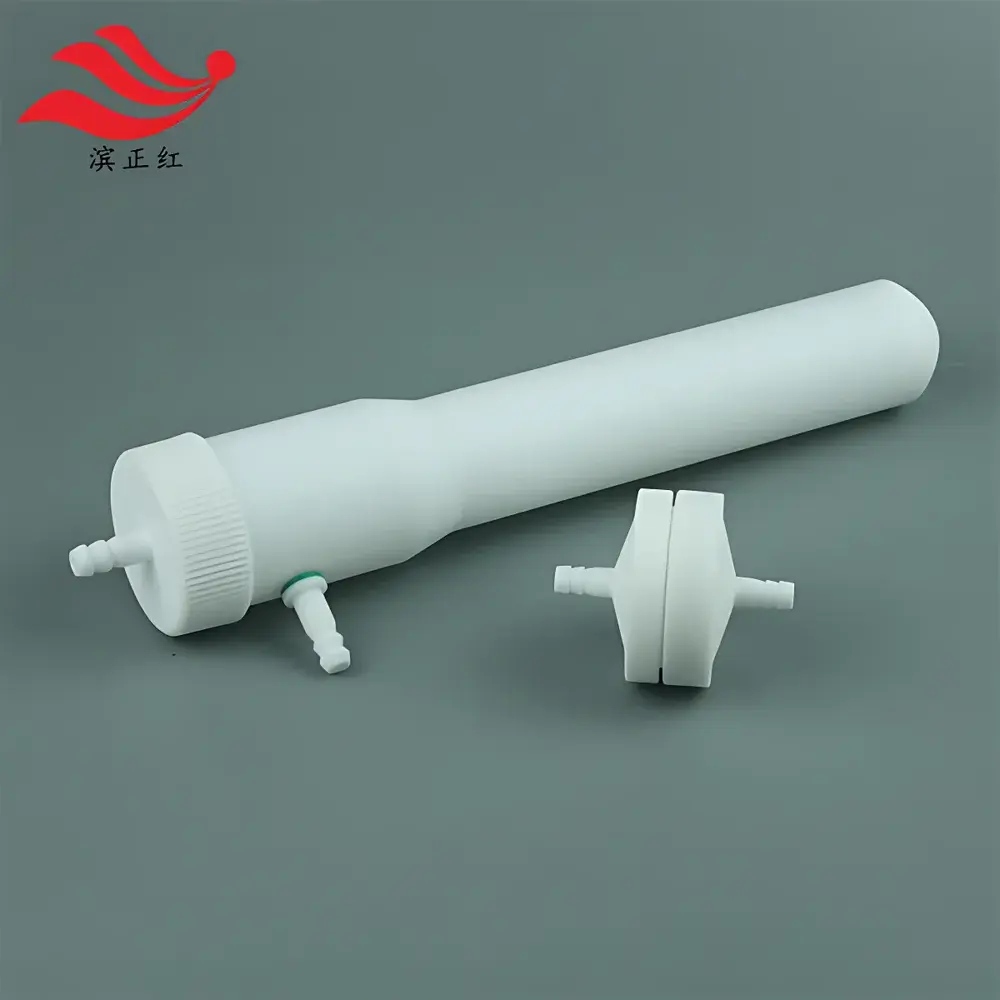
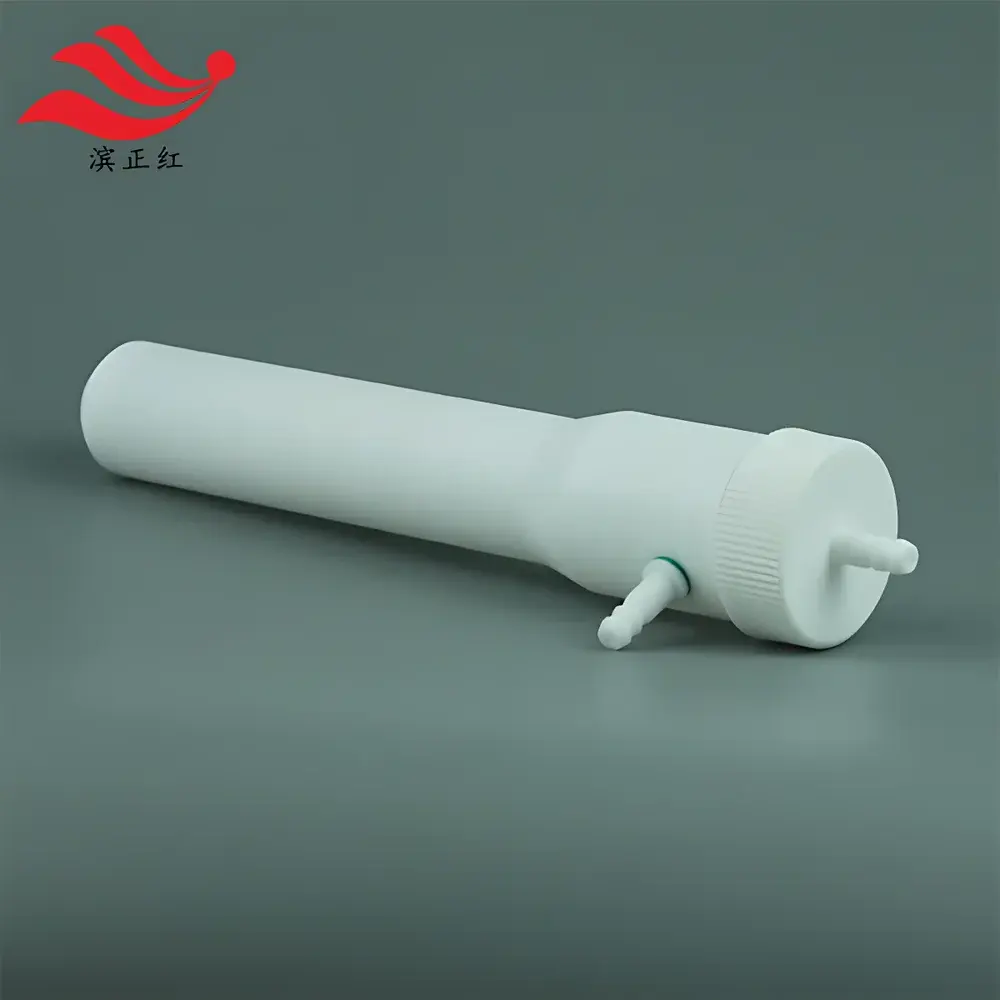
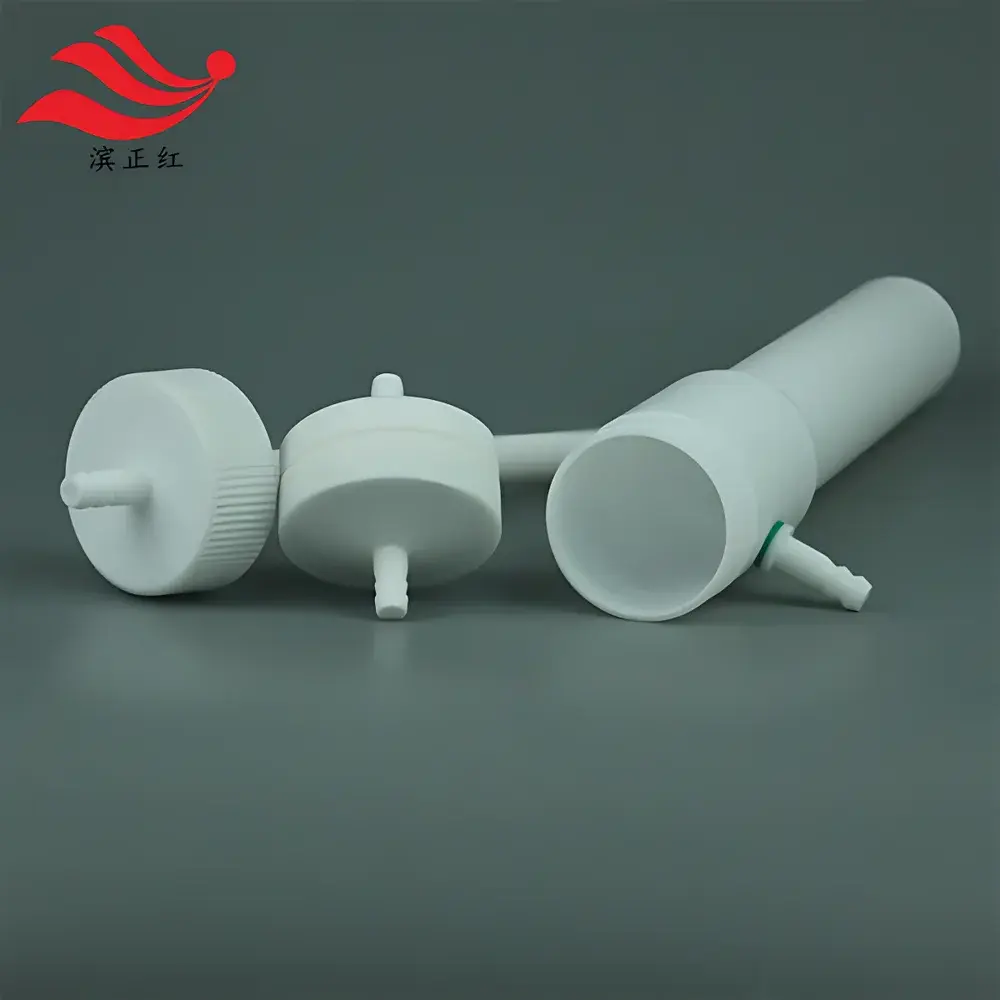
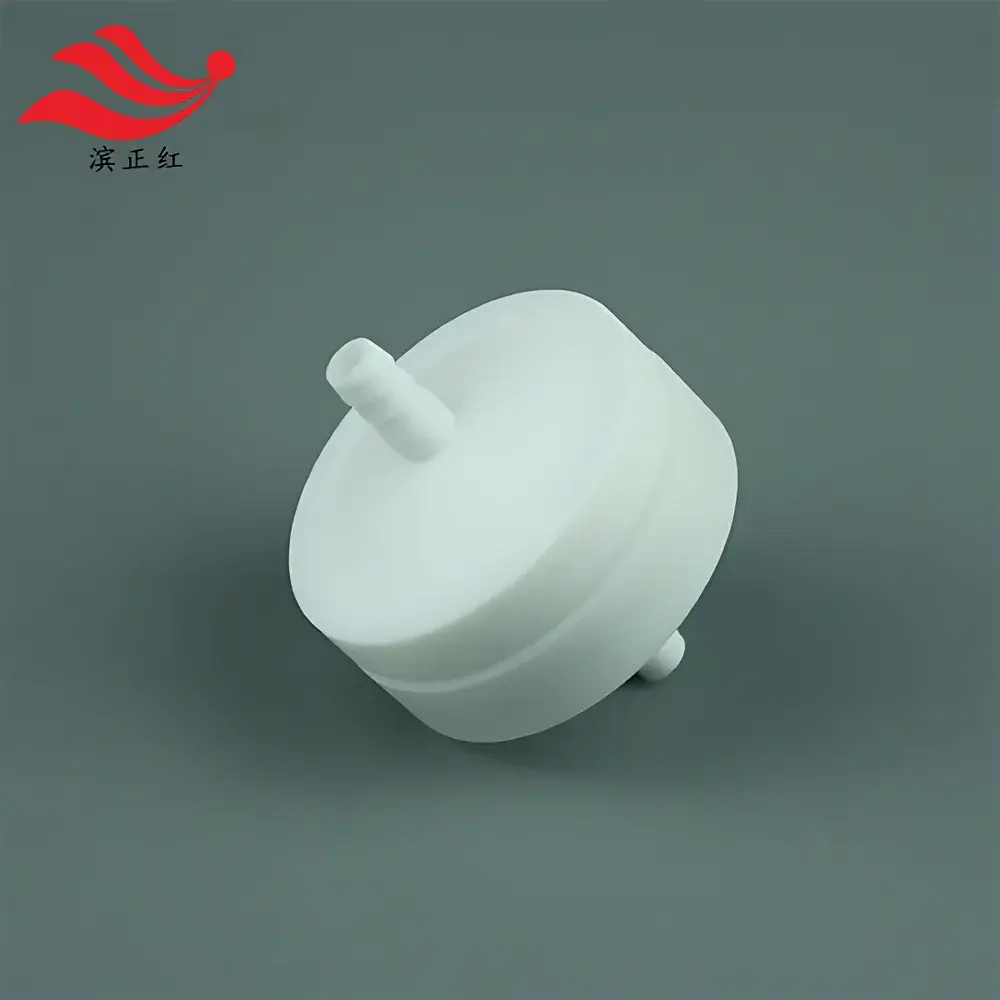
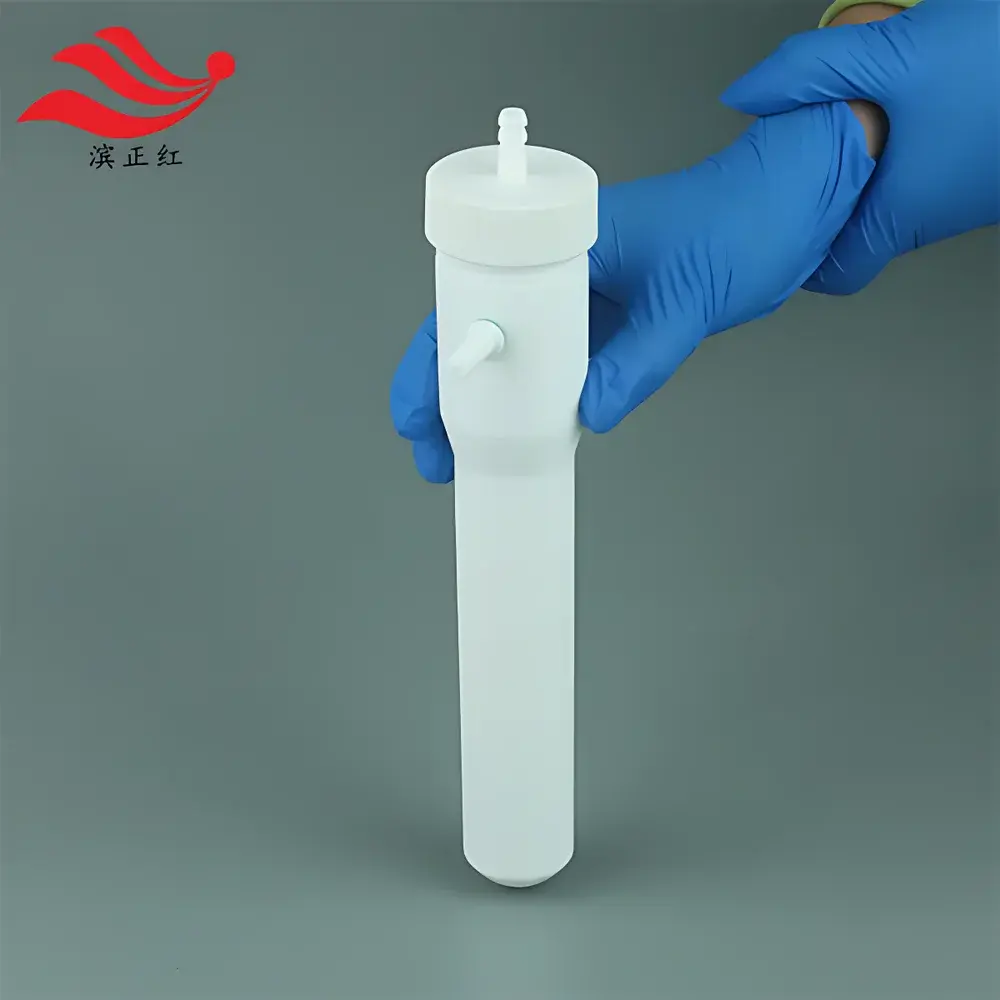
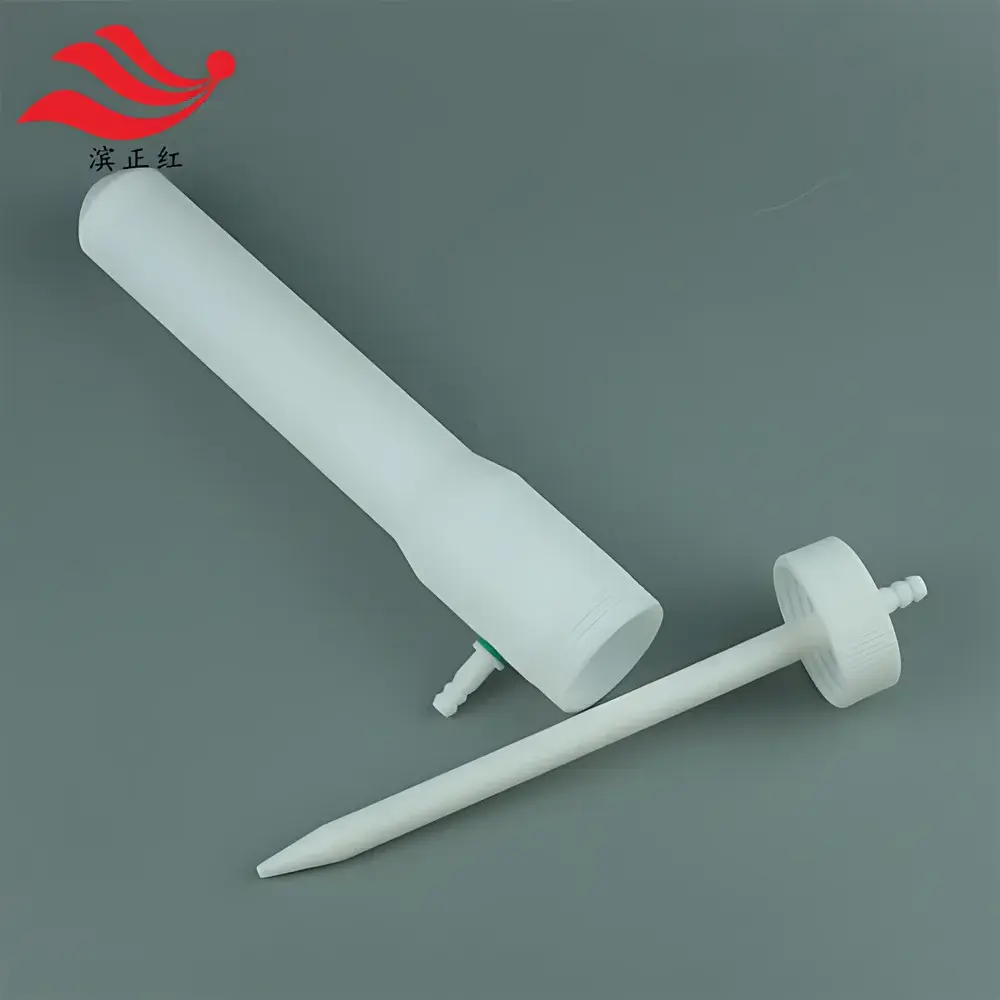
Binzhenghong PTFE Bubble Absorption Bottle with Filter Holder, 75 mL, for HF and HCl Sampling in Stack Emission Monitoring
| Brand | Binzhenghong |
|---|---|
| Origin | Jiangsu, China |
| Manufacturer Type | Direct Manufacturer |
| Product Origin | Domestic (China) |
| Capacity | 75 mL |
| Pricing | Upon Request |
Overview
The Binzhenghong PTFE Bubble Absorption Bottle with Integrated Filter Holder is a chemically inert, high-purity sampling device engineered for quantitative collection of gaseous hydrogen fluoride (HF), hydrogen chloride (HCl), and other highly corrosive acidic compounds from industrial stack emissions and ambient air streams. Constructed entirely from virgin polytetrafluoroethylene (PTFE), this absorption bottle eliminates the risk of analyte loss, adsorption, or leaching associated with glass or polyethylene alternatives—critical when measuring trace-level halogenated acids under regulatory compliance protocols such as EPA Method 26A, ISO 15713, and HJ 688–2013 (China). The device operates on the principle of bubble impingement: sample gas is introduced via a calibrated inlet tube, dispersed into fine bubbles through a PTFE frit or tapered tip, and thoroughly contacted with an alkaline absorption medium (e.g., dilute NaOH or Na₂CO₃ solution). This ensures high-efficiency capture (>95% at recommended flow rates) while maintaining minimal pressure drop across the system. Its seamless PTFE construction supports full compatibility with subsequent ion chromatographic analysis (IC), eliminating interferences from metal contamination or surface-active sites.
Key Features
- Monolithic PTFE construction—no adhesives, seals, or metallic components—to guarantee ultra-low background levels of cations (e.g., Na⁺, K⁺, Ca²⁺, Fe³⁺) and prevent analyte adsorption or catalytic decomposition.
- Optimized internal geometry for stable bubble formation and uniform gas–liquid contact time, validated for flow rates between 0.3 and 1.0 L/min per ASTM D5016–19 guidance.
- Operating temperature range: –200 °C to +250 °C—enabling use with heated sampling lines up to 180 °C without deformation or outgassing.
- Chemical resistance profile includes concentrated HF, HCl, HNO₃, H₂SO₄, aqua regia, and common organic solvents—zero detectable leachables per USP and EP 3.1.1 testing protocols.
- Integrated filter holder accepts standard 47 mm circular membrane filters (e.g., PTFE, quartz fiber, or nylon) for simultaneous particulate removal upstream of absorption—ensuring speciation integrity for total vs. gaseous HF quantification.
- Opaque white PTFE formulation minimizes UV-induced degradation of absorbed fluoride species and provides visual confirmation of liquid level and bubble behavior during sampling.
Sample Compatibility & Compliance
This absorption bottle is validated for use in fixed-source emission testing per Chinese Environmental Protection Standard HJ 688–2013 (Determination of Fluoride in Exhaust Gas—Ion Chromatography Method) and aligns with international frameworks including ISO 15713:2017 (Air quality—Determination of hydrogen fluoride in ambient air—Ion chromatographic method) and EPA Method 26A (Determination of Hydrogen Halides and Halogens from Stationary Sources). It meets GLP-compliant laboratory requirements for trace-metal-free sample preparation and is suitable for audits under CNAS-CL01 and ISO/IEC 17025. When paired with certified reference materials (CRMs) and procedural blanks, it supports data integrity for regulatory reporting to MEE (Ministry of Ecology and Environment, P.R. China) and provincial environmental monitoring centers.
Software & Data Management
While the PTFE absorption bottle itself is a passive hardware component, its performance is fully traceable within digital QA/QC workflows. Each unit is supplied with a unique batch certificate documenting elemental impurity screening (ICP-MS analysis for ≤10 ng/g Na, K, Ca, Mg, Fe, Al, Cr, Ni, Cu, Zn), dimensional verification, and pressure-drop characterization at 0.5 L/min. Laboratories integrating this device into LIMS or ELN platforms can assign controlled identifiers and link analytical runs to specific absorption bottles—supporting 21 CFR Part 11–compliant audit trails when used alongside IC systems equipped with electronic signature and data archiving modules.
Applications
- Regulatory stack testing for HF and HCl emissions from aluminum smelters, semiconductor etching facilities, fluoropolymer production plants, and waste incinerators.
- Method validation studies requiring ultra-low blank values in fluoride speciation (e.g., distinguishing HF(g) from particulate-bound F⁻).
- Field-deployable sampling campaigns where mechanical durability, thermal stability, and chemical inertness are non-negotiable.
- Reference material certification programs requiring matrix-matched absorption vessels free of extractable contaminants.
- Research into acid gas partitioning behavior under varying humidity, temperature, and flow conditions.
FAQ
Can this PTFE absorption bottle be autoclaved for reuse?
Yes—full-cycle autoclaving at 121 °C, 15 psi for 20 minutes is permissible; however, repeated thermal cycling may accelerate creep deformation. For regulatory applications, single-use protocol is recommended.
What filter types are compatible with the integrated filter holder?
Standard 47 mm diameter membranes: hydrophobic PTFE (0.45 µm), quartz fiber (for high-temp ashing), or nylon—provided they meet low-metal specifications (e.g., Pall Acrodisc PF, Sartorius SMWP).
Is calibration required before use?
No instrument calibration is needed; however, users must verify flow rate accuracy using a primary standard (e.g., bubble meter or calibrated mass flow controller) and confirm absorption efficiency via spike recovery tests per HJ 688–2013 Annex B.
How should the bottle be cleaned between analyses?
Rinse three times with ultrapure water (18.2 MΩ·cm), followed by 5% v/v nitric acid, then ultrapure water again. Air-dry in Class 100 laminar flow hood. Avoid ultrasonic cleaning unless validated for PTFE integrity.
Does the product comply with FDA or EU food-contact regulations?
Not intended for food-contact use; however, raw PTFE resin complies with FDA 21 CFR 177.1550 and EU Regulation (EC) No 1935/2004 for indirect food contact under defined conditions.



