
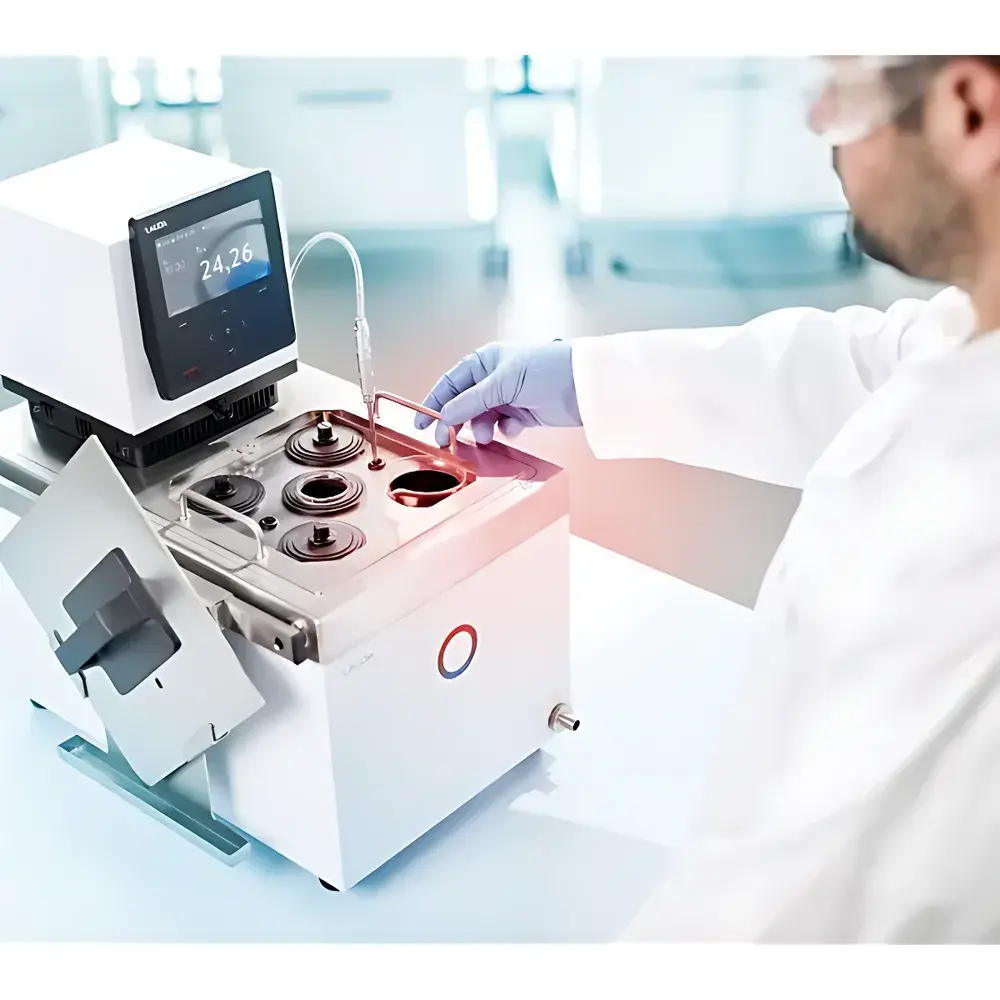
LAUDA Universa Pro Heating Circulating Bath
| Brand | LAUDA |
|---|---|
| Origin | Germany |
| Model | Universa Pro Heating Circulating Bath |
| Instrument Type | Temperature-Controlled Circulating Bath |
| Circulation Mode | Internal & External |
| Temperature Control | Heating-Only |
| Bath Volume Range | 3–41 L |
| Temperature Range | 20 °C to 200 °C |
| Temperature Stability | ±0.01 °C |
| Input Power | 2.5 kW |
Overview
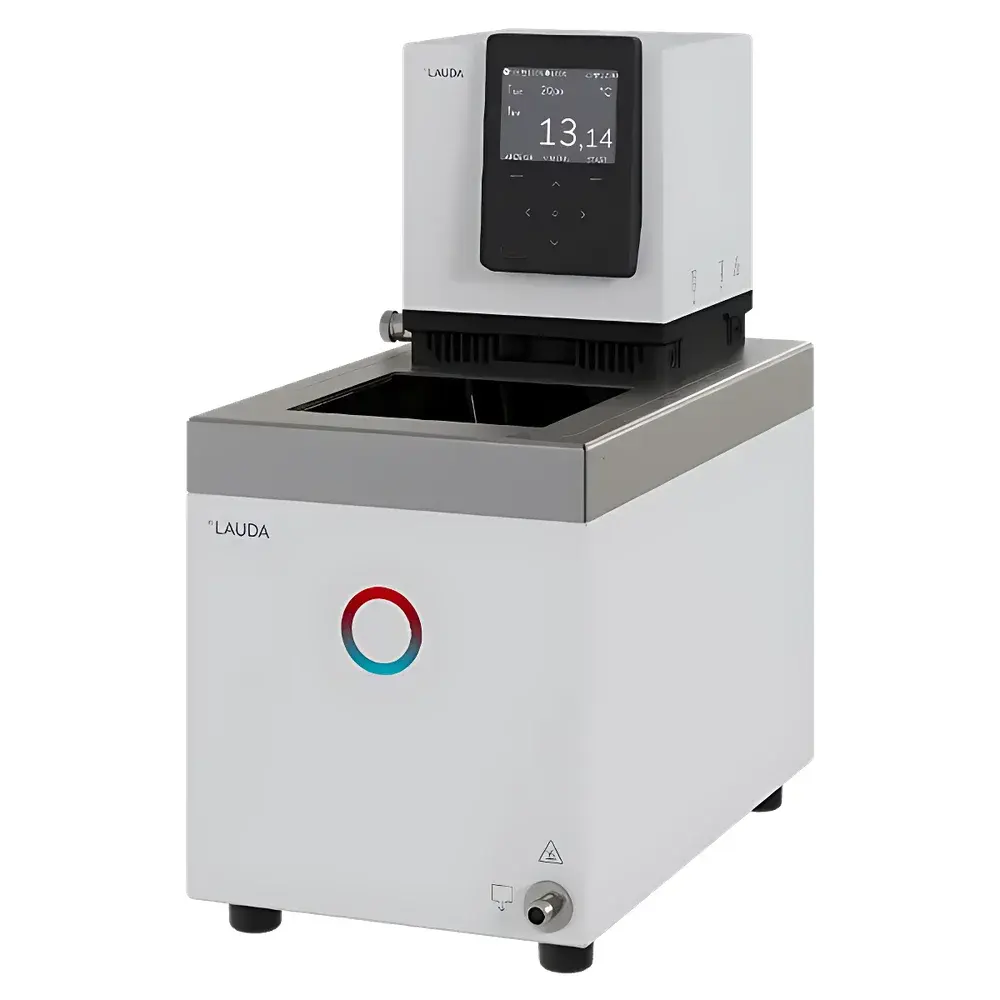
The LAUDA Universa Pro Heating Circulating Bath is a precision-engineered, digitally enabled temperature control system designed for demanding laboratory and pilot-scale applications requiring stable, uniform, and reproducible thermal environments. Based on LAUDA’s proven thermoregulation architecture—featuring high-efficiency heating elements, optimized fluid dynamics, and advanced PID control algorithms—the Universa Pro delivers exceptional thermal stability (±0.01 °C) across its full operating range of 20 °C to 200 °C. Unlike basic immersion heaters or open-bath systems, the Universa Pro employs forced circulation via an integrated pump with selectable internal/external flow paths, ensuring rapid heat transfer, minimal spatial temperature gradients (<0.02 °C uniformity across bath volume), and dynamic response to load changes. Its robust stainless-steel bath chamber, corrosion-resistant wetted materials, and CE-compliant safety design meet stringent requirements for pharmaceutical QC, polymer characterization, reaction calorimetry, and material testing under GLP and ISO/IEC 17025 frameworks.
Key Features
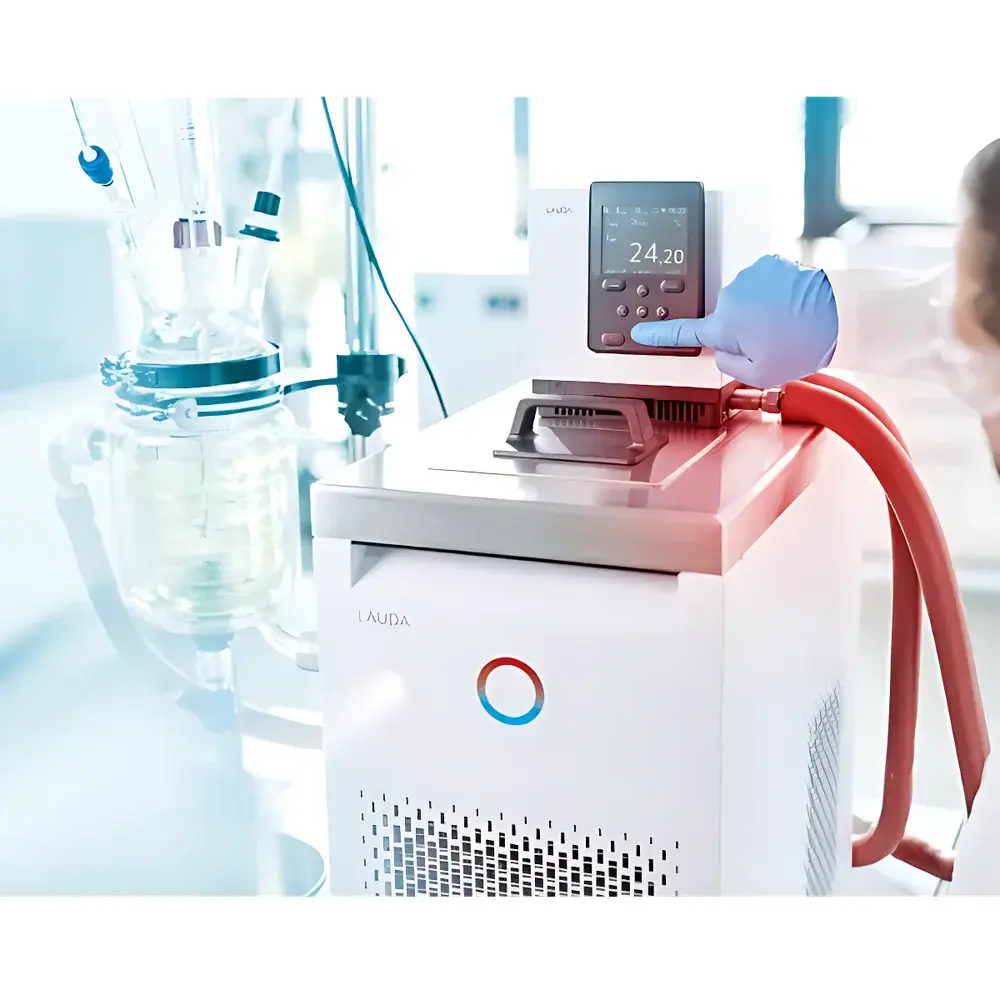
- Dual-mode circulation: Independent selection of internal recirculation (for bath-only stabilization) or external loop operation (for jacketed reactors, viscometers, or analytical instruments)
- Digital precision control: High-resolution touchscreen interface with real-time PID tuning, ramp-soak programming, and event logging
- Network-ready connectivity: Standard Ethernet and USB ports enable integration into lab-wide instrument networks; supports Modbus TCP and HTTP API for centralized monitoring
- Energy-optimized architecture: Variable-speed pump drive and adaptive power modulation reduce energy consumption by up to 30% compared to fixed-power equivalents
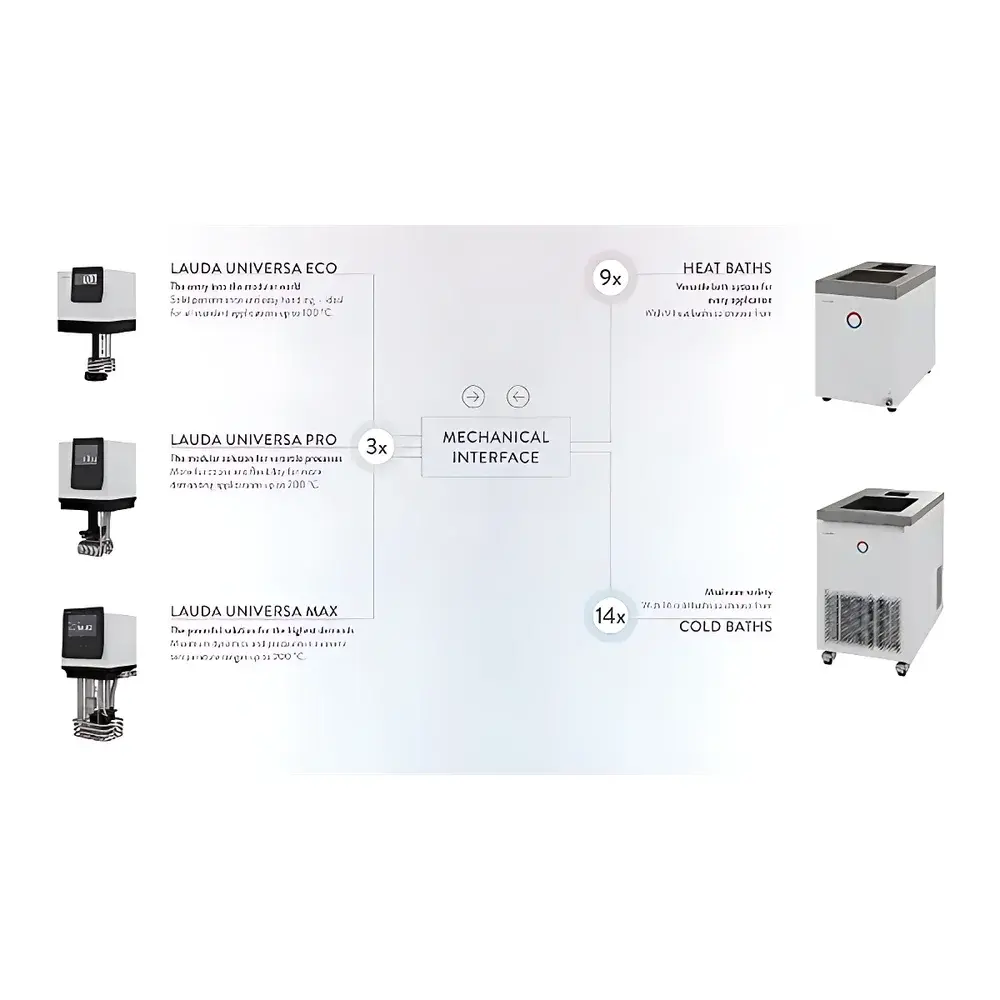
- Modular expansion capability: Over ten plug-and-play interface modules available—including Pt100 sensor inputs, analog I/O, relay outputs, and LiBus-compatible cryo-cooling add-ons—for seamless scalability in Industry 4.0 environments
- Compliance-ready firmware: Audit trail functionality, user access levels (admin/operator/guest), and electronic signature support align with FDA 21 CFR Part 11 and EU Annex 11 requirements
Sample Compatibility & Compliance
The Universa Pro accommodates a broad spectrum of sample formats—from standard Erlenmeyer flasks and jacketed glass reactors to custom process vessels—via its standardized bath opening geometry and optional mounting rails, tube racks, and insulated lid assemblies with integrated sensor ports. All wetted components comply with USP Class VI and EC 1935/2004 food-contact regulations. The system meets CE marking requirements per Machinery Directive 2006/42/EC and Low Voltage Directive 2014/35/EU. Thermal performance validation protocols are compatible with ASTM E1137 (Standard Specification for Temperature Uniformity of Laboratory Ovens and Baths) and ISO 17025 Clause 6.4.3 (Equipment Verification). Optional traceable calibration kits—including cylindrical reference inserts with NIST-traceable Pt100 sensors—support internal verification and metrological traceability.
Software & Data Management
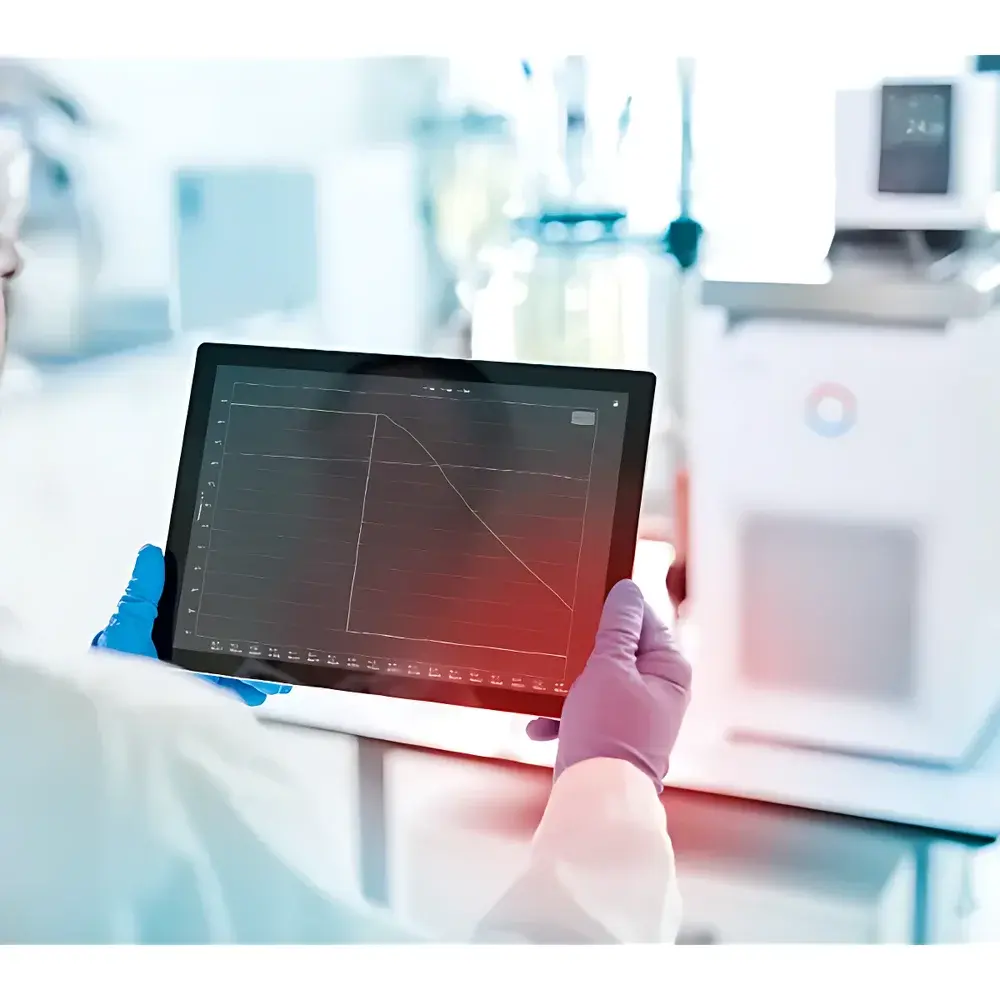
LAUDA Command software provides cross-platform (Windows/macOS/iOS/Android) configuration, remote operation, and data visualization. Users can define multi-step temperature profiles, monitor real-time bath and external loop temperatures, log operational parameters (flow rate, power draw, setpoint deviation), and export timestamped CSV reports compliant with ALCOA+ principles. Integration with LAUDA.LIVE cloud service enables encrypted TLS 1.3 data transmission, predictive maintenance alerts based on runtime analytics, and secure role-based access control. All system events—including login attempts, parameter changes, and alarm triggers—are recorded with immutable timestamps and user identifiers, satisfying GMP documentation requirements for audit readiness.
Applications
- Pharmaceutical stability testing (ICH Q1A–Q1E compliant thermal conditioning)
- Viscosity measurement of polymers, resins, and biopharmaceutical formulations using rotational rheometers and capillary viscometers
- Calibration of temperature-sensitive sensors (thermocouples, RTDs, IR cameras) against certified reference standards
- Thermal preconditioning of electronic components prior to accelerated life testing
- Enzyme kinetics studies requiring precise, long-duration incubation at elevated temperatures
- Material science applications including DSC sample preparation, solvent annealing of thin films, and thermal aging of composites
FAQ
What is the maximum external loop pressure rating for the Universa Pro?
The integrated circulation pump supports up to 2.5 bar (36 psi) static pressure in external loops, compatible with most jacketed reactor systems and inline heat exchangers.
Can the Universa Pro be operated without external software?
Yes—the front-panel touchscreen provides full standalone operation, including setpoint adjustment, timer functions, and alarm acknowledgment.
Is the bath fluid level sensor configurable for different media densities?
The capacitive level detection system is factory-calibrated for water and silicone oil but can be reconfigured via service mode for other fluids with known dielectric constants.
Does LAUDA provide IQ/OQ documentation templates?
Yes—validated installation and operational qualification templates aligned with ASTM E2500 and ISPE GAMP 5 are available upon request for regulated environments.
How often does the system require preventive maintenance?
Recommended maintenance intervals are every 12 months or 2,000 operating hours, whichever occurs first; includes pump seal inspection, coolant analysis (if used), and control loop verification.



