
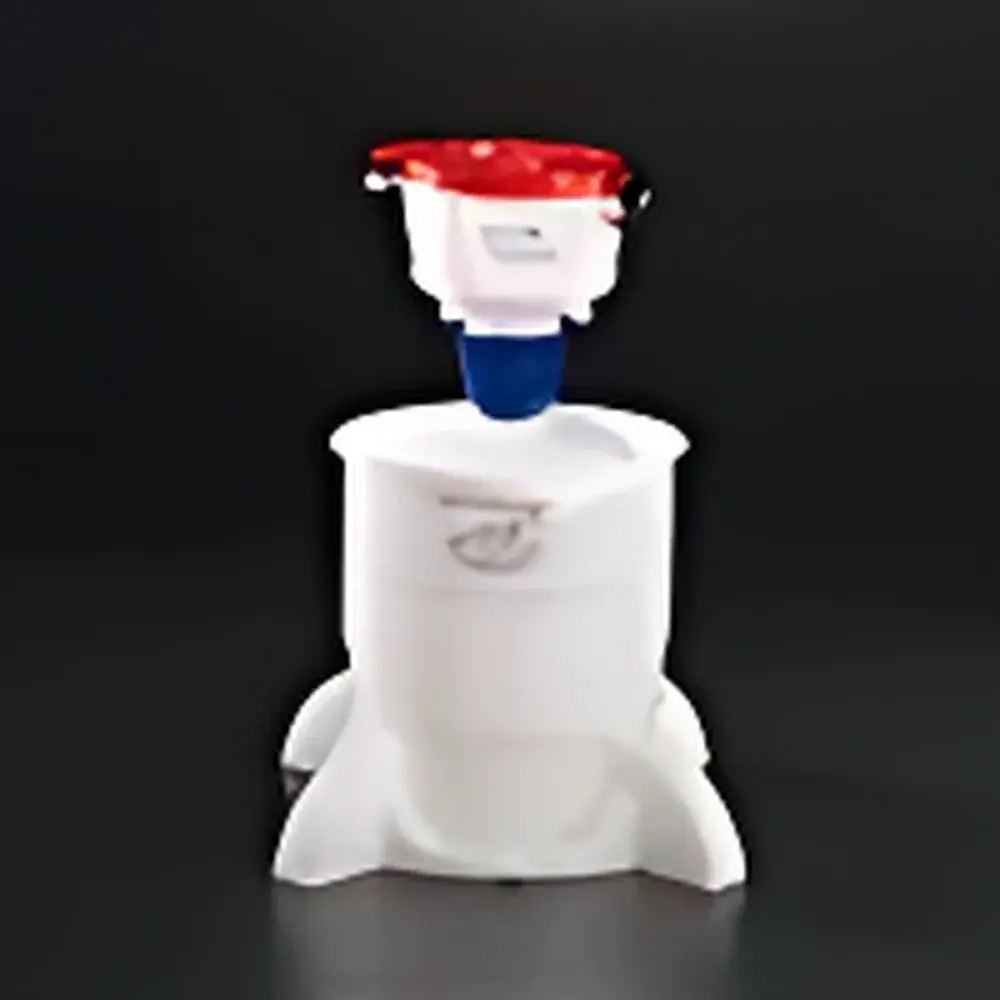
CP Lab Safety EF-4-38B-SYS 4″ ECO Waste Collection Funnel System
| Brand | CP Lab Safety |
|---|---|
| Origin | USA |
| Model | EF-4-38B-SYS |
| Funnel Diameter | 4" (101.6 mm) |
| Neck Length | 11" (279 mm) |
| Top Dimensions | 5" × 7" (127 mm × 178 mm) |
| Capacity | 450 mL |
| Material | High-Density Polyethylene (HDPE) |
| Neck Thread | 38-430 Standard |
| Solid Particle Filtration | Integrated Sintered Polyethylene Filter |
| Max HPLC Fitting Ports | 6 |
| Compliance | Meets OSHA, NFPA 30, and ANSI Z9.5 Laboratory Ventilation Standards |
Overview
The CP Lab Safety EF-4-38B-SYS is a precision-engineered 4-inch ECO waste collection funnel system designed for safe, compliant, and efficient containment of volatile organic solvents and hazardous liquid waste generated during analytical and preparative laboratory operations. Unlike open-beaker or uncapped bottle waste handling—common sources of vapor exposure, fire hazard, and cross-contamination—the EF-4-38B-SYS integrates a sealed, threaded neck interface with standardized reagent bottles (e.g., 2 L and 4 L LDPE or PP containers), forming a closed-loop collection architecture. Its operation relies on passive vapor suppression through physical containment and extended neck geometry, eliminating reliance on active vacuum or power sources while maintaining compatibility with standard lab infrastructure. This design directly addresses critical safety imperatives outlined in OSHA 29 CFR 1910.1200 (Hazard Communication), NFPA 30 Flammable and Combustible Liquids Code, and ANSI Z9.5–2022 Laboratory Ventilation requirements—particularly where HPLC, GC, peptide synthesis, DNA sequencing, and low-to-medium pressure chromatography generate continuous low-volume, high-volatility effluents.
Key Features
- 4-inch (101.6 mm) HDPE funnel body with chemical resistance to alcohols, chlorinated solvents, esters, and aqueous acids/bases—validated per ASTM D543 and ISO 17359 for long-term structural integrity under repeated solvent exposure.
- 11-inch (279 mm) extended conical neck minimizes headspace vapor concentration and reduces evaporation rate by >90% compared to standard funnels, as verified in controlled chamber testing per EPA Method 204A.
- Integrated sintered polyethylene filter (pore size: ~50 µm) retains particulate matter from column packing debris, precipitated salts, or synthetic intermediates without clogging or pressure buildup.
- Standardized 38-430 thread interface ensures mechanical and leak-tight coupling with CP Lab Safety’s certified LDPE (EC-2002A, EC-2004), narrow-mouth PP (NG-2203-0010), and other UL-listed waste containers.
- Modular top plate accommodates up to six 1/4″-28 UNF HPLC waste line fittings (e.g., stainless steel or PEEK), enabling simultaneous drainage from multiple instruments—including Agilent 1260/1290, Waters Acquity, Thermo Vanquish, and Shimadzu Nexera systems.
- Compact footprint (5″ × 7″ base) allows stable placement inside fume hoods (per ANSI/AIHA Z9.5 clearance guidelines) or over sink drains without obstructing workflow or compromising ventilation face velocity.
Sample Compatibility & Compliance
The EF-4-38B-SYS supports safe handling of Class I (flammable) and Class II (combustible) liquids per NFPA 30 Table 3.3.1, including acetonitrile, methanol, dichloromethane, ethyl acetate, and hexane—common mobile phases in reversed-phase HPLC and extraction workflows. It is routinely deployed in GLP-compliant QC labs (e.g., pharmaceutical stability testing per ICH Q5C), academic core facilities conducting proteomics sample prep, and environmental testing labs adhering to EPA SW-846 protocols. The HDPE construction complies with FDA 21 CFR §177.1520 for incidental food contact (where applicable), and the system satisfies institutional EH&S requirements for secondary containment and vapor control in ISO/IEC 17025-accredited laboratories.
Software & Data Management
As a passive mechanical containment device, the EF-4-38B-SYS does not incorporate embedded electronics or firmware. However, its standardized interface enables seamless integration into digital lab infrastructure: funnel usage logs can be linked to instrument run records via LIMS (e.g., LabWare, STARLIMS) using barcode-labeled bottle assemblies; HPLC method files may include waste routing metadata referencing EF-4-38B-SYS configuration; and audit trails for solvent disposal volume tracking align with FDA 21 CFR Part 11 electronic record retention when paired with calibrated mass-based or volumetric waste bottle weighing protocols.
Applications
- HPLC and UHPLC waste capture—preventing column wash solvent (e.g., 95% ACN/water gradients) from volatilizing in open reservoirs.
- Automated DNA synthesizer and solid-phase peptide synthesizer effluent management, where trichloroacetic acid, dichloroacetic acid, and DMF pose inhalation and corrosion risks.
- Low-pressure flash chromatography (e.g., Biotage Isolera, Teledyne ISCO Combiflash) fraction collection lines requiring particulate filtration and vapor containment.
- Proteomics sample digestion workflows involving guanidine hydrochloride or urea solutions, where ammonia off-gassing must be minimized.
- Environmental analysis labs performing EPA Method 525.3 (drinking water pesticides) or 8270 (semivolatile organics), where solvent recovery and operator exposure limits are strictly enforced.
FAQ
Can the EF-4-38B-SYS be used with flammable solvent waste under NFPA 30?
Yes—when coupled with UL-listed HDPE or PP safety bottles and installed within a grounded, ventilated enclosure, it meets NFPA 30 Section 9.6.2 requirements for non-pressurized flammable liquid collection.
Is the sintered filter autoclavable?
No—HDPE deforms above 121°C; filter cleaning is limited to ultrasonic bath treatment in compatible solvents followed by air drying.
What bottle types are certified for use with this funnel?
CP Lab Safety EC-2002A (2 L LDPE), EC-2004 (4 L LDPE), NG-2203-0010 (4 L narrow-mouth PP), and NG-2126-4000 (4 L HDPE) are validated for chemical compatibility and mechanical seal integrity.
Does the system support regulatory audit requirements for waste tracking?
Yes—when integrated with barcode-scanned bottle labels and LIMS-based disposal logs, it fulfills documentation traceability requirements under ISO 14001 and RCRA Subpart J.
How often should the filter be replaced?
Replacement frequency depends on particulate load; visual inspection every 50–100 runs is recommended, with replacement triggered by visible clogging or increased backpressure observed at instrument waste line outlets.



